The cost of living problem
James Carville, former campaign adviser to Bill Clinton, is credited with coining the expression, “It’s the economy, stupid.” The very blunt point he was making is that voters care about economic conditions more than anything else.
While Carville’s maxim likely remains true in the current environment, the voting public today is hyper-focused on one specific economic concern—affordability.
Inflation has clearly moderated, but after several years of high inflation rates way above recent historical trends, Americans still have sticker shock.
Although cost of living concerns seem to dominate, it is worth noting that many other economic metrics are in fact quite positive.
Since Trump took office and Republicans swept nearly two years ago, we have seen a rising stock market along with a relatively low unemployment rate. The S&P 500 has returned more than 35% in less than two years since Trump was elected, which should help Republicans with the investor class.
And more good economic data came in on Wednesday.
Second quarter GDP growth was revised up to 2.2%, from 1.5%. The core Personal Consumption Expenditures (PCE) price index—the inflation metric closely watched by Fed officials—came in lighter than expected at 3.0%.
But every consumer still feels the burden of higher prices.
The stock market’s success is also not terribly meaningful to the broader population, especially younger voters with minimal savings. Most estimates suggest 40% of the population has no exposure to the stock market at all.
And with respect to energy prices in particular, high prices at the pump and high home heating bills hit rural voters particularly hard.
Whereas urban voters tend to be reliably Democrat-leaning regardless of economic circumstances, rural and suburban districts are more prone to flip from one election to the next.
These voters tend to drive more miles, drive trucks and other heavy vehicles, live in single family homes rather than apartments, and spend a greater portion of their household income on energy-related expenses.
This means high energy prices have the potential to register a disproportionate impact on election dynamics. Voters in the specific states most at risk for Republican losses in Congress—Michigan, Texas, Ohio, Maine, North Carolina—spend a lot of time in their vehicles.
The good news is that there are growing reasons to believe the pressure could finally begin to ease.
As frustrating as the Iran conflict has been, the physical oil market is adapting—and the economic pressure on Tehran is intensifying.
And despite higher oil prices, the U.S. economy has performed remarkably well this year, supported by strong GDP growth and healthy corporate earnings. The AI boom has, in effect, overwhelmed much of the drag from higher energy costs and the secondary impact on monetary policy.
A sustained decline in oil prices could now turn that headwind into a tailwind—removing what has arguably become the biggest obstacle facing both the economy and the stock market.
The storm before the calm?
As President Trump has noted, the impact of high oil prices on the midterm election is not lost on Iran’s current leadership.
Trump has made clear his view that the Iranians are deliberately stalling on peace talks in order to keep oil prices high and prevent Republicans from preserving their control over Congress.
The Islamic Revolutionary Guard Corps (IRGC) helped validated Trump’s thesis this week when it took the extraordinary step of releasing a 25-page letter addressed directly to the American public, criticizing U.S. policy toward Iran.
Within this memo, the IRGC makes many bold claims, including the idea that “the U.S. economy is on the precipice of collapse” thanks to Trump’s actions toward Iran.
The memo clearly demonstrates Tehran’s understanding that expensive energy creates economic and political problems in Washington. It also displays Iran’s preference for a scenario in which Trump is hobbled by a Democrat-controlled Congress.
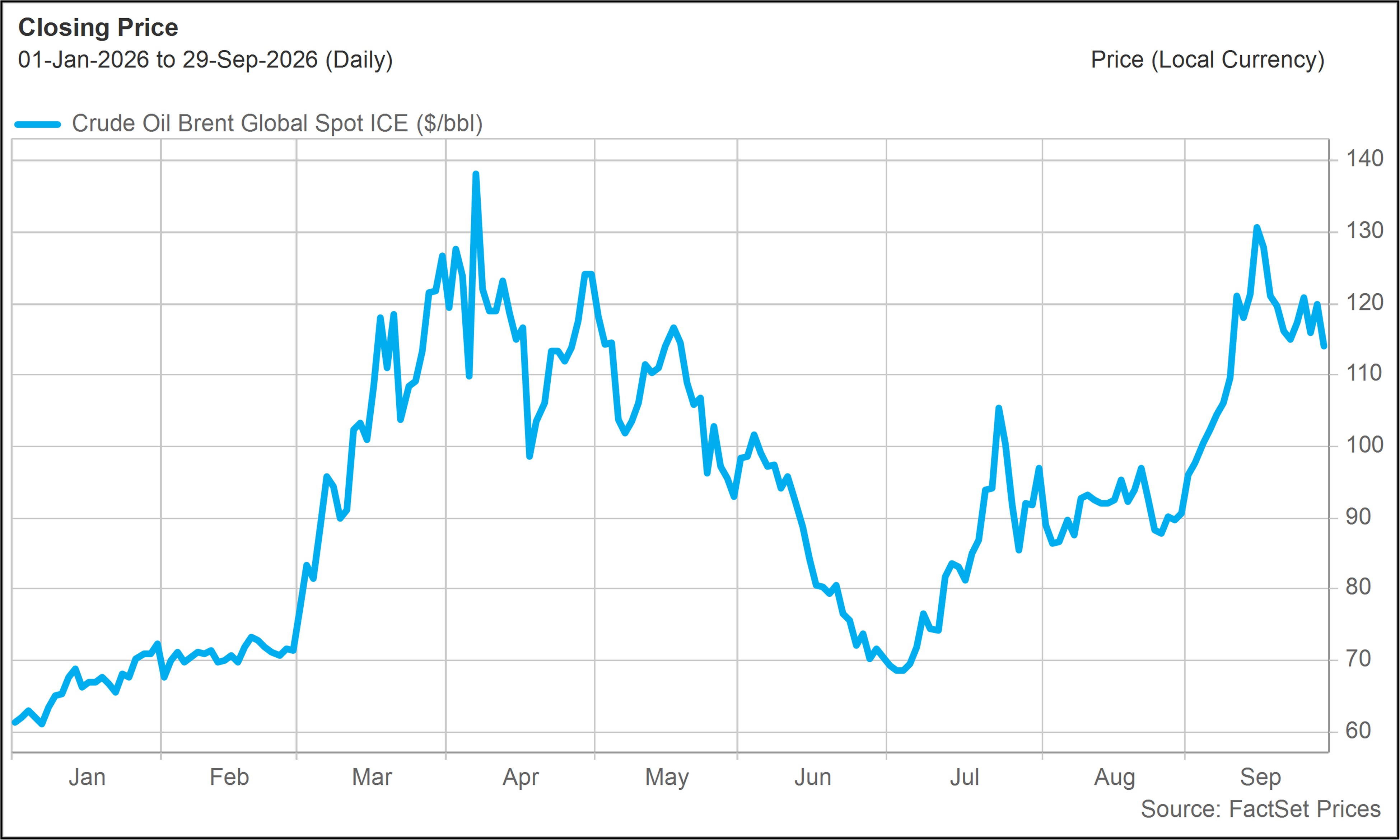
The Iranians may be overestimating the fragility of the American economy, but they are correct in their assessment that the lack of diplomatic progress is keeping spot oil prices high. They also correctly identify the political significance of depriving Trump a foreign policy win prior to midterms.
As diplomacy stalls, warfare across multiple fronts continues. This includes the U.S. taking actions to prevent the flow of Iranian oil into world markets. China and other customers are now forced to buy oil from other countries, sending prices higher.
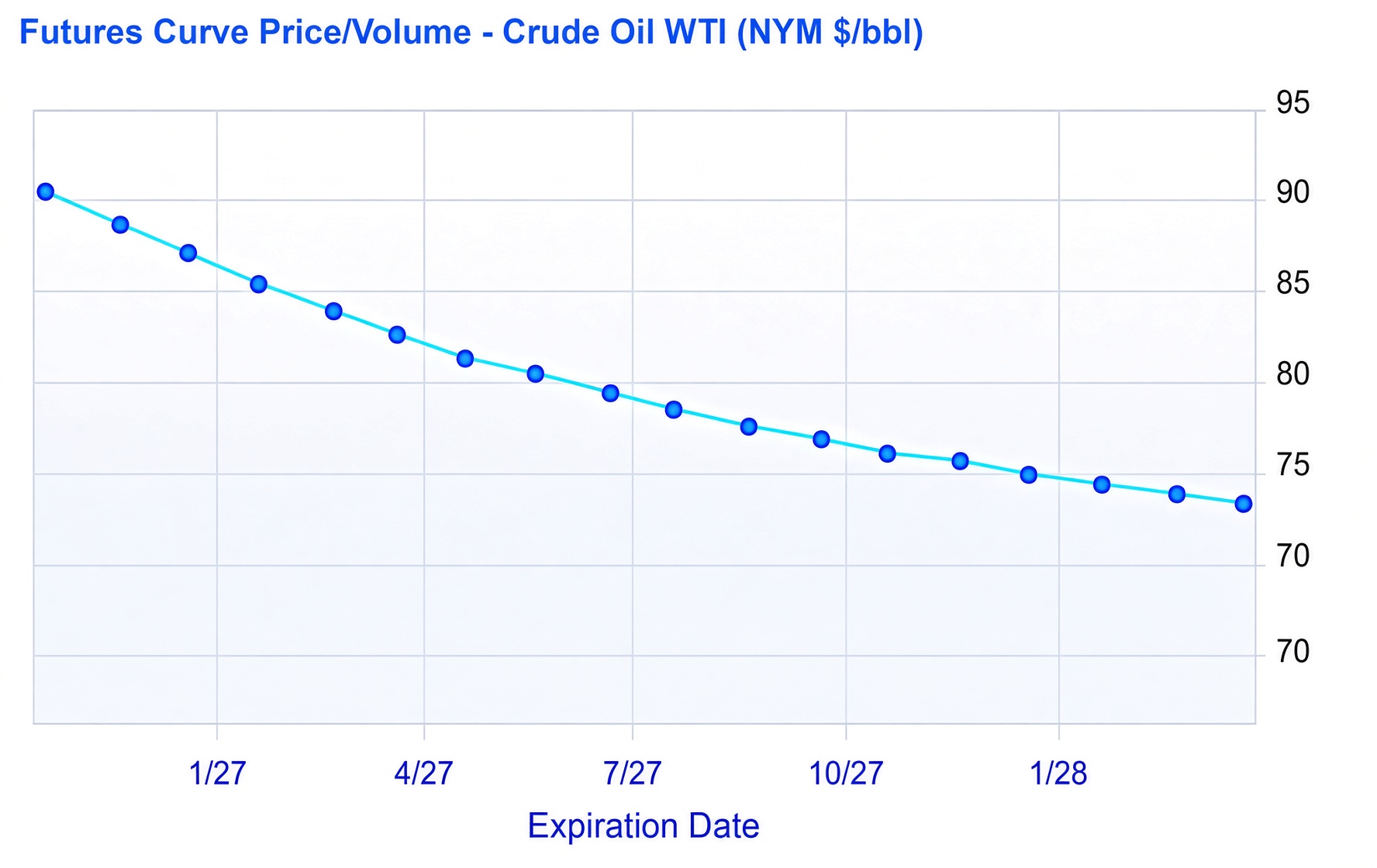
But currently elevated oil prices are masking some significant positive developments, which help explain why oil futures markets continue to signal significantly lower oil prices over the next year or two, trending toward the low $70’s.