76report

1f61e38d11

February 4, 2026
*|MC:SUBJECT|*
͏ ‌     ͏ ‌     ͏ ‌     ͏ ‌     ͏ ‌     ͏ ‌     ͏ ‌     ͏ ‌     ͏ ‌     ͏ ‌     ͏ ‌     ͏ ‌     ͏ ‌     ͏ ‌     ͏ ‌     ͏ ‌     ͏ ‌     ͏ ‌     ͏ ‌     ͏ ‌     ͏ ‌     ͏ ‌     ͏ ‌     ͏ ‌     ͏ ‌     ͏ ‌     ͏ ‌     ͏ ‌     ͏ ‌     ͏ ‌     ͏ ‌     ͏ ‌     ͏ ‌     ͏ ‌     ͏ ‌     ͏ ‌     ͏ ‌     ͏ ‌     ͏ ‌     ͏ ‌     ͏ ‌     ͏ ‌     ͏ ‌     ͏ ‌     ͏ ‌     ͏ ‌     ͏ ‌     ͏ ‌     ͏ ‌     ͏ ‌     ͏ ‌     ͏ ‌     ͏ ‌     ͏ ‌     ͏ ‌     ͏ ‌     ͏ ‌     ͏ ‌     ͏ ‌     ͏ ‌     ͏ ‌     ͏ ‌     ͏ ‌     ͏ ‌     ͏ ‌     ͏ ‌     ͏ ‌     ͏ ‌     ͏ ‌     ͏ ‌     ͏ ‌     ͏ ‌     ͏ ‌     ͏ ‌     ͏ ‌     ͏ ‌     ͏ ‌     ͏ ‌     ͏ ‌     ͏ ‌     ͏ ‌     ͏ ‌     ͏ ‌     ͏ ‌     ͏ ‌     ͏ ‌     ͏ ‌     ͏ ‌     ͏ ‌     ͏ ‌     ͏ ‌     ͏ ‌     ͏ ‌     ͏ ‌     ͏ ‌     ͏ ‌     ͏ ‌     ͏ ‌     ͏ ‌     ͏ ‌     ͏ ‌     ͏ ‌     ͏ ‌     ͏ ‌     ͏ ‌     ͏ ‌     ͏ ‌     ͏ ‌     ͏ ‌     ͏ ‌     ͏ ‌     ͏ ‌     ͏ ‌     ͏ ‌     ͏ ‌     ͏ ‌     ͏ ‌     ͏ ‌     ͏ ‌     ͏ ‌     ͏ ‌     ͏ ‌     ͏ ‌     ͏ ‌     ͏ ‌     ͏ ‌     ͏ ‌     ͏ ‌     ͏ ‌     ͏ ‌     ͏ ‌     ͏ ‌     ͏ ‌     ͏ ‌     ͏ ‌     ͏ ‌     ͏ ‌     ͏ ‌     ͏ ‌     ͏ ‌     ͏ ‌     ͏ ‌     ͏ ‌     ͏ ‌     ͏ ‌     ͏ ‌     ͏ ‌     ͏ ‌     ͏ ‌     ͏ ‌     ͏ ‌     ͏ ‌     ͏ ‌     ͏ ‌     ͏ ‌     ͏ ‌     ͏ ‌     ͏ ‌     ͏ ‌     ͏ ‌     ͏ ‌     ͏ ‌     ͏ ‌     ͏ ‌     ͏ ‌     ͏ ‌     ͏ ‌     ͏ ‌     ͏ ‌     ͏ ‌     ͏ ‌     ͏ ‌     ͏ ‌     ͏ ‌     ͏ ‌     ͏ ‌     ͏ ‌     ͏ ‌     ͏ ‌     ͏ ‌     ͏ ‌     ͏ ‌     ͏ ‌     ͏ ‌     ͏ ‌     ͏ ‌     ͏ ‌     ͏ ‌     ͏ ‌     ͏ ‌     ͏ ‌     ͏ ‌     ͏ ‌     ͏ ‌     ͏ ‌     ͏ ‌     ͏ ‌     ͏ ‌     ͏ ‌     ͏ ‌     ͏ ‌     ͏ ‌     ͏ ‌     ͏ ‌     ͏ ‌     ͏ ‌     ͏ ‌     ͏ ‌     ͏ ‌     ͏ ‌     ͏ ‌     ͏ ‌     ͏ ‌     ͏ ‌     ͏ ‌     ͏ ‌     ͏ ‌     ͏ ‌     ͏ ‌     ͏ ‌     ͏ ‌     ͏ ‌     ͏ ‌     ͏ ‌     ͏ ‌     ͏ ‌     ͏ ‌     ͏ ‌     ͏ ‌     ͏ ‌     ͏ ‌     ͏ ‌     ͏ ‌     ͏ ‌     ͏ ‌     ͏ ‌     ͏ ‌     ͏ ‌     ͏ ‌     ͏ ‌     ͏ ‌     ͏ ‌     ͏ ‌     ͏ ‌     ͏ ‌     ͏ ‌     ͏ ‌     ͏ ‌     ͏ ‌     ͏ ‌     ͏ ‌     ͏ ‌     ͏ ‌     ͏ ‌     ͏ ‌     ͏ ‌     ͏ ‌     ͏ ‌     ͏ ‌     ͏ ‌     ͏ ‌     ͏ ‌     ͏ ‌     ͏ ‌     ͏ ‌     ͏ ‌     ͏ ‌     ͏ ‌     ͏ ‌     ͏ ‌     ͏ ‌     ͏ ‌     ͏ ‌     ͏ ‌     ͏ ‌     ͏ ‌     ͏ ‌     ͏ ‌     ͏ ‌     ͏ ‌     ͏ ‌     ͏ ‌     ͏ ‌     ͏ ‌     ͏ ‌     ͏ ‌     ͏ ‌     ͏ ‌     ͏ ‌     ͏ ‌     ͏ ‌     ͏ ‌     ͏ ‌     ͏ ‌     ͏ ‌     ͏ ‌     ͏ ‌     ͏ ‌     ͏ ‌     ͏ ‌     ͏ ‌     ͏ ‌     ͏ ‌     ͏ ‌     ͏ ‌     ͏ ‌     ͏ ‌     ͏ ‌     ͏ ‌     ͏ ‌     ͏ ‌     ͏ ‌     ͏ ‌     ͏ ‌     ͏ ‌     ͏ ‌     ͏ ‌     ͏ ‌     ͏ ‌     ͏ ‌    ­ ­ ­ ­ ­ ­ ­ ­ ­ ­ ­ ­ ­ ­ ­ ­ ­ ­ ­ ­ ­ ­ ­ ­ ­ ­ ­ ­ ­ ­ ­ ­ ­ ­ ­ ­ ­ ­ ­ ­ ­ ­ ­ ­ ­ ­ ­ ­ ­ ­ ­ ­ ­ ­ ­ ­ ­ ­ ­ ­ ­ ­ ­ ­ ­ ­ ­ ­ ­ ­ ­ ­ ­ ­ ­ ­ ­ ­ ­ ­ ­ ­ ­ ­ ­ ­ ­ ­ ­ ­ ­ ­ ­ ­ ­ ­ ­ ­ ­ ­ ­ ­ ­ ­ ­ ­ ­ ­ ­ ­ ­ ­ ­ ­ ­ ­ ­ ­ ­ ­ ­ ­ ­ ­ ­ ­ ­ ­ ­ ­ ­ ­ ­ ­ ­ ­ ­ ­ ­ ­ ­ ­ ­ ­ ­ ­ ­ ­ ­ ­ ­ ­ ­ ­ ­ ­ ­ ­ ­ ­ ­ ­ ­ ­ ­ ­ ­ ­ ­ ­ ­ ­ ­ ­ ­ ­ ­ ­ ­ ­ ­ ­ ­ ­ ­ ­ ­ ­ ­ ­ ­ ­ ­ ­ ­ ­ ­ ­ ­ ­ ­ ­ ­ ­ ­ ­ ­ ­ ­ ­ ­ ­ ­ ­ ­ ­ ­ ­ ­ ­ ­ ­ ­ ­ ­ ­ ­ ­ ­ ­ ­ ­ ­ ­ ­ ­ ­ ­ ­ ­ ­ ­ ­ ­ ­ ­ ­ ­ ­ ­ ­ ­ ­ ­ ­ ­ ­ ­ ­ ­ ­ ­ ­ ­ ­ ­ ­ ­ ­ ­ ­ ­ ­ ­ ­ ­ ­ ­ ­ ­ ­ ­

76report

February 4, 2026

Software as a Sell-Off: Another AI Overreaction?

Tech stocks have been under pressure as the market responds to a developing threat: will innovation in AI actually hurt the profitability of the technology sector itself?


The tech-heavy NASDAQ Composite was down 1.5% today, following a 1.4% decline yesterday. The NASDAQ is now flat for the year, as investors rotate into other areas. The S&P 500 Value Index is up more than 3% so far this year.


A major factor behind the pressure on tech stocks this week was Anthropic, the AI start-up founded in 2021 by former OpenAI researchers.


Anthropic is known for its Claude large language model, which competes with OpenAI’s ChatGPT and other AI models. Backed by Amazon (AMZN) and Alphabet (GOOGL), as well as leading venture capital firms, the company is said to be targeting an Initial Public Offering later this year.


Anthropic has begun rolling out what it calls Claude Cowork plugins. These are productivity tools that automate real work tasks in legal, sales, and other business workflows.


These are not just fun demos; they are real tools designed to handle document review, legal compliance, contract triage, customer service workflows and other use cases. Most of these functions are currently addressed by other companies that offer them as high-value software services.


In other words, Claude is now offering potentially valuable services to its premium subscribers—at no incremental cost to them—that are currently being provided by other companies.


A number of high-profile technology and information services stocks have declined sharply, based on this specific development and the broader threat of AI disruption.


After all, it is not as if Anthropic—or, for that matter, the other major AI model providers—are done innovating and introducing new features.


Consumers could soon be getting for free what they used to have to pay through the nose for.


The end of SaaS?


Software-as-a-Service (SaaS) refers to the evolution of the software industry from a licensing model (much more common ten or twenty years ago) to a subscription model. Instead of buying software once and installing it on their computers, customers pay a recurring subscription charge to access the software over the internet.


SaaS was made possible by the development of cloud computing and created enormous value for both customers and businesses. Customers benefited from ease of use, continuous updates, and centralized hosting. Vendors locked in predictable, high-margin recurring revenue streams that were rewarded by the stock market.


But what happens if many of the core functions provided by these various software service providers come free with an AI subscription plan?


While the announcement by Anthropic has hit a number of stocks particularly hard this week, the weakness in software has actually been something of a slow motion trainwreck since last summer.


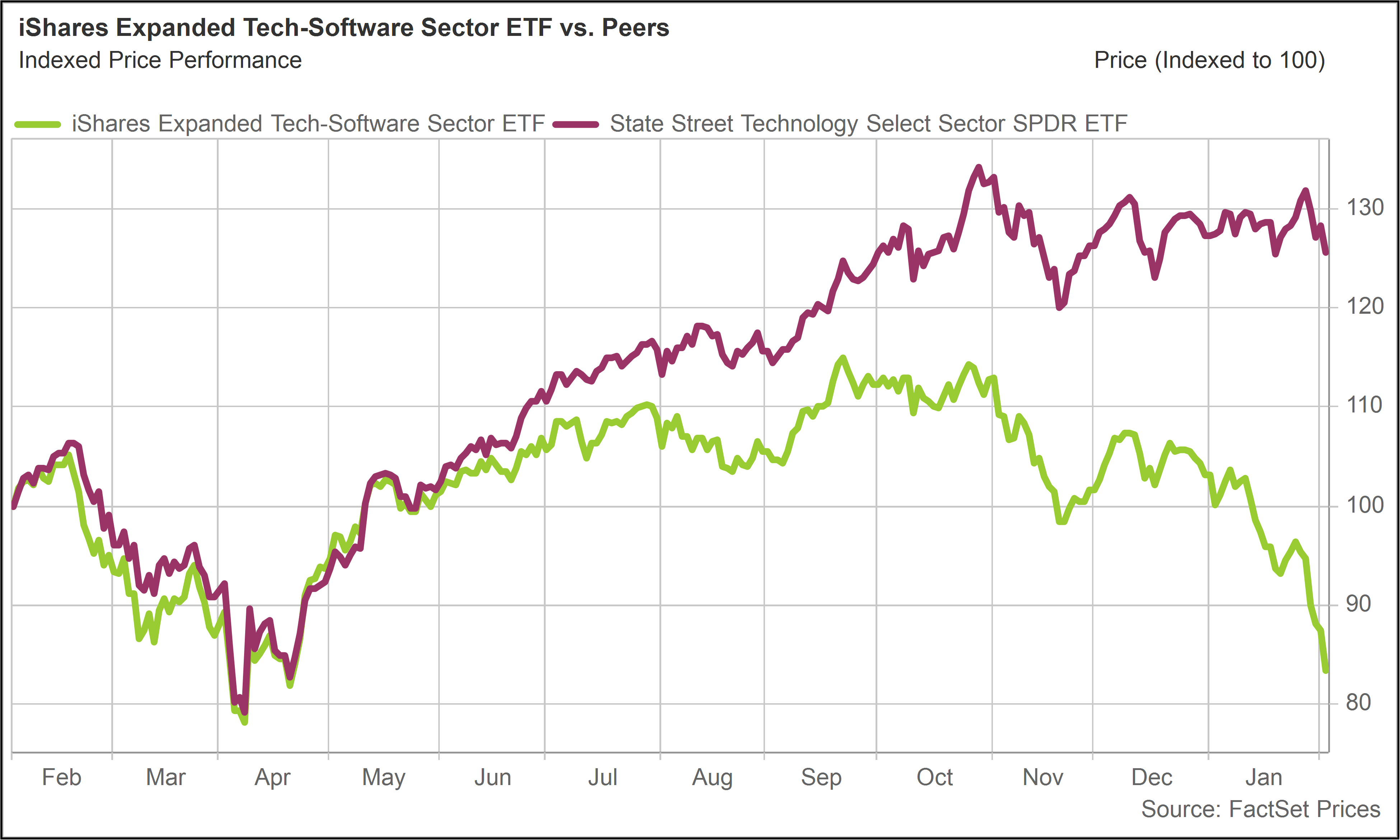
Staring in June 2025, the performance of software stocks has departed visibly from the broader technology sector. This is quite noticeable when we compare the returns of the iShares Expanded Tech-Software ETF (IGV) versus a less narrowly focused technology fund like the State Street Technology Select ETF (XLK).


Software (IGV) vs. Broader Technology (XLK)

(Total Return - Last 12 Months)


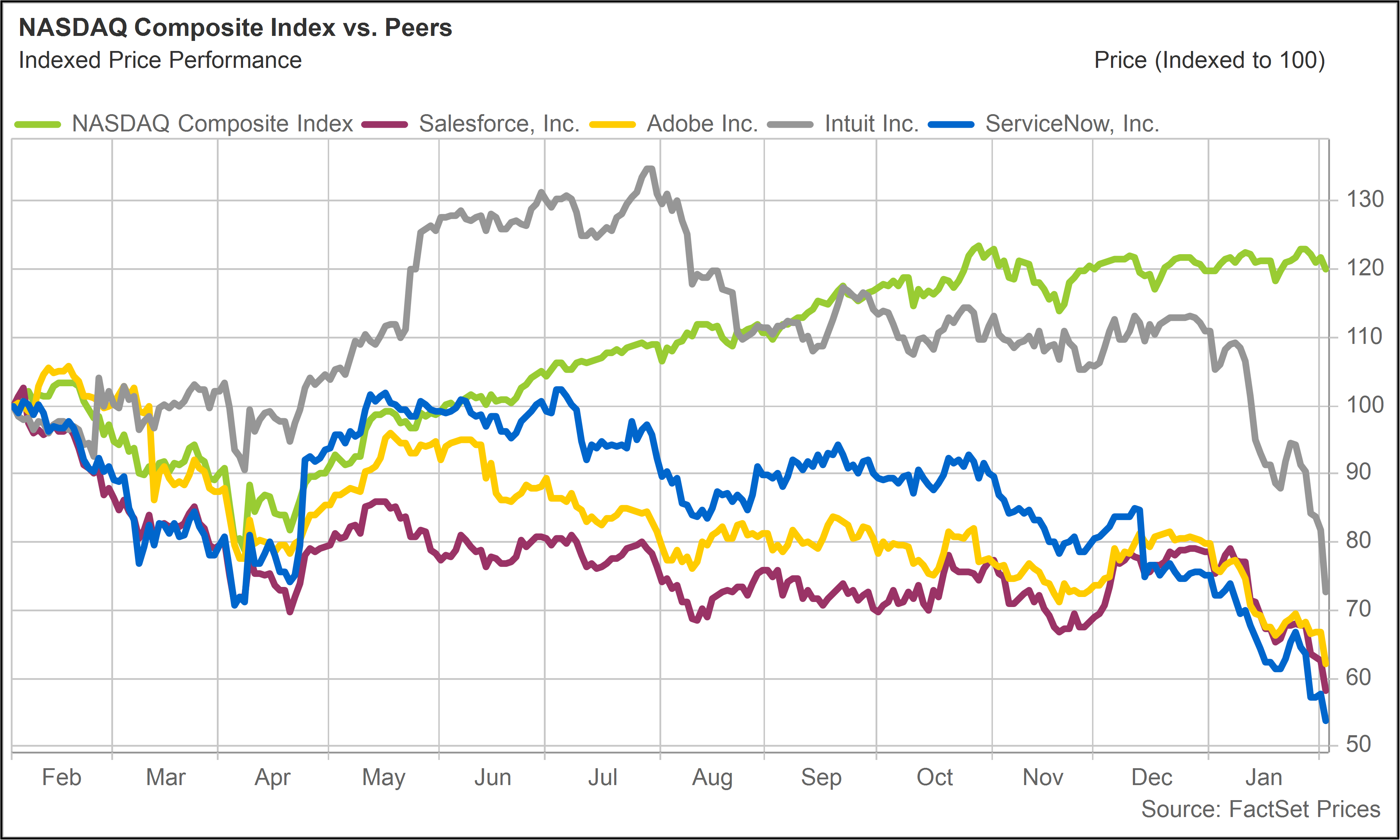
The weakness in software has extended to a number of very prominent technology names that have market capitalizations in the hundreds of billions of dollars. These include stocks like Salesforce (CRM), Adobe (ADBE), Intuit (INTU), and ServiceNow (NOW).


While the tech-heavy NASDAQ Composite has gained approximately 20% over the past year, these software bellwethers have declined around 25% to 50%. Much of that downside has occurred over the last four weeks.

NASDAQ vs. SaaS Leaders

(Total Return - Last 12 Months)

Echoes of DeepSeek


This wave of negative sentiment directed toward software is reminiscent of the broader sell-off in technology that was sparked just about a year ago, at the end of January 2025, when a mini-panic developed around DeepSeek (see China’s DeepSeek Rattles Markets).


The concern at the time was that AI capacity could be created at much lower cost and that the Chinese had figured out how to do it through open source approaches. This, it was feared, would put an abrupt end to the AI infrastructure buildout and bring down all the lofty growth expectations supporting the stocks that were tied to it.


The fundamental problem was similar to this latest breakthrough by Anthropic: has an innovation in AI technology produced an efficiency that eliminates established profit streams?


Many investors then as now jumped to worst case scenario conclusions. But markets eventually settled down, and nowadays DeepSeek is mentioned infrequently.


One voice urging investors to stay calm about the DeepSeek threat—in part because his stock was being sold heavily amidst the volatility—was NVIDIA (NVDA) founder Jensen Huang.


Jensen’s position at the time was that efficiency breakthroughs in AI were to be expected, if not encouraged. If companies were able to manufacture AI more cost efficiently, this will only stimulate more AI consumption.


In other words, the more efficiently and productively NVDA chips could be used, the more demand there would be for them. This argument was an important factor in our decision to add NVDA to the American Resilience portfolio back on March 12, 2025 (NVDA: The Time Has Come) when the shares were under pressure.


Jensen was, in retrospect, absolutely right. NVDA’s growth trajectory was not affected by DeepSeek, and the shares have advanced approximately 50% since that date.


Jensen has taken a similar position on the current software sell-off.

Remember what software is. Software is a tool. There’s this notion that the software industry is in decline and will be replaced by AI. You can tell because there’s a whole bunch of software companies whose stock prices are under a lot of pressure. Because somehow AI is going to replace them. It is the most illogical thing in the world, and time will prove itself. - Jensen Huang (2/4/2025)

As Jensen elaborates, software is fundamentally a tool that AI will use, not replace or reinvent. He goes onto describe a scenario where AI agents make use of existing software, perhaps even more heavily than it is currently used.


Selectivity matters


Many of the stocks that investors are dumping in response to the disruption threat embodied by the Claude plugins have proprietary data sets and other strategic assets that cannot be easily replicated.


It is in many cases an extreme oversimplification to think AI can perform complex, data-intensive tasks for which expensive software was previously required. Just as it was an extreme oversimplification to think DeepSeek could do for millions of dollars what American companies were spending billions on.


That said… AI absolutely is a disruptive technology.


The technology sector as a whole may ultimately do well as a result of AI, but within the sector, there will be a substantial separation between winners and losers.


The large-cap software names mentioned above that have significantly underperformed in recent months may in some cases be undervalued now. But their long-term earnings growth may also be genuinely impaired.


In our Model Portfolios, especially our more technology and growth-oriented American Resilience portfolio, our top priority is to choose stocks that we believe stand to benefit from long-term developments in AI (and certainly not get injured by them).


This is because we view AI as probably the most impactful driver of technological, economic and social change of our lifetimes. (We discuss our approach to AI in more depth in our Guide to Investing in the Age of AI.)


While the goal is clear, the answers are not always obvious, as many tech investors over the last six months have discovered. Within the American Resilience portfolio, for example, we recently chose to exit a software stock that we concluded did have too much vulnerability to AI disruption.


It pays to be alert to these risks. That particular stock has since declined some 13% since its removal from the portfolio in mid-January.


AI will inevitably get cheaper, more powerful and more pervasive. Within and outside our tech investments, we are constantly stress testing our ideas to make sure this inevitability is an asset rather than a liability.


Investing beyond tech


While AI is a product of the tech sector, its impact is felt across all sectors of the economy, directly or indirectly. Given uncertainties around which particular tech stocks will prevail and which will suffer, many investors are now prioritizing other areas.


We are just over a month into the new year, but a key observation so far is that stocks in certain more traditional industries are in many cases performing quite well. AI is driving productivity and economic growth, benefiting these companies.


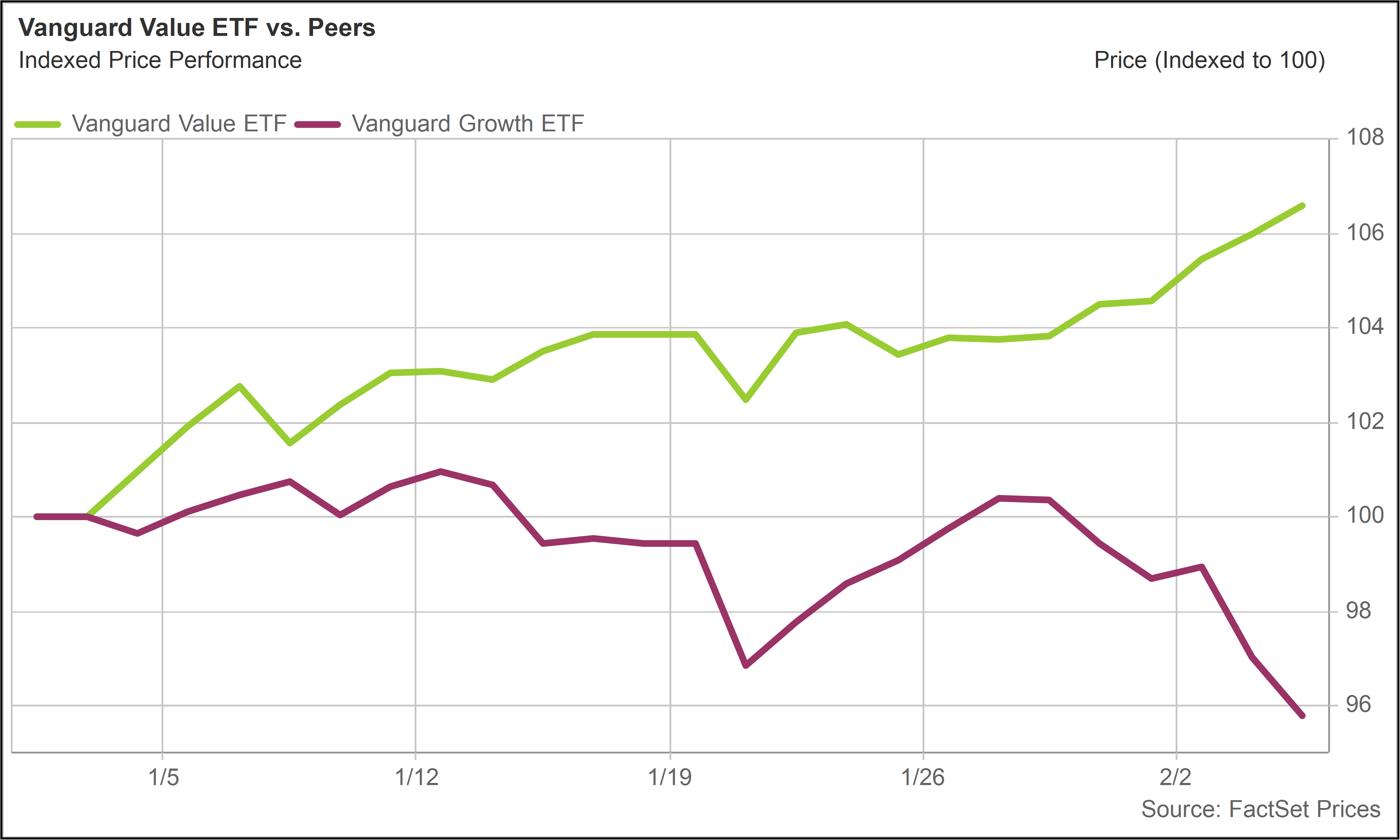
The Vanguard Value ETF (VTV), which tracks the large-cap value index, is in fact outperforming the Vanguard Growth ETF (VUG) by more than 10% on a year to date basis.


This is by historical standards a large dispersion as well as a trend reversal. The last decade has belonged to growth. Over the last ten years, VUG (420% total return) has substantially outperformed VTV (240% total return).

Value vs. Growth

(Total Return - Year to Date)

This is not to say that investors should feel discouraged from investing in technology and related areas. We are in fact now focusing on valuation opportunities created by this sentiment shift.


Investors should recognize, however, that opportunities created by AI are broad-based.


As we explained in a recent note (Gold Hits $5,000: This Is Scarcity, Not Risk Aversion), even an asset as old-fashioned as gold can be seen as an AI beneficiary, because of its exposure to shifts in monetary policy that are driven by higher productivity.


Software investors are worried because AI enables people to do things faster and cheaper. Not all forms of software will suffer; many will in fact benefit from leveraging AI.


But AI does have the potential to impose a sort of ruthless efficiency across the economy.


The key is to own companies that control scarce resources and have durable competitive advantages—business models that should gain value as AI drives real economic growth.

Click HERE to learn more about our Model Portfolio subscription plans.

FOR SUBSCRIBER USE ONLY. DO NOT FORWARD OR SHARE.

This is an automated post