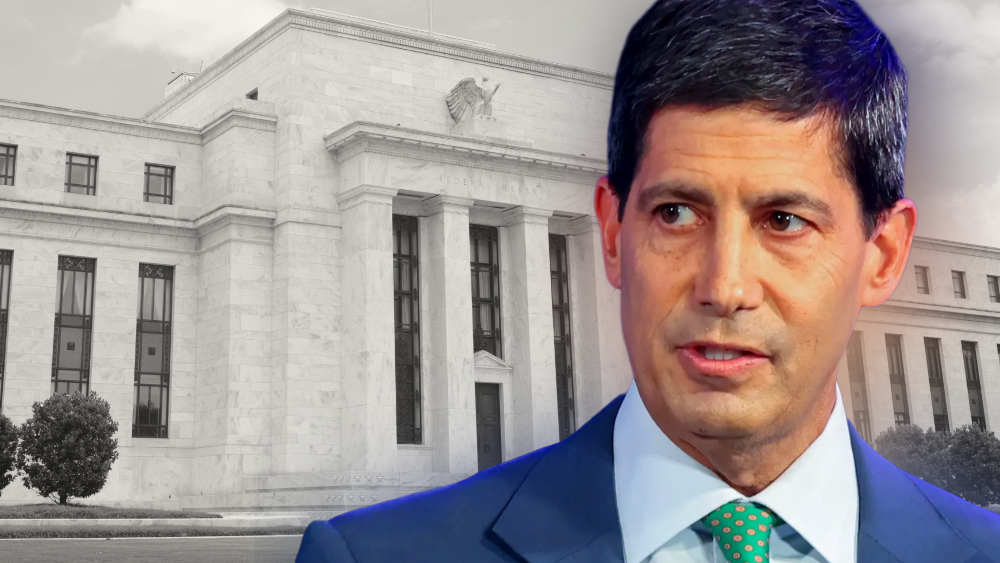
Warsh described the rate hike as removing "a dose of accommodation."
In other words, this was not presented as a deliberate attempt to crush economic activity. It was presented as an adjustment to an economy that has become strong enough to tolerate it.
Muted market reaction
With implied odds of a quarter-point rate hike going into the meeting at around 90%, markets initially took the widely expected rate hike in stride.
Stocks did turn slightly lower as Warsh emphasized the Fed’s determination to bring inflation back to 2% and signaled another hike could follow.
The S&P 500 lost 0.4% on the day, while the Nasdaq Composite was essentially flat.
Bond yields rose most sharply at the short end of the curve: the Two-year Treasury yield jumped about seven basis points, reflecting the elimination of any lingering chance there would be no rate hike.
The 10-Year Treasury yield edged up slightly, ending just above 5%, around its highest level in two decades.
Was this truly necessary?
As Warsh explained, the economy is growing nicely, labor markets are fine, and inflation is still too high. But the decision is hardly beyond debate.
Former Fed Governor Stephen Miran, who relinquished his seat to make room for Warsh, has been among the most prominent critics of the idea that today's inflation environment requires higher rates.
Much of the recent increase in headline inflation comes from supply shocks—particularly energy prices—not from excessive domestic demand.
Higher interest rates cannot produce more barrels of oil, and they cannot reopen the Strait of Hormuz.
In a recent social media post, Miran noted that core inflation has fallen back toward levels last seen in early 2021 and that market-based inflation expectations remain well behaved.
His response to the argument that the Fed needed to hike simply to preserve "credibility" was especially pointed: credibility should ultimately be visible in inflation expectations, not in whether commentators believe the Fed looks sufficiently tough.
There is also an important debate over what the bond market is actually telling us.
Miran makes the case that rising long-term yields reflect higher real growth expectations, rather than escalating inflation expectations. Increasing short-term rates in response to higher long-term yields therefore risks confusing economic strength with inflationary excess.
If inflation expectations are not what is driving up long-term rates, this raises the question of whether lifting short-rates would even help bring down long-term rates.
The argument that they would is based on the idea that higher short term rates, by reducing short-term demand, can also bring down long-term inflation expectations.
The counterargument is that short-term rates compete with long-term rates for investor capital. To the extent short-term rates are higher, this pulls capital away from long-term bonds, sending yields higher.
The credibility issue
Warsh walked into the Federal Reserve with an unusual credibility challenge.
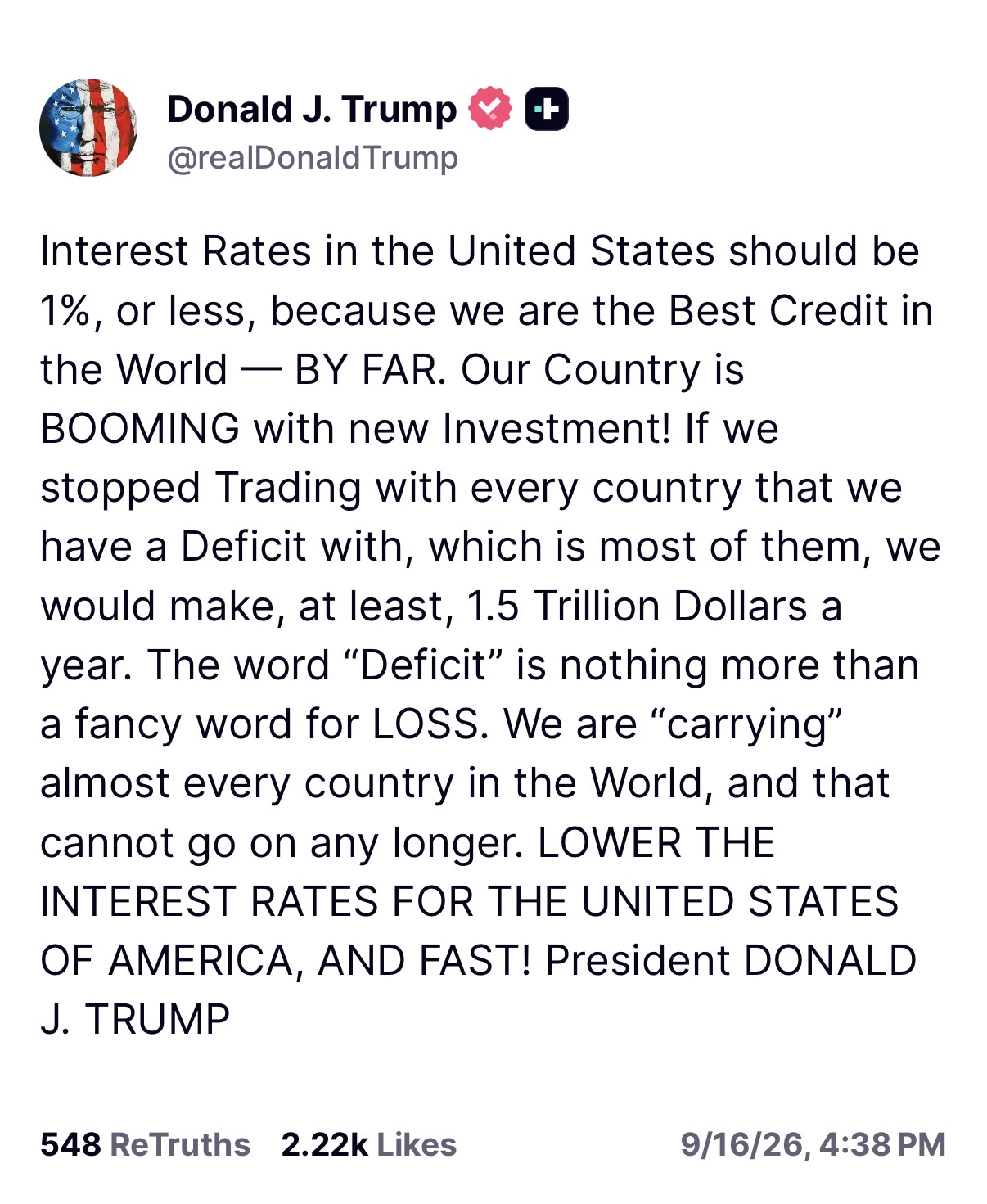
Trump had chosen him after repeatedly demanding lower interest rates.
During the selection process, Trump publicly made clear that he expected lower rates from his new Fed Chair, although after Warsh took office he also publicly said he wanted him to act independently. Trump is not oblivious to Warsh’s optics problem.
If Warsh immediately began cutting rates while inflation remained materially above the Fed's 2% objective, markets could reasonably have questioned whether monetary policy was being influenced by the White House.
It is also important to remember, while the Fed Chair is powerful, he is not a dictator.
It is easy for investors to talk about "Warsh raising rates" as though the Federal Reserve Chair personally moves the federal funds rate up and down. But that is not how the institution works.
The FOMC currently has 12 voting members: the seven members of the Board of Governors, the president of the New York Fed and four rotating regional Federal Reserve Bank presidents. Other regional presidents participate in the discussion even when they do not vote.
The Chair has enormous influence over the discussion and traditionally builds consensus. But he still gets just one vote.
At the July meeting, the Fed left rates unchanged. But that decision passed by only a 9-3 vote, with Beth Hammack, Neel Kashkari and Lorie Logan all voting for an immediate quarter-point hike.
Seven weeks later, the vote was 12-0 to raise rates.
The practical reality is that Warsh would have had enormous difficulty steering the committee toward lower rates—or even another hold—if a clear majority of policymakers had concluded inflation required tightening.
Attempting to do so could also have produced precisely the outcome he wanted to avoid: a deeply fractured committee, accompanied by questions about whether the new Chair was pushing his colleagues toward easier policy because that is what Trump wanted.
The reality is, Warsh may not have been able to resist a rate hike even if he wanted to. The outcome would have likely been the same, and Warsh would find himself in the extremely awkward and compromising position of dissenting as Chair to the committee’s conclusion.
Instead, Warsh led a unanimous decision and in the process helped put to bed speculation that he is merely Trump’s lapdog.
Trump himself later on Wednesday acknowledged Warsh’s hands were severely tied.