The real story behind the Jensen takedown
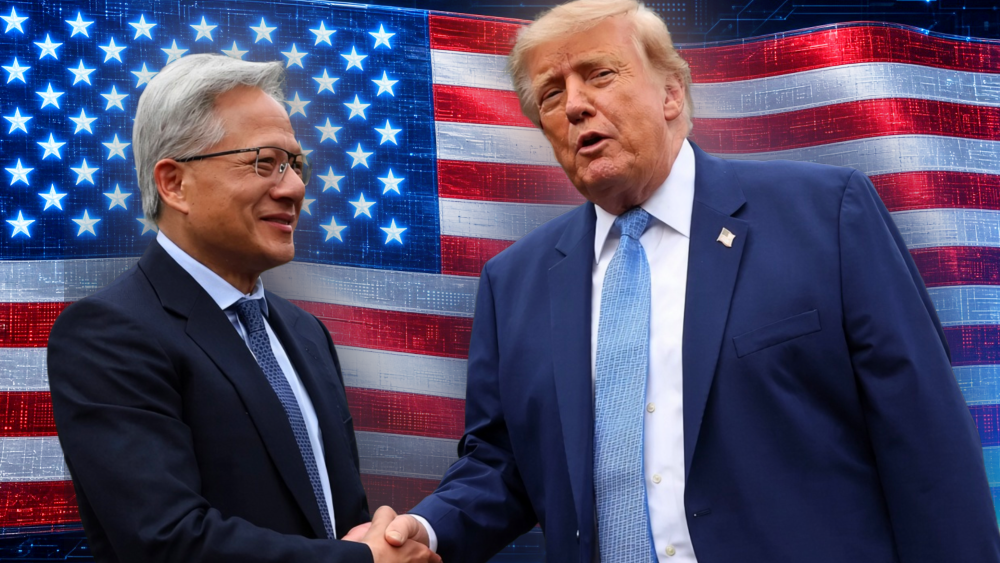
This debacle was never just about extramarital affairs. It became entangled with powerful political interests that had reasons to want Jensen Huang removed from his position.
Democrats, fresh from their midterm victories, saw an opportunity to challenge Trump's economic agenda and undermine one of the major accomplishments of his second term—a buoyant tech-led stock market.
Jensen also had powerful enemies within the national security establishment, including many Republicans, who disliked his influence over Trump and his advocacy for semiconductor exports to China.
Jensen argued that keeping Chinese developers dependent on American technology could be more advantageous than forcing them to develop an independent ecosystem around competitors such as Huawei.
This was a legitimate strategic disagreement, but one that made Jensen powerful enemies in Washington.
The war on open source
Another important dimension of the controversy involved Jensen's advocacy for open-weight AI models, which allow developers to customize and operate advanced AI systems independently.
This put NVDA on a collision course with proprietary AI providers such as Anthropic (ANT), which just went public.
ANT has become increasingly influential in Washington, advocating extensive AI safety regulations. Although it opposes blanket bans on open-weight models, its preferred regulatory framework could create significant burdens for smaller competitors.
The economic interests are enormous.
Through its Nemotron models, investments in developers such as Reflection AI, and support for the broader open-model ecosystem, NVDA was helping make advanced AI more accessible and affordable.
NVDA's interests are fundamentally aligned with the proliferation of AI. More models, developers, applications and competition ultimately mean more demand for computing power and, by extension, NVIDIA hardware.
Jensen's removal threatened to weaken an important counterweight to the growing concentration of economic and political power within the AI industry—a trend that ANT founder and CEO Dario Amodei has helped accelerate through his aggressive advocacy for AI regulation.
It will be interesting to learn in the weeks and months ahead what role if any Amodei and his allies played in shaping the political response to this scandal and influencing some of the major actors.
The truth about export controls
The core national security controversy also deserves perspective.
There are legitimate concerns about advanced semiconductor technology reaching China, particularly given its potential military applications.
Even Jensen agreed that China should not get the benefit of unrestricted access to NVDA’s latest technology.
But acknowledging these risks, along with Jensen’s resistance to the most extreme restrictions on China, is very different from concluding that Jensen knowingly facilitated illegal activity.
Consider Megaspeed, the Singapore-based NVDA customer at the center of the controversy.
The company purchased billions of dollars of NVDA equipment and operated computing infrastructure in Southeast Asia, including facilities serving Chinese commercial customers like e-commerce giant Alibaba (BABA).
Providing Chinese customers with remote access to compute in third countries is not illegal, subject to certain restrictions. However, physically diverting restricted chips into China is.
Authorities are still investigating whether Megaspeed may have engaged in such activity. The investigation began in 2024, and NVDA voluntarily placed Megaspeed on its no-sell list in June 2025.
There have been sweeping claims that NVDA, and even Jensen specifically, promoted illegal sales to China through Megaspeed (or turned a blind eye to them). But these are based on allegations, suspicions and media reports, rather than formal findings.
In our view, legitimate export control concerns became dangerously overheated and were used to advance a broader political case against Jensen's leadership.
Meanwhile, it seems apparent at this point, based on statements from the administration, that there is no known evidence that Jensen engaged in any illegal activity.
A dramatic win for the United States
NVDA's leader is back. This is tremendous news for shareholders, customers and employees, who appear overwhelmingly supportive.
It is also excellent news for the broader AI trade.
Jensen's return restores confidence that NVDA will continue pursuing its ambitious technological agenda while supporting smaller companies that might otherwise struggle to compete against the industry's largest players.
Ultimately, Jensen's reinstatement represents a major victory not only for NVDA shareholders but for the American economy.
AI is among the most consequential technological opportunities in generations. The United States enjoys several advantages, but these are not guaranteed.
China is investing aggressively in AI while American companies confront growing regulatory pressures and political resistance to infrastructure development.
As Jensen has pointed out, the United States now has the edge in chip technology, but China leads in electrical generation, infrastructure, and the sheer number of AI researchers.
When it comes to the growth and expansion of AI, there are legitimate reasons to proceed with caution. But allowing fear, political opportunism and bureaucratic overreach to undermine America's leading technology companies would be a disastrous mistake.
President Trump deserves substantial credit for recognizing the stakes and intervening to help resolve NVDA's leadership crisis.
So does Vice President JD Vance, whose reported involvement reflects the administration's recognition of the strategic importance of American open source AI.
The objective should not be to protect executives from legitimate scrutiny, but to ensure that America's technological future is determined primarily by innovation, competition and entrepreneurial achievement.
We do not need a harsh regulatory crackdown based on unproven allegations.
We do not need our strongest, most profitable, most innovative businesses turned into a piñata for politicians with agendas—especially if those agendas are driven by specific corporate interests.
What we needed was Jensen Huang back at the helm of the company he created. And the American AI revolution is back on stronger footing because of it.