76report

61e6113518

December 13, 2025
*|MC:SUBJECT|*
͏ ‌     ͏ ‌     ͏ ‌     ͏ ‌     ͏ ‌     ͏ ‌     ͏ ‌     ͏ ‌     ͏ ‌     ͏ ‌     ͏ ‌     ͏ ‌     ͏ ‌     ͏ ‌     ͏ ‌     ͏ ‌     ͏ ‌     ͏ ‌     ͏ ‌     ͏ ‌     ͏ ‌     ͏ ‌     ͏ ‌     ͏ ‌     ͏ ‌     ͏ ‌     ͏ ‌     ͏ ‌     ͏ ‌     ͏ ‌     ͏ ‌     ͏ ‌     ͏ ‌     ͏ ‌     ͏ ‌     ͏ ‌     ͏ ‌     ͏ ‌     ͏ ‌     ͏ ‌     ͏ ‌     ͏ ‌     ͏ ‌     ͏ ‌     ͏ ‌     ͏ ‌     ͏ ‌     ͏ ‌     ͏ ‌     ͏ ‌     ͏ ‌     ͏ ‌     ͏ ‌     ͏ ‌     ͏ ‌     ͏ ‌     ͏ ‌     ͏ ‌     ͏ ‌     ͏ ‌     ͏ ‌     ͏ ‌     ͏ ‌     ͏ ‌     ͏ ‌     ͏ ‌     ͏ ‌     ͏ ‌     ͏ ‌     ͏ ‌     ͏ ‌     ͏ ‌     ͏ ‌     ͏ ‌     ͏ ‌     ͏ ‌     ͏ ‌     ͏ ‌     ͏ ‌     ͏ ‌     ͏ ‌     ͏ ‌     ͏ ‌     ͏ ‌     ͏ ‌     ͏ ‌     ͏ ‌     ͏ ‌     ͏ ‌     ͏ ‌     ͏ ‌     ͏ ‌     ͏ ‌     ͏ ‌     ͏ ‌     ͏ ‌     ͏ ‌     ͏ ‌     ͏ ‌     ͏ ‌     ͏ ‌     ͏ ‌     ͏ ‌     ͏ ‌     ͏ ‌     ͏ ‌     ͏ ‌     ͏ ‌     ͏ ‌     ͏ ‌     ͏ ‌     ͏ ‌     ͏ ‌     ͏ ‌     ͏ ‌     ͏ ‌     ͏ ‌     ͏ ‌     ͏ ‌     ͏ ‌     ͏ ‌     ͏ ‌     ͏ ‌     ͏ ‌     ͏ ‌     ͏ ‌     ͏ ‌     ͏ ‌     ͏ ‌     ͏ ‌     ͏ ‌     ͏ ‌     ͏ ‌     ͏ ‌     ͏ ‌     ͏ ‌     ͏ ‌     ͏ ‌     ͏ ‌     ͏ ‌     ͏ ‌     ͏ ‌     ͏ ‌     ͏ ‌     ͏ ‌     ͏ ‌     ͏ ‌     ͏ ‌     ͏ ‌     ͏ ‌     ͏ ‌     ͏ ‌     ͏ ‌     ͏ ‌     ͏ ‌     ͏ ‌     ͏ ‌     ͏ ‌     ͏ ‌     ͏ ‌     ͏ ‌     ͏ ‌     ͏ ‌     ͏ ‌     ͏ ‌     ͏ ‌     ͏ ‌     ͏ ‌     ͏ ‌     ͏ ‌     ͏ ‌     ͏ ‌     ͏ ‌     ͏ ‌     ͏ ‌     ͏ ‌     ͏ ‌     ͏ ‌     ͏ ‌     ͏ ‌     ͏ ‌     ͏ ‌     ͏ ‌     ͏ ‌     ͏ ‌     ͏ ‌     ͏ ‌     ͏ ‌     ͏ ‌     ͏ ‌     ͏ ‌     ͏ ‌     ͏ ‌     ͏ ‌     ͏ ‌     ͏ ‌     ͏ ‌     ͏ ‌     ͏ ‌     ͏ ‌     ͏ ‌     ͏ ‌     ͏ ‌     ͏ ‌     ͏ ‌     ͏ ‌     ͏ ‌     ͏ ‌     ͏ ‌     ͏ ‌     ͏ ‌     ͏ ‌     ͏ ‌     ͏ ‌     ͏ ‌     ͏ ‌     ͏ ‌     ͏ ‌     ͏ ‌     ͏ ‌     ͏ ‌     ͏ ‌     ͏ ‌     ͏ ‌     ͏ ‌     ͏ ‌     ͏ ‌     ͏ ‌     ͏ ‌     ͏ ‌     ͏ ‌     ͏ ‌     ͏ ‌     ͏ ‌     ͏ ‌     ͏ ‌     ͏ ‌     ͏ ‌     ͏ ‌     ͏ ‌     ͏ ‌     ͏ ‌     ͏ ‌     ͏ ‌     ͏ ‌     ͏ ‌     ͏ ‌     ͏ ‌     ͏ ‌     ͏ ‌     ͏ ‌     ͏ ‌     ͏ ‌     ͏ ‌     ͏ ‌     ͏ ‌     ͏ ‌     ͏ ‌     ͏ ‌     ͏ ‌     ͏ ‌     ͏ ‌     ͏ ‌     ͏ ‌     ͏ ‌     ͏ ‌     ͏ ‌     ͏ ‌     ͏ ‌     ͏ ‌     ͏ ‌     ͏ ‌     ͏ ‌     ͏ ‌     ͏ ‌     ͏ ‌     ͏ ‌     ͏ ‌     ͏ ‌     ͏ ‌     ͏ ‌     ͏ ‌     ͏ ‌     ͏ ‌     ͏ ‌     ͏ ‌     ͏ ‌     ͏ ‌     ͏ ‌     ͏ ‌     ͏ ‌     ͏ ‌     ͏ ‌     ͏ ‌     ͏ ‌     ͏ ‌     ͏ ‌     ͏ ‌     ͏ ‌     ͏ ‌     ͏ ‌     ͏ ‌     ͏ ‌     ͏ ‌     ͏ ‌     ͏ ‌     ͏ ‌     ͏ ‌     ͏ ‌     ͏ ‌     ͏ ‌     ͏ ‌     ͏ ‌     ͏ ‌     ͏ ‌     ͏ ‌     ͏ ‌     ͏ ‌     ͏ ‌     ͏ ‌    ­ ­ ­ ­ ­ ­ ­ ­ ­ ­ ­ ­ ­ ­ ­ ­ ­ ­ ­ ­ ­ ­ ­ ­ ­ ­ ­ ­ ­ ­ ­ ­ ­ ­ ­ ­ ­ ­ ­ ­ ­ ­ ­ ­ ­ ­ ­ ­ ­ ­ ­ ­ ­ ­ ­ ­ ­ ­ ­ ­ ­ ­ ­ ­ ­ ­ ­ ­ ­ ­ ­ ­ ­ ­ ­ ­ ­ ­ ­ ­ ­ ­ ­ ­ ­ ­ ­ ­ ­ ­ ­ ­ ­ ­ ­ ­ ­ ­ ­ ­ ­ ­ ­ ­ ­ ­ ­ ­ ­ ­ ­ ­ ­ ­ ­ ­ ­ ­ ­ ­ ­ ­ ­ ­ ­ ­ ­ ­ ­ ­ ­ ­ ­ ­ ­ ­ ­ ­ ­ ­ ­ ­ ­ ­ ­ ­ ­ ­ ­ ­ ­ ­ ­ ­ ­ ­ ­ ­ ­ ­ ­ ­ ­ ­ ­ ­ ­ ­ ­ ­ ­ ­ ­ ­ ­ ­ ­ ­ ­ ­ ­ ­ ­ ­ ­ ­ ­ ­ ­ ­ ­ ­ ­ ­ ­ ­ ­ ­ ­ ­ ­ ­ ­ ­ ­ ­ ­ ­ ­ ­ ­ ­ ­ ­ ­ ­ ­ ­ ­ ­ ­ ­ ­ ­ ­ ­ ­ ­ ­ ­ ­ ­ ­ ­ ­ ­ ­ ­ ­ ­ ­ ­ ­ ­ ­ ­ ­ ­ ­ ­ ­ ­ ­ ­ ­ ­ ­ ­ ­ ­ ­ ­ ­ ­ ­ ­ ­ ­ ­ ­ ­ ­ ­ ­ ­ ­ ­ ­ ­ ­ ­ ­

76report

December 13, 2025

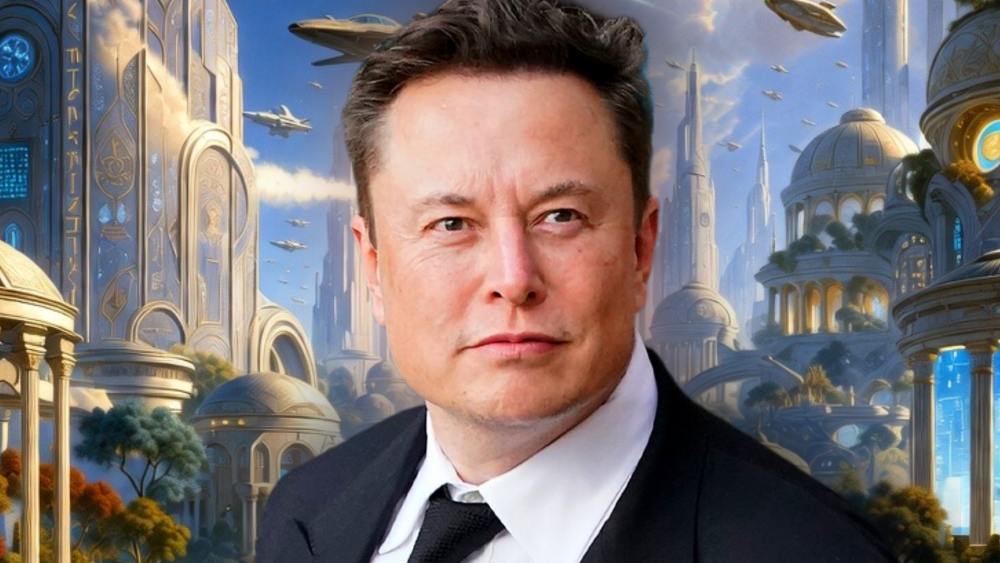
Elon Musk’s Vision of Hyperabundance: Are We Ready?


Everyone has an opinion about the future. Very few actually help create it. The predictions of those who do deserve extra attention.


Elon Musk is now the world’s wealthiest man. Whatever you think of him, he has demonstrated a capacity to not only peer into the future but also define it.


One does not accumulate a $500 billion net worth, essentially from scratch, without having a knack for anticipating what comes next. So when he repeatedly and confidently expresses a viewpoint about what the world is eventually going to look like, it should be taken seriously.


Lately, Elon has been pounding the table on one prediction in particular that sounds completely crazy but, if true, would change the world as we have known it throughout history.


Elon has shared his belief that human beings will, in just a matter of decades, no longer need to work.


In other words, we are on the cusp of hyperabundance. The economy will be so productive—thanks to AI-driven technological advancements—that most goods and services, especially the most essential ones, will be widely available for all to consume, at presumably little or no cost.

Long term—I don't know what long term is maybe it's 10 to 20 years, something like that—my prediction is that work will be optional. Optional…. I mean it will be like playing sports or a video game or something like that. If you want to work, you know in the same way like you can go to the store and just buy some vegetables or you could grow vegetables in your backyard. It's much harder to grow vegetables in your backyard but some people still do it because they like growing vegetables. - Elon Musk (11/19/2025)

Thinking from first principles


Elon’s predictions are worth considering carefully not just because of the outcomes he has achieved, but because of how he thinks.


Elon often describes his approach to problem-solving as being grounded in first principles reasoning. As he has explained it, first principles are “a kind of physics way of looking at the world—you boil things down to the most fundamental truths, and then reason up from there.”


Instead of asking what has worked before or what others believe, this way of thinking takes a more direct approach by focusing on a single question: what must be true?


Elon is not alone in this approach. Jensen Huang, the founder and CEO of NVIDIA (NVDA), frequently emphasizes the same mindset. So do many of the most consequential entrepreneurs of the modern economy.


At its core, this is the discipline of independent thought. You are not outsourcing judgment to consensus, tradition, or authority. You are starting with facts, constraints, and logic—and building your conclusions from the ground up.


Some of the greatest first principles thinkers in history were America’s founding generation. The name 76research was not chosen purely out of patriotism. It pays tribute to a mindset rooted in the Enlightenment, and ultimately in the Ancient Greeks, whose works Jefferson and Madison studied carefully.


The U.S. Constitution itself is a product of first principles reasoning. We are not granted inalienable rights to life, liberty, and property because a king or a priest declared them so. We hold them because we perceive them to be self-evident truths—just as we recognize that three times three is nine, or that fire is hot.


America is arguably the first large-scale political experiment in first principles thinking. And, like Tesla, it has been remarkably successful. This way of looking at the world appears to work.


The case for hyperabundance


So why has Musk come to the conclusion that, within a few decades, human beings may no longer need to work? We can examine this claim ourselves—using the same first principles framework he likely followed.


Start with a simple observation: economic output (the delivery of goods and services) is the result of intelligence getting applied to matter and energy.


For example, a baker comes up with an idea for a delicious cake (intelligence). He gathers the ingredients and necessary equipment and utensils (matter). He mixes them together with his own hands and maybe some electrical appliances, then puts the cake into the oven (energy).


The cake is a valuable economic good that is the result of thinking about how to combine matter and energy in such a way that it addresses a particular human need.


For most of human history, intelligence has been a limiting factor in the equation. Each unit of thought, skill, and decision-making had to come from a human mind. That imposed a hard ceiling on economic production.


AI attacks that constraint directly.


Once an AI model is trained, its output can be replicated endlessly. It does not tire. It does not forget. It does not demand higher wages or shorter hours. The cost of producing one more answer, one more plan, or one more design trends rapidly toward zero.


Exponential improvement


What also differentiates AI from past technological advances—some of which, like communications technology, also amplify human intelligence—is the potential pace at which it can improve. Rather than advancing in small, linear steps, AI systems exhibit exponential improvement.


This phenomenon is captured in what researchers refer to as scaling laws. As models are scaled—using more data, more parameters, and more computing power—their performance improves in a non-linear fashion. Doubling inputs can lead to even greater gains in capability.


What makes AI uniquely powerful is that it can also help accelerate its own progress.


AI systems now assist in writing code, designing chips, optimizing data centers, and even generating new scientific hypotheses. This creates a form of recursive improvement, as better models help produce the next generation of even better models.


This represents a positive feedback system. Improvements compound. Each advance makes the next advance easier, faster, and cheaper.


Historically, similar dynamics occurred during electrification or the Industrial Revolution—but AI operates in the domain of cognition itself, where replication costs are near zero.


Unlike matter and energy, ideas are not limited by the laws of physics, which constrain progress in the physical realm.


As intelligence becomes abundant, economic coordination improves. Waste falls. Errors decline. Entire categories of labor—especially cognitive and administrative work—compress or disappear.


An activity that could have required thousands of hours of human effort becomes a prompt and a response that is delivered in seconds.


That does not mean everything becomes free as AI scales. Physical constraints remain. Energy, land, raw materials, and capital still matter.


But when intelligence—the organizing force behind production—becomes cheap and ubiquitous, the effective supply of many goods and services can expand dramatically.


This is what Elon is pointing to when he talks about a world where work becomes optional. It is a regime shift—away from scarcity driven by limited human cognition and toward hyperabundance driven by machine intelligence.


Phase one: learning to think


It is important to recognize that we are only a few years into the large-scale commercialization of AI. But AI as an idea has been cooking in the lab for some 70 years.


AI was in fact first formally presented as an idea in 1956 by an assistant professor of mathematics at Dartmouth College named John McCarthy.


McCarthy brought a small group of scientists to Hanover, New Hampshire for the Dartmouth Summer Research Project on Artificial Intelligence, which would “proceed on the basis of the conjecture that every aspect of learning or any other feature of intelligence can in principle be so precisely described that a machine can be made to simulate it.”


Decades of subsequent research led to an enormous breakthrough in June 2020, when most of us were thinking about Covid. This was when OpenAI released GPT-3, which marked the beginning of the foundation model era of AI.


For the first time, a single large model trained on vast amounts of general data could perform a wide range of tasks simply by changing the prompt.


From 2020 through today, AI has been primarily about building and refining these models. Progress has focused on scale: larger models, more data, more compute.


The results show up as much better language understanding, stronger reasoning, improved coding ability, and more powerful image generation. Those of us who have been playing with AI chatbots like ChatGPT or Grok over the years have experienced the progress directly.


But so far, generative AI has lived almost entirely in the digital world. It writes, summarizes, analyzes, and advises—but waits for further instructions. Humans are firmly in the loop.


Phase two: acting


If Large Language Models (LLMs) like GPT are the brains of the AI economy, then AI agents and robots are becoming its hands and feet.


Until recently, most of AI’s impact has been confined to screens. It has helped people write, code, design, analyze, and make decisions. Powerful as that is, it remained incomplete.


AI has been able to think, but it cannot, until very recently, reliably act. Humans have still had to translate insights into execution. AI can come up with a new cake recipe but won’t just make the cake.


That divide is now closing.


AI agents represent a shift from tools that just respond to prompts to systems that can pursue goals. An agent can take an objective, break it into steps, decide what to do next, use software, coordinate with other agents, and keep going until a task is complete.


Instead of just answering questions, an AI agent completes workflows. Instead of assisting workers, it increasingly replaces entire tasks.


This transition is happening faster than many expect. Over the next year or two, a meaningful share of enterprise software is expected to embed task-specific agents directly into finance, logistics, customer service, procurement, and operations.


Early surveys already show companies moving beyond pilots and into production, where agents run continuously in the background, handling work that once required teams of people.


At the same time, robotics is undergoing a similar transformation. New AI systems can combine vision, language, and action, allowing robots to understand their surroundings, follow natural-language instructions, and adapt to unfamiliar situations.


Unlike traditional industrial robots, these machines are no longer confined to tightly controlled environments. They can learn on the fly.


As these technologies mature, real-world use cases accelerate: warehouses that largely run themselves, factories with minimal human staffing, autonomous delivery and inventory systems.


When intelligence and physical execution both scale, human labor stops being the primary constraint. The bottleneck shifts to energy, materials, and infrastructure. That is where hyperabundance stops being theoretical—and perhaps becomes unavoidable.


What does this look like economically?


Economists measure total economic output through the concept of Gross Domestic Product (GDP). In economic terms, hyperabundance would be reflected in an explosion of real GDP.


The more productive an economy is, the higher GDP will be.

There’s a belief that the world’s GDP is somehow limited at $100 trillion. AI is going to cause that $100 trillion to become $500 trillion. - Jensen Huang (12/11/2025)

If AI continues down the path Elon and others foresee, the most immediate economic effect is likely disinflation—not because demand disappears, but because the cost of producing many goods and services falls.


The downward pressure on prices will give the Fed and other central banks more latitude to create financial liquidity (print money) to make sure prices keep slightly rising.


The Fed currently targets 2% inflation, adding or withdrawing liquidity, through interest rate manipulations and other methods, to steer the economy towards that outcome.


Prices will likely not actually fall. Rather, to offset deflation, more money will be released into the economy through the banking system, allowing us to consume more collectively.


As intelligence becomes cheap and widely available, entire layers of labor embedded in prices begin to compress. Tasks that once required hours of skilled human effort—analysis, coordination, design, customer support, compliance, even management—can increasingly be done by machines at a fraction of the cost.


That doesn’t eliminate all labor, but it does devalue routine cognitive work in the same way industrialization devalued certain forms of manual labor.


This does not mean inflation disappears everywhere. Physical constraints still matter. Energy, raw materials, land, logistics, and capital-intensive infrastructure remain scarce.


But the intelligence component of production—often a hidden but significant cost—shrinks dramatically.


And to the extent AI starts to produce major scientific breakthroughs, like figuring out methods to extract and store energy in a much more efficient way, the physical constraints could also start to disappear.


Fundamentally, the reason work could become optional is precisely because these productivity gains make basic goods and services so cheap.


As to whether jobs will even be available is another question.


Since the Industrial Revolution, society has seen vast productivity gains, yet we have always had demand for human labor. The nature of employment has shifted, however, from physical (declining employment in the manufacturing and agricultural sectors) to cognitive (where bottlenecks remain, like in the services sector).


An AI productivity boom could result in demand for almost all types of labor disappearing. This scenario gives rise to highly controversial concepts like Universal Basic Income, which Elon also anticipates, as a political mechanism for giving purchasing power to displaced workers who lack accumulated savings.


Otherwise, only the holders of capital will be able to access the economic abundance that becomes widely available. Even if everything is cheap, if you have no money, you can’t buy it.


What should we own now?


In a world potentially undergoing a transition on this scale, humility matters.


The general trajectory here is positive—we are describing a scenario of immense productivity gains and wealth creation—but the economic landscape is difficult to predict.


With abundance, scarce assets could become extremely valuable. Take gold, for example.


If the world becomes wealthy at a rapid rate, but supply growth in gold is consistent with the past, the price of gold could skyrocket. You have more rich people looking to own the same quantity of gold as a way to store their savings.


But this assumes gold will remain as scarce as it was historically. There is in fact plenty of gold in the earth’s crust. The problem we face now is that it is expensive to access, involving significant investment in equipment and energy.


But what if AI breakthroughs impact gold mining, making the entire extraction process much lower cost?


The same can be said for scarce real estate. A logical assumption would be that beachfront property near population centers escalates in value as overall wealth surges.


But what if AI breakthroughs in transportation make it relatively easy to get to beachfront property anywhere in the world?


These may seem like far-fetched possibilities, at least right now, but the main point is that what is scarce today could become abundant in the future. Scarcity should not be taken for granted.


Diversification given uncertainty  


The safest posture is to diversify—not just across assets, but across types of scarcity. Some forms of scarcity will persist. Others will erode faster than expected as intelligence improves coordination, discovery, and substitution.


This argues for owning an array of assets tied to physical constraints—energy, infrastructure, materials—while recognizing that technology can still surprise us. At the same time, it argues for exposure to the drivers of productivity themselves: the systems, platforms, and capital that enable intelligence to scale.


It is risky to bet on a single, clean outcome. Some assets will appreciate faster than others, but the exact path of innovation, which is essentially unknowable, is what might primarily determine this.


So, in our view, which we express through our diversified Model Portfolio positions, it makes sense to have exposure to a wide range of productive and scarce assets: businesses (through stocks), commodities (through stocks, precious metals and crypto), and real estate (through stocks and direct ownership).


What does seem clear above all is the absolute necessity of saving and investing. A world of hyperabundance is one which favors capital, which becomes more productive, over labor, which becomes less essential.


What does it mean for us personally?


The hardest adjustments may not be economic at all. For centuries, work has provided structure, identity, and meaning. If intelligence and execution become increasingly automated, many people may struggle not with survival—but with relevance.


Consumption has its limits. Rob recently experimented with hyperabundance, taking an extended transatlantic cruise on a luxury ship. It was delightful but, fortunately, time-limited—requiring the implementation of an emergency fitness regimen upon returning home.


Having no meaningful resource constraints is potentially dangerous—and something that has never been experienced across society as a whole.


Yet having effectively unlimited access to goods and services—and not needing to work to survive—is actually nothing new. This is essentially the predicament of wealthy people and even comfortably retired people.


In the United States, there are now approximately 160 million people with jobs, but there are 267 million adults. So we already have about 100 million Americans who are not working.


Meanwhile, you have billionaires like Elon and Jensen who seem to work 24/7. They are obviously motivated beyond a desire to secure access to creature comforts.


A post-work world


Throughout history, most people have not had the luxury of asking themselves, what is worth doing when I no longer have to do anything at all? Survival was the main priority, and work was the only practical answer.


Thanks to AI, we may be headed into a world where more and more people are confronted with what is ultimately a “champagne” problem.


Helping people navigate these challenges could itself become a new source of employment in a world of hyperabundance. The “life coaching” industry is already $3 billion and apparently growing around 10% per year.


On the other hand, AI can handle that too. If you are comfortable with it, start a conversation with ChatGPT or your preferred chatbot about what you should do with your life. You might be surprised at the depth and subtlety of the response.


Click HERE to learn more about our Model Portfolio subscription plans.

FOR SUBSCRIBER USE ONLY. DO NOT FORWARD OR SHARE.

This is an automated post