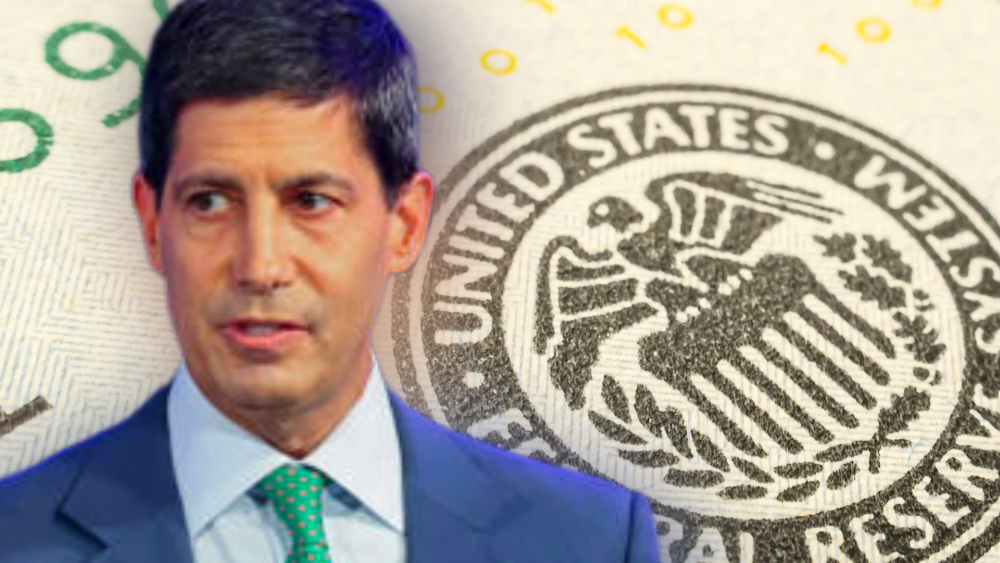
After months of speculation, with many strong candidates in the mix, President Trump announced today that he is nominating Kevin Warsh to become the next Chair of the Federal Reserve.
The news led to some immediate weakness in assets that are highly sensitive to monetary policy. Gold closed down approximately 10%—yet is still up around 12% for the month of January after a historic rally.
Stocks were down modestly. The S&P 500 traded down less than a half-percent, while the Russell 2000, which tracks more rate-sensitive small-cap stocks, was down closer to 1.5%.
Warsh is seen by many as an inflation “hawk,” especially relative to other potential candidates for the role. The knee-jerk—and, in our view, overly simplistic—interpretation is that Warsh will have a bias toward tighter monetary policy.
This read is largely based on his positions and public statements during the 2008/2009 global financial crisis as well as the post-pandemic inflation wave.
From 2006 to 2011, Warsh served as a Federal Reserve Governor after being named by President George W. Bush. Appointed at age 35, he was the youngest person ever to take that role.
It is true that Warsh was highly critical of the Fed’s balance sheet expansion via Quantitative Easing (QE) in that time frame and that he remains a critic. But this was fifteen to twenty years ago, amidst much different economic circumstances.
Investors should pay more attention to what Kevin Warsh is saying about monetary policy and the economy now—as opposed to the Obama years.
If they do, they will discover that his thought process is highly aligned with the Trump administration’s pro-growth agenda—with a focus on productivity, AI, crypto, and delivering interest rate relief to “Main Street” borrowers.
We view Warsh as an excellent choice to replace Jerome Powell and expect him to be confirmed by the Senate. Under Warsh, the Fed will retain its independence but will no longer work at cross-purposes with the White House.
When it comes to the vast technology-driven changes that are underway in the economy, Warsh gets it.
We expect him to come into the role of Fed Chair as a reformer—preparing the central bank for a new era of productivity growth, driven by AI, as well as financial system modernization, driven by blockchain technology.
The selection process
There were several other highly qualified candidates for the job, including Kevin Hassett, one of Trump’s top advisers as Director of the National Economic Council, and Rick Rieder, Blackrock’s top bond manager.
The process was led by Treasury Secretary Scott Bessent, who was undoubtedly highly influential in the decision-making. All of these candidates were closely scrutinized over a period of several months.
There has been some speculation that Trump, who has repeatedly bashed Jerome “Too Late” Powell for keeping interest rates too high, misunderstands Warsh and how he will behave as Fed Chair.
This defies common sense. The administration undoubtedly knows exactly what it is getting with Kevin Warsh—and likes it.
Bessent himself has deep professional ties to Warsh via famed global macro investor Stanley Druckenmiller, the billionaire hedge fund manager who many consider to be the greatest investor of all time. Druckenmiller was Bessent’s mentor. Warsh has most recently been working with Druckenmiller at his family office.
Warsh blends public service with private market experience. He began his career at Morgan Stanley as an investment banker before becoming a Fed Governor.
A fellow at Stanford’s Hoover Institution, he also has strong academic credentials. He graduated from Stanford in the early 1990s with an economics degree and later attended Harvard Law School.
What he thinks now
Trump had many solid options. He likely chose Warsh because he views him as best aligned with his economic vision for the country and most capable of advancing that vision.
Warsh has written several articles and given a few lengthy interviews in recent months that shed light on his current outlook for the economy and his likely priorities as Fed Chair.
Investors concerned that Trump managed to pick someone who will keep monetary policy conditions too tight (precisely what he has criticized Powell for!) should focus on Warsh’s most recent statements.
AI and productivity
Warsh has described AI as the most powerful productivity shock of modern times. He believes productivity gains will appear first in leading U.S. companies, long before they show up in official statistics.
If policymakers rely on backward-looking statistics, they risk tightening policy just as growth becomes structurally non-inflationary.
Warsh draws a parallel to the early internet era, when productivity gains were visible anecdotally before appearing in data. He has praised former Fed Chair Alan Greenspan for having the foresight to keep interest rates low in the early 1990s in anticipation of technology-led deflation.
This is a critical insight. As Fed Chair, Warsh is likely to advocate for lower rates on the basis of AI-related impacts on the horizon.