Oil flows again
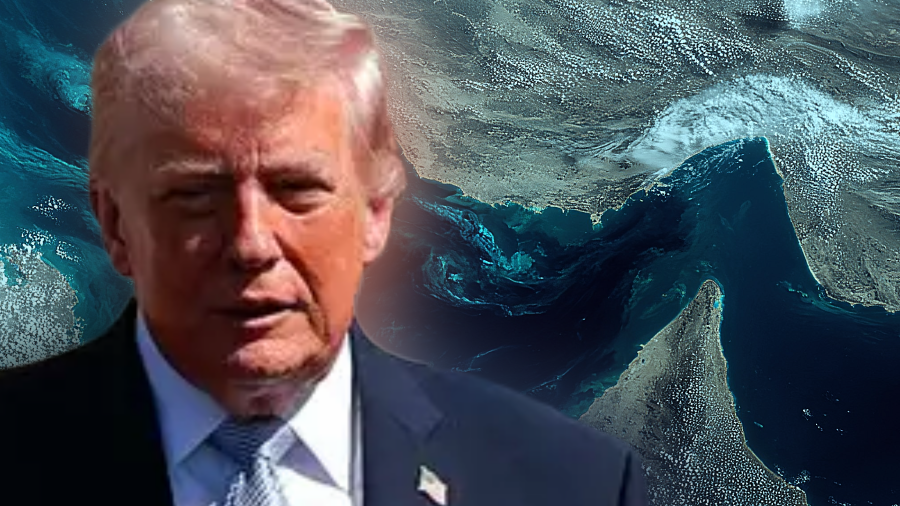
The effective closure of the Strait of Hormuz has been the central issue throughout this conflict.
From a military perspective, Iran was quickly overwhelmed. However, it retained one critical lever: the ability to threaten commercial shipping exiting the Persian Gulf.
It does not take much to deter a commercial vessel. No operator wants to risk losing a ship, no insurer wants to underwrite a catastrophic loss, and no crew wants to sail into a war zone.
Even with its navy largely neutralized, Iran maintained the ability to disrupt oil flows simply by posing a credible threat.
This asymmetry created a difficult trade-off for the Trump administration. Iran could not stop U.S. military operations—but it could keep global oil prices elevated.
Managing economic realities
Shortly after Operation Epic Fury began, the administration suggested it would last roughly four to five weeks. With the ceasefire now in place, that timeline has proven accurate.
While never explicitly stated, it is reasonable to assume that this duration reflected not only military objectives, but also economic tolerance.
Five weeks of elevated oil prices were beginning to strain both markets and the broader economy.
The S&P 500 declined nearly 8% from late February to its March 30 low. At its mid-March meeting, the Federal Reserve signaled a more cautious stance on rate cuts due to inflation risks. Supply chains began to feel pressure from higher energy costs and disruptions in commodity flows.
Oil is to the global economy what oxygen is to the human body. It cannot function without it. A short disruption is manageable. A prolonged one becomes more dangerous with each passing moment.
Even as a net exporter of hydrocarbons overall, the United States remains a net importer of crude oil. Rising oil prices function as a tax on both businesses and consumers, creating a stagflationary dynamic that hurts growth while pushing inflation higher.
Beyond market volatility, the administration had to consider the political implications of higher gasoline prices for the average American voter.
Short-term economic discomfort is one thing. A full blown economic crisis is another.
Key objectives met
While operating within clear time constraints—given that roughly 20% of global oil supply could not remain disrupted indefinitely without serious consequences—the United States was still able to achieve substantially all of its military objectives.
The mission was never formally framed as regime change, though the elimination of key leadership figures has, as the administration has noted, altered the structure of the regime.
The primary goal from day one was to neutralize Iran as a meaningful strategic threat.
This included degrading its nuclear capabilities, but also dismantling its conventional military infrastructure, which was growing into a meaningful deterrent to action against its nuclear program.
Importantly, the U.S. has accomplished this at relatively little cost so far.
The economic impact, while real, has been contained. While the loss of thirteen U.S. service members is significant and should not be understated, the overall human cost remains low relative to historical conflicts of this scale.
Where we go from here
Over the next two weeks, negotiations will focus on formalizing a longer-term agreement. The administration has made clear that any deal must include the effective termination of Iran’s nuclear program, alongside broader security guarantees.
For markets, the most immediate impact of the conflict was its effect on oil—and, by extension, interest rates. Higher oil prices translated into renewed inflation concerns, which reduced the likelihood of near-term rate cuts.
A prolonged conflict, particularly one involving sustained disruption to Iranian oil production, would have introduced significant upside risk to energy prices—and, in turn, to inflation and rates.
With the ceasefire announcement, that pressure is beginning to unwind.
Both short-term and long-term interest rates are now close to 20 basis points below their late-March peaks, which coincided with the stock market bottom.
Lower oil prices reduce inflation expectations. Lower inflation expectations give the Fed more flexibility. And that, ultimately, supports higher equity valuations.
In addition to the shift in the inflation outlook, for the past five weeks, investors have priced in a wide range of negative tail scenarios: prolonged supply disruption, regional escalation, or even a broader war. That risk premium is now being removed.
To be clear, the situation is not yet fully resolved. A final agreement still needs to be signed, and compliance will need to be verified. Tensions could re-escalate.
But for now, the key pressures that have weighed on markets—oil shortages, rising inflation expectations, and geopolitical uncertainty—have eased meaningfully.
Long-term implications
Iran has not only been decimated militarily; it has also alienated key regional players, particularly Gulf states.
In response, those countries are likely to accelerate efforts to reduce reliance on the Strait of Hormuz—expanding pipeline networks and alternative export routes that bypass the chokepoint altogether.
For long-term investors, that points to a more stable, more U.S.-aligned Middle East—and a renewed wave of capital investment in energy infrastructure across the region and beyond.
Iran’s ability to hold the global economy hostage through its proximity to a narrow waterway has proven to be an unacceptable risk.
In response, this conflict is likely to accelerate a structural shift toward a more secure and diversified energy system—one far less vulnerable to disruption from any single actor.