The earnings of the major players in AI have been soaring. Normally, this is great news—but Wall Street seems far from happy.
The problem is free cash flow.
Alphabet (GOOGL) is among the latest high-profile examples.
Even though third quarter operating income grew 30%, shares of GOOGL slid 13% on Thursday as investors responded to worse than expected free cash flow results.
This significantly contributed to the poor performance of the NASDAQ Composite Index, which fell 1.4% yesterday. As of mid-morning Friday, the NASDAQ is trading down a further 2.5%.
Today’s weakness in tech stocks is to a large degree driven by Amazon (AMZN), which reported earnings last night. AMZN shares are down about 3%, after having declined as much as 7% in pre-market trading.
It's the same basic story. Strong earnings—but much higher than expected capital spending.
GOOGL shareholders were bothered by softer than expected growth in the core search business, potentially signaling cannibalization by AI. But they were also taken off guard by an unexpectedly large negative free cash flow result.
Thanks to high capital spending, along with the payment of a $5.2 billion fine to EU regulators, GOOGL posted free cash flow of negative $9.1 billion. Market expectations were much closer to breakeven.
Meanwhile, AMZN expanded its operating income even more, delivering 61% growth. But quarterly capital expenditures came in at $77.3 billion, nearly $19 billion above expectations, sending free cash flow deeply into negative territory.
The market's reaction to both GOOGL and AMZN reflects a pervasive concern that the tech giants, while perhaps growing earnings nicely on paper, are bleeding cash.
Wall Street desperately wants these companies to gush cash, not consume it—just like they did before the AI boom.
But are investors right to be so alarmed?
All things being equal, having more cash is better than having less. But if a business is putting its cash to work productively, those investments can create substantial long-term shareholder value.
In fact, a company that is able to reinvest its profits at attractive rates of return should ultimately be worth considerably more than one that simply accumulates cash or distributes it to shareholders.
AI has unleashed one of the largest capital spending booms in American history. In many ways, it has taken over both the stock market and the economy.
With so much money at stake, it is no surprise that the tension between rising corporate earnings and shrinking free cash flow has become one of the most consequential debates in the investment world.
To succeed in the current landscape, investors need to get smart on this issue—and not oversimplify it.
Below, we explain what really matters when evaluating a company's cash generation and why not all capital spending should be viewed the same way.
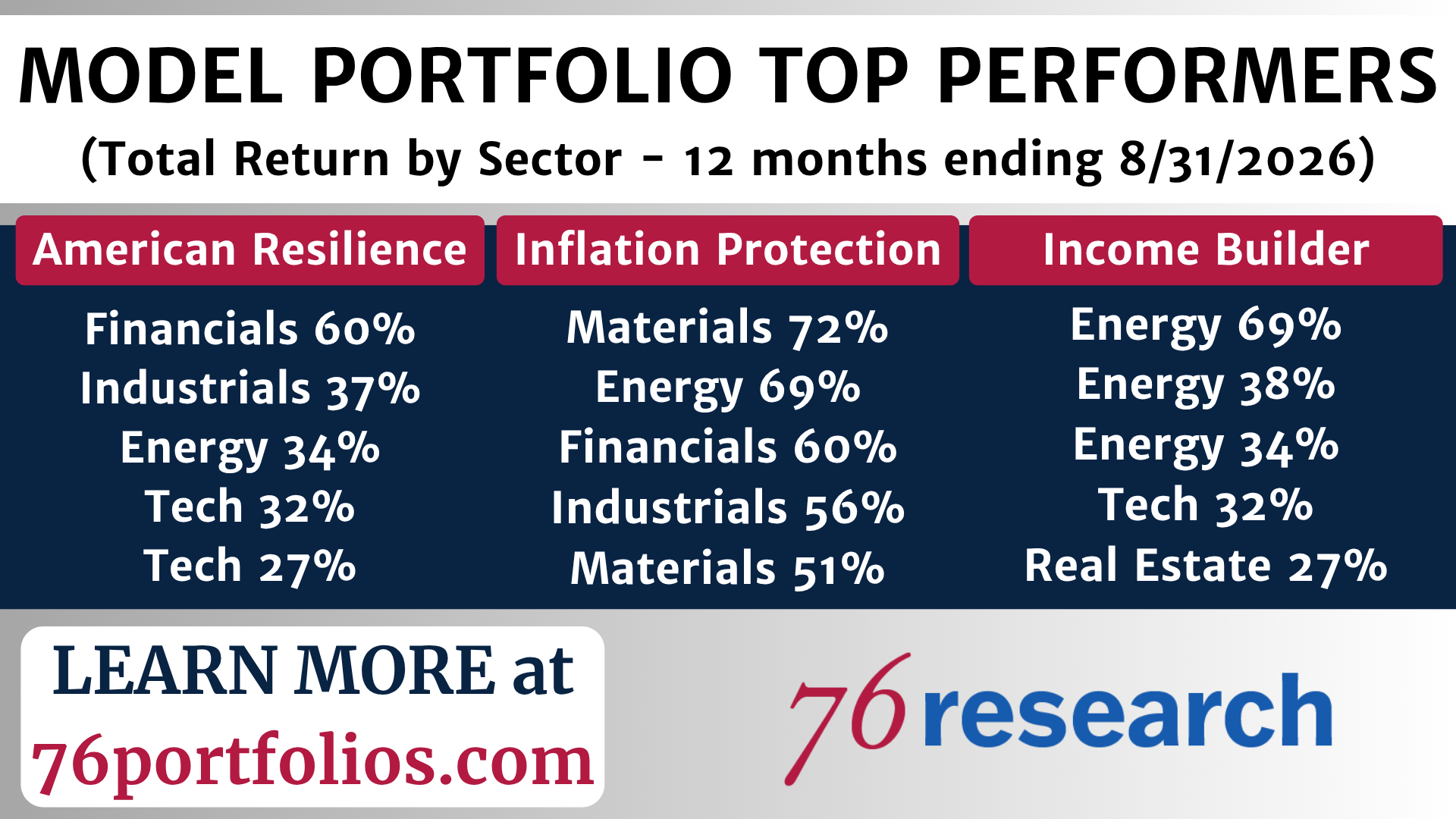
We also discuss why certain AI stocks—including two holdings within our American Resilience Model Portfolio that are at the center of the free cash flow debate—may deserve considerably more credit for their earnings growth than the market is currently giving them.
Earnings vs. free cash flow
What many people do not realize is that the company earnings we hear so much about every quarter are really just an accounting concept.
Earnings are a representation of financial reality that emerges from accrual accounting rules.
The purpose of earnings as a financial metric is to provide investors with a snapshot of normalized profitability—one that strips away potentially erratic movements in cash flows.
But there are many adjustments and assumptions that go into it. And these accounting adjustments can often be quite convoluted and arbitrary.
Free cash flow, on the other hand, measures actual cash generation—how much more cash a business has in the register, so to speak, at the end of the day.
Free cash flow can be noisy—but it has the advantage of being highly objective. Cash is cash.
When businesses are "capital light"—meaning they do not require substantial investments in property, plant, and equipment—earnings and free cash flow tend to track each other fairly closely.
But when companies engage in heavy long-term capital spending—as all the major AI hyperscalers are now doing—earnings and free cash flow can diverge dramatically.
So even as leading mega-cap tech companies experience very strong earnings growth, Wall Street is taking a look at their aggressive capital spending trajectories and in many cases pushing back hard.
What exactly is free cash flow—and why does it matter?
Earnings are a useful shorthand to measure financial success. Across the financial media, it is the metric most commonly referenced.
But in the halls of the world’s largest institutional asset managers, free cash flow has always been the subject of much more discussion than many people realize.
The AI spending boom is now bringing this critically important metric to the attention of a much broader audience.
Professional stock analysts spend much of their time trying to decode a company’s financial statements, which are prepared according to Generally Accepted Accounting Principles (GAAP).
The goal is to decipher what is really happening beneath the hood from a cash flow perspective.
Analysts and valuation experts may quibble over what the best way to calculate free cash flow is, but the general idea is that it should measure how much more cash (or less debt) a business is projected to have at the end of a given period versus the beginning.
For example, if a business started the year with a cash balance of $1 million and ended with $1.5 million, it generated $500,000 of free cash flow.
A wide range of factors influence the free cash flow number, such as working capital fluctuations, but usually the biggest one is capital expenditures (or “cap ex”).
Cap ex consists of long-term investments in assets that depress cash flow now but are expected to contribute to cash flow well into the future.
In GAAP earnings calculations, cap ex is addressed through depreciation. A portion of the investment is recorded as a cost every year (depreciation expense) in an attempt to marry the lifespan of the asset to the revenue it generates over time.
For example, a business may make a capital investment in a new truck and depreciate it over a ten year period, rather than book the whole sum as an expense immediately.
This all makes sense if the goal is to generate a fair estimate of run-rate profitability.
Free cash flow calculations, on the other hand, do away with this timing consideration entirely. All that matters is the cash that goes out the door today.
This explains how a company can report substantial profits while generating little or even sharply negative free cash flow.
And it is particularly relevant to the enormous data center construction projects now underway in connection with the multi-trillion dollar AI infrastructure buildout.
These are multi-year projects that are draining resources today on the premise that there will be an attractive future payoff.
Since the tech sector alone now accounts for nearly 40% of the market cap of the S&P 500, whether or not these investments will ultimately succeed may be the most important factor that will determine long-term stock market returns.
Not all cap ex is created equal
There is a crucial aspect of free cash flow that even professional investors often overlook, underappreciate or miscalculate.
One of the most important distinctions in financial analysis is the difference between maintenance cap ex and growth cap ex.
Maintenance cap ex represents investments necessary to preserve a company's existing earning power.
Think of an airline replacing aging aircraft or a manufacturer replacing worn-out machinery. Without these expenditures, the business would eventually deteriorate.
Growth cap ex, on the other hand, represents investments intended to create additional earning power.
Imagine a manufacturer operating ten highly profitable factories that decides to build another ten.
The construction program might consume all the cash generated by the existing operations for several years. Free cash flow could temporarily fall to zero or even become negative.
But would that necessarily mean the company had become less valuable?
Of course not. If the new factories eventually generate attractive returns, the company could become substantially more valuable.
The critical question is not how much cash is being spent, but why is it being spent and what kind of incremental economic return will that spending generate.
Why this matters for AI
The hyperscalers are not replacing existing computers and data centers. They are developing the infrastructure for entirely new products, services, and economic activities.
The vast majority of today's capital spending is intended to create earning power that does not yet exist.
This creates a timing mismatch. The cash expenditures are happening now, but the resulting revenue and profits may not arrive for several years.
Of course, these investments still need to generate returns that justify their cost. Growth cap ex does not automatically create shareholder value.
But a dollar spent maintaining existing earning power is fundamentally different from a dollar spent creating additional earning power. Conventional free cash flow calculations do not distinguish between them.
Are AI companies “buying” their earnings growth?
This brings us to what we consider the most important risk in the current AI spending boom.
There is a legitimate concern that companies can make their earnings growth look more attractive than the underlying economics justify by capitalizing large expenditures.
If it could be demonstrated that the big players in AI are in fact “buying” their current earnings growth, this would be the strongest argument supporting AI bears.
There are historical precedents.
In the cable television and wireless industries, companies frequently spent substantial amounts on set-top boxes, mobile phones, and other investments needed to acquire and retain customers.
These expenditures could often be capitalized, allowing their costs to be spread over several years through depreciation.
In the meantime, reported earnings could look quite attractive, even though the businesses required substantial ongoing capital expenditures to sustain customer growth.
What if the very investments that are driving today's earnings growth are also expenditures that must continue indefinitely to sustain those earnings?
If so, the distinction between growth cap ex and maintenance cap ex becomes much less favorable.
In this scenario, a company cannot simply eliminate its spending without compromising its underlying business.
And if the assets become technologically obsolete faster than expected, the depreciation expense recorded in future years may understate the true economic cost of maintaining the business.
The concern is not that companies are using improper accounting practices. It is that investors may be underestimating the amount of capital required to produce the earnings they are valuing.
But there is also a reciprocal danger in failing to recognize how much of the capital spending is truly tied to future growth.
META as a case study
Meta Platforms (META), a holding within our American Resilience Model Portfolio, is another big AI hyperscaler at the very center of the free cash flow debate.
In the recently reported third quarter, the company generated approximately $33 billion in operating cash flow. That is an enormous amount of money for any business to produce in just three months.
But META also spent approximately $35 billion on capital expenditures, including finance lease payments, resulting in negative free cash flow of just over $2.1 billion.
Meanwhile, its underlying business continues to perform exceptionally well. Third quarter revenue increased 26% year over year to approximately $65 billion.
There is growing evidence that AI is contributing directly to this success.
META is deploying AI to improve the algorithms that determine which content users see and which advertisements are presented to them.
Better recommendations increase engagement, while more effective advertising tools improve conversion rates and allow advertisers to achieve better returns on their spending.
These investments are not merely a speculative bet on some distant future. They are already contributing to the profitability of META's core business.
But this is where the free cash flow debate gets particularly interesting.
As of September 30, META had approximately $89.5 billion in construction in progress on its balance sheet, compared with $50.5 billion at the end of 2025.
That represents an increase of $39 billion over nine months.
Construction in progress refers to assets that have not yet been placed into service and are therefore not contributing at all to current operating revenue.
While we cannot precisely separate maintenance spending from growth spending, the enormous investment in projects still under construction illustrates how much capital is being committed by META to future earning power.
Even the data centers already supporting today's advertising growth will likely continue producing economic benefits for years to come.
The main takeaway is that the vast majority of META's current capital spending is directed toward future earning power rather than simply sustaining existing operations.
They can also just stop
This takes us to another crucial point about free cash flow.
Long-term capital spending programs cannot necessarily be stopped on a dime, but generally speaking, they can be reduced and eventually ended.
META cannot simply turn off its capital spending overnight and eliminate all its financial obligations—but it can scale it back.
Capital spending is a choice.
If return expectations deteriorate, or if management concludes that its investment program has become too aggressive, spending can be curtailed.
If the spending was primarily directed toward future growth, pulling back should have a less immediate impact on existing earnings than if those investments were necessary to sustain current operations.
Whether or not a business has this flexibility is a key consideration when assessing the economic significance of today's free cash flow deficits.
Oracle: Tapping the brakes
A company’s ability to boost its free cash flow by adjusting its cap ex plans just became highly relevant to another American Resilience position—Oracle (ORCL).
ORCL has been investing aggressively in AI data centers as it transforms itself into a major provider of cloud computing infrastructure.
While customer demand has been quite strong, shares have suffered this year amid concerns that the enormous spending commitments could strain the company's balance sheet.
On Wednesday, ORCL delivered some welcome news, sending the shares up approximately 8% (although much of that upside is likely to be erased amidst the broader negative sentiment towards tech now coursing through the market).
At its annual Investor Day, management outlined a path toward substantially improved free cash flow, with capital expenditures expected to peak in fiscal 2027 and 2028 before declining in fiscal 2029.
More importantly, ORCL now expects free cash flow to turn positive in the second half of fiscal 2028 and exceed $30 billion in fiscal 2029.
Management also committed to limiting additional capital raises through fiscal 2030 to $20 billion, excluding refinancing of existing debt, and expects the business to become self-funding beginning in fiscal 2029.
Importantly, the improved cash flow outlook does not reflect a retreat from ORCL's ambitious AI growth strategy. The company is targeting more than $225 billion in annual revenue by fiscal 2030, implying annualized growth exceeding 35% from fiscal 2026.
What ORCL demonstrates is that the AI hyperscalers can indeed pivot if they choose to, quickly improving their free cash flow profile.
The bigger picture
Setting aside the long-term cap ex strategies of individual companies, there is a much larger question when it comes to the AI capital spending boom is….
Will all of these massive investments in AI infrastructure deliver attractive returns?
Some companies will undoubtedly overinvest. Others may misjudge demand, take on too much debt, or fail to achieve adequate returns.
But we also believe investors should consider the risk of underestimating the extraordinary economic opportunity driving this investment cycle.
In our view, AI may ultimately prove to be one of the greatest inventions in human history.
In a sense, we have invented invention itself.
We have developed a technology capable of performing increasingly sophisticated intellectual tasks—and potentially helping us discover even better ways to perform those tasks.
The implications extend across virtually the entire economy.
Healthcare, education, engineering, scientific research, software development, manufacturing, and financial services could all become substantially more productive.
One particularly relevant economic concept is Jevons paradox.
The 19th century British economist William Stanley Jevons observed that the cheaper coal became as a result of more efficient steam engines, the more coal was consumed.
When a resource becomes cheaper and more efficient to use, total consumption can actually increase rather than decrease.
AI compute is likely to follow a similar path.
The opportunity is not simply to sell today's quantity of intelligence at today's prices. It is to make intelligence so inexpensive and abundant that demand expands into areas we can barely imagine.
This dynamic helps explain why the hyperscalers continue investing so aggressively despite extraordinary improvements in computing efficiency. It also explains why they all now report overwhelming demand for access to AI compute, far beyond their ability to deliver it.
An incalculaby vast market opportunity
More fundamentally, AI represents something unusual in economic history.
Traditionally, capital investment has been used to increase the productivity of human labor. Humans provided the ingenuity, while capital gave them the tools to express it.
AI is somewhat different in that it performs many of the judgment and decision-making roles previously belonging to the human being.
In effect, capital can increasingly function as labor.
The potential addressable market is therefore hard to limit. In a sense, it is all forms of work.
This includes not just knowledge work but also manual labor as physical AI—in the form of self-driving vehicles, robotics, and automation—becomes more economically viable.
The implications for economic growth and wealth creation could be profound. This is why some of the most profitable and valuable enterprises in world history are pushing the envelope with their AI investments.
Mistakes will be made. We therefore continue to favor diversified, selective exposure to the AI opportunity.
At the same time, while today's free cash flow figures are definitely important, they need to be interpreted carefully. And not too skeptically.
Companies that are intelligently deploying capital that makes AI more powerful, inexpensive, and widely accessible have the potential to create enormous shareholder value.