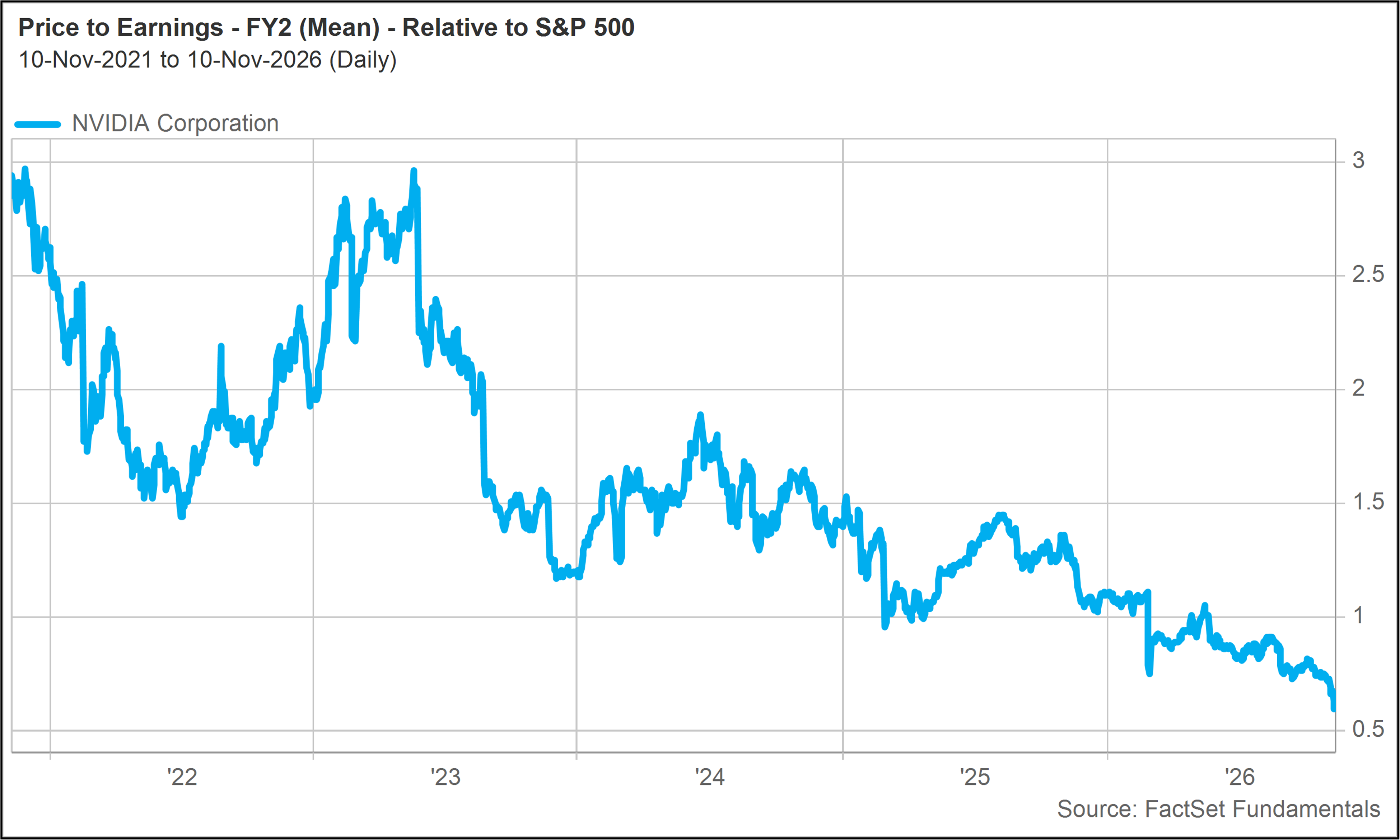
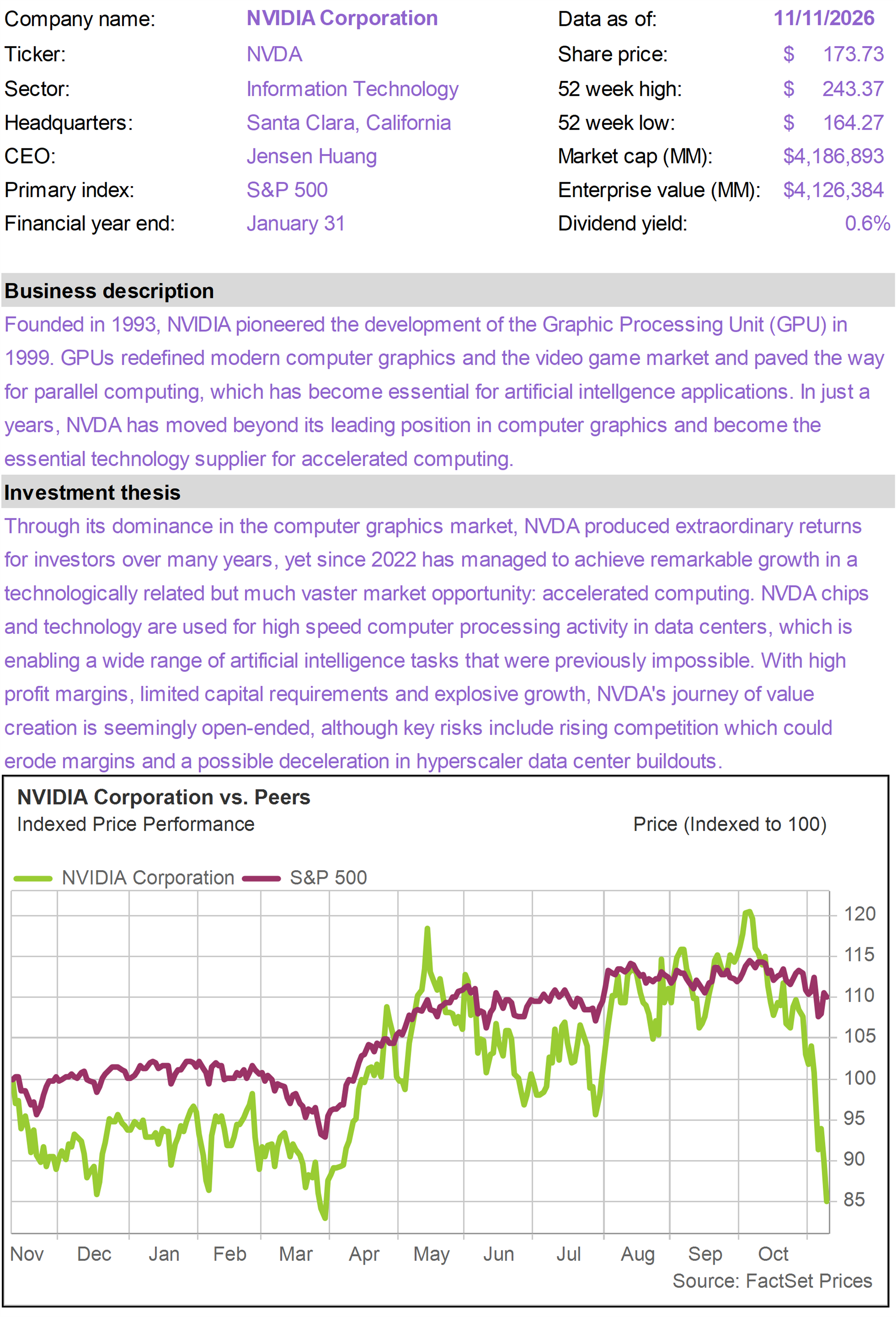
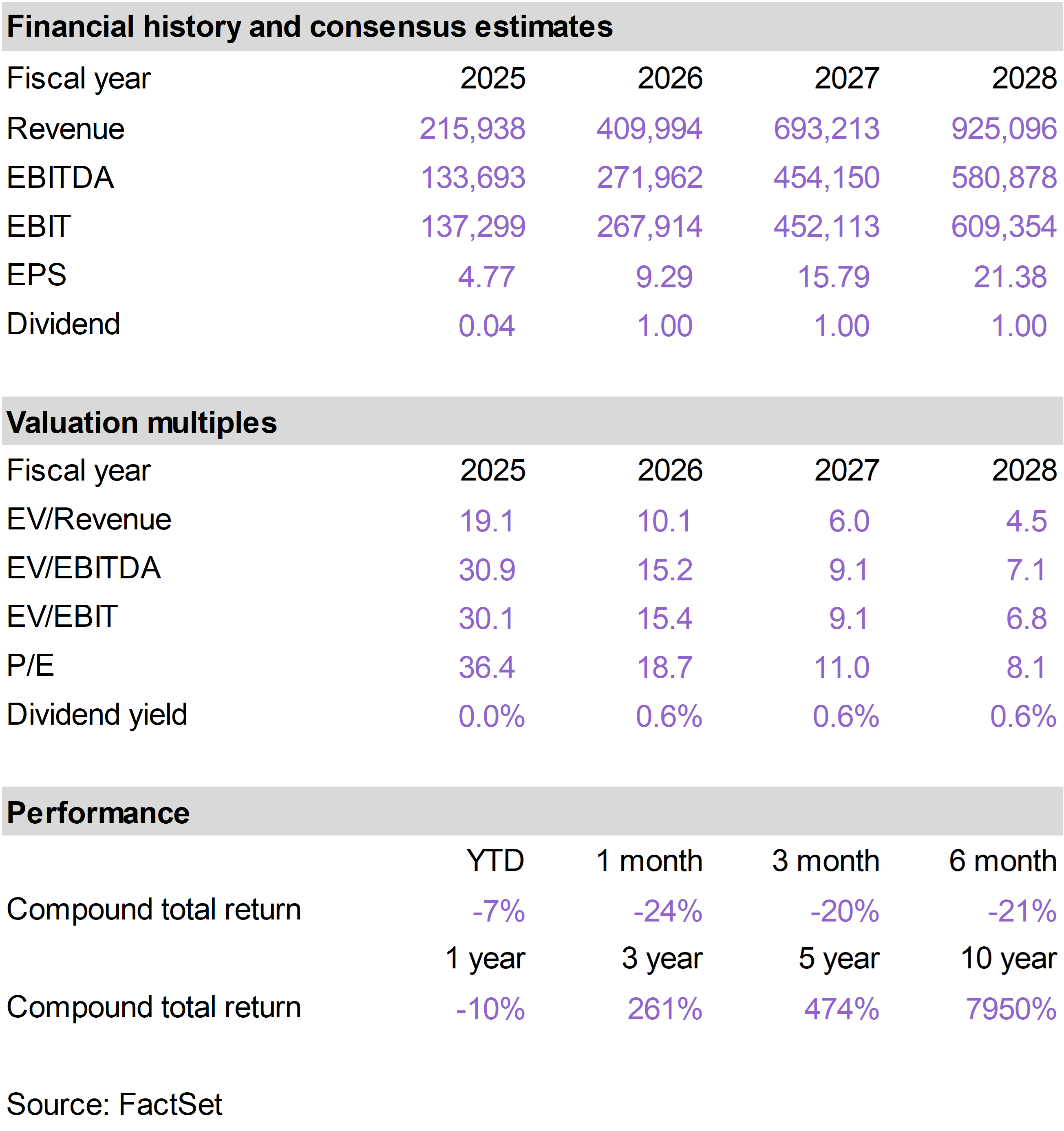
NVDA now has an exceptionally low valuation for a business with its long-term growth profile, high free cash flow conversion and strategic importance.
Of course, a low earnings multiple is only attractive if the earnings materialize.
If the AI infrastructure boom were to unravel, or if the current set of circumstances undermines NVDA’s revenue and margin trajectory, today's projected profits could prove much too optimistic.
But there is one key reason we believe NVIDIA's earnings outlook may be more resilient than many investors appreciate.
Protected by excess demand
NVIDIA's biggest problem has not been finding customers. It has been producing enough computing capacity to satisfy them.
The company remains constrained by the availability of advanced semiconductor manufacturing, high-bandwidth memory, sophisticated packaging technologies and other critical components.
In its August earnings call, management indicated that supply could remain a bottleneck through the end of fiscal year 2028.
This is an extremely important consideration when assessing the risks associated with a slowdown in AI capital expenditures.
Suppose political opposition to data centers delays construction projects or certain AI developers reduce their spending. Under ordinary circumstances, weaker demand might result in lower sales and considerable pressure on profit margins.
But NVDA is not operating under ordinary circumstances.
When customers are competing for limited supplies of a product, the loss or postponement of some orders does not necessarily translate into lower revenue. Other customers may simply absorb the capacity that becomes available.
This gives NVDA an important cushion against a certain amount of weakness in the broader AI infrastructure market.
It is not an unlimited cushion. A sufficiently large reduction in spending could eventually eliminate the supply shortage and create serious earnings pressure. There is also the risk of diminished pricing power.
But we believe the underlying demand for computing intelligence is so powerful that NVDA could continue experiencing substantial growth even if some customers temporarily step back.
And that demand is becoming increasingly diversified.
Large technology companies remain major customers, but investment is
expanding across independent AI developers, enterprises, sovereign governments and emerging applications such as robotics and autonomous systems.
As the cost of producing intelligence declines, new applications become economically viable, creating additional demand for computing power. This is one of the central reasons we remain optimistic about the long-term AI opportunity.
Greater efficiency does not necessarily mean less demand for computing. It may ultimately mean much more.
The most pressing risks
The most immediate concern is obviously the loss of Jensen Huang himself.
Huang was not merely a corporate administrator. He played a key role in defining NVDA's technology roadmap, managing relationships with major customers and anticipating the direction of the computing industry.
Replacing that combination of technical insight, strategic judgment and commercial influence will not be easy.
Longtime CFO Colette Kress brings considerable experience and institutional knowledge to the interim CEO position. But her expertise is primarily financial, and the company still needs to identify a permanent leader capable of directing its technological strategy.
The second major risk is the sustainability of AI infrastructure spending, although this is largely unrelated to the current leadership crisis.
NVDA's customers are investing extraordinary sums in computing capacity, often well ahead of the revenue that capacity is expected to generate.
Some companies are financing these investments with substantial amounts of debt. Others rely on complex arrangements involving long-term purchase commitments, equipment financing and strategic investments.
NVDA itself has become an important financial participant in the ecosystem, investing in AI companies and supporting infrastructure projects that ultimately purchase its hardware.
These arrangements have helped accelerate the AI buildout, but they also create financial dependencies. If financing conditions tighten, some developers could find themselves unable to complete projects or fulfill existing commitments.
There is also competition.
Companies such as Advanced Micro Devices (AMD), Broadcom (AVGO) and the major hyperscalers are developing increasingly capable alternatives to NVIDIA hardware.
Over time, custom-designed chips could capture a larger portion of AI workloads, particularly inference applications that may not require the flexibility of NVIDIA's general-purpose computing architecture.
Meanwhile, China's determination to create an independent semiconductor ecosystem presents another long-term competitive challenge.
Finally, and most relevant to the current situation, there is political and regulatory risk.
American restrictions on advanced chip exports already limit NVDA's access to China. Further controls could extend to international cloud providers that make computing capacity available to Chinese customers.
Domestic political opposition to data center construction could also slow the industry's expansion.
Importantly, NVIDIA's most recent quarterly guidance already assumed no revenue from data center computing sales to China.
This limits the company's immediate exposure to additional direct export restrictions, although broader limitations on international customers could create new problems.
All of these factors deserve attention. But the distinction between risks to growth and risks to the long-term viability of the business is critical.
A slowdown in revenue growth, some loss of market share or a period of management disruption could certainly justify a lower valuation. It does not follow that NVDA's extraordinary technological capabilities and competitive advantages would disappear.
And at today's share price, investors are already discounting a considerable amount of bad news.
Looking beyond the crisis
The coming months will be critical for rebuilding investor confidence in the stock.
Investors will be closely watching the search for a permanent CEO, the findings of ongoing investigations, and any changes to the company's product roadmap or major commercial relationships.
We will also get an important update on the underlying business when NVIDIA reports quarterly earnings on November 17.
The next few trading sessions could be volatile.
But we believe it is important to distinguish between the disruption taking place at the top of the company and the extraordinary technological and commercial enterprise that Jensen Huang spent more than three decades building.
In January 2025, investors worried that DeepSeek had undermined the economics of AI computing. They were wrong.
Today, investors are questioning whether NVIDIA can sustain its success without the visionary leader who created it.
That is a more serious challenge, and one that should not be minimized.
But the demand for computing intelligence has not disappeared.
NVIDIA's engineering talent, intellectual property, software ecosystem and financial resources remain firmly in place. Jensen Huang may be gone, but the company he built is still here.
At a valuation that would have been almost unimaginable just a few months ago, we believe NVDA continues to offer an attractive opportunity for investors willing to look beyond the immediate crisis.
President Trump has offered his own suggestion to take over as CEO: Tim Cook. Apple’s former CEO recently retired after an extremely successful run following the resignation and death of Steve Jobs.
We have no idea if Cook is even interested in the role, but the suggestion points to the idea that every crisis creates an opportunity.
Jensen Huang was exceptional in many ways. As the world now knows, he also had flaws. But NVDA still has tremendous assets and advantages.
There are other talented men and women in this world who have the capacity to step up and build upon Jensen’s legacy.