| American Resilience Model Portfolio |
|
| Monthly Portfolio Review: April 2026Publication date: May 4, 2026 |
|
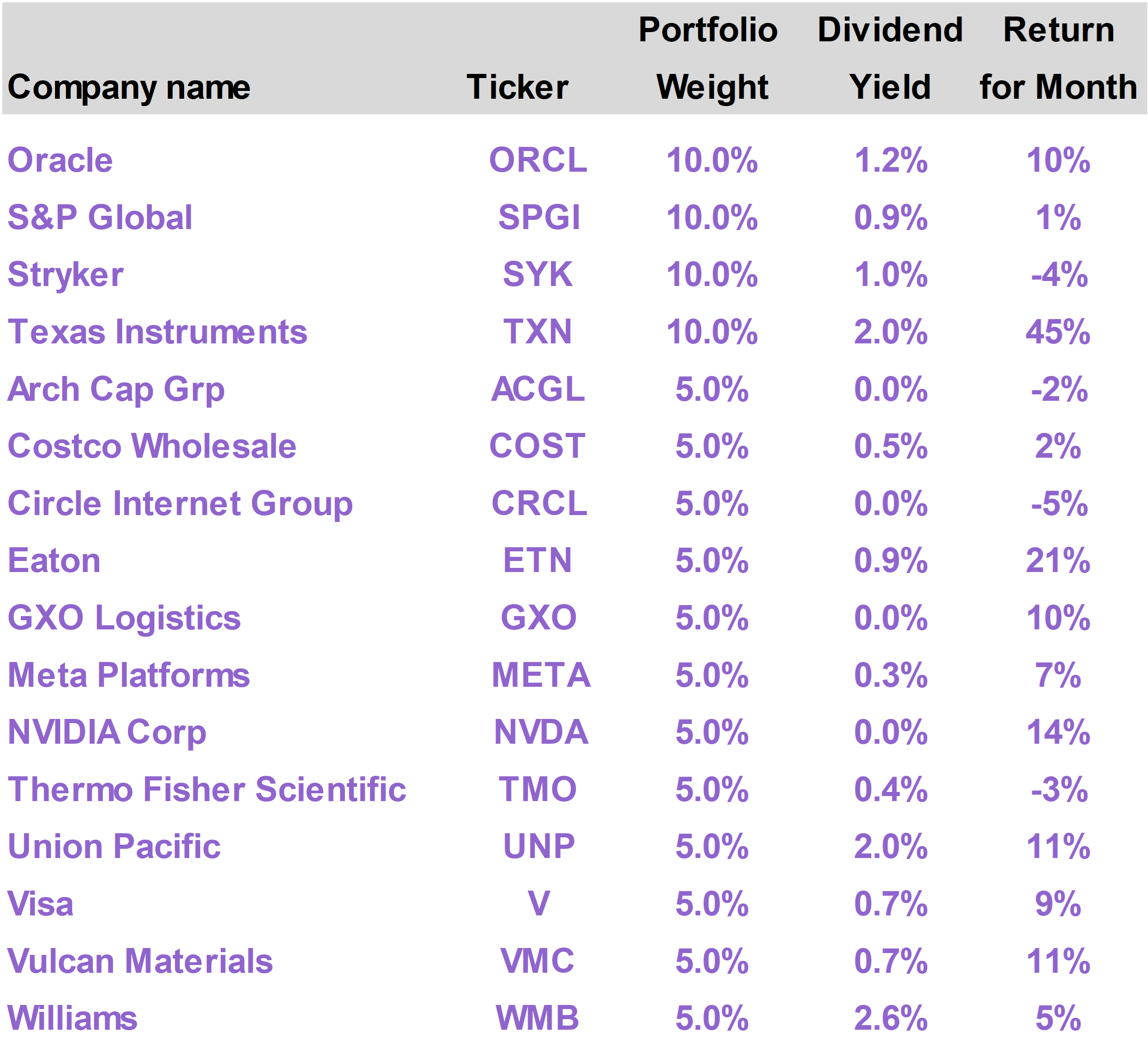
| | | Current portfolio holdings |
|
|
| | FOR SUBSCRIBER USE ONLY. DO NOT FORWARD OR SHARE. |
|
| | | Stocks rebounded sharply in April as investors grew more confident in a positive resolution in Iran. Risk-off sentiment gave way to enthusiasm around first quarter earnings, particularly among companies tied to AI. The Technology sector led the advance, rising 20% and helping drive a 10.5% gain in the S&P 500. The American Resilience portfolio generated a 9.3% return for the month and is now up 9.5% year to date, compared to 5.7% for the S&P 500. Performance was led by Texas Instruments (TXN), which surged 45% following strong earnings that highlighted AI-driven growth. Eaton (ETN) and NVIDIA (NVDA) also posted strong gains, supported by continued investment in AI infrastructure. The worst performer was Circle (CRCL), which fell 5% in April, though shares have already rebounded sharply—rising 32% in the first two trading days of May on a favorable outlook for the CLARITY Act. With energy risks easing and confidence in the AI growth story returning, the macro backdrop remains supportive.
|
|
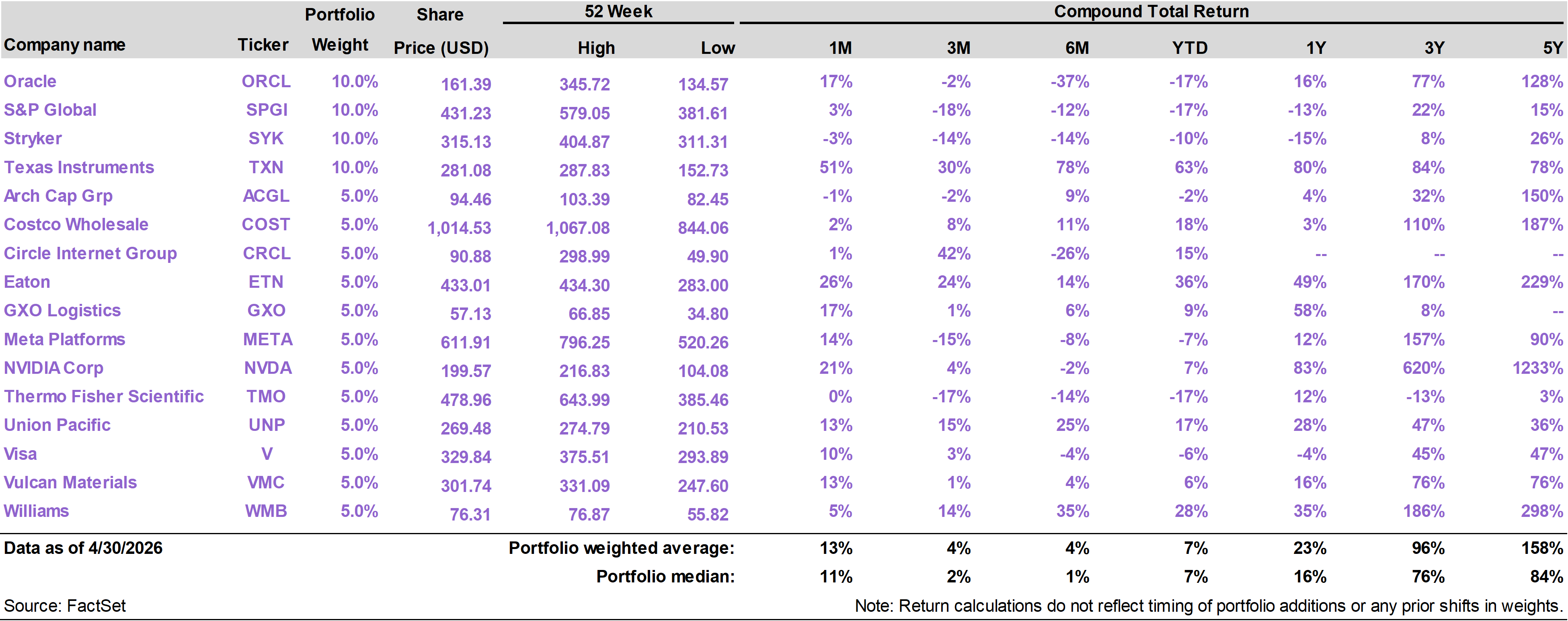
| | | The American Resilience portfolio generated a total return of 9.3% in April, versus the S&P 500 Index return of 10.5%. On a year to date basis through the end of the month, the portfolio has returned 9.5%, outpacing the 5.7% return of the S&P 500.
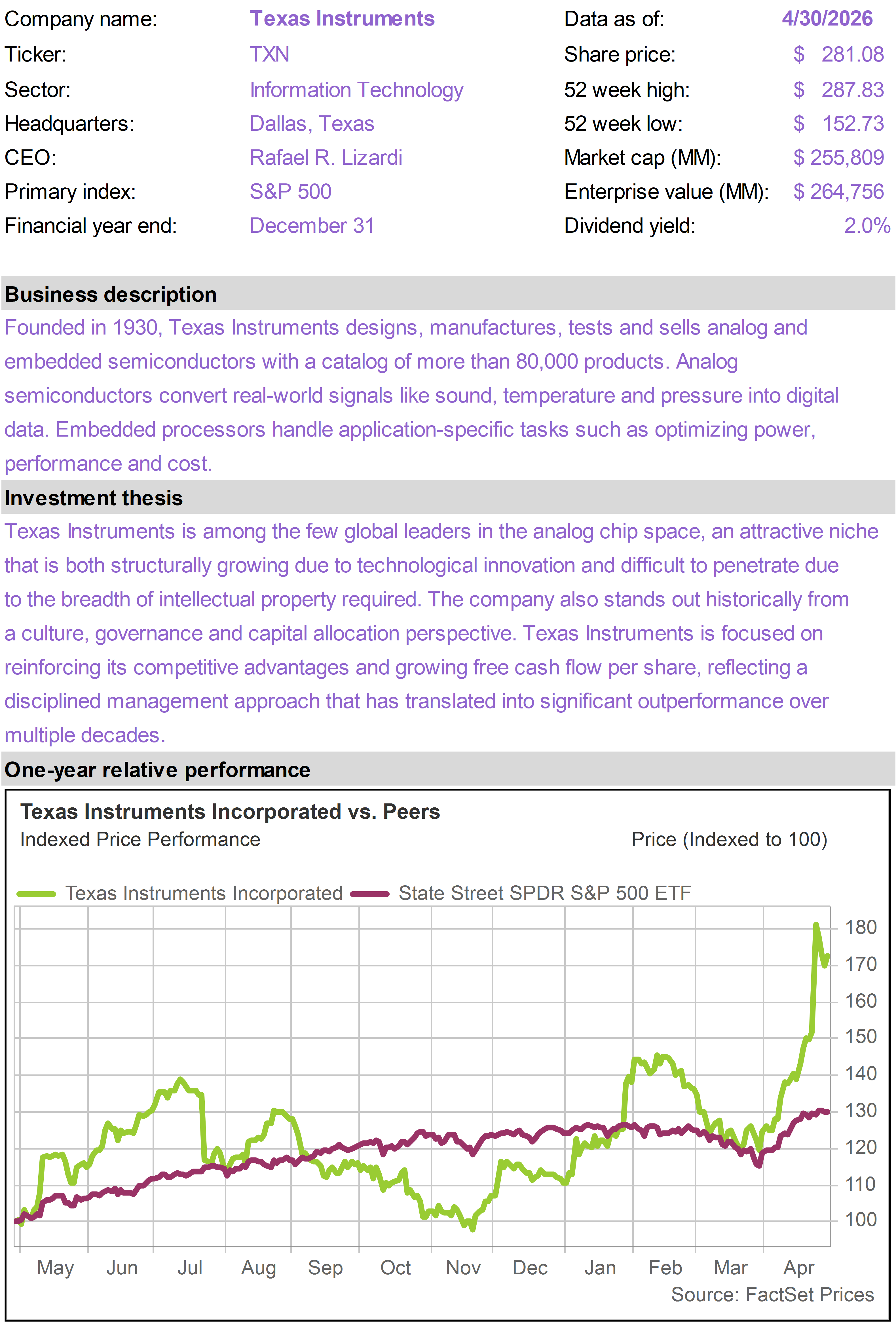
The top performing portfolio positions in April were Texas Instruments (TXN), which returned 45%; Eaton (ETN), which returned 21%; and NVIDIA (NVDA), which returned 14%.
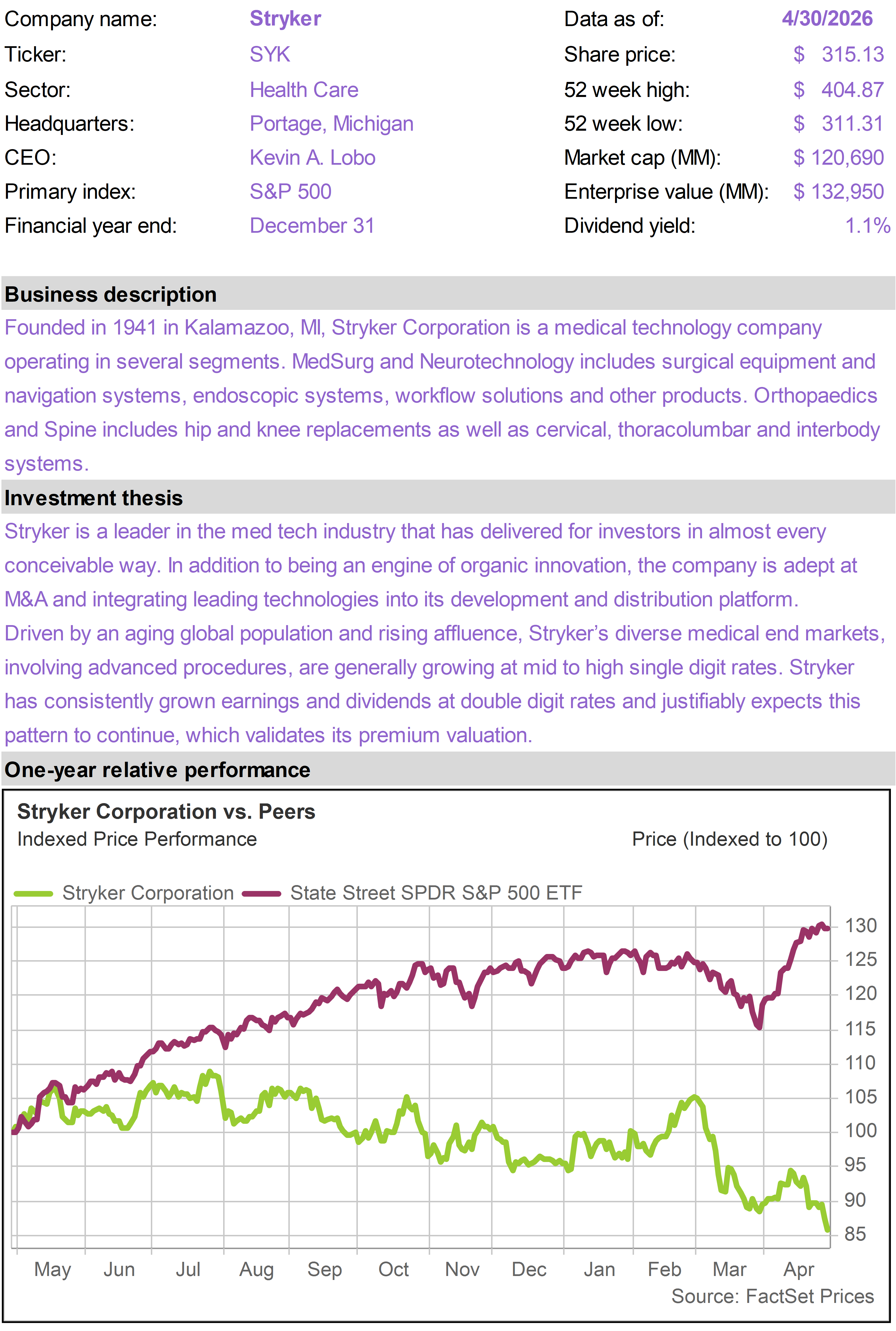
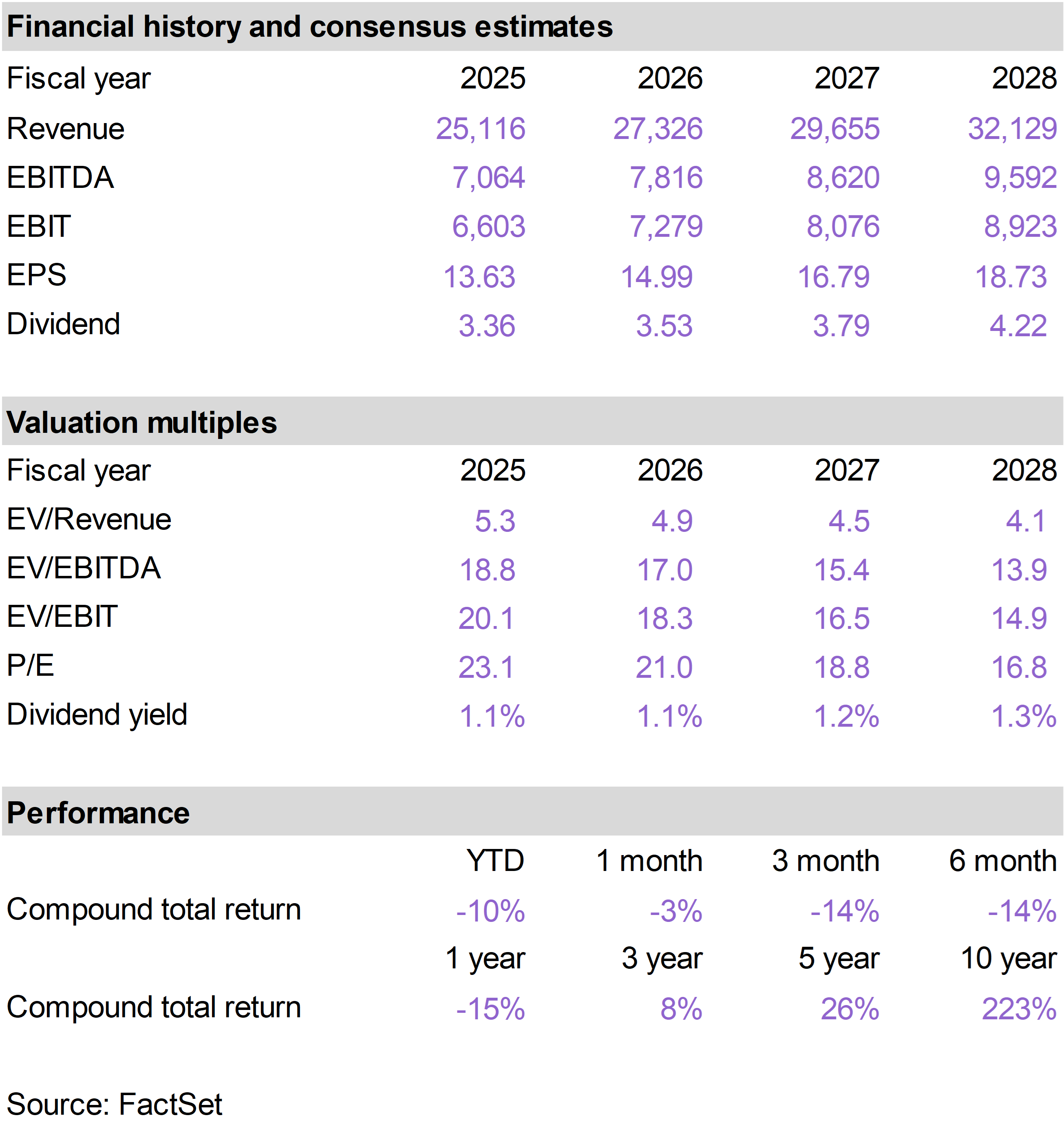
The worst performing positions were Circle Internet Group (CRCL), which returned -5%; Stryker (SYK), which returned -4%; and Thermo Fisher Scientific (TMO), which returned -3%. |
|
| Stocks come back
We concluded last month’s portfolio review with the view that investors would ultimately be rewarded for pushing through the March volatility—and that the sell-off had created an opportunity to build positions at more attractive levels.
That view was quickly validated. Stocks rallied sharply in April as the U.S. demonstrated progress in Iran, even as the situation in the Strait of Hormuz remained unresolved.
Oil prices stayed elevated, but markets began to look through the disruption, increasingly focused on the likelihood that the worst-case outcomes would be avoided.
At the same time, strong economic data and a solid earnings season helped shift attention back to the fundamentals underpinning the market.
Tech leads the way
The rebound was led decisively by technology.
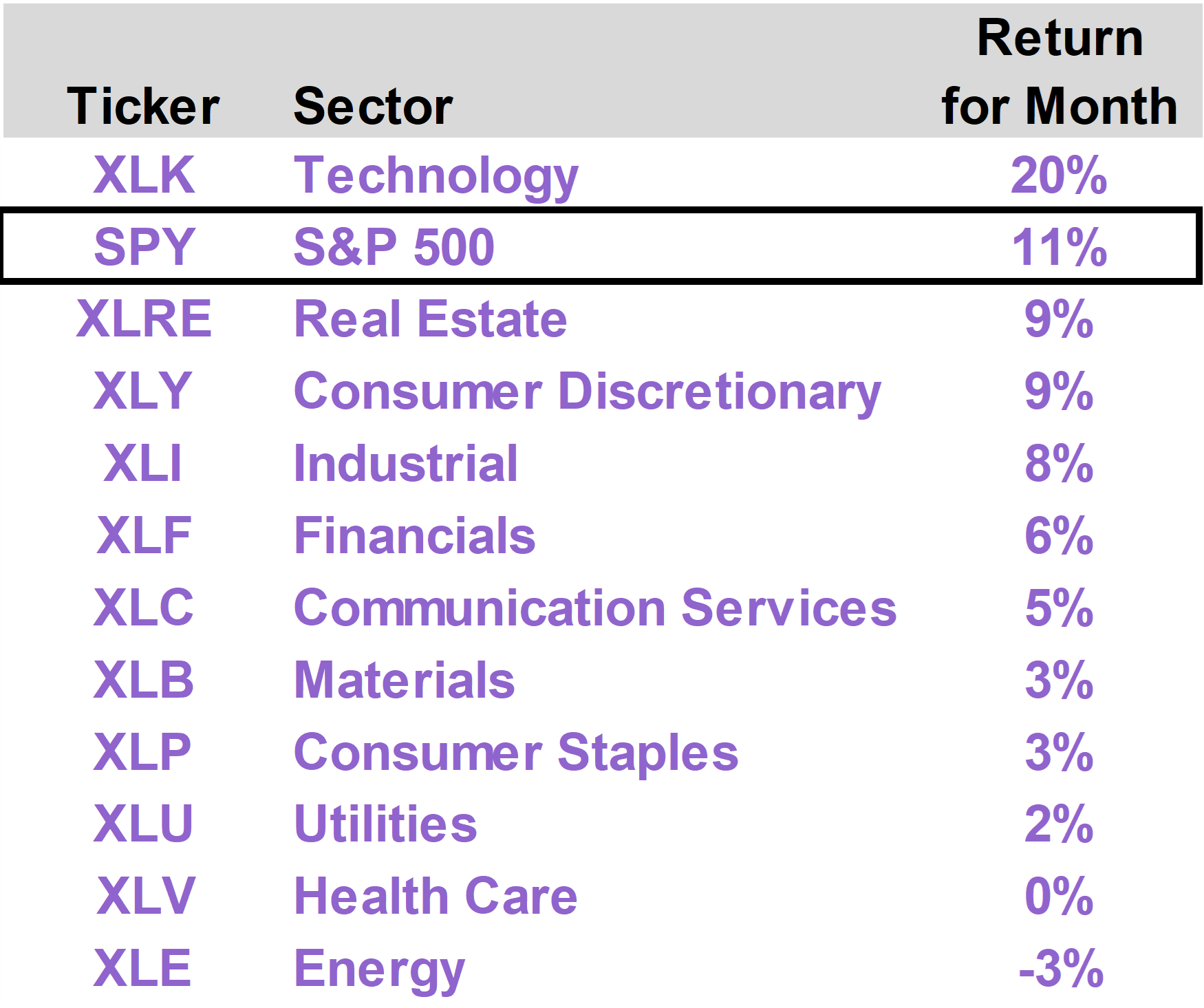
The S&P 500 rose 10.5% in April, while the tech-heavy NASDAQ Composite surged 15.3%. Beneath the surface, the leadership was even more concentrated, with the Technology sector advancing roughly 20% for the month.
Investor sentiment pivoted quickly—from concern over energy disruptions to renewed enthusiasm around corporate earnings, particularly those tied to AI spending.
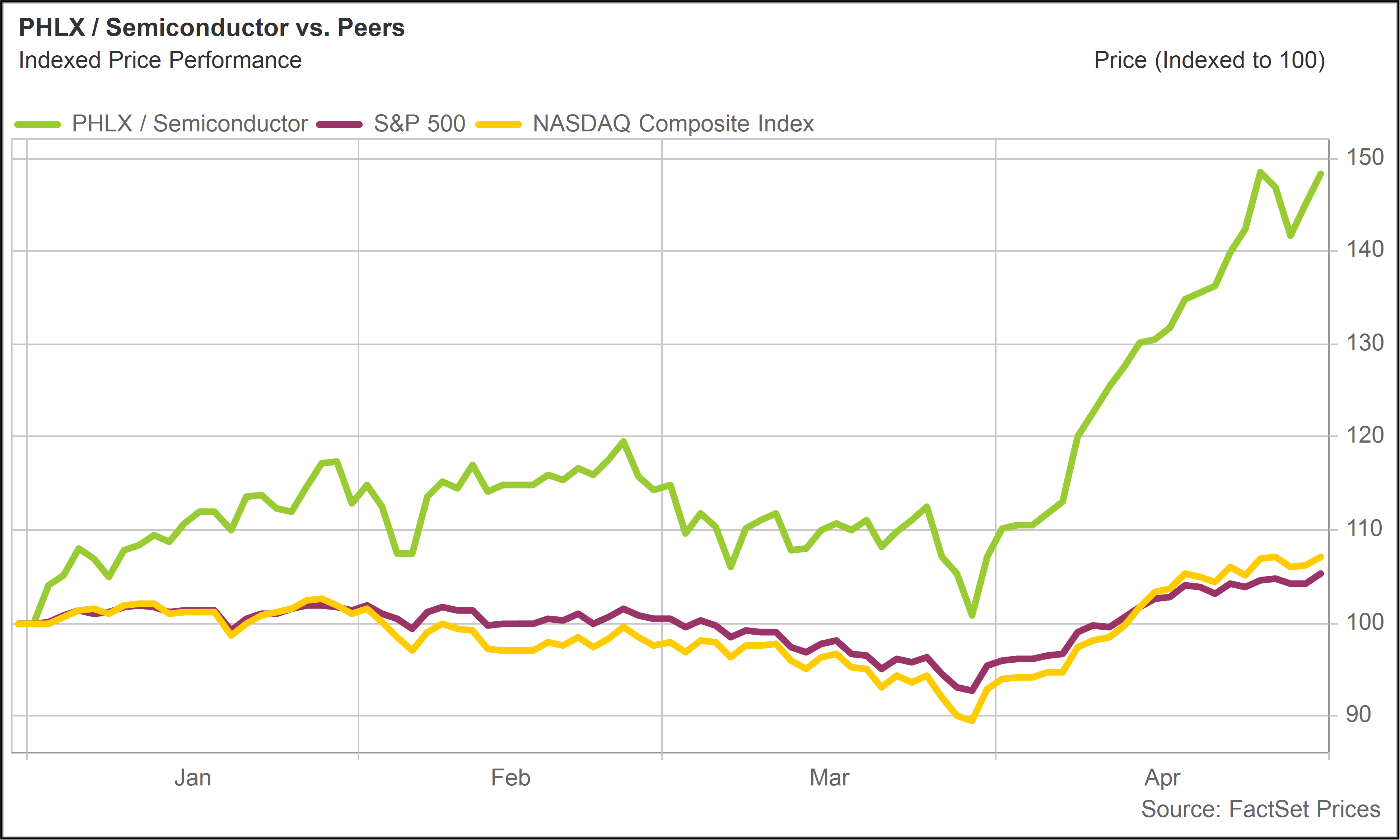
Semiconductors were a clear standout. The PHLX Semiconductor Index (SOX) climbed 38% in April, as a wave of strong first quarter results and optimistic outlooks drove the group higher.
The move capped an already powerful start to the year, with the index now up nearly 50%—far outpacing the broader market. |
|
|
| SOX vs. S&P 500, NASDAQ(Total Return - Year to Date) |
|
| Insatiable demand
Semiconductors are benefiting from a surge in demand for AI compute that continues to exceed expectations.
What once looked like a speculative buildout is now translating into real, measurable revenue growth across nearly every company tied to the ecosystem.
AI data centers sit at the center of this shift. They rely on a wide range of chips to generate the massive volumes of “tokens”—the fundamental units of AI output—that businesses and consumers increasingly rely on.
Not long ago, investors questioned whether AI had the makings of a bubble. As hyperscalers poured capital into infrastructure, there were real concerns about who would ultimately consume the output and whether meaningful use cases would materialize.
Those questions are now being answered.
Companies like Alphabet (GOOGL), Microsoft (MSFT), and Amazon (AMZN) are reporting AI-related growth in the 30%–60% range, providing clear evidence that demand is not only real, but accelerating.
The nature of that demand is also evolving.
In the early stages, most AI compute was dedicated to training models—feeding them vast datasets so they could learn patterns and improve performance. Increasingly, however, demand is shifting toward inference, where those models are deployed to solve real-world problems at scale.
One of the most important drivers has been AI-assisted coding. Software development is being transformed, with engineers now leveraging AI tools to write and refine code—unlocking significant productivity gains.
That shift is beginning to ripple across the broader economy.
Enterprises are investing heavily in AI services because they are seeing tangible returns, using these tools to amplify the output of their workforce. Despite persistent concerns about job displacement, initial jobless claims recently fell to multi-decade lows—suggesting that the near-term impact of AI may be more additive than disruptive.
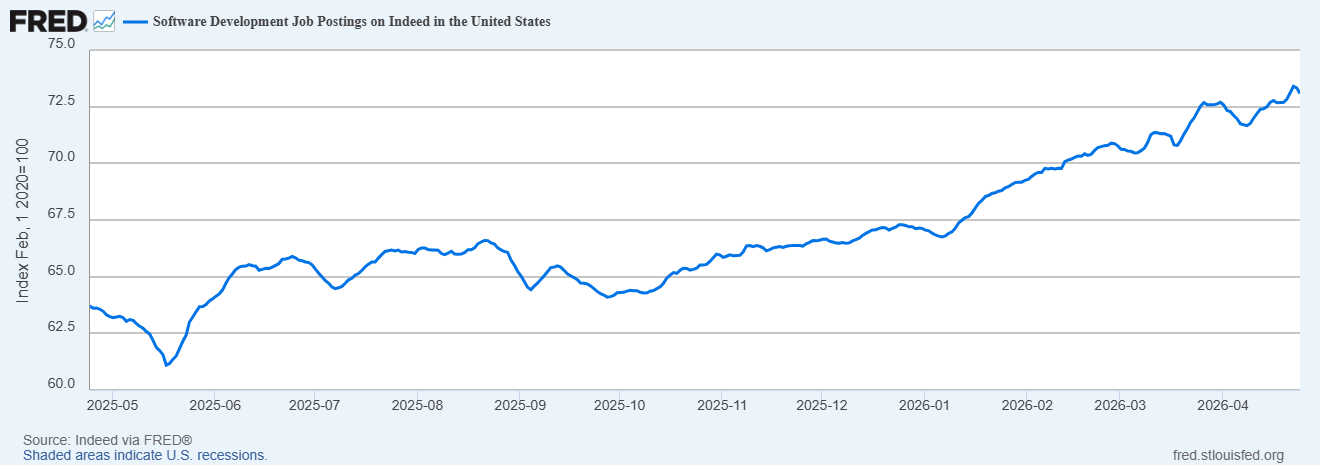
At a more granular level, demand for software talent remains strong. Job postings for developers continue to grow even as AI automates portions of the work, reinforcing the idea that productivity-enhancing technologies can expand, rather than contract, opportunity. |
|
|
| Software Development Job Postings(Last 12 Months) |
|
| An AI-powered economy
Technology stocks dominated performance in April, to the point that the sector was the primary driver of gains in the broader market. But strength was not limited to tech alone.
As markets increasingly looked through Iran-related risks, several other sectors also moved higher. Part of this reflected a reversal of March’s risk aversion, but it was also supported by improving earnings trends across the economy.
Across industries, companies with exposure to AI—whether through adoption, infrastructure, or productivity gains—tended to outperform their peers. What began as a technology story is increasingly becoming an economy-wide driver of growth. |
|
|
|
Energy holds
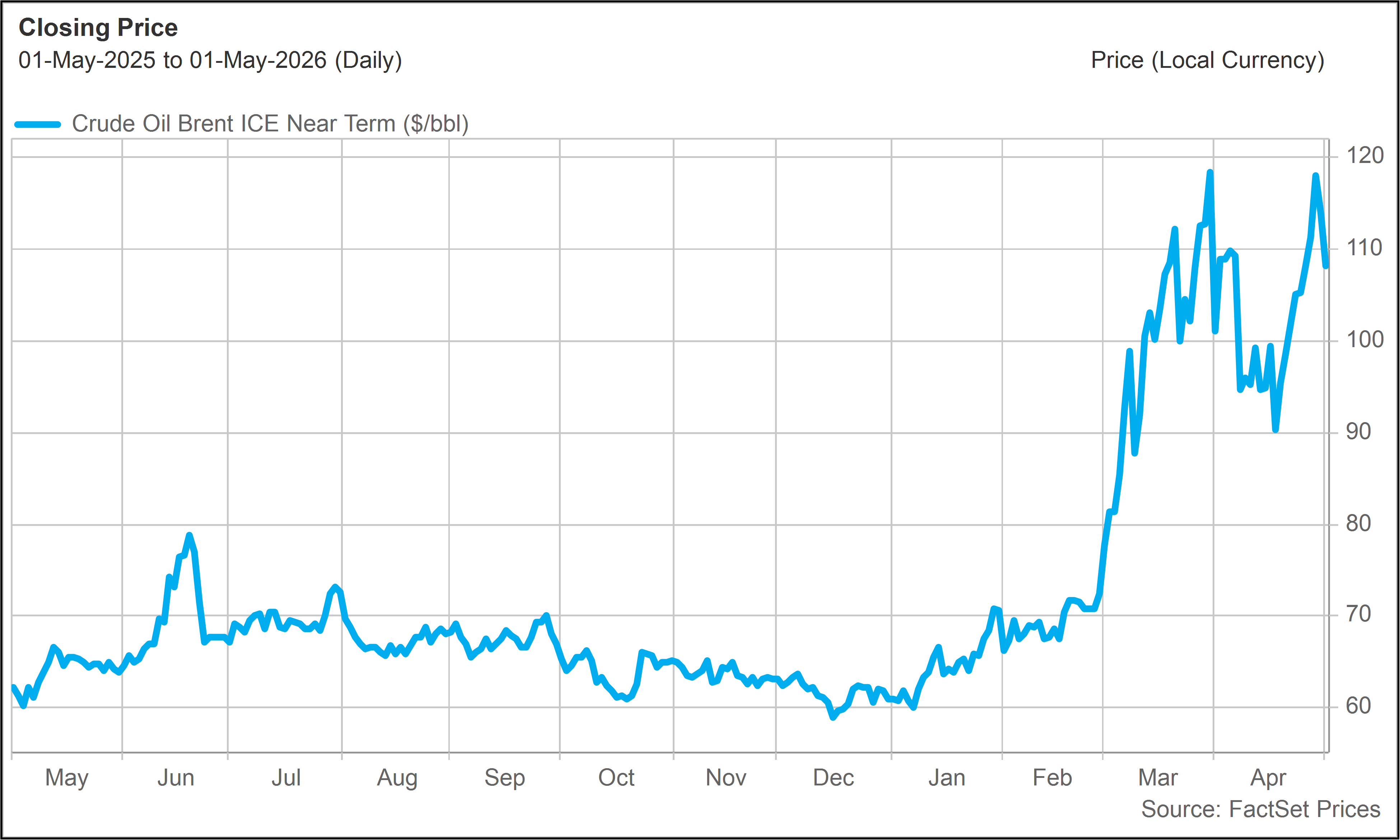
After leading the market in March with a 10% gain, the Energy sector lagged in April. The sector was the only one to post a negative return, declining roughly 3%.
The pullback came as investor perceptions of the Iran crisis improved. While oil prices remained elevated—at times exceeding $120 per barrel amid supply disruptions—markets became less focused on worst-case scenarios involving prolonged shortages or sustained price spikes.
Even so, energy equities held up relatively well given the move in sentiment.
Looking ahead, we expect oil markets to gradually normalize as supply from the Persian Gulf recovers, though that process may take time. Historically, supply shocks tend to catalyze new investment and capacity expansion, often leading to structural shifts in the market.
Recent developments reinforce that dynamic. The UAE’s decision to exit OPEC, as we recently discussed (Did Trump Break OPEC?), raises the possibility of further fragmentation within the cartel. Venezuela could be next.
Despite near-term volatility, the outlook for many energy companies remains constructive. Global inventories have been drawn down, and governments are likely to use any pullback in prices to rebuild reserves.
At the same time, we expect increased investment in energy infrastructure—both in the United States and globally—as policymakers prioritize resilience and supply security.
From a portfolio perspective, recent months have underscored the value of energy exposure as a geopolitical hedge.
Sentiment toward the sector was subdued entering 2026, but the Iran conflict has served as a reminder of its strategic importance. With spot prices still elevated, producers are likely to benefit from a period of strong cash flow generation in the near term. |
|
|
| Brent Crude Oil($/barrel - Last 12 Months) |
|
|
A divided Fed
April also brought increased focus on the future leadership of the Federal Reserve.
Following the apparent resolution of the investigation into Jerome Powell, the path now appears clearer for Kevin Warsh to assume the role of Chair after his confirmation process moves forward.
For now, however, Powell has stated that he has no immediate intention of stepping down from the Board of Governors—a stance that departs from typical precedent and adds uncertainty to the policy outlook.
At the same time, divisions within the Fed are becoming more visible.
A number of policymakers have signaled reluctance to move toward further rate cuts, pitting themselves against Warsh, Stephen Miran, and others who have argued that easier policy is needed to support investment, particularly as the economy enters what could be an AI-driven productivity cycle.
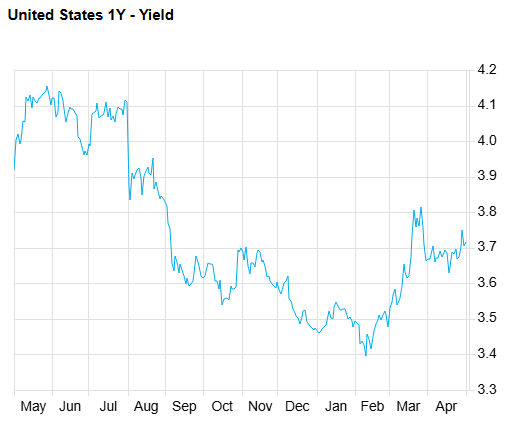
Markets began to reflect this tension in April. Both short- and long-term interest rates drifted higher, as expectations for near-term rate cuts diminished.
Elevated oil prices, combined with resilient economic data—including the stronger-than-expected jobs report—reinforced the view that the Fed may be less inclined to ease policy in the near term. |
|
|
| 1-Year Treasury Yields—Last 12 Months(Source: FactSet) |
|
|
| 10-Year Treasury Yields—Last 12 Months(Source: FactSet) |
|
| But with Warsh likely to assume the Chair role in mid-May, and with oil markets expected to normalize in the months ahead—easing inflation pressures—we could begin to see a gradual decline in interest rates, which would provide a supportive backdrop for equities.
Back on track
The Iran “excursion,” as Trump described it, is beginning to fade from the forefront as investor attention shifts back to the AI growth narrative.
While some investors remain uneasy about the valuation implications of aggressive capital spending by the hyperscalers, the impact of that spending—now widely expected to exceed $1 trillion by 2027—is increasingly visible across the economy.
Those investments are flowing through the system, benefiting downstream technology segments like semiconductors and extending into a broad range of industries tied to the buildout of AI infrastructure.
There are still crosscurrents. Kevin Warsh may face resistance within the Fed, and policy uncertainty remains a factor.
But with the Iran crisis receding, energy markets likely to stabilize, and AI beginning to deliver tangible economic gains, the broader picture is becoming clearer.
The stock market is moving back onto a stronger foundation. |
|
| | |
The top performing stocks in the portfolio in April were Texas Instruments (TXN), which returned 45%; Eaton (ETN), which returned 21%; and NVIDIA (NVDA), which returned 14%.
The worst performing positions this month were Circle Internet Group (CRCL), which returned -5%; Stryker (SYK), which returned -4%; and Thermo Fisher Scientific (TMO), which returned -3%. |
|
| | Shares of TXN surged in April following a strong first quarter earnings release that highlighted a powerful combination of cyclical recovery and structural growth.
The biggest driver was accelerating demand across industrial and data center markets. Industrial strength broadened across geographies and end markets, with activity still below prior peaks—suggesting further upside as the cycle continues to recover.
At the same time, the company is emerging as a key beneficiary of AI infrastructure spending. Data center revenue grew sharply—up roughly 25% sequentially and 90% year over year—driven by strong demand for power management chips used across AI systems.
This positions TXN as a critical, and often underappreciated, supplier to the AI buildout. Revenue, margins, and earnings all came in ahead of expectations, supported by higher volumes and improving factory utilization.
TXN is transitioning out of a heavy investment phase and into a period of rising free cash flow, with a greater share of revenue expected to convert into real cash earnings and shareholder returns.
Demand related to AI data centers is finally having a material impact on TXN’s financials, and the market is recognizing it. Over a longer time horizon, we also expect TXN to be viewed a major beneficiary of growth in robotics and “physical AI,” which rely heavily on analog chips. |
|
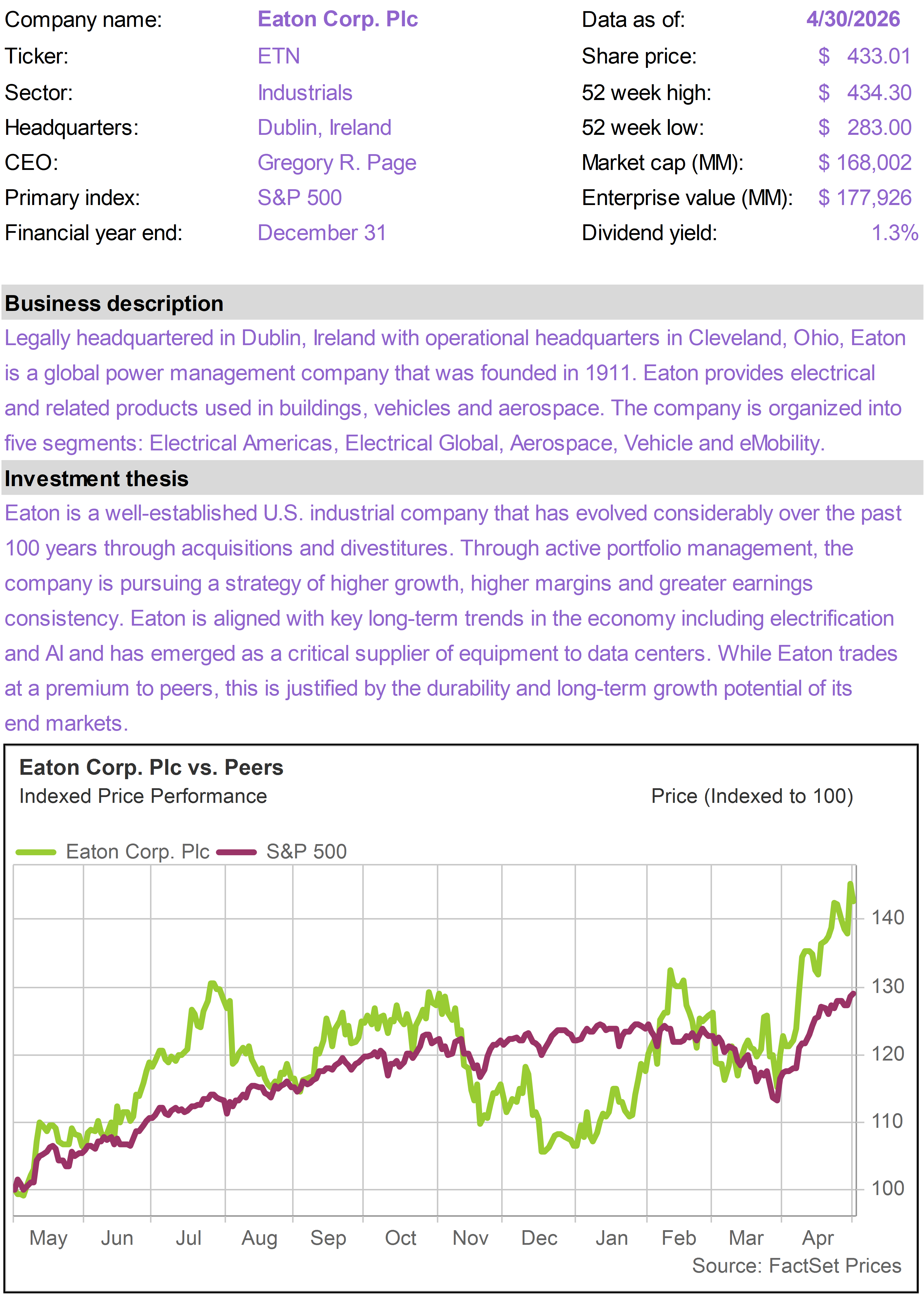
| | ETN is a prime example of an industrial company benefiting from the AI boom. Shares of ETN moved sharply higher in April as investors increasingly recognized the company as a key beneficiary of the AI infrastructure buildout.
The core driver has been accelerating demand tied to data centers and electrification. ETN’s electrical business is seeing strong growth, supported by rising orders, a record backlog, and sustained investment in power infrastructure required to support AI workloads.
Data center exposure has become central to the story. Demand for power distribution, backup systems, and cooling solutions is expanding rapidly, with data center-related revenue growing at a strong pace—roughly 40%+ year over year—as hyperscalers scale out AI capacity.
An improvement in the policy backdrop contributed to the strong April performance. On April 20, the Trump administration invoked the Defense Production Act to accelerate investment in grid infrastructure, transformers, and broader energy systems—areas now viewed as critical to national security given the demands of AI and electrification.
These actions are designed to expand domestic capacity and remove bottlenecks in the power supply chain, including components that are directly relevant to data centers.
The company sits squarely in the middle of these constrained areas—supplying the electrical equipment, grid components, and power management systems that are now being prioritized at the federal level.
ETN is not just an industrial company benefiting from cyclical recovery—it is a leveraged play on one of the most important constraints in the AI economy: power. |
|
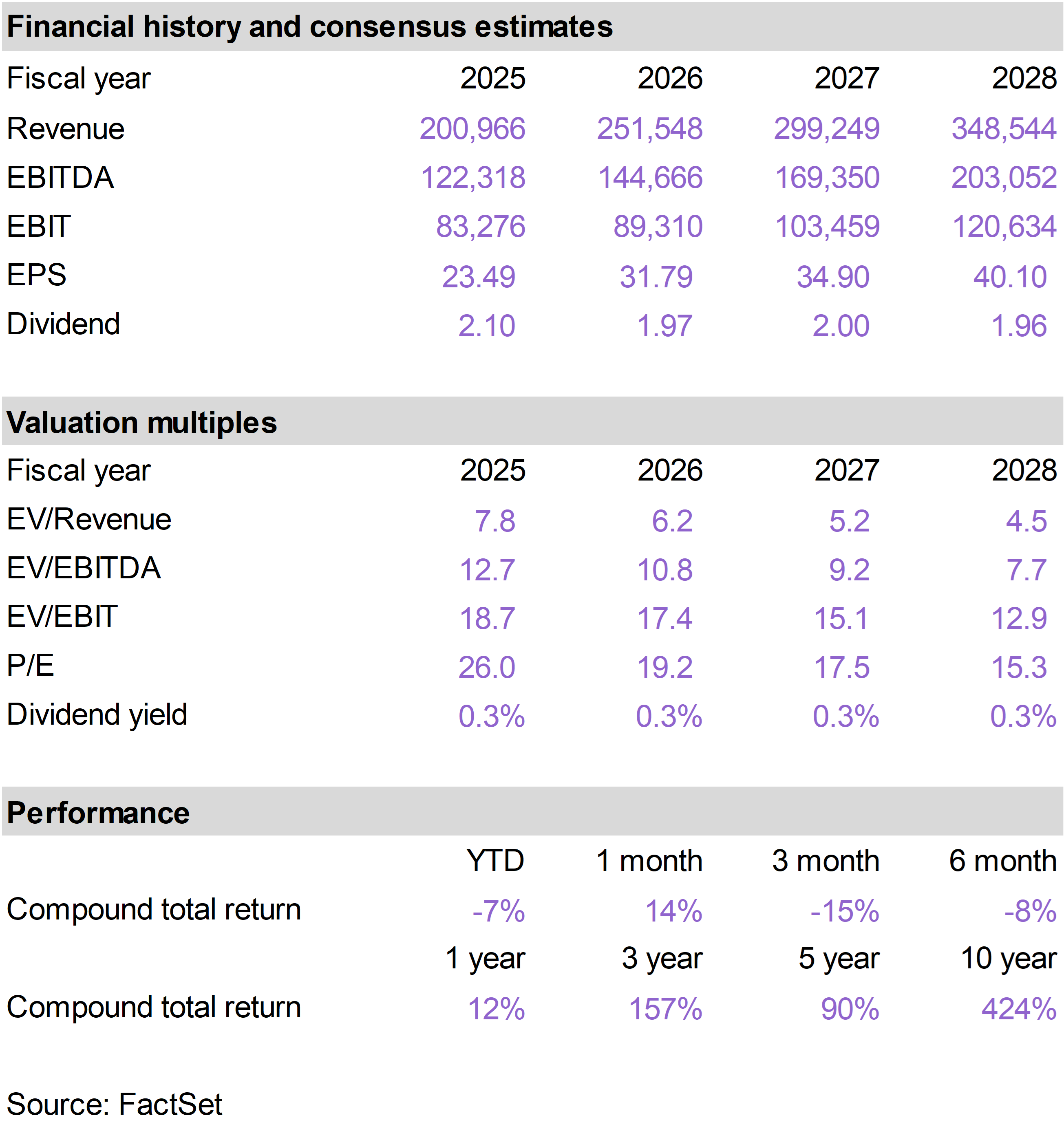
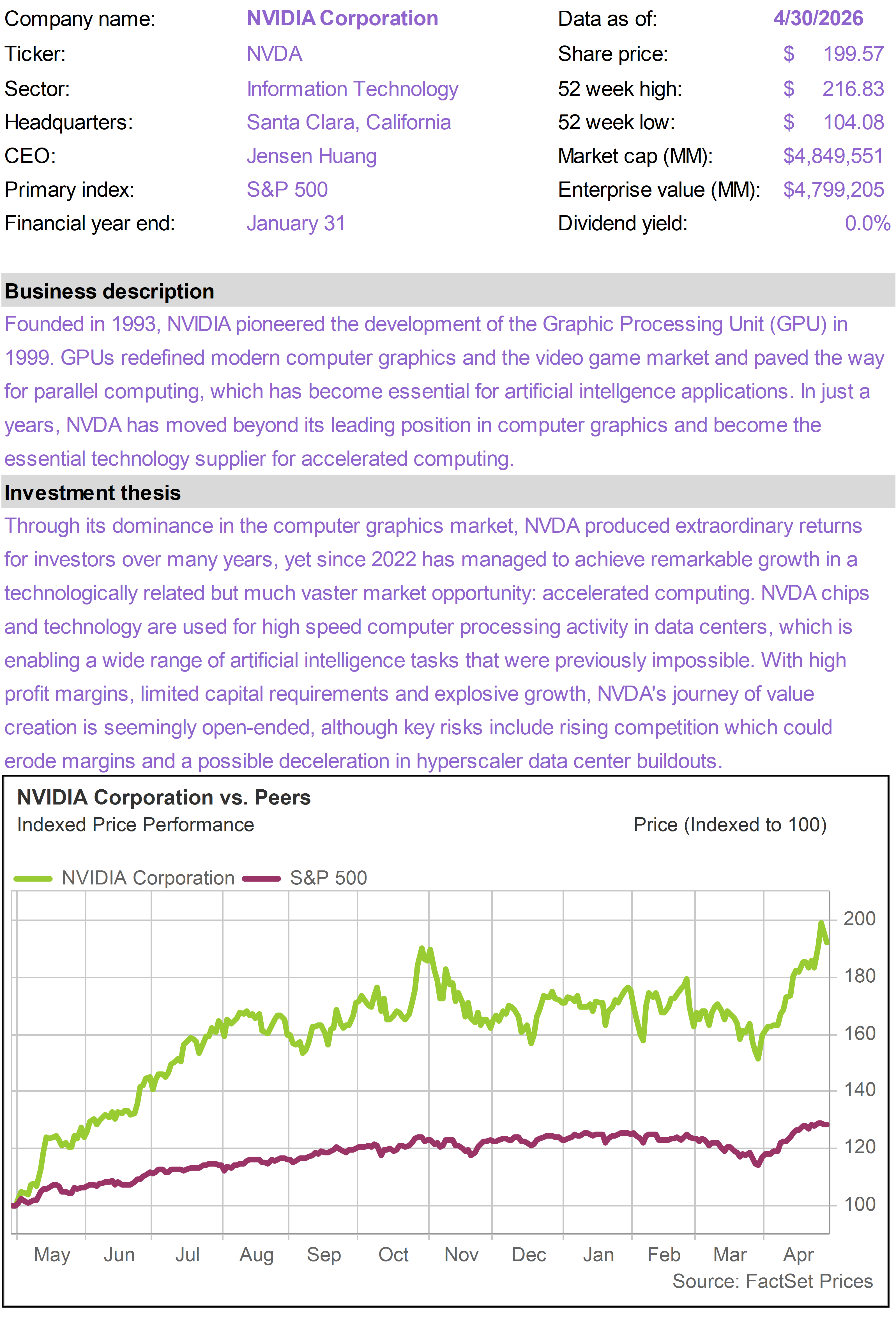
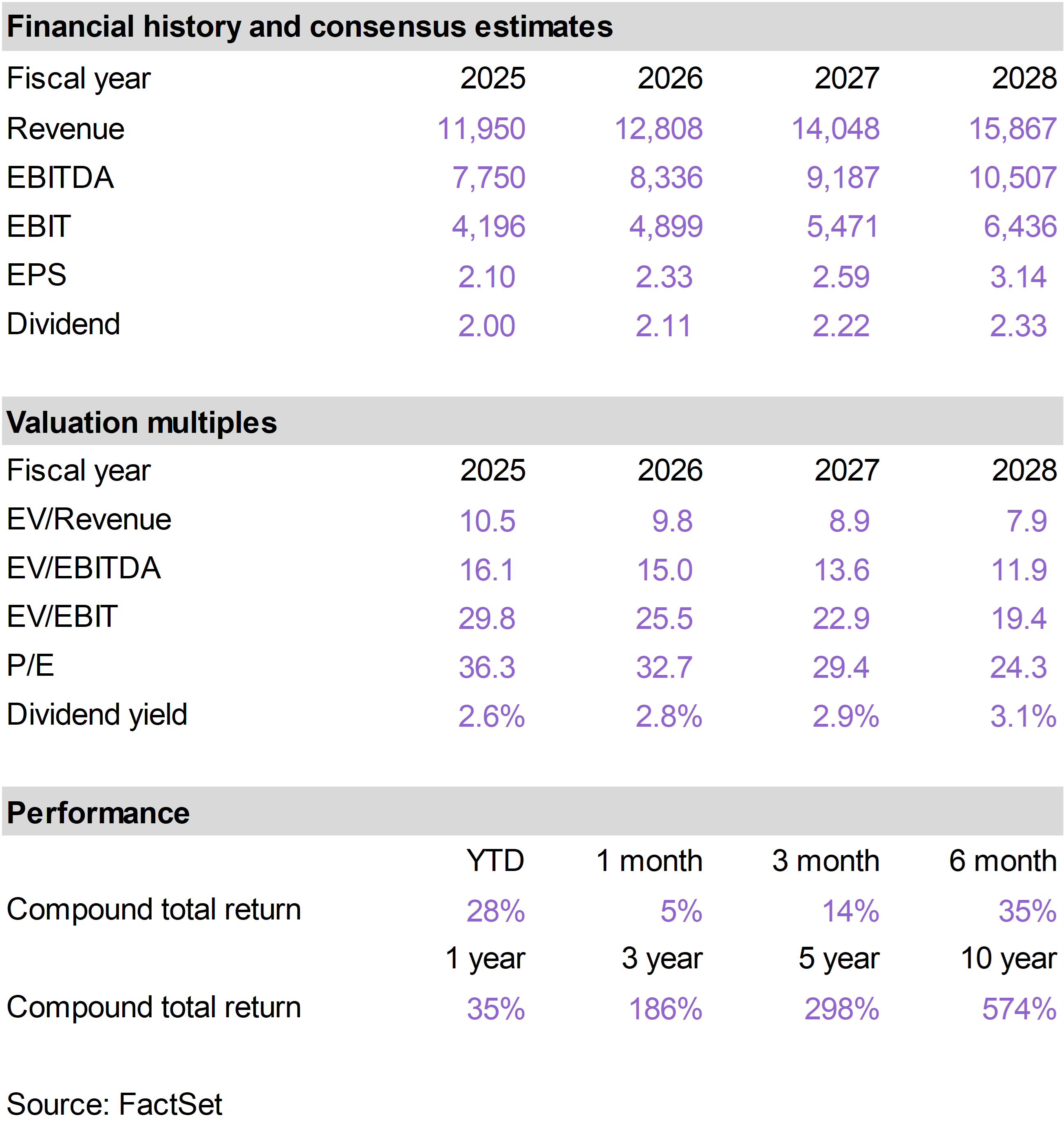
| | As the leading player in semiconductors, NVDA outperformed the broader market in April, yet in our view still trades at a relatively modest valuation given its long-term growth potential.
The company continues to benefit from its dominant position within the AI ecosystem. Its CUDA software platform, integrated hardware stack, and expanding suite of AI tools create a high barrier to entry, enabling NVDA to capture a disproportionate share of industry profits.
NVDA benefits directly as hyperscaler capital expenditures trend toward the trillion-dollar mark. In contrast with many of its Mag 7 peers, NVDA’s own capital intensity remains low, resulting in exceptionally strong free cash flow conversion.
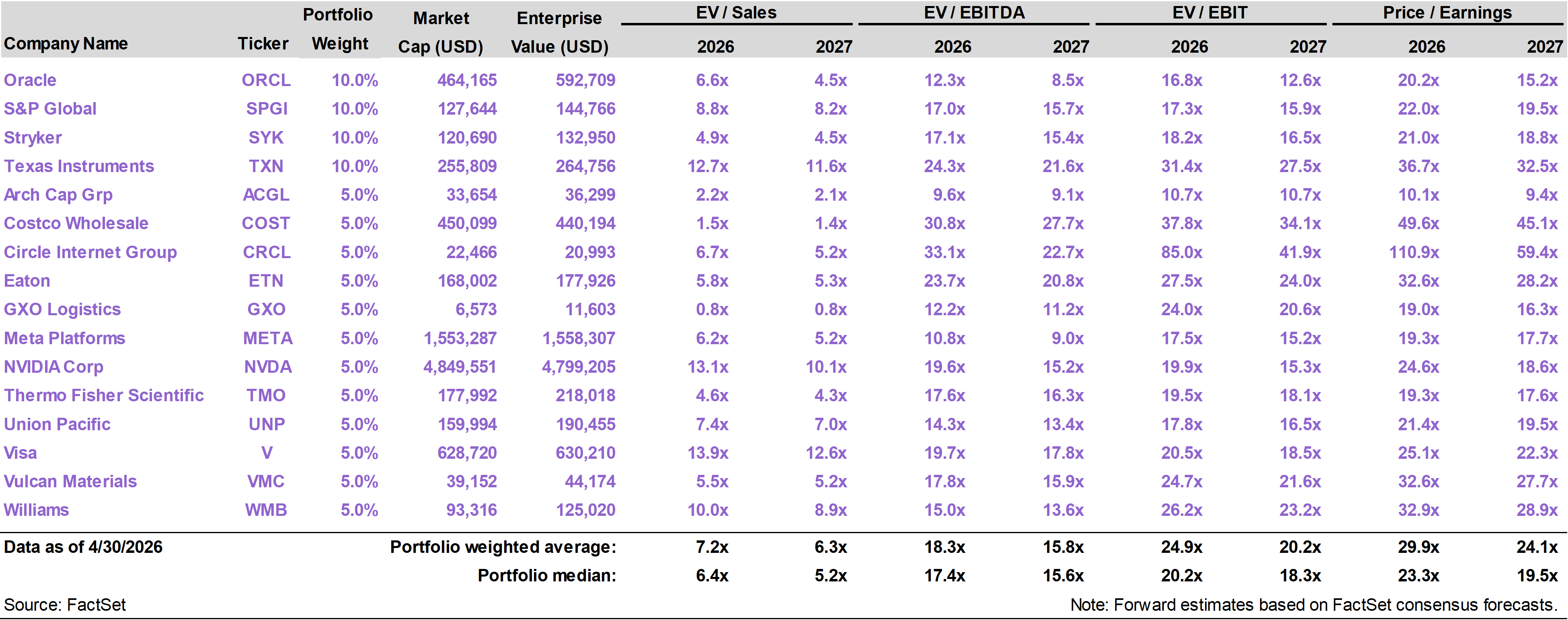
Despite all this, NVDA is trading at less than 18x next year’s estimated earnings. The low multiple gives investors a valuation margin of safety for a business that sits at the very center of the AI revolution. |
|
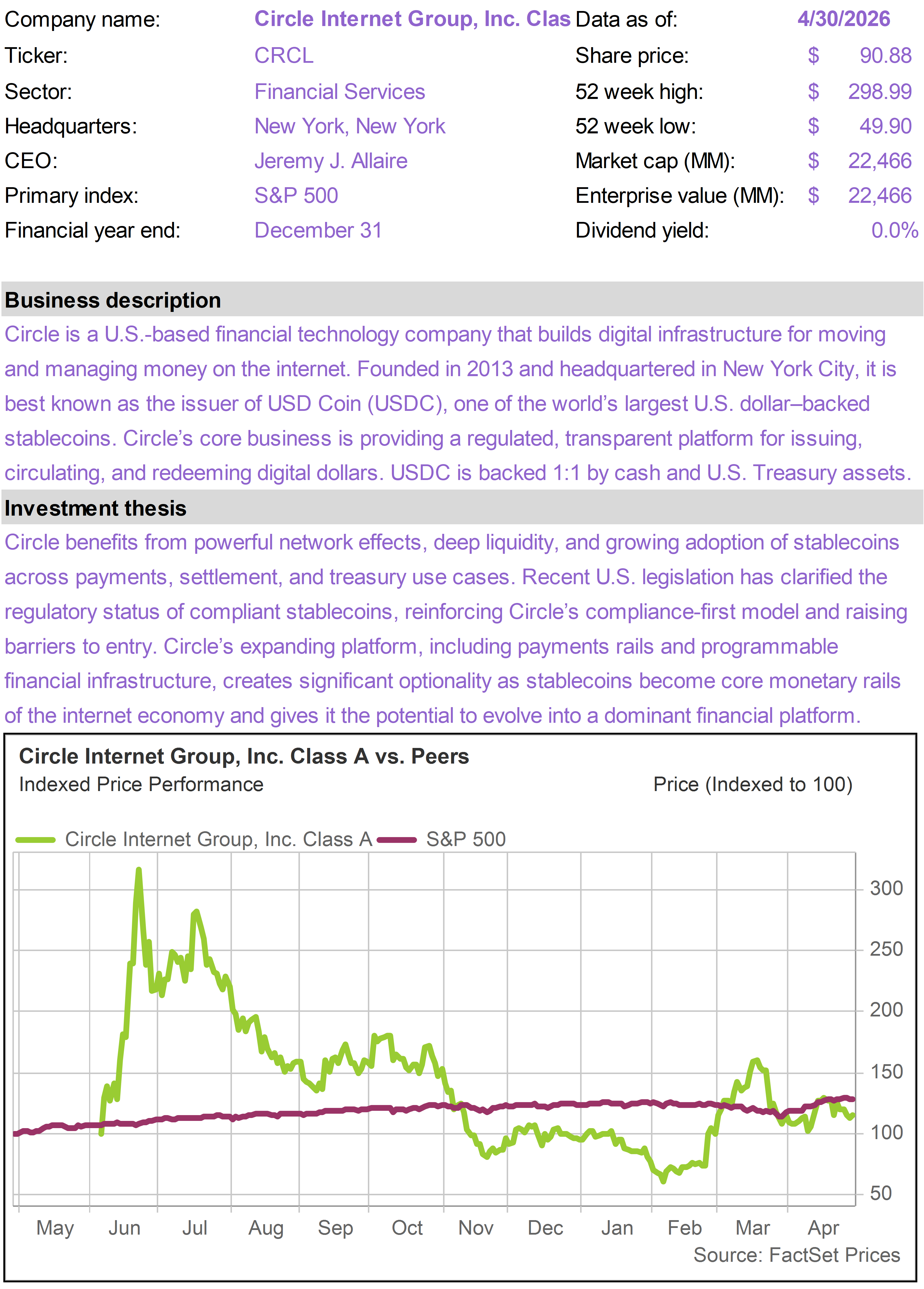
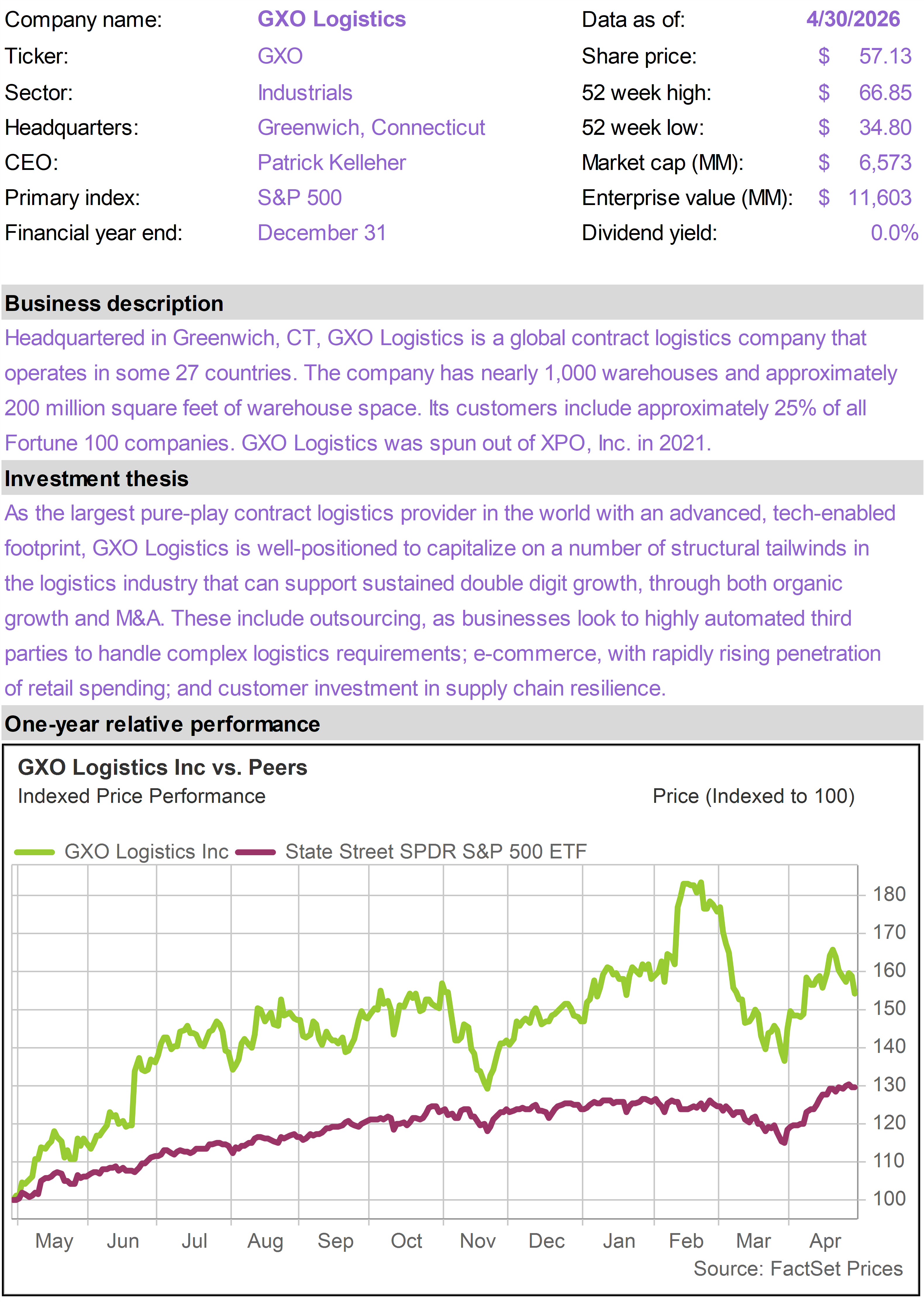
| | Shares of CRCL underperformed in April as investors grew more cautious around the outlook for the CLARITY Act—key legislation expected to shape the long-term trajectory of the crypto industry.
CRCL, alongside Tether, is one of the two dominant stablecoin issuers. As we discussed last month, a central concern was that the banking lobby would push to restrict stablecoin issuers from offering yield, viewing it as a competitive threat to traditional deposit products.
As May begins, however, there are strong indications that a legislative compromise may be emerging—one that would allow stablecoins to continue offering rewards to holders on crypto platforms, broadly in line with current practices.
If confirmed, this would remove a key overhang for CRCL and, more importantly, increase the likelihood that the legislation ultimately passes—an outcome that would serve as a major catalyst for the broader crypto ecosystem.
With sentiment improving around the legislation, CRCL shares have rebounded sharply, rising approximately 32% in just the first two trading days of May.
We continue to view CRCL as a highly promising long-term opportunity, given the vast addressable market of stablecoins and, more generally, the tokenization of financial products. |
|
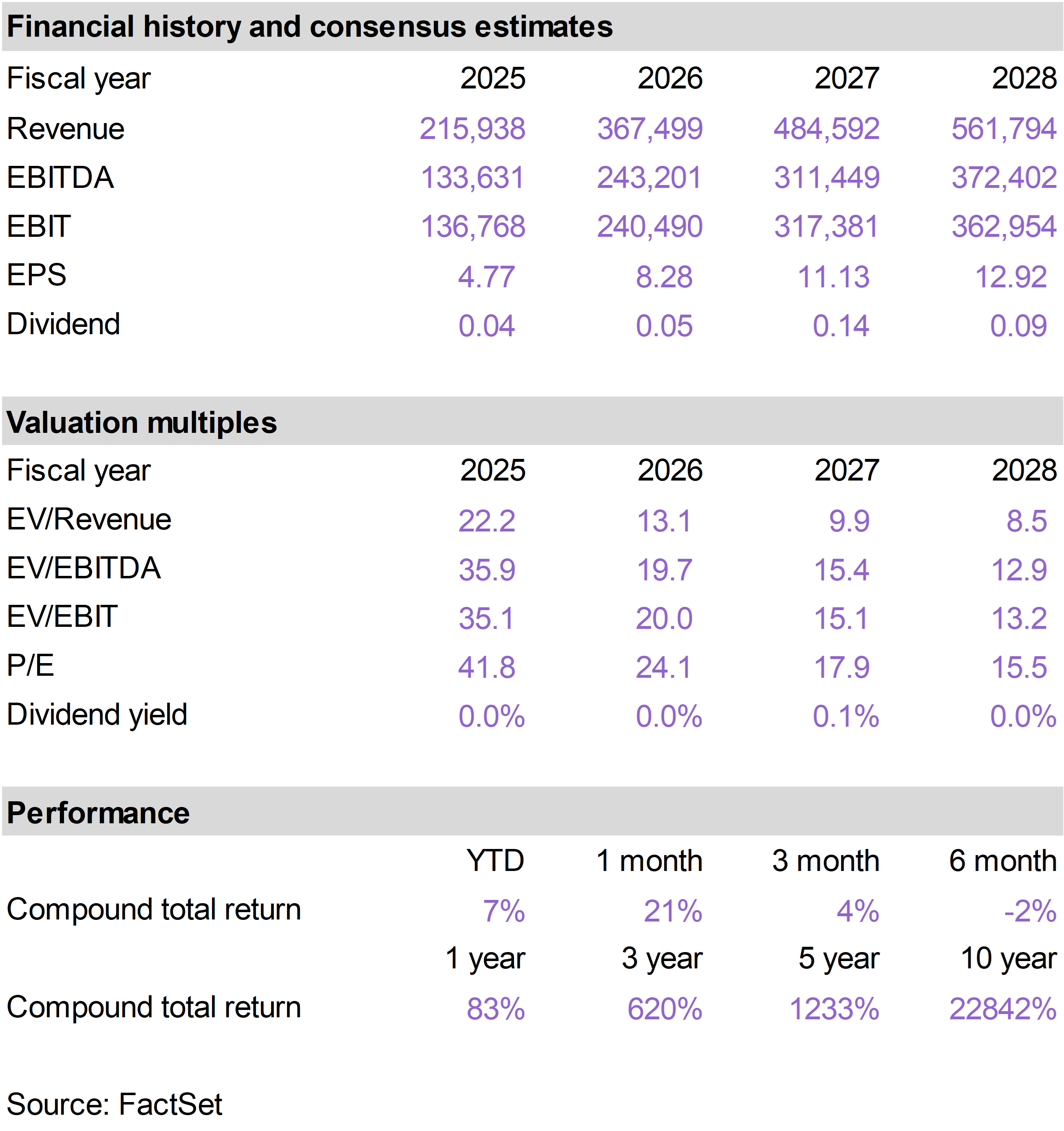
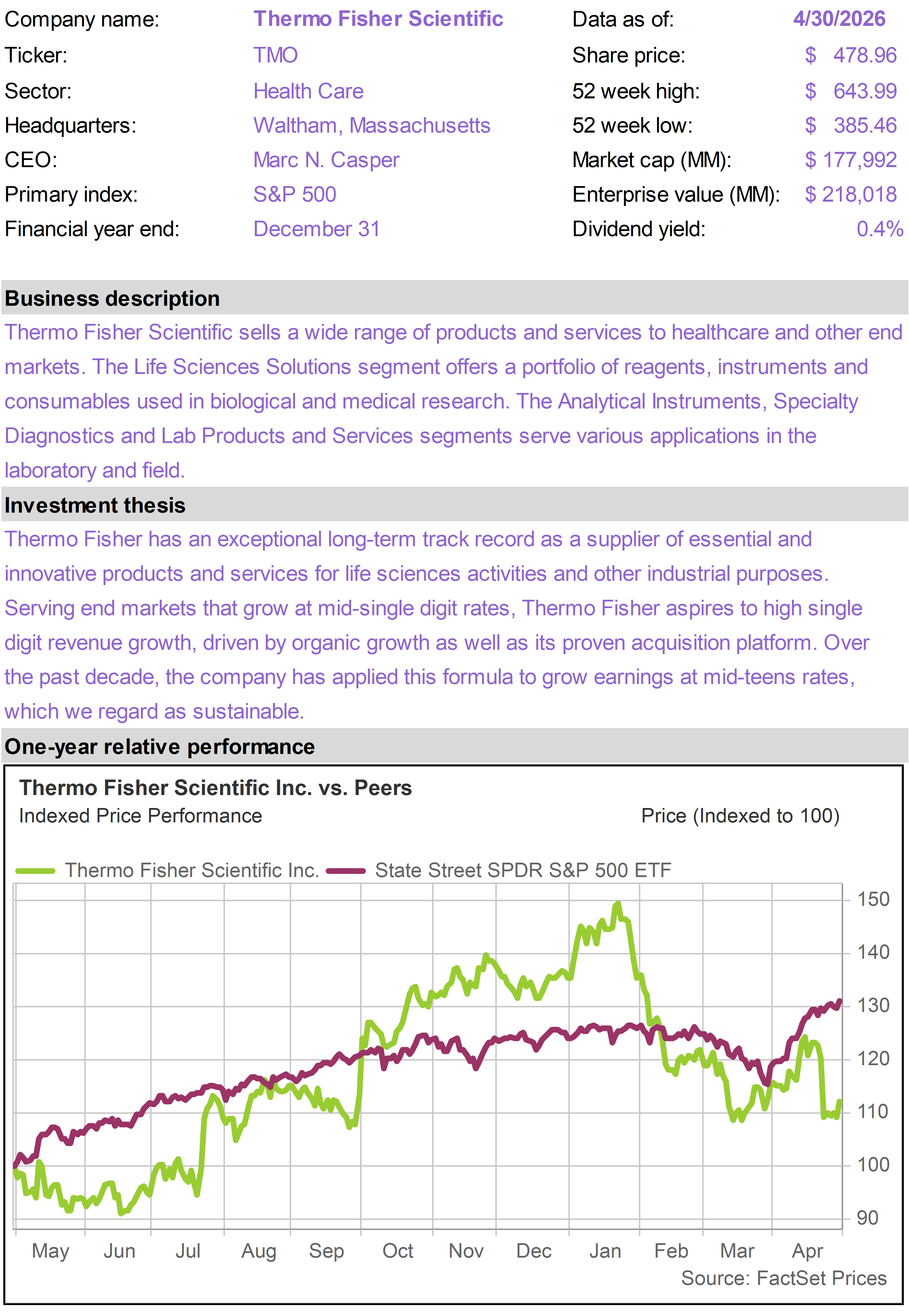
| | The other notable underperformers in the portfolio were SYK and TMO, both of which are health care names that declined modestly during the month.
Health care, a traditionally defensive sector, was broadly flat in April as investors rotated toward technology and more cyclical areas of the market amid improving sentiment around Iran. This shift toward risk-on positioning left lower-beta sectors lagging despite stable fundamentals. |
|
| | |
| | |
| | |
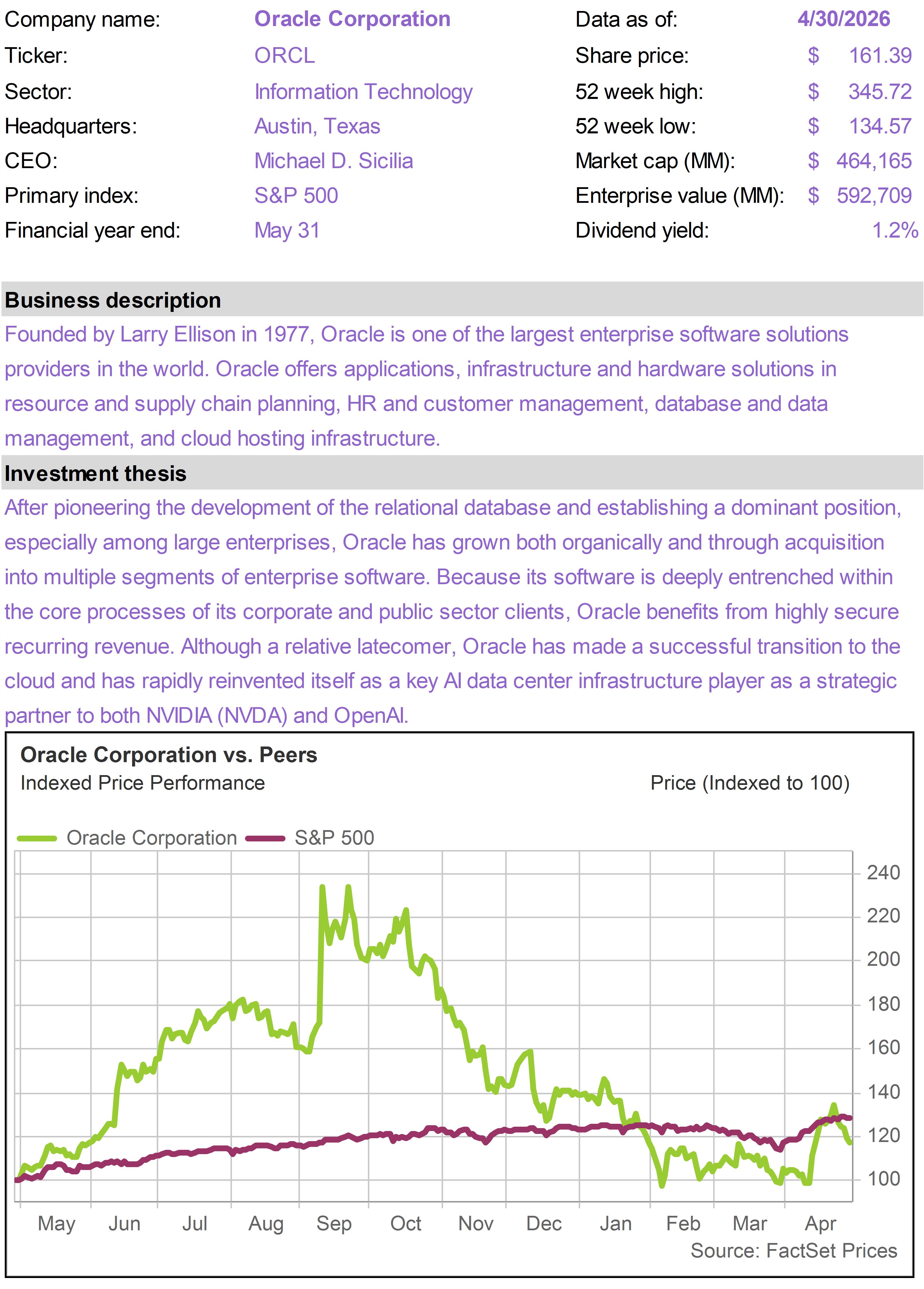
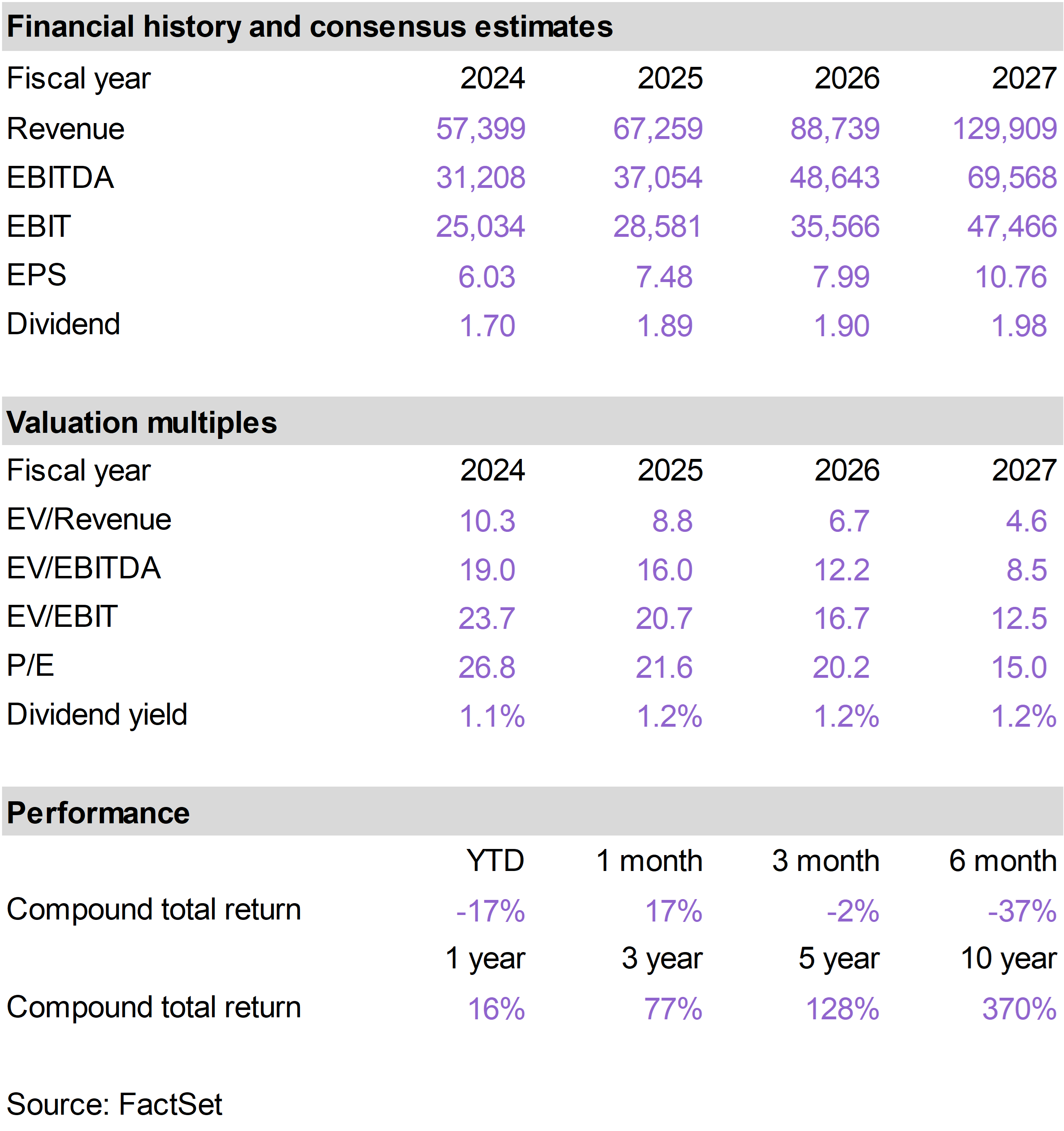
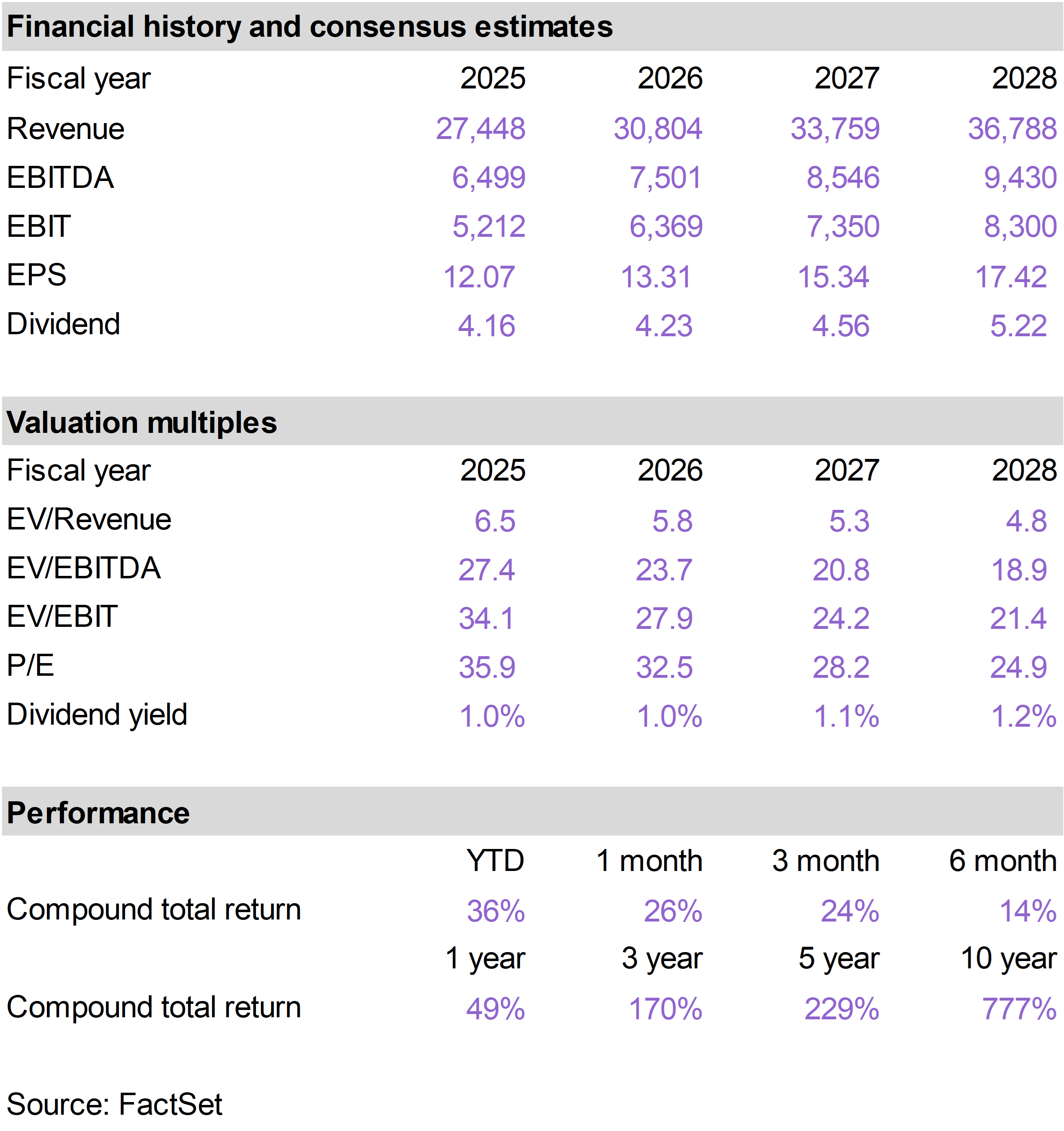
| | | Oracle Corporation (ORCL) |
|
|
|
| | |
|
| | |
|
| | |
|
| | Arch Capital Group (ACGL) |
|
|
|
| | |
|
| | Circle Internet Group (CRCL) |
|
|
|
| | |
|
| | |
|
| | |
|
| | |
|
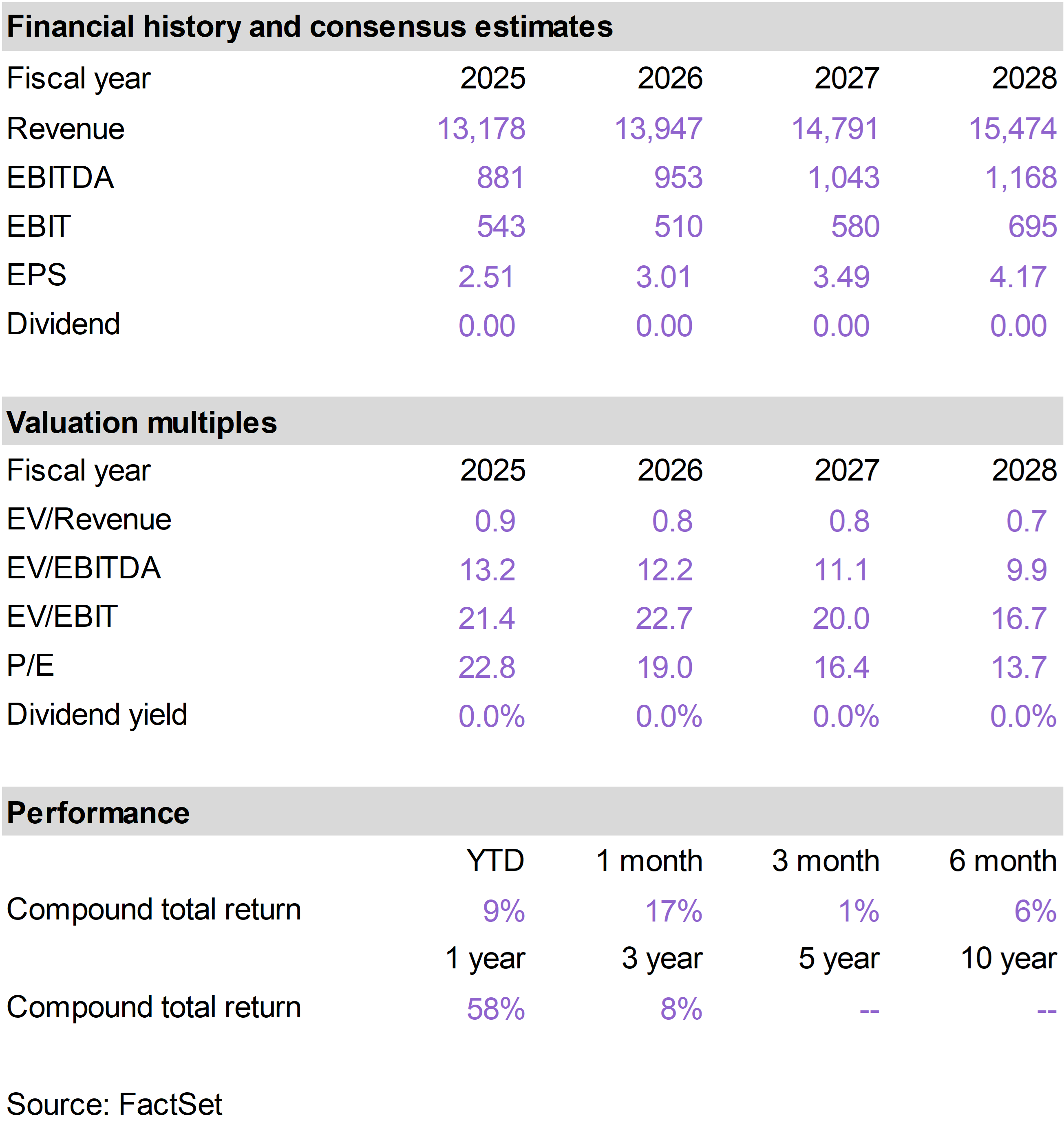
| | Thermo Fisher Scientific (TMO) |
|
|
|
| | |
|
| | |
|
| | |
|
| | |
|
| | The 76research American Resilience Model Portfolio is designed to provide exposure to growth businesses that operate with competitive advantages in structurally attractive markets. The objective is to identify businesses that can survive and thrive across different macroeconomic environments and whatever geopolitical crises may unfold. The holdings are intended as long-term investments to drive portfolio compounding with minimal need to realize taxable gains. Emphasis is placed on critical markers of business quality such as barriers to entry, physical scarcity of assets, balance sheet strength, effective capital allocation and durable long-term growth drivers. These assessments are paired with careful consideration of valuation and risk. |
|
| | FOR SUBSCRIBER USE ONLY. DO NOT FORWARD OR SHARE. |
|
| | | |
|
|
|
|
|