Inside This Week’s Discussion
OPEC: The Beginning of the End? (0:00)
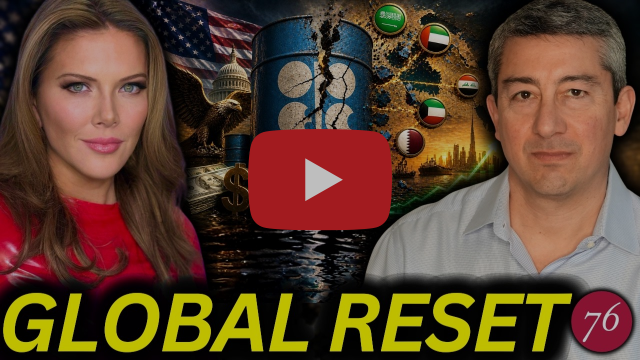
The UAE just left OPEC, a cartel that for decades has had an outsized influence on global oil prices—and at times, the U.S. economy itself.
The timing of this is not a coincidence. It comes amid a broader geopolitical shift, where countries in the Middle East are increasingly aligning with the United States—not just for security, but for access to the global financial system.
If one founding member can walk away, others can too. Venezuela is already being discussed as a potential next domino.
For investors, this all points to a future where supply is less controlled, markets are more dynamic, and the U.S. has significantly more influence.
Fed Power Struggle (9:58)
Kevin Warsh is stepping in as Fed chair with a clear message: the economy is evolving, AI is driving growth, and policy needs to adapt. He wants lower rates—and he wants them sooner.
But Jerome Powell isn’t leaving the stage. In a highly unusual move, Powell is staying on as a governor, setting up what could become a very real power struggle inside the Fed.
Trish and Rob break down the implications of a divided Fed.
Powell’s Legacy (15:41)
Under Jerome Powell, inflation didn’t just edge higher—it surged. The target is 2%. On his watch, it climbed as high as 9%.
While COVID created extraordinary circumstances, the warning signs were there, and policy stayed too loose for too long. Now the risk is the opposite mistake.
The Fed’s current hesitation—potentially influenced by partisan dynamics—is colliding with a very different reality: an economy being reshaped in real time by AI, productivity gains, and rising capital investment.
Is Wall Street Getting AI Wrong? (19:34)
Several of the Mag 7 just delivered strong results. Demand for AI is real. Revenue is growing. Earnings are growing.
But market reaction was mixed, with investors increasingly focused on the sheer scale of AI spending—particularly the billions going into infrastructure and hardware.
That may be missing the bigger picture. The companies investing most aggressively today are positioning themselves to own the infrastructure, the platforms, and ultimately the economics of the next decade.
Trish and Rob break down what this means for the market’s most important stocks—and where the opportunity really lies.
The Economy Is Holding Up (25:44)
Jobless claims are sitting near multi-decade lows. At the same time, businesses are investing—particularly in areas tied to AI, infrastructure, and long-term growth.
What we’re seeing is a split economy. The AI-driven, capital-intensive side is booming. The rate-sensitive parts—housing, lower-income consumers—are feeling the squeeze.
Even with higher energy prices, consumer confidence is starting to move higher. It says the economy today is more resilient than it used to be—less dependent on oil, more driven by services, technology, and productivity.
If energy prices stabilize—and there are reasons to think they will—that could remove one of the biggest overhangs on sentiment.
NATO Is Being Rewritten (37:06)
For decades, NATO worked because the U.S. carried the weight—financially and militarily. That model is now being challenged, as Washington becomes more selective about where it commits resources and who it backs.
NATO was built to contain Soviet expansionism. Today, the strategic focus is shifting toward China.
This is not a retreat—it’s a recalibration. And like energy markets, it’s part of a broader realignment—one where the U.S. is consolidating influence around its economic and strategic priorities.
The Trump IRA: Spreading Capitalism (45:21)
The Trump IRA is designed to get more Americans invested in markets, with government matching funds helping turn small, consistent contributions into real wealth over time.
But the bigger story is what it represents: a push toward an ownership economy, where more people have a stake in American enterprise.
This is more than a government program. It is a deliberate effort to fight the rising tide of socialism and extend the culture of saving and investing across the entire population.