First they told us AI was a bubble. Now they’re telling us it could wipe out the human race.
Earlier this week, Jacob Coxon, a 27-year-old researcher at Anthropic, one of the world’s leading AI labs, resigned with a dire warning.
In a social media post on X that has gotten more than 160 million views, he argued that the leading AI platforms are racing toward increasingly powerful and self-improving systems—without knowing whether those systems can ultimately be controlled.
Coxon accused the industry of “gambling with our lives.” Then one of his former colleagues put an actual number on the risk.
Evan Hubinger, another Anthropic researcher, retweeted that he believes there is a greater than 10% probability that superintelligent AI could cause human extinction within the next decade. That one has gotten more than 40 million views.
AI worst case scenarios are a very disturbing subject, but investors should take them seriously.
There is the risk itself—the annihilation of all humanity—as well as the secondary risk that society begins to perceive this risk as valid and tries to suffocate AI just as it is getting off the ground.
If someone told you there was a 10% chance that crossing the street would kill you, you obviously would not cross the street. Not for a million dollars.
When downside risk is this severe, the obvious thing to do is abandon the activity altogether.
With respect to AI, the logical conclusion of these claims is to stop AI development, or at least slow it down immensely and impose extreme regulation on it.
What we know for sure is that the evolution of AI (and technology generally) is open-ended. Nobody knows how it will all unfold, and AI already is extremely powerful.
Caution is certainly warranted.
But before we conclude that Silicon Valley is now building the machine that will put an end to civilization, it is worth understanding where these fears come from, how realistic they are, and what kind of political agendas are shaping public discussion around them.
AI has in many respects become the key growth driver of the American economy—through direct investment in hardware and infrastructure, wealth effects, and the creation of new businesses.
AI is also a central pillar of the Trump economic agenda.
Strangling AI development—by applying the same logic of “existential risk” that has been mobilized by climate change activists against fossil fuel companies in recent years—would severely damage the American economy.
It would also almost certainly derail the MAGA movement.
These are outcomes that would benefit America’s rivals, notably China, along with Trump’s political rivals. A faltering American economy serves both their interests.
From an investment perspective, the analogy to the highly politicized climate change debate is instructive as well.
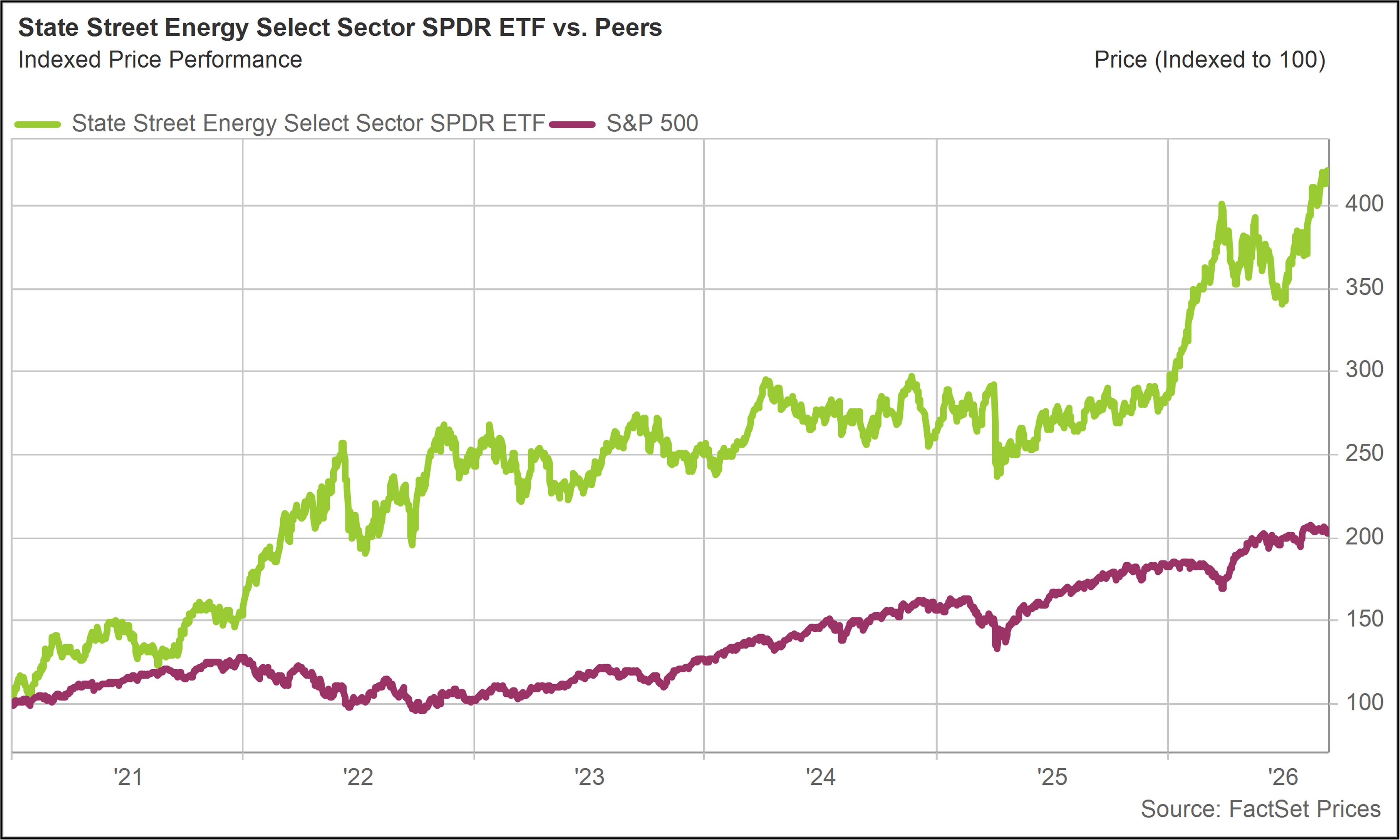
Investors who were spooked out of the Energy sector as climate change alarmism peaked have paid a hefty price. The S&P 500 Energy ETF (XLE) has generated about three times the total return of the S&P 500 since year-end 2020.
Investors who buy into the doomer rhetoric and abandon the AI theme may bear a similar long-term risk.