While this strategy is somewhat rational (and maybe even the regime’s best bet at the moment), Iran’s ability to restrict the flow of oil through the threat of force is rapidly diminishing.
Since the campaign began just over a week ago, large portions of Iran’s conventional military capacity have been degraded. The Iranian Air Force and Navy have reportedly suffered catastrophic losses, major missile systems have been destroyed, drone manufacturing facilities have been targeted, and many senior regime figures have been eliminated.
What remains of the Iranian regime has attempted to mount a response, but so far that response has been limited in scale and effectiveness.
Tehran has launched waves of ballistic missiles and drones at Israel, energy infrastructure around the Persian Gulf, and U.S. bases in the region. These strikes have caused localized damage and casualties—killing several U.S. personnel and dozens of civilians regionally—but the vast majority of projectiles have been intercepted by missile defense systems.
Iran retains the ability to create headlines and localized problems, but its capacity to inflict meaningful damage appears significantly diminished. As U.S. attacks on Iranian targets continue, that capacity only further erodes.
Getting the oil out
As we discussed shortly after the operation began in Resetting the Balance of Power in the Middle East, the primary economic and market impact of the confrontation does come not from military destruction itself but from the disruption of oil flows out of the Persian Gulf.
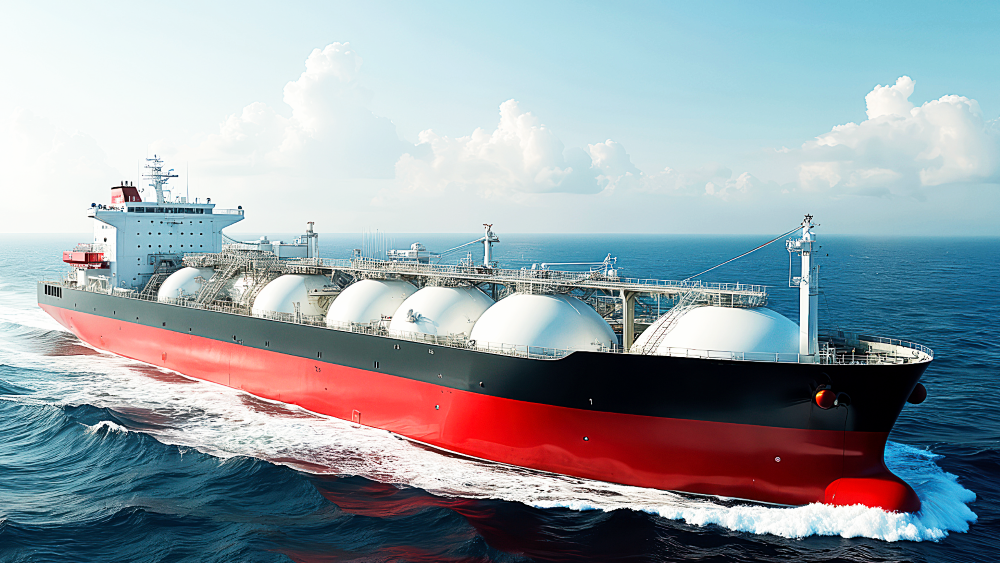
Oil production in the region has continued, but production alone is not the critical issue. If oil tankers cannot safely exit the Persian Gulf and reach global customers (particularly in Asia) then that supply is effectively removed from the market.
The Strait of Hormuz remains the most important energy chokepoint in the world. Roughly 20% of global oil supply normally flows through the narrow shipping lane, making it one of the most strategically sensitive waterways on the planet.
With remnants of the Iranian military threatening shipping lanes using mines, fast attack boats, and anti-ship missiles positioned along the coastline, insurers and shipping companies temporarily curtailed tanker traffic through the Strait. Even the perception of risk was enough to interrupt flows and drive oil markets higher.
Stagflation risk
As spot oil prices began to climb sharply late last week and into the early part of this week, we saw pressure on global equity markets for a number of reasons.
Higher energy prices, if sustained, have the potential to create a stagflationary dynamic. Rising oil prices act as a tax on consumers and businesses, reducing disposable income while simultaneously pushing production and transportation costs higher across the economy.
In other words, energy shocks simultaneously weaken growth and raise inflation—a combination markets naturally dislike.
Elevated energy prices also complicate the interest rate outlook.
As we saw in 2022, even temporary spikes in energy prices can push inflation readings higher by raising manufacturing, logistics, and distribution costs throughout the economy. These second-order effects often show up in inflation data months after the initial oil price move.
If inflation runs hotter because of higher oil prices, the Federal Reserve becomes less likely to cut interest rates. A “higher for longer” rate environment would weigh on equity valuations.
Help is on the way
The good news for investors is that oil markets now appear to be stabilizing as the outlook for a recovery in free transit through the Strait of Hormuz begins to improve.
President Trump held a press conference late yesterday afternoon outlining operational progress in the military campaign.
According to the administration, U.S. and allied forces have neutralized large portions of Iran’s remaining coastal missile batteries and naval assets that had been threatening tanker traffic. The administration also signaled that a multinational naval escort program for oil tankers moving through the Strait is being expanded.
There was some confusion today as to whether the U.S. Navy did escort an oil tanker through the Strait of Hormuz. It now appears that this did not happen, yet there are indications that some Greek-operated tankers have traveled through.
(One reason that traffic through the Strait is hard to determine is that ships are deliberately turning off their satellite transponders to reduce the risk of detection.)
In addition to naval escorts, Trump has also floated the possibility of easing sanctions on certain Russian oil exports as a temporary measure to cool global energy prices.
Whether or not Trump removes sanctions from Russian oil, his willingness to do so sends a helpful signal to oil markets that this administration is clearly focused on avoiding an energy crisis.
A critical workaround
While passage through the Strait of Hormuz remains constrained, the global oil system has begun to activate alternative routes. The most important of these is Saudi Arabia’s East-West pipeline, also known as the Petroline.
This massive pipeline runs roughly 750 miles across Saudi Arabia, transporting crude from the country’s major oil fields in the Eastern Province to export terminals on the Red Sea. Oil shipped from those terminals bypasses the Strait of Hormuz entirely.
In recent days, Saudi authorities have reportedly accelerated efforts to ramp up throughput along the pipeline, allowing additional crude to reach global markets without passing through the Gulf chokepoint.
The capacity of the system—roughly five million barrels per day—does not fully replace the oil that normally flows through the Strait. But it does provide a critical pressure valve for global energy markets during this periods of stress.
Solving the problem
An oil price shock is precisely what the Iranian regime wants and arguably represents the biggest strategic risk to the mission. But as military operations degrade Iran’s ability to threaten shipping, naval escorts expand, and alternative export routes come online, the odds of a sustained oil shock appear to be declining.
Trump addressed this directly at his press conference yesterday, promising naval escorts and the escalation of military force as needed to make sure tanker traffic resumes through the Strait of Hormuz.
Speaking on the President’s behalf late this afternoon, White House Press Secretary Karoline Leavitt built upon that message. The military is now exploring other options to ensure safe passage through the Strait.