American Resilience
*|MC:SUBJECT|*
͏ ‌     ͏ ‌     ͏ ‌     ͏ ‌     ͏ ‌     ͏ ‌     ͏ ‌     ͏ ‌     ͏ ‌     ͏ ‌     ͏ ‌     ͏ ‌     ͏ ‌     ͏ ‌     ͏ ‌     ͏ ‌     ͏ ‌     ͏ ‌     ͏ ‌     ͏ ‌     ͏ ‌     ͏ ‌     ͏ ‌     ͏ ‌     ͏ ‌     ͏ ‌     ͏ ‌     ͏ ‌     ͏ ‌     ͏ ‌     ͏ ‌     ͏ ‌     ͏ ‌     ͏ ‌     ͏ ‌     ͏ ‌     ͏ ‌     ͏ ‌     ͏ ‌     ͏ ‌     ͏ ‌     ͏ ‌     ͏ ‌     ͏ ‌     ͏ ‌     ͏ ‌     ͏ ‌     ͏ ‌     ͏ ‌     ͏ ‌     ͏ ‌     ͏ ‌     ͏ ‌     ͏ ‌     ͏ ‌     ͏ ‌     ͏ ‌     ͏ ‌     ͏ ‌     ͏ ‌     ͏ ‌     ͏ ‌     ͏ ‌     ͏ ‌     ͏ ‌     ͏ ‌     ͏ ‌     ͏ ‌     ͏ ‌     ͏ ‌     ͏ ‌     ͏ ‌     ͏ ‌     ͏ ‌     ͏ ‌     ͏ ‌     ͏ ‌     ͏ ‌     ͏ ‌     ͏ ‌     ͏ ‌     ͏ ‌     ͏ ‌     ͏ ‌     ͏ ‌     ͏ ‌     ͏ ‌     ͏ ‌     ͏ ‌     ͏ ‌     ͏ ‌     ͏ ‌     ͏ ‌     ͏ ‌     ͏ ‌     ͏ ‌     ͏ ‌     ͏ ‌     ͏ ‌     ͏ ‌     ͏ ‌     ͏ ‌     ͏ ‌     ͏ ‌     ͏ ‌     ͏ ‌     ͏ ‌     ͏ ‌     ͏ ‌     ͏ ‌     ͏ ‌     ͏ ‌     ͏ ‌     ͏ ‌     ͏ ‌     ͏ ‌     ͏ ‌     ͏ ‌     ͏ ‌     ͏ ‌     ͏ ‌     ͏ ‌     ͏ ‌     ͏ ‌     ͏ ‌     ͏ ‌     ͏ ‌     ͏ ‌     ͏ ‌     ͏ ‌     ͏ ‌     ͏ ‌     ͏ ‌     ͏ ‌     ͏ ‌     ͏ ‌     ͏ ‌     ͏ ‌     ͏ ‌     ͏ ‌     ͏ ‌     ͏ ‌     ͏ ‌     ͏ ‌     ͏ ‌     ͏ ‌     ͏ ‌     ͏ ‌     ͏ ‌     ͏ ‌     ͏ ‌     ͏ ‌     ͏ ‌     ͏ ‌     ͏ ‌     ͏ ‌     ͏ ‌     ͏ ‌     ͏ ‌     ͏ ‌     ͏ ‌     ͏ ‌     ͏ ‌     ͏ ‌     ͏ ‌     ͏ ‌     ͏ ‌     ͏ ‌     ͏ ‌     ͏ ‌     ͏ ‌     ͏ ‌     ͏ ‌     ͏ ‌     ͏ ‌     ͏ ‌     ͏ ‌     ͏ ‌     ͏ ‌     ͏ ‌     ͏ ‌     ͏ ‌     ͏ ‌     ͏ ‌     ͏ ‌     ͏ ‌     ͏ ‌     ͏ ‌     ͏ ‌     ͏ ‌     ͏ ‌     ͏ ‌     ͏ ‌     ͏ ‌     ͏ ‌     ͏ ‌     ͏ ‌     ͏ ‌     ͏ ‌     ͏ ‌     ͏ ‌     ͏ ‌     ͏ ‌     ͏ ‌     ͏ ‌     ͏ ‌     ͏ ‌     ͏ ‌     ͏ ‌     ͏ ‌     ͏ ‌     ͏ ‌     ͏ ‌     ͏ ‌     ͏ ‌     ͏ ‌     ͏ ‌     ͏ ‌     ͏ ‌     ͏ ‌     ͏ ‌     ͏ ‌     ͏ ‌     ͏ ‌     ͏ ‌     ͏ ‌     ͏ ‌     ͏ ‌     ͏ ‌     ͏ ‌     ͏ ‌     ͏ ‌     ͏ ‌     ͏ ‌     ͏ ‌     ͏ ‌     ͏ ‌     ͏ ‌     ͏ ‌     ͏ ‌     ͏ ‌     ͏ ‌     ͏ ‌     ͏ ‌     ͏ ‌     ͏ ‌     ͏ ‌     ͏ ‌     ͏ ‌     ͏ ‌     ͏ ‌     ͏ ‌     ͏ ‌     ͏ ‌     ͏ ‌     ͏ ‌     ͏ ‌     ͏ ‌     ͏ ‌     ͏ ‌     ͏ ‌     ͏ ‌     ͏ ‌     ͏ ‌     ͏ ‌     ͏ ‌     ͏ ‌     ͏ ‌     ͏ ‌     ͏ ‌     ͏ ‌     ͏ ‌     ͏ ‌     ͏ ‌     ͏ ‌     ͏ ‌     ͏ ‌     ͏ ‌     ͏ ‌     ͏ ‌     ͏ ‌     ͏ ‌     ͏ ‌     ͏ ‌     ͏ ‌     ͏ ‌     ͏ ‌     ͏ ‌     ͏ ‌     ͏ ‌     ͏ ‌     ͏ ‌     ͏ ‌     ͏ ‌     ͏ ‌     ͏ ‌     ͏ ‌     ͏ ‌     ͏ ‌     ͏ ‌     ͏ ‌     ͏ ‌     ͏ ‌     ͏ ‌     ͏ ‌     ͏ ‌     ͏ ‌     ͏ ‌     ͏ ‌     ͏ ‌     ͏ ‌     ͏ ‌     ͏ ‌     ͏ ‌     ͏ ‌     ͏ ‌     ͏ ‌     ͏ ‌     ͏ ‌     ͏ ‌    ­ ­ ­ ­ ­ ­ ­ ­ ­ ­ ­ ­ ­ ­ ­ ­ ­ ­ ­ ­ ­ ­ ­ ­ ­ ­ ­ ­ ­ ­ ­ ­ ­ ­ ­ ­ ­ ­ ­ ­ ­ ­ ­ ­ ­ ­ ­ ­ ­ ­ ­ ­ ­ ­ ­ ­ ­ ­ ­ ­ ­ ­ ­ ­ ­ ­ ­ ­ ­ ­ ­ ­ ­ ­ ­ ­ ­ ­ ­ ­ ­ ­ ­ ­ ­ ­ ­ ­ ­ ­ ­ ­ ­ ­ ­ ­ ­ ­ ­ ­ ­ ­ ­ ­ ­ ­ ­ ­ ­ ­ ­ ­ ­ ­ ­ ­ ­ ­ ­ ­ ­ ­ ­ ­ ­ ­ ­ ­ ­ ­ ­ ­ ­ ­ ­ ­ ­ ­ ­ ­ ­ ­ ­ ­ ­ ­ ­ ­ ­ ­ ­ ­ ­ ­ ­ ­ ­ ­ ­ ­ ­ ­ ­ ­ ­ ­ ­ ­ ­ ­ ­ ­ ­ ­ ­ ­ ­ ­ ­ ­ ­ ­ ­ ­ ­ ­ ­ ­ ­ ­ ­ ­ ­ ­ ­ ­ ­ ­ ­ ­ ­ ­ ­ ­ ­ ­ ­ ­ ­ ­ ­ ­ ­ ­ ­ ­ ­ ­ ­ ­ ­ ­ ­ ­ ­ ­ ­ ­ ­ ­ ­ ­ ­ ­ ­ ­ ­ ­ ­ ­ ­ ­ ­ ­ ­ ­ ­ ­ ­ ­ ­ ­ ­ ­ ­ ­ ­ ­ ­ ­ ­ ­ ­ ­ ­ ­ ­ ­ ­ ­ ­ ­ ­ ­ ­ ­ ­ ­ ­ ­ ­ ­

American Resilience Model Portfolio

Portfolio Update: February 10, 2026

Publication date: February 10, 2026

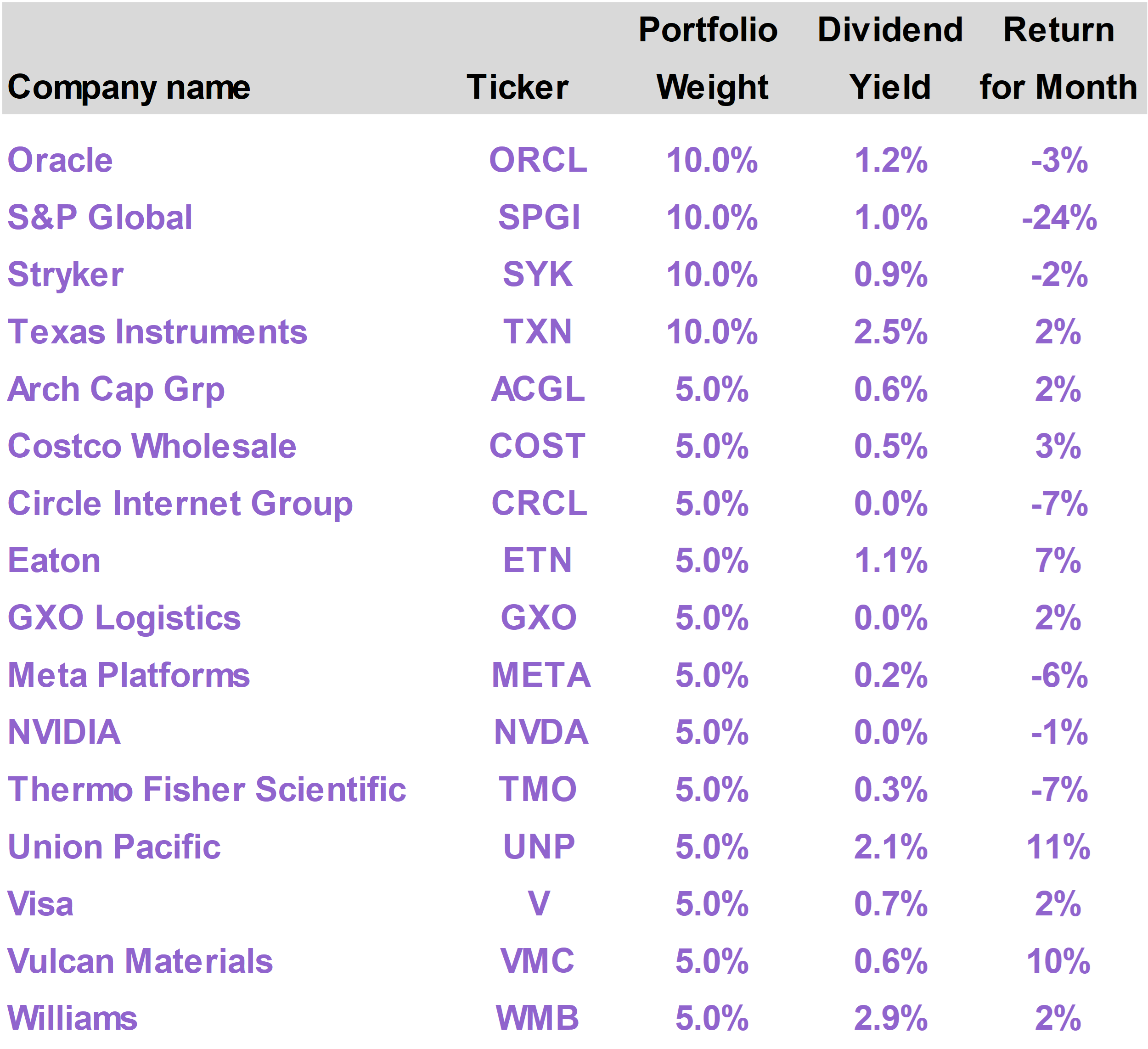
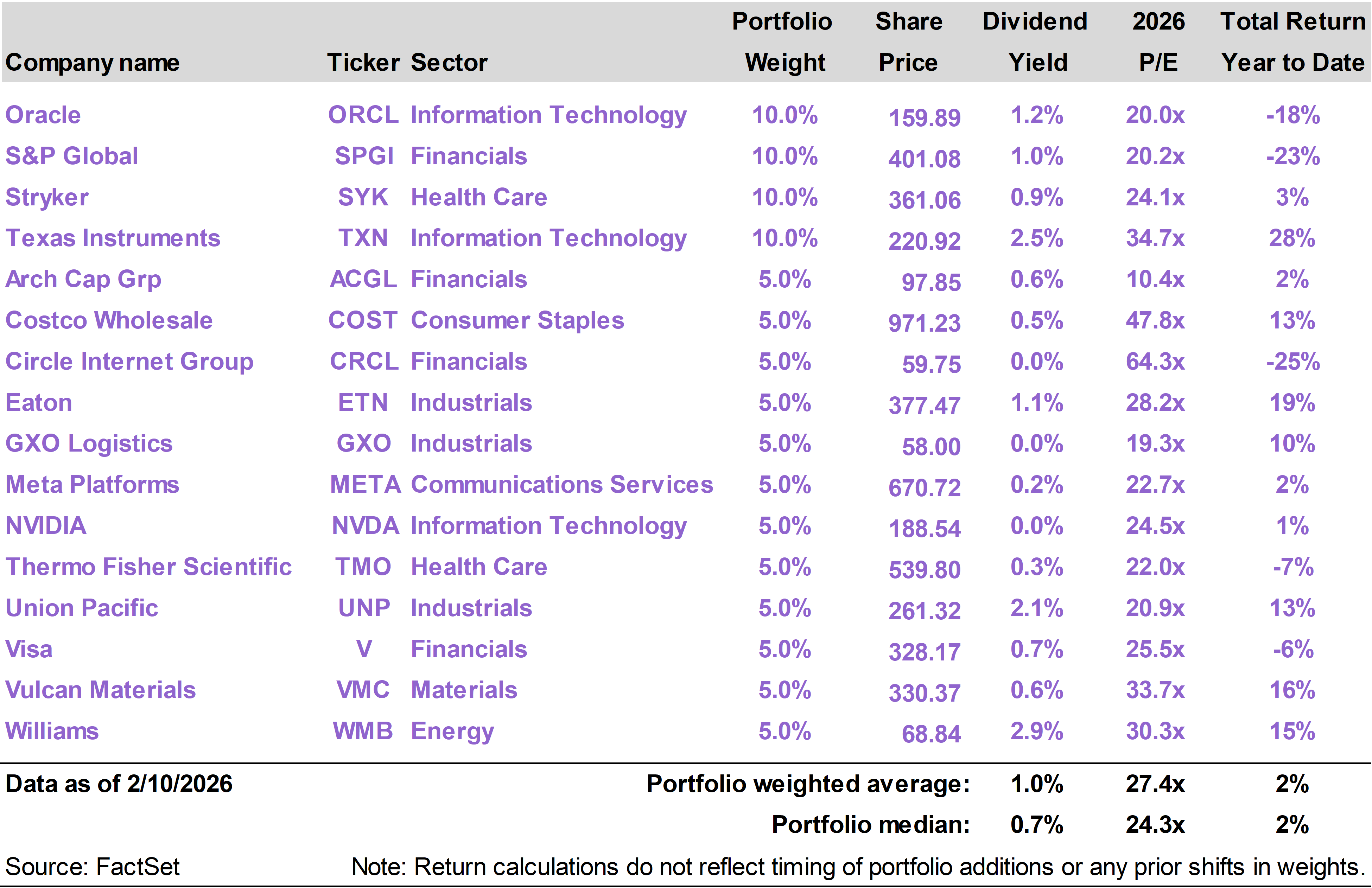
Current portfolio holdings

FOR SUBSCRIBER USE ONLY. DO NOT FORWARD OR SHARE.

Executive summary

  • We are adding Circle Internet Group (CRCL) as a 5% portfolio position.

  • CRCL is a clear leader in the nascent stablecoin market, which we view as having enormous long-term growth potential.

  • Network effects and other competitive advantages suggest CRCL has the ability to achieve platform dominance in this high growth area.

  • Shares of CRCL are down sharply over the past several months, in sympathy with the sell-off in software and crypto-related stocks.

  • We believe the recent weakness is unwarranted and creates a compelling entry point.

  • To accommodate the new position, we are exiting from Air Products and Chemicals (APD).

  • APD is a solid business with improvement potential, but we view CRCL as the superior long-term investment.

Portfolio discussion

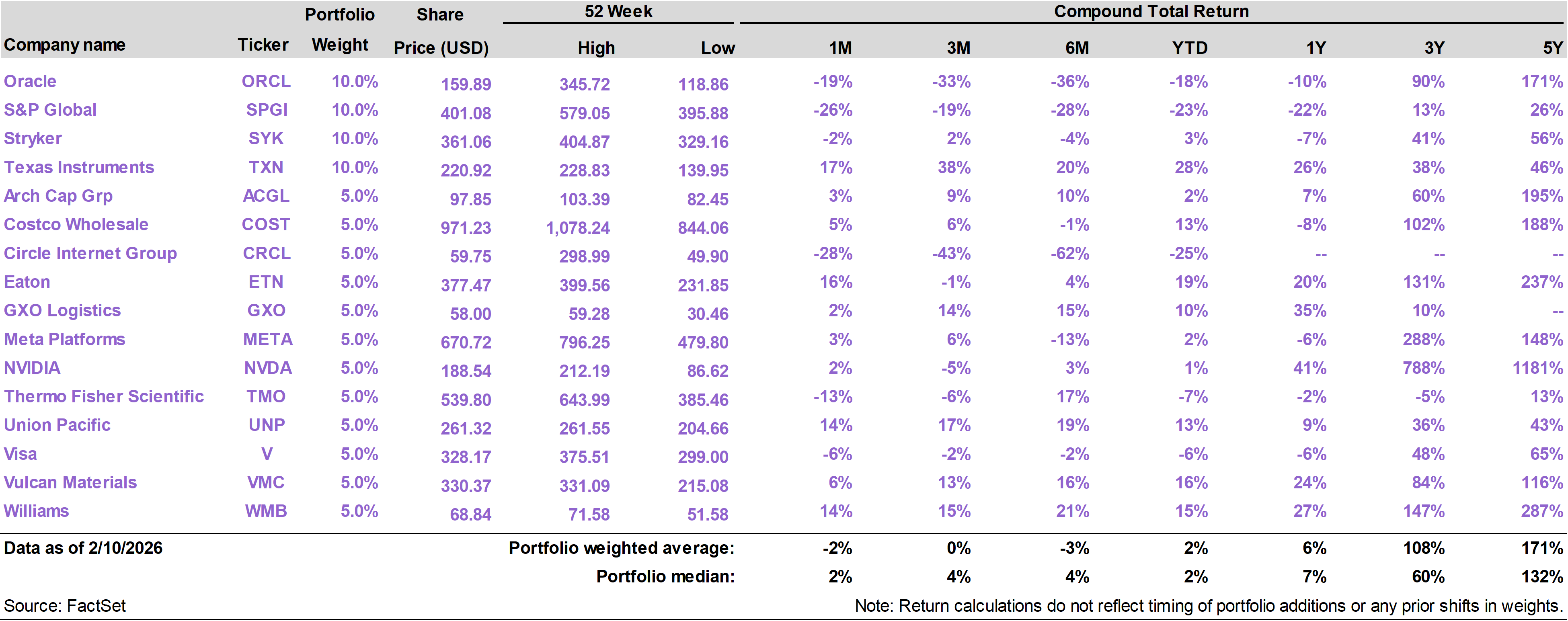
The American Resilience portfolio has delivered a total return of -1.0% so far in February, versus the S&P 500 Index return of 0.1%. On a year to date basis through February 10, the portfolio has returned 3.4%, versus 1.5% for the S&P 500.


The purpose of this portfolio update is to add Circle Internet Group (CRCL) as a 5% position and to remove Air Products and Chemicals (APD) as a 5% position.


Our detailed investment case on CRCL is provided below. In short, we are taking advantage of the severe pressure on crypto/software stocks, which has affected CRCL, to establish a position in a stock that we believe has excellent long-term prospects.


The decision to remove APD is based in part on recent strength in the stock. While we continue to view APD as a solid company with strong industrial positions and improvement potential, we believe access to the structural growth opportunity in stablecoins represents the more compelling use of capital.

Circle (CRCL): Financial Infrastructure for the Future


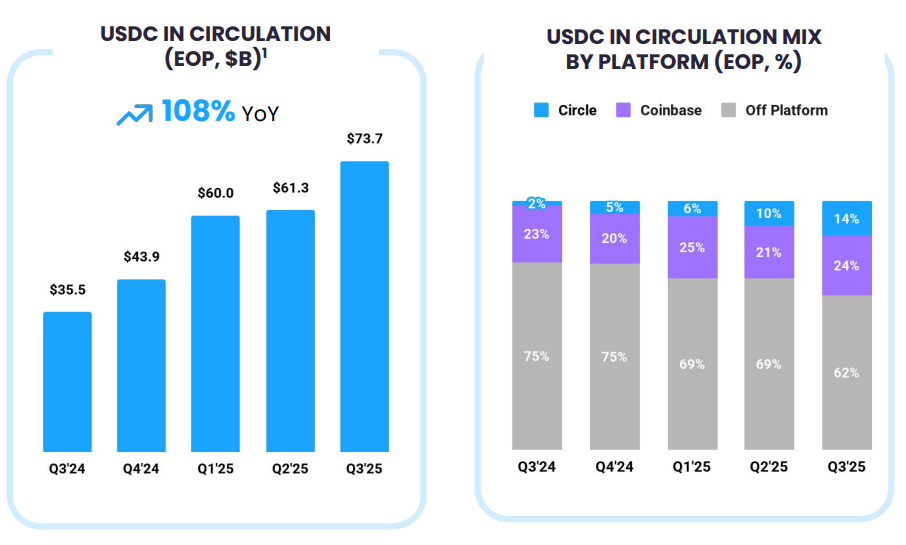
Circle (CRCL) is best understood not as a “crypto company,” but as a regulated digital-dollar platform that is on a path to becoming a major part of the global financial plumbing. The company issues USDC, the world’s second-largest U.S.-dollar stablecoin, which has a market capitalization that now exceeds $70 billion.


A stablecoin is a digital currency designed to maintain a stable value, typically by being pegged on a one-to-one basis to a fiat currency such as the U.S. dollar. Unlike volatile cryptocurrencies, stablecoins are backed by reserves like cash, short-term government securities, or other highly liquid assets.


Stablecoins are essentially digital representations of traditional money, adapted for the internet. They can move instantly over blockchain networks, settle 24/7, and be programmed into financial applications. Stablecoins are commonly used for trading, payments, cross-border transfers, and on-chain settlement.


Stablecoins are a critical innovation in financial technology, offering a faster and more flexible way to conduct commerce. They have also become a central pillar of the Trump administration’s economic agenda, with broad and growing support in Congress.


Stablecoins represent a revolution in digital finance. The dollar now has an internet-native payment rail that is fast, frictionless, and free of middlemen. This groundbreaking technology will buttress the dollar’s status as the global reserve currency, expand access to the dollar economy for billions across the globe, and lead to a surge in demand for US Treasuries, which back stablecoins. - Treasury Secretary Scott Bessent (7/18/2025)


Circle vs. Tether


Circle’s stablecoin is not the largest in the world. That distinction belongs to USDT, a different stablecoin with a market cap now above $180 billion. USDT is issued by offshore competitor Tether, an elusive private company incorporated in the British Virgin Islands.


There are dozens of stablecoins in active circulation, but USDT and USDC dominate the overall stablecoin market with more than 80% share. The next largest stablecoin is well under $10 billion.


Tether may currently have more assets, but the vast majority of that is based outside the United States, including Asia, Latin America, the Middle East and various offshore crypto markets. What differentiates Circle is its superior positioning within the United States, Europe and other highly regulated, developed market jurisdictions.


As a Delaware corporation headquartered in New York City, Circle completed its Initial Public Offering (IPO) at $31 per share in June 2025. The company has spent over a decade building up trust, regulatory credibility, liquidity, and a technology ecosystem around its products.


Despite the smaller asset base, we view Circle as better positioned to capitalize on stablecoin adoption within the mainstream financial world, especially as stablecoins have now become a focal point of U.S. economic policy.


Stablecoins are rapidly transitioning from a niche crypto utility into much broader use cases like payments, treasury management, capital markets transactions, and global commerce.


The Circle business plan was built around this opportunity to bring stablecoins into the traditional financial world. Circle is now one of the few scaled, compliant stablecoin platforms that a wide range of enterprises can actually build on.


Network effects are critical


An ongoing debate within the investment community is whether or not stablecoins will simply become a commodity since they can be easily created by more or less any financial institution.


After all, there are several hundred money market funds in existence. Stablecoins are in some respects just a digital version of these funds.


To the extent Circle presents a compelling investment opportunity, the business will have to benefit from network effects. We believe it does.


Network effects are arguably the most important concept in investing today. Essentially all of the most valuable companies in the world owe their success to them.


Network effects describe a dynamic where a product or platform becomes more valuable as more users participate. Each new participant increases the utility of the network for others, creating a self-reinforcing cycle of adoption. This often leads to winner-take-most outcomes, making established platforms extremely difficult to displace.


Microsoft’s Windows operating system, Google’s search function, Meta’s social media platforms, and Visa and Mastercard’s payment systems are prominent examples of how businesses with strong network effects can snowball into hundreds of billions or trillions in shareholder value.


Circle is interesting precisely because it has the potential to evolve into a dominant digital platform like all of these companies, while also playing in an addressable market of vast proportions.


The critical importance of promoting network effects is not lost on management. On the most recent earnings call, founder and CEO Jeremy Allaire described Circle’s position as being anchored in “durable, powerful network effects built on trust, liquidity infrastructure, regulatory compliance, and broad distribution across blockchains and financial institutions.”


Once a digital platform achieves dominance, it can grow over time in all kinds of new directions. Amazon, for example, started with books and now sells essentially everything.


If stablecoins continue to scale as expected, the company’s optionality extends well beyond today’s revenue model, encompassing a wide range of potential transaction activity. The key to Circle’s long-term success will therefore be getting its products, services and systems deeply entrenched within the core operations of its financial system counterparts.


What Circle does… and how it makes money


Circle is literally in the business of “making” money. It takes dollars from the traditional financial system and converts them into digital tokens, or stablecoins, that represent a dollar of value.


At its core, Circle issues fully reserved, dollar-backed stablecoins—primarily USDC—and manages the financial and technical infrastructure that allows those digital dollars to circulate globally, 24/7.


Circle’s current revenue model is relatively simple, with two primary components. The company earns interest income on the reserves backing USDC (similar to how a bank earns a “spread” on deposits). It also generates additional revenue from transaction activity and service-based fees (similar to payment processors).


(1) Reserve income


When USDC is issued, Circle holds the backing reserves in cash and short-duration U.S. Treasuries. The interest earned on those reserves is the primary driver of revenue today. As USDC in circulation grows, reserve income scales proportionately.


This creates a powerful operating characteristic: revenue growth can occur simply through greater adoption of the digital dollar itself.


Circle shares a portion of its reserve income with distribution partners—exchanges, platforms, and financial institutions that help grow USDC usage. Coinbase (COIN), the leading U.S. crypto exchange, is a key distribution partner and represents one of its oldest and most important strategic relationships.


While distribution partnerships involve revenue sharing and reduce margins, they accelerate network adoption and liquidity, reinforcing USDC’s position. Over time, as more activity happens “on-platform” through Circle-owned rails, Circle’s share of the economics can improve.


(2) Platform and developer services (early but growing)


Beyond reserve income, Circle is gradually building transaction-based and service-based revenue streams. These include cross-chain transfer infrastructure, payments Application Programming Interfaces (APIs), tokenized cash-like instruments, and enterprise financial tools.


These are still a small percentage of revenue today—but they represent higher-margin fee streams layered on top of USDC’s base network.


USDC Assets and Platform Mix

(Source: Circle)


Regulatory tailwind


Recent U.S. legislation materially improves Circle’s competitive positioning by turning its long-standing compliance posture into a structural advantage.


The GENIUS Act (Guiding and Establishing National Innovation for U.S. Stablecoins Act), now law, establishes a federal framework for payment stablecoins. It requires 1:1 reserve backing with high-quality liquid assets, frequent public disclosures, and ongoing regulatory supervision—while explicitly clarifying that compliant payment stablecoins are not securities.


For Circle, this largely codifies how USDC already operates. In effect, regulation is no longer a hurdle Circle must clear; it is a moat that raises the bar for competitors who built under looser standards.


Crucially, GENIUS enables banks, payment processors, and enterprises to use stablecoins within a clear legal perimeter. That expands USDC’s addressable market beyond crypto-native activity into payments, treasury management, settlement, and tokenized finance.


The Digital Asset Market Clarity Act, while not yet fully enacted, complements this shift by defining regulatory jurisdiction and market structure for digital assets more broadly. The law reduces the risk that stablecoins become entangled in securities or commodities enforcement regimes, reducing long-term policy uncertainty and supporting institutional adoption.


Taken together, these two laws reward the model Circle has already built: transparent reserves, regulatory engagement, and neutral financial infrastructure.


Sizing the stablecoin opportunity


Stablecoins are best thought of as “internet-native money.” They combine the stability of fiat currency with the speed, programmability, and global reach of blockchains.


Today, global stablecoin supply is roughly $300 billion, having grown at a rapid pace over the last five years. The future long-term growth opportunity is vast. Stablecoins have the potential to become the dominant mode of digital transactions.


Stablecoins represent a fully digital approach to moving, storing, and exchanging money. Most stablecoin usage today is still concentrated in crypto-related activity like trading and on-chain settlement.


The real long-term opportunity, however, is the upgrade of the traditional financial system to tokenized cash, which is similar in many ways to the upgrade from physical mail to e-mail over the past several decades.


Management contends that stablecoins function as a new form of digital M1. This refers to the portion of the money supply (totaling some $19 trillion at year-end 2025 in the U.S. alone) that sits in checking and savings accounts or as physical cash in a wallet or safe.


Stablecoins enable cash to move at internet speed. As adoption broadens, growth is driven not just by supply, but by velocity. The same dollar can settle many transactions in a short period, magnifying utility.


If even a modest percentage of global dollar settlement migrates on-chain, the addressable market for stablecoins expands into the trillions, not hundreds of billions.


It is worth noting as well that the money supply itself is not static but is constantly growing. Over the past 20 years, overall money supply has grown approximately 6% per year in the United States. So, over the long term, stablecoins have the potential to take a growing share of a consistently growing pie.


Circle’s competitive advantages


Circle’s benefits from numerous competitive advantages which intersect to strengthen its positioning within this rapidly growing sector.


(1) Trust and regulatory credibility


USDC is fully reserved, transparent, and issued within an increasingly clear regulatory framework. This matters enormously as stablecoins move beyond retail crypto traders into businesses, funds, and regulated institutions. Trust is hard to regain once lost—and Circle has spent more than a decade prioritizing credibility, often at the expense of faster growth.


(2) Liquidity


USDC is deeply embedded across exchanges, decentralized finance protocols, payment systems, and blockchains. Liquidity begets liquidity: developers build where liquidity already exists; users migrate to where transactions are cheapest and fastest.


As Allaire noted on the recent earnings call, Circle’s moat comes from its “core liquidity infrastructure, global minting and redemption capabilities, and broad distribution across ecosystems.”


(3) Market-neutral infrastructure


Unlike exchanges, wallets, or trading firms, Circle positions itself as market-neutral plumbing. This makes it a trusted counterparty for firms that do not want to build on a competitor’s technology stack.


(4) Technology depth


Circle is not just an issuer; it is a builder of financial infrastructure software. Its cross-chain transfer technology, payments rails, and programmable money tooling allow developers to treat USDC as a native application layer rather than a static token.


Additional growth avenues


Circle’s most compelling long-term upside potentially lies beyond reserve income.


As USDC migrates into real-world payments—B2B settlement, remittances, marketplace payouts—Circle can capture transaction-based fees while reinforcing the base network. Unlike card networks, stablecoin payments settle instantly, globally, and at low cost. That is attractive for use cases where speed and predictability matter more than consumer credit.


Circle’s strategy also extends into traditional payment rails through partnerships with Visa (V) and other payment processors.


Visa has integrated USDC settlement capabilities, enabling select partners to settle obligations directly in stablecoins rather than through legacy banking rails. This allows payments to clear faster, operate 24/7, and reduce reliance on correspondent banks, particularly for cross-border transactions.


Circle’s Arc initiative is particularly important to long-term optionality. Arc is designed as a blockchain-based financial infrastructure layer optimized for regulated digital money.


Rather than competing with general-purpose blockchains, Arc aims to offer enterprise-grade performance, compliance hooks, and programmability that is specifically tailored to payments, treasury, and financial contracts.


Management has described Arc as part of a broader “internet financial system,” where money, contracts, and settlement logic live natively in software. If successful, Arc could become a high-margin platform layer enabling tokenized cash instruments, programmable settlement, and AI agent-driven financial workflows.


The company is currently exploring the creation of an Arc token to facilitate this business. Arc is early, but if adoption takes hold, it expands Circle’s role from issuer to operating system for digital money.


Company background


Circle was founded in 2013 by Jeremy Allaire, a repeat entrepreneur with deep roots in internet infrastructure and payments. Unlike many crypto founders, Allaire has consistently framed Circle’s mission in decade-long time horizons, not speculative cycles.


For years, Circle invested heavily in compliance, policy engagement, and global regulatory alignment—often while competitors optimized for speed or yield. That patience is now paying off as regulation shifts from existential risk to structural tailwind.


Allaire has described Circle as “still early-stage relative to the scale of what we’re building,” emphasizing that the company’s goal is to upgrade the entire global financial system, not simply issue a popular token.


Post-IPO sell-off as opportunity


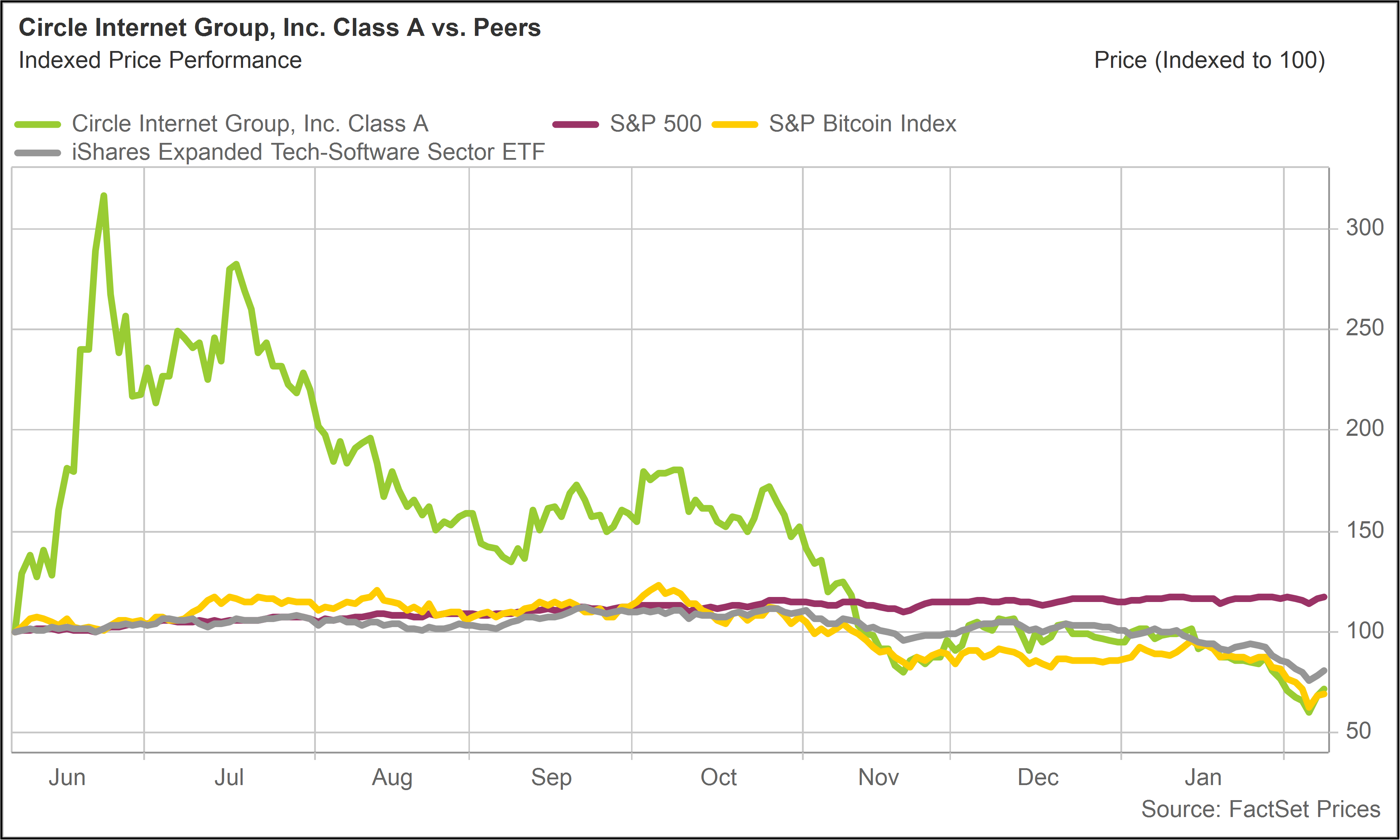
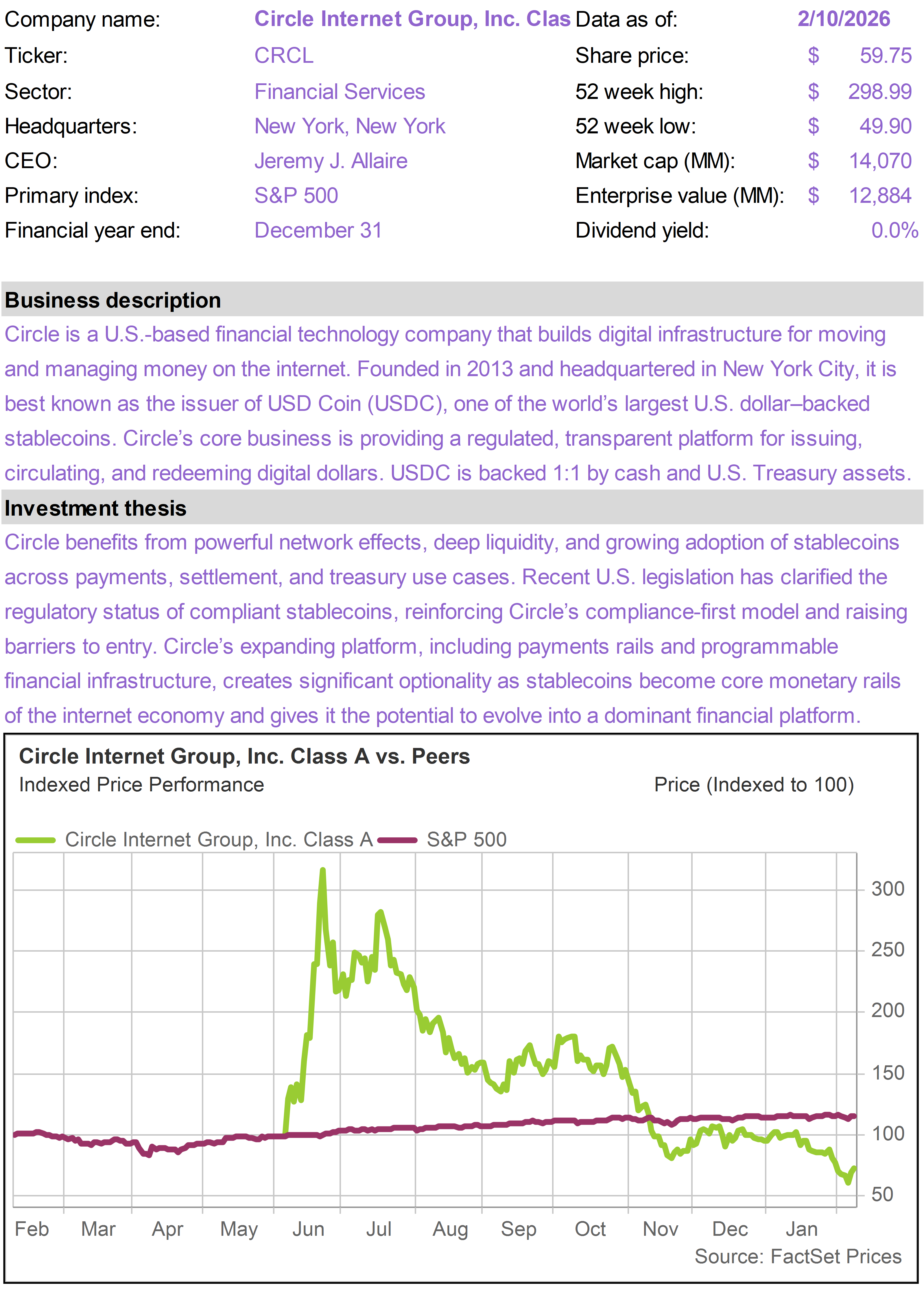
The June 5, 2025 IPO of CRCL was highly successful and coincided with strong momentum in crypto and technology. The shares were originally issued at $31 and closed at $83 on the first day of trading.


Over the next few weeks, CRCL would get as high as $299 in intra-day trading before settling into the $120 to $150 range for most of August, September and October.


Circumstances began to change drastically, however, starting at the end of October. CRCL shares came under pressure as the stock got caught up in two major (and intersecting) market trends.


First, there was the crypto sell-off. Bitcoin and other crypto assets peaked in late summer and early fall 2025. On October 10, crypto prices fell sharply as heavy leverage unwound across the system.


While broader macro uncertainty set the stage, the decline was amplified by market dynamics on major exchanges, particularly Binance, the world’s largest crypto exchange. When prices began to slip, automated liquidations kicked in, accelerating the move and creating a self-reinforcing cycle of forced selling.


Bitcoin and other digital assets have been extremely weak ever since, bringing down fintech stocks like CRCL as crypto sentiment has deteriorated.


There was also the software sell-off, which we wrote about last week (Software as a Sell-Off: Another AI Overreaction?). Since October, but especially in January and February 2026, software application stocks have traded poorly as investors have begun to view many of these companies (rightly or wrongly) as AI victims rather than beneficiaries.  


CRCL vs. S&P 500, Bitcoin, Software ETF

(Total Return since 6/5/2025 IPO)


Interest rate cuts have also been part of the negative narrative around CRCL, because as short-term interest rates come down, interest income from reserves naturally declines.


While this effect of interest rates is real, there is a countervailing benefit from lower rates, as more capital flows into stablecoins. The reason is that the opportunity cost of not being invested in interest-bearing assets declines.  


It is worth noting as well that the Fed began cutting interest rates as early as late August 2025, but the CRCL share price did not break down for several months. We therefore view the weakness in the shares as much more driven by sentiment toward crypto and software.


Stablecoin baby thrown out with the bathwater


It is not surprising that CRCL shares suffered as sentiment toward its peer group suffered sharply. This is typical market behavior. Certain stocks trades with a high degree of correlation.


We look at this scenario opportunistically. With CRCL shares now hovering around $60, they are down some 80% from their briefly achieved all-time high. They are down more than 50% from levels that consistently prevailed before the crypto/software meltdown.


Meanwhile, the business has progressed largely as expected, with the company actually lifting guidance in key areas in its most recently released earnings report. In the third quarter of 2025, CRCL reaffirmed its long-term expectation for 40% annual stablecoin growth, while raising its guidance for other revenue and affirming the high-end of its forecast for operating margin.


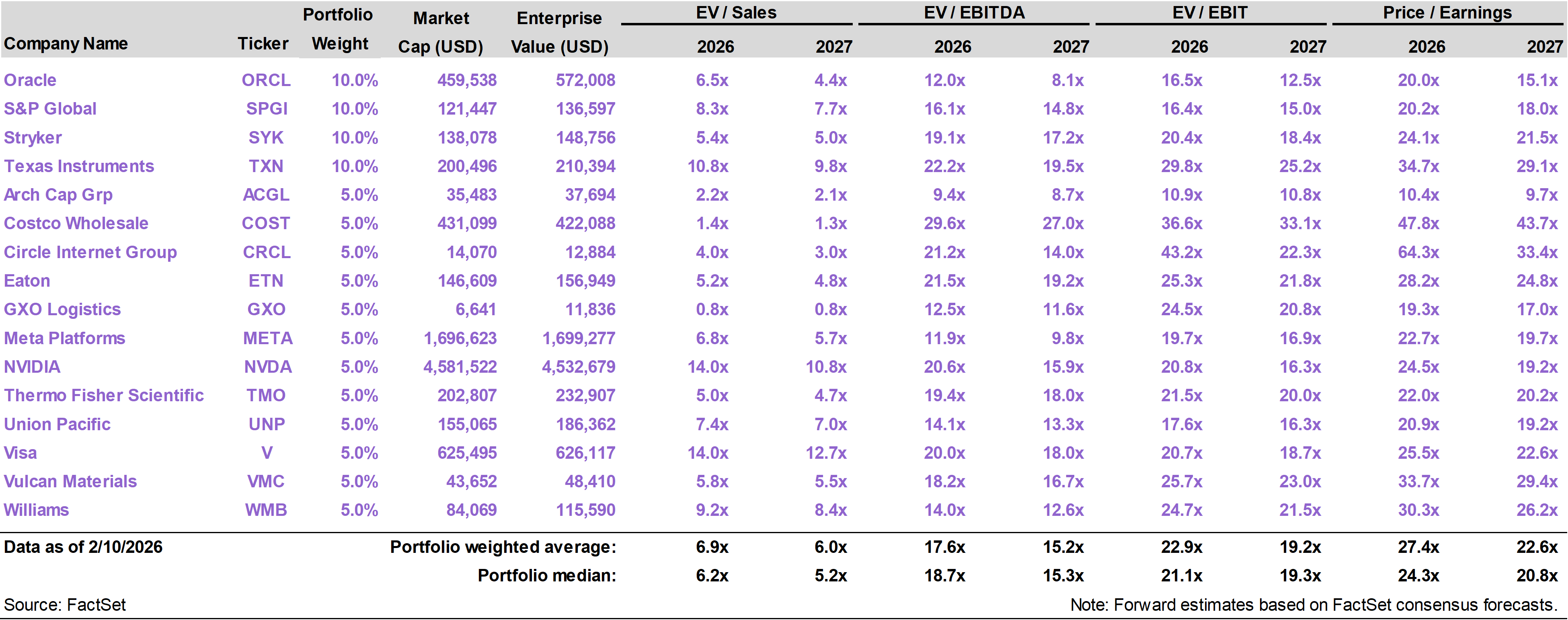
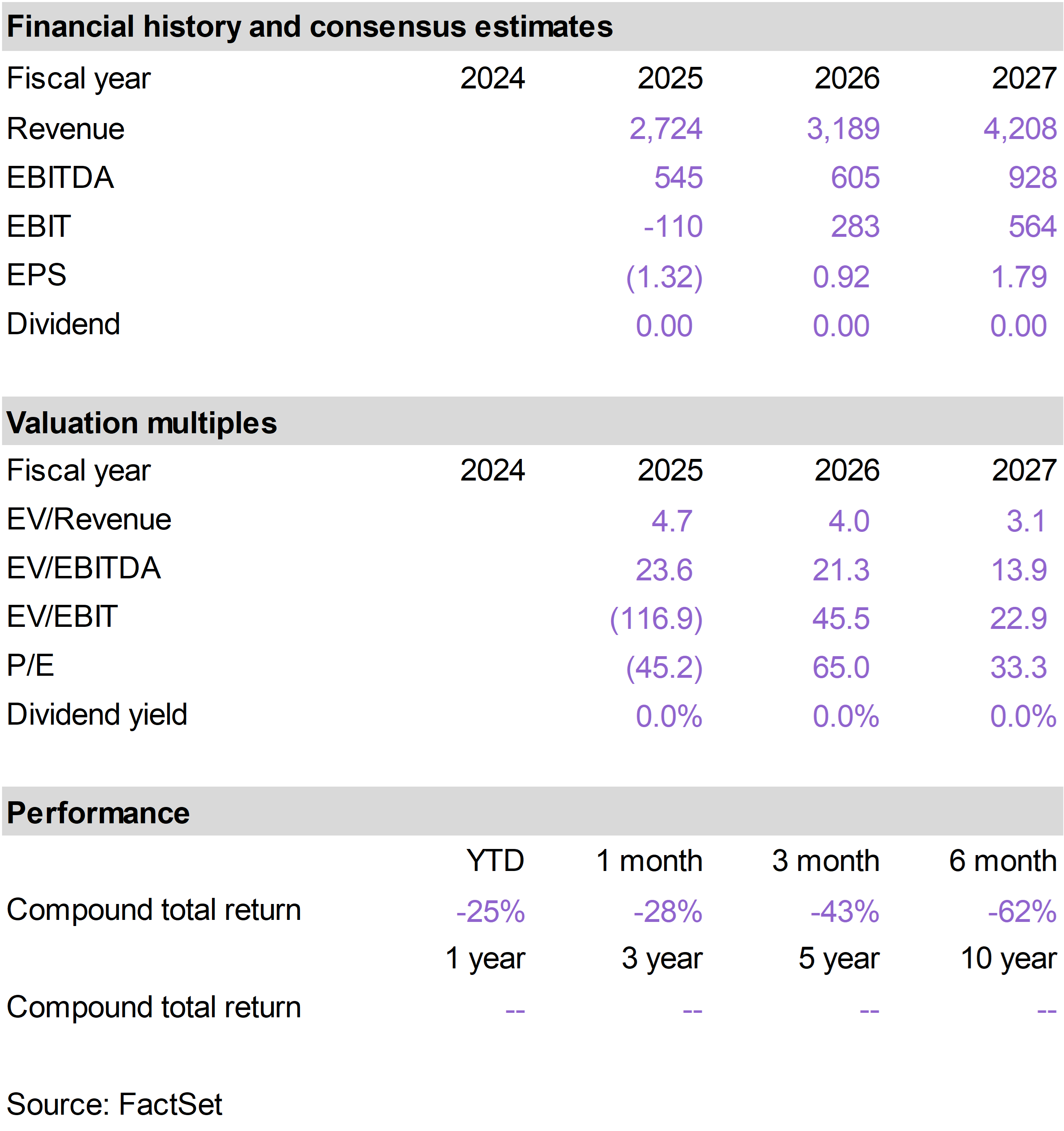
As a result of the recent share price weakness, CRCL is now trading at a subdued 18 times consensus estimates of 2028 earnings per share.


Staying focused on the long term


In comparison with most of our other Model Portfolio holdings, CRCL is an early-stage growth company in a nascent industry and is relatively volatile. Investors should expect it to remain volatile.


From a long-term perspective, we find the business compelling, largely because we find stablecoins so compelling. We view stablecoins as a financial innovation with enormous long-term growth potential and a high probability of success. Within this nascent industry, CRCL strikes us as a strong platform with plausibly immense future upside.


CRCL is crypto-related, but its success is not dependent on any particular cryptocurrencies appreciating in value. What it really depends on is growth in the stablecoin industry and its ability to preserve high market share.


We see many reasons for optimism on both counts and are attracted to the open-ended optionality the stock offers.


The next Visa?


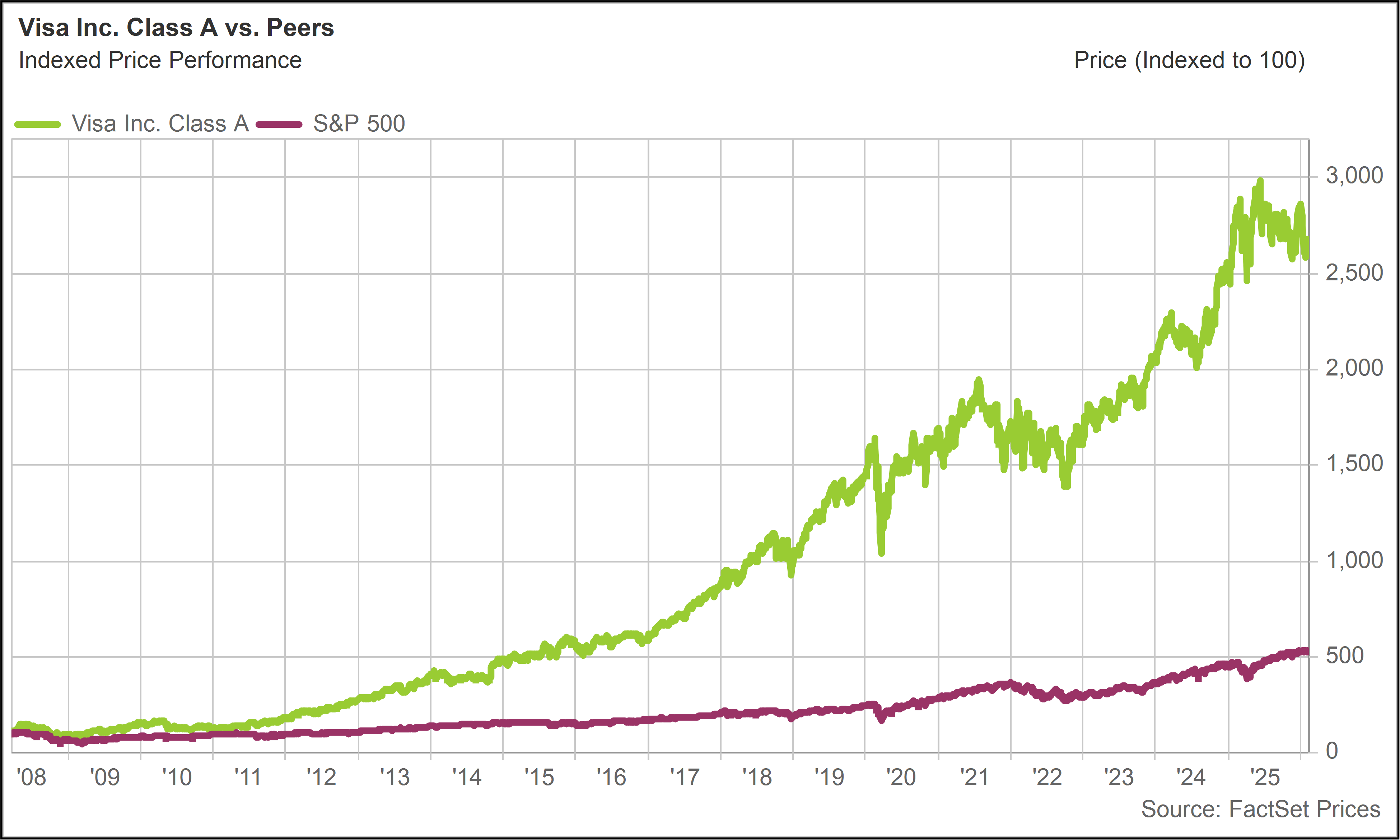
Investors can always learn from history. When financial platform stocks work, they can really work. In March 2008, Visa (V) went public. Since then, the shares have appreciated more than 2,600%, while the S&P 500 advanced just over 500%.


V vs. S&P 500

(Total Return since 3/19/2008 IPO)


There are obviously no guarantees CRCL will perform as well as V over the next two decades, but there are interesting parallels. V outperformed thanks to a sticky franchise, reinforced by network effects, and robust sustained growth in credit and debit cards as a share of overall financial transactions.


Tokenization and AI


Circle has suffered as part of a large cluster of stocks that have been negatively affected by concerns around AI disruption. In the recent downturn, the market has painted many different business models with a broad brush.


Stablecoins represent the tokenization of cash, but we are rapidly moving toward a future where all major financial assets will be tokenized. We are also rapidly moving toward a future where AI agents will engage directly in financial transactions using digital money.


In our view, Circle is not software at risk of being replaced by AI—it is building the digital money layer that AI-driven systems will increasingly use. As finance becomes more automated and more digital, money must move instantly, reliably, and without friction. That is exactly what stablecoins like USDC are designed to do.


The more financial activity moves on-chain, the more demand for digital dollars should grow. In that context, Circle looks less like a loser from technological change and more like core infrastructure for the next phase of financial markets.

Key metrics

Valuation detail

Performance detail

Circle Internet Group (CRCL)

The 76research American Resilience Model Portfolio is designed to provide exposure to growth businesses that operate with competitive advantages in structurally attractive markets. The objective is to identify businesses that can survive and thrive across different macroeconomic environments and whatever geopolitical crises may unfold. The holdings are intended as long-term investments to drive portfolio compounding with minimal need to realize taxable gains. Emphasis is placed on critical markers of business quality such as barriers to entry, physical scarcity of assets, balance sheet strength, effective capital allocation and durable long-term growth drivers. These assessments are paired with careful consideration of valuation and risk.    

FOR SUBSCRIBER USE ONLY. DO NOT FORWARD OR SHARE.