The unresolved situation in Iran remains a major overhang on markets, matched only perhaps by uncertainty around AI-related capital spending.
Fears related to Iran extend beyond general geopolitical risk to broader macroeconomic and domestic political risk.
For investors seeking portfolio protection from what may now be the most significant vulnerability of the stock market, we view exposure to high-quality plays within the Energy sector as critically important.
This is why we have maintained our energy allocations across all of our Model Portfolios—spanning oil and gas producers and infrastructure players—even as the outlook for an end to hostilities seemed to improve in June.
Energy and the economy
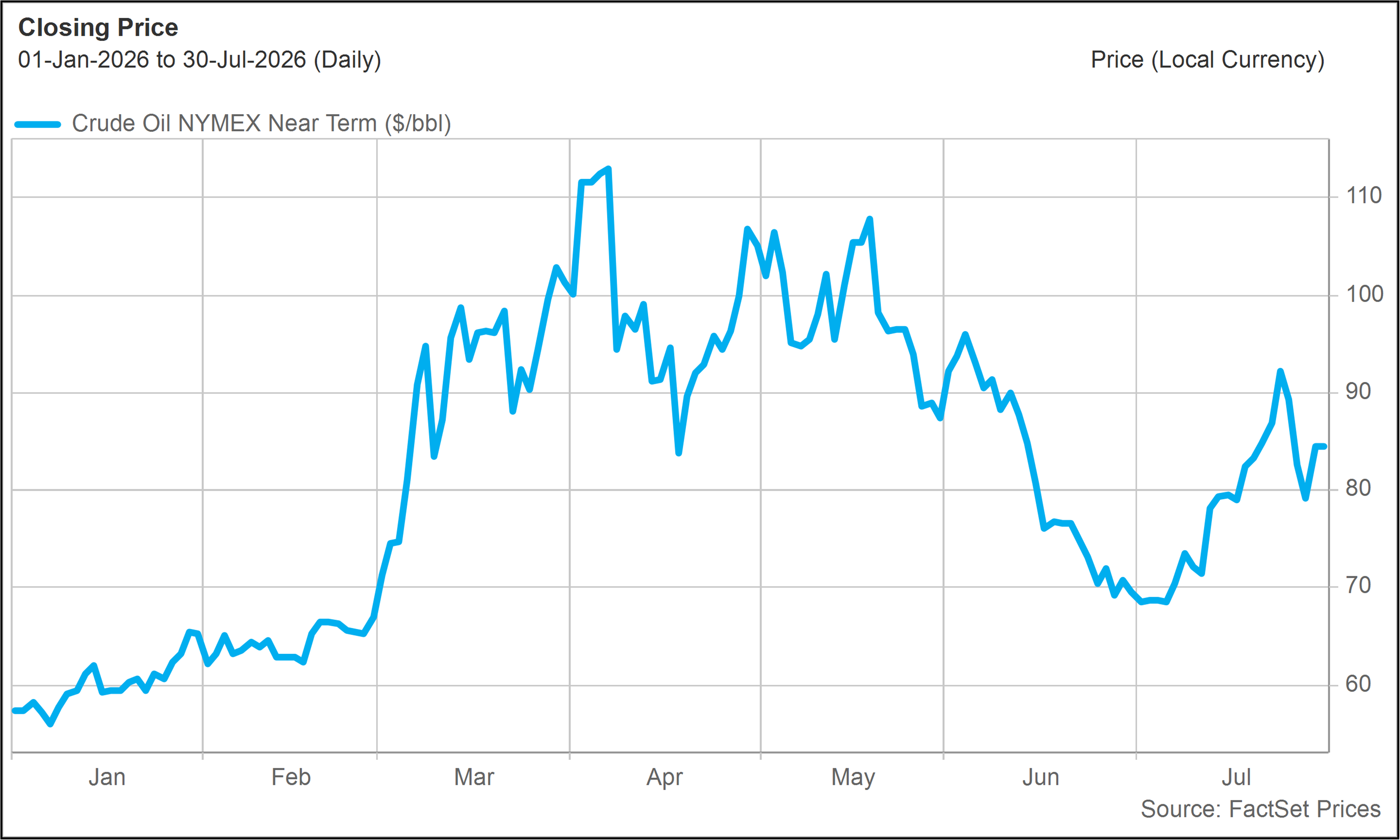
Elevated energy prices have been the main source of inflationary pressure coursing through the economy this year. This shows up directly in the most recent inflation data, with the energy category showing a 16% gain over the last 12 months, despite declining in June.
But energy prices also affect other categories of inflation indirectly.
Virtually all products and services have energy as an input cost to some degree, largely through transportation. It is almost impossible to disentangle these energy costs from broader inflation measurements.
So long as oil prices remain high, inflation is likely to linger, which in turn makes life difficult for the Federal Reserve to cut rates—even if the new Chair Kevin Warsh is somewhat predisposed toward easier monetary policy.
We saw the impact of energy-driven inflation yesterday—with the Fed deciding to keep the Fed fund rates flat for the moment. Three of the twelve voting members of the Federal Open Market Committee wanted to see a quarter-point rate hike.
Beyond monetary policy, elevated energy prices also create political risks in U.S. domestic politics that can translate into economic and market risks.
High gas prices undermine popular support for Trump. If they stay high, this could potentially lead to Republican losses in mid-term elections and take away legislative support for Trump’s pro-growth agenda, especially as progressives now target construction of AI data centers.
The energy hedge
Predicting the next move by the Iranian regime is essentially impossible. To what extent they are even rational actors is a matter of debate.
One could argue it is rational for them to test President Trump. They know he has a strong incentive to put an end to the conflict. A diplomatic outcome would allow oil to flow through the Strait of Hormuz again and thereby tamp down inflationary pressures.
Perhaps they are thinking (correctly or not) that the more they resist now, the more they will eventually get diplomatically. In this scenario, getting to the most positive outcome (sustained lower oil prices) is perhaps just a matter of time.
But it is also possible that the regime is not acting in a unified way. The diplomats may say (and even genuinely want) one thing, while the military commanders act independently.
We can make educated guesses, but geopolitical outcomes are inherently unpredictable, especially when it comes to unstable regimes with murky leadership structures.
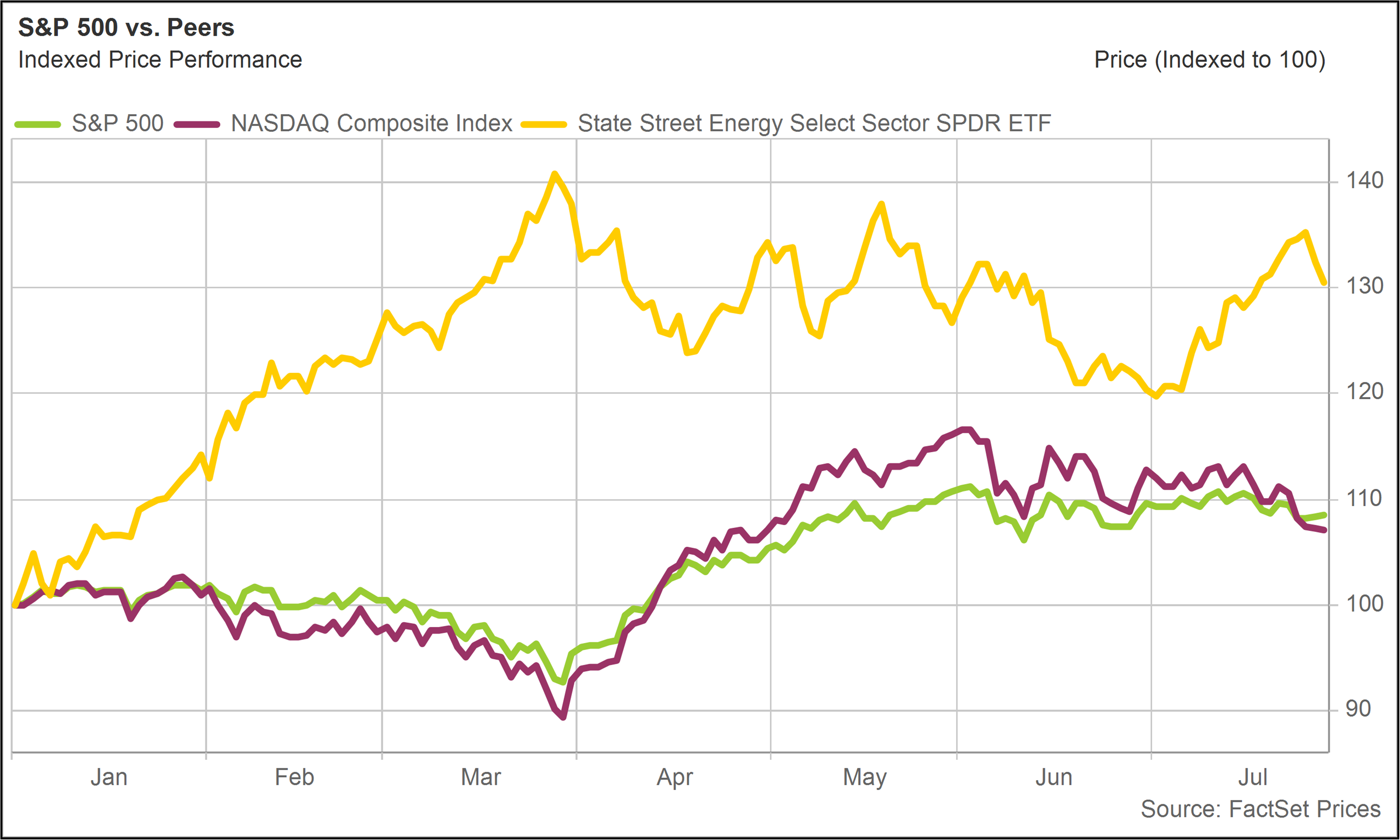
Against the backdrop of on-again, off-again diplomacy, the S&P 500 Energy Sector delivered a year-to-date total return greater than 40% as it peaked towards the end of March. With the subsequent retreat in oil prices, the sector’s return compressed to closer to 20% by the end of June, essentially returning to mid-February levels.
Now, with the resumption of hostilities in July, energy stocks have again moved higher, advancing approximately 10%.