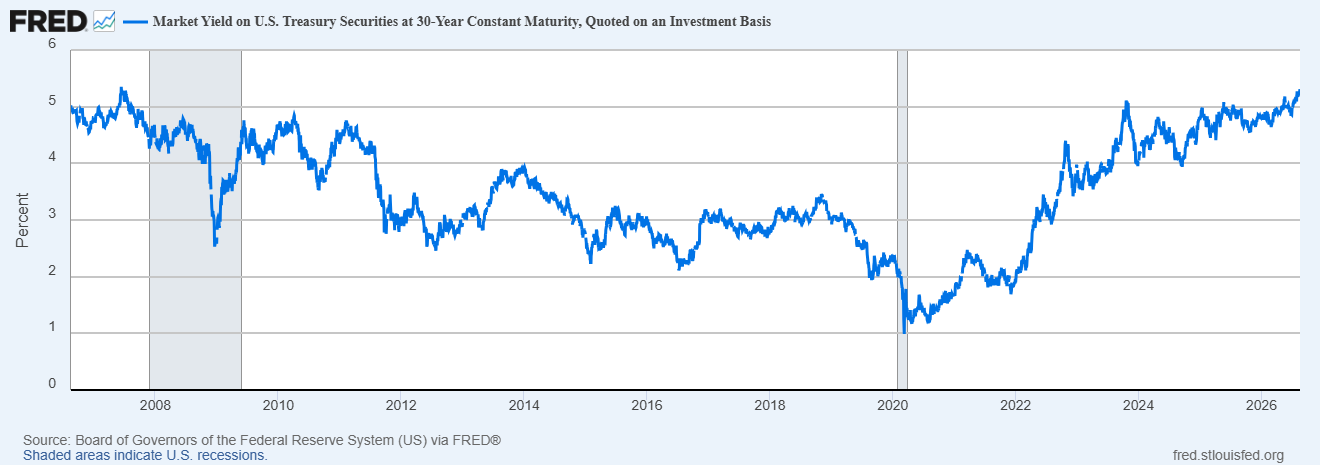
While a 0.3% move sounds small, it is material for investors in long duration bonds, where small movements in rates can lead to substantial moves in bond prices.
For a 30-Year Treasury bond, this sort of move translates into an approximate 5% decline in value.
A decline of that magnitude may be nothing for investors in tech stocks but can be quite noticeable for Treasury investors, who tend to prioritize stability of principal above all else.
A sharp rise in long-term interest rates also sets the stage for some very good clickbait—and brings the bears out of the woodwork.
Higher yields imply falling investor demand for government bonds, leading to all kinds of renewed speculation over the fragile state of America’s balance sheet….
With sky-high debt-to-GDP and persistent budget deficits, is the federal government finally about to go bust?
Are markets finally turning their back on a recklessly overextended U.S.A.?
The debasement trade gains ground
These concerns are not imaginary. The risks associated with U.S. fiscal imbalances are quite real and remain core to our long-term macro outlook.
They underpin our interest in investments that stand to benefit from monetary debasement, such as gold, Bitcoin, and companies built around scarce real assets.
Our Inflation Protection Model Portfolio in particular is oriented around positioning for these risks.
The “debasement trade” refers to owning scarce assets that should preserve their value as governments increasingly rely on money creation and inflation to manage excessive debt burdens.
We are seeing signs of strength in the debasement trade today.
Gold and Bitcoin rallied 4% and 6% respectively after the Treasury Department announced that it “is increasing, by at least double, the size of liquidity support buyback operations for longer-dated nominal coupon securities (the 10-year to 20-year sector and the 20-year to 30-year sector).”
Investors in both gold and Bitcoin tend to respond positively to any sign that the government is printing or borrowing money to suppress rising yields, which damages the relative value of U.S. dollar.
Treasury’s announced intervention today is relatively minor and technical, designed to support liquidity, but smacks of fiscal dominance—the scenario in which a government engages in artificial interest rate suppression at the expense of its own currency.
But is it all bad news?
America’s fiscal challenges are indeed serious—and justify long-term allocations to investments that stand to benefit from monetary debasement.
Yet we caution against overreacting to the latest developments in bond markets—or reading into them a broader bearish outlook or looming crisis.
In fact, some of the forces pushing long-term interest rates higher may be the very same forces that have been pushing the stock market higher….
To continue reading The Long Bond Selloff: How Worried Should You Be?, subscribe now to the 76report.
With promo code DOLLAR, you can upgrade to a paid subscription for as little as $1 per month.
Click HERE!