Metallic money talks
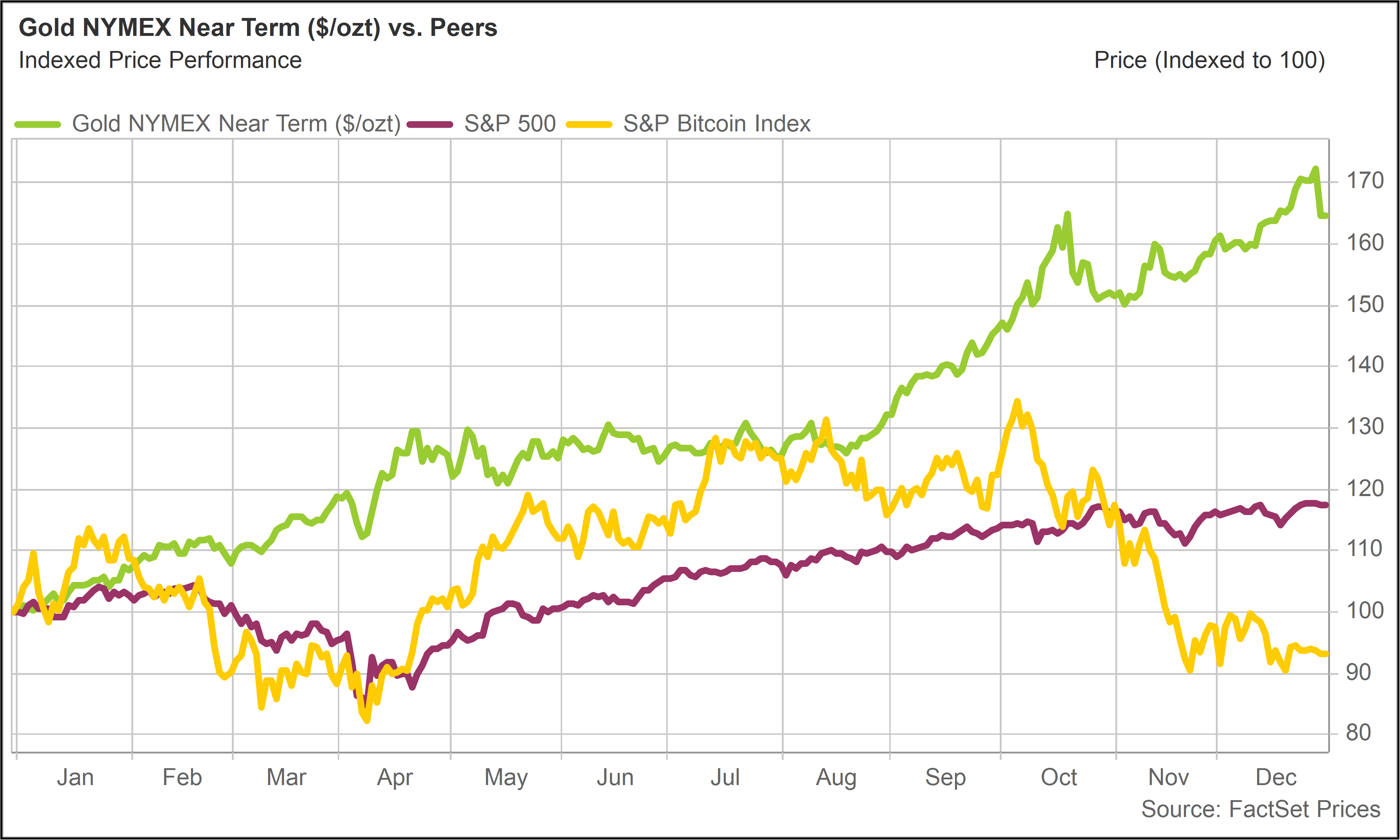
Gold’s success in 2025 signals declining faith in the prevailing economic order. In times of uncertainty, like technological or political revolution, metallic money has great appeal.
A historical snippet from the American Revolution proves the point.
In July of 1780, a convoy of French warships carrying more than 5,000 soldiers entered Newport Harbor in Rhode Island to assist the Continental Army. Initially, locals were highly skeptical.
Just two years prior, another French fleet had arrived in Newport, which had been under British control since December 1776. Expecting strong French naval support, American patriots engaged the Redcoats. But bad weather and poor communication forced the French to retreat.
The attack was a complete disaster for the Americans. The Battle of Rhode Island in 1778 also devastated the local economy in Newport and sparked a wave of anti-French sentiment. Patriots were furious.
The Marquis de Lafayette was a young French nobleman, a major general in the Continental Army and one of George Washington’s closest aides. In a letter written shortly after the defeat, he wrote: “I never was in such danger as during this affair, not so much from the enemy as from the disposition of our own people toward the French.”
Yet when the French returned two years later, they were greeted warmly. It quickly became known that they would be paying local merchants with silver coins, not the rapidly depreciating paper bills issued by the Continental Congress, which were backed by nothing.
Baron Ludwig von Closen, a Bavarian-born French army officer, explained: “The inhabitants, who had at first shown some uneasiness at our arrival, soon became perfectly easy when they saw that we paid exactly for everything, and always in silver.”