Premium
Quicktake
*|MC:SUBJECT|*
͏ ‌     ͏ ‌     ͏ ‌     ͏ ‌     ͏ ‌     ͏ ‌     ͏ ‌     ͏ ‌     ͏ ‌     ͏ ‌     ͏ ‌     ͏ ‌     ͏ ‌     ͏ ‌     ͏ ‌     ͏ ‌     ͏ ‌     ͏ ‌     ͏ ‌     ͏ ‌     ͏ ‌     ͏ ‌     ͏ ‌     ͏ ‌     ͏ ‌     ͏ ‌     ͏ ‌     ͏ ‌     ͏ ‌     ͏ ‌     ͏ ‌     ͏ ‌     ͏ ‌     ͏ ‌     ͏ ‌     ͏ ‌     ͏ ‌     ͏ ‌     ͏ ‌     ͏ ‌     ͏ ‌     ͏ ‌     ͏ ‌     ͏ ‌     ͏ ‌     ͏ ‌     ͏ ‌     ͏ ‌     ͏ ‌     ͏ ‌     ͏ ‌     ͏ ‌     ͏ ‌     ͏ ‌     ͏ ‌     ͏ ‌     ͏ ‌     ͏ ‌     ͏ ‌     ͏ ‌     ͏ ‌     ͏ ‌     ͏ ‌     ͏ ‌     ͏ ‌     ͏ ‌     ͏ ‌     ͏ ‌     ͏ ‌     ͏ ‌     ͏ ‌     ͏ ‌     ͏ ‌     ͏ ‌     ͏ ‌     ͏ ‌     ͏ ‌     ͏ ‌     ͏ ‌     ͏ ‌     ͏ ‌     ͏ ‌     ͏ ‌     ͏ ‌     ͏ ‌     ͏ ‌     ͏ ‌     ͏ ‌     ͏ ‌     ͏ ‌     ͏ ‌     ͏ ‌     ͏ ‌     ͏ ‌     ͏ ‌     ͏ ‌     ͏ ‌     ͏ ‌     ͏ ‌     ͏ ‌     ͏ ‌     ͏ ‌     ͏ ‌     ͏ ‌     ͏ ‌     ͏ ‌     ͏ ‌     ͏ ‌     ͏ ‌     ͏ ‌     ͏ ‌     ͏ ‌     ͏ ‌     ͏ ‌     ͏ ‌     ͏ ‌     ͏ ‌     ͏ ‌     ͏ ‌     ͏ ‌     ͏ ‌     ͏ ‌     ͏ ‌     ͏ ‌     ͏ ‌     ͏ ‌     ͏ ‌     ͏ ‌     ͏ ‌     ͏ ‌     ͏ ‌     ͏ ‌     ͏ ‌     ͏ ‌     ͏ ‌     ͏ ‌     ͏ ‌     ͏ ‌     ͏ ‌     ͏ ‌     ͏ ‌     ͏ ‌     ͏ ‌     ͏ ‌     ͏ ‌     ͏ ‌     ͏ ‌     ͏ ‌     ͏ ‌     ͏ ‌     ͏ ‌     ͏ ‌     ͏ ‌     ͏ ‌     ͏ ‌     ͏ ‌     ͏ ‌     ͏ ‌     ͏ ‌     ͏ ‌     ͏ ‌     ͏ ‌     ͏ ‌     ͏ ‌     ͏ ‌     ͏ ‌     ͏ ‌     ͏ ‌     ͏ ‌     ͏ ‌     ͏ ‌     ͏ ‌     ͏ ‌     ͏ ‌     ͏ ‌     ͏ ‌     ͏ ‌     ͏ ‌     ͏ ‌     ͏ ‌     ͏ ‌     ͏ ‌     ͏ ‌     ͏ ‌     ͏ ‌     ͏ ‌     ͏ ‌     ͏ ‌     ͏ ‌     ͏ ‌     ͏ ‌     ͏ ‌     ͏ ‌     ͏ ‌     ͏ ‌     ͏ ‌     ͏ ‌     ͏ ‌     ͏ ‌     ͏ ‌     ͏ ‌     ͏ ‌     ͏ ‌     ͏ ‌     ͏ ‌     ͏ ‌     ͏ ‌     ͏ ‌     ͏ ‌     ͏ ‌     ͏ ‌     ͏ ‌     ͏ ‌     ͏ ‌     ͏ ‌     ͏ ‌     ͏ ‌     ͏ ‌     ͏ ‌     ͏ ‌     ͏ ‌     ͏ ‌     ͏ ‌     ͏ ‌     ͏ ‌     ͏ ‌     ͏ ‌     ͏ ‌     ͏ ‌     ͏ ‌     ͏ ‌     ͏ ‌     ͏ ‌     ͏ ‌     ͏ ‌     ͏ ‌     ͏ ‌     ͏ ‌     ͏ ‌     ͏ ‌     ͏ ‌     ͏ ‌     ͏ ‌     ͏ ‌     ͏ ‌     ͏ ‌     ͏ ‌     ͏ ‌     ͏ ‌     ͏ ‌     ͏ ‌     ͏ ‌     ͏ ‌     ͏ ‌     ͏ ‌     ͏ ‌     ͏ ‌     ͏ ‌     ͏ ‌     ͏ ‌     ͏ ‌     ͏ ‌     ͏ ‌     ͏ ‌     ͏ ‌     ͏ ‌     ͏ ‌     ͏ ‌     ͏ ‌     ͏ ‌     ͏ ‌     ͏ ‌     ͏ ‌     ͏ ‌     ͏ ‌     ͏ ‌     ͏ ‌     ͏ ‌     ͏ ‌     ͏ ‌     ͏ ‌     ͏ ‌     ͏ ‌     ͏ ‌     ͏ ‌     ͏ ‌     ͏ ‌     ͏ ‌     ͏ ‌     ͏ ‌     ͏ ‌     ͏ ‌     ͏ ‌     ͏ ‌     ͏ ‌     ͏ ‌     ͏ ‌     ͏ ‌     ͏ ‌     ͏ ‌     ͏ ‌     ͏ ‌     ͏ ‌     ͏ ‌     ͏ ‌     ͏ ‌     ͏ ‌     ͏ ‌     ͏ ‌     ͏ ‌     ͏ ‌     ͏ ‌     ͏ ‌     ͏ ‌     ͏ ‌     ͏ ‌     ͏ ‌     ͏ ‌     ͏ ‌     ͏ ‌    ­ ­ ­ ­ ­ ­ ­ ­ ­ ­ ­ ­ ­ ­ ­ ­ ­ ­ ­ ­ ­ ­ ­ ­ ­ ­ ­ ­ ­ ­ ­ ­ ­ ­ ­ ­ ­ ­ ­ ­ ­ ­ ­ ­ ­ ­ ­ ­ ­ ­ ­ ­ ­ ­ ­ ­ ­ ­ ­ ­ ­ ­ ­ ­ ­ ­ ­ ­ ­ ­ ­ ­ ­ ­ ­ ­ ­ ­ ­ ­ ­ ­ ­ ­ ­ ­ ­ ­ ­ ­ ­ ­ ­ ­ ­ ­ ­ ­ ­ ­ ­ ­ ­ ­ ­ ­ ­ ­ ­ ­ ­ ­ ­ ­ ­ ­ ­ ­ ­ ­ ­ ­ ­ ­ ­ ­ ­ ­ ­ ­ ­ ­ ­ ­ ­ ­ ­ ­ ­ ­ ­ ­ ­ ­ ­ ­ ­ ­ ­ ­ ­ ­ ­ ­ ­ ­ ­ ­ ­ ­ ­ ­ ­ ­ ­ ­ ­ ­ ­ ­ ­ ­ ­ ­ ­ ­ ­ ­ ­ ­ ­ ­ ­ ­ ­ ­ ­ ­ ­ ­ ­ ­ ­ ­ ­ ­ ­ ­ ­ ­ ­ ­ ­ ­ ­ ­ ­ ­ ­ ­ ­ ­ ­ ­ ­ ­ ­ ­ ­ ­ ­ ­ ­ ­ ­ ­ ­ ­ ­ ­ ­ ­ ­ ­ ­ ­ ­ ­ ­ ­ ­ ­ ­ ­ ­ ­ ­ ­ ­ ­ ­ ­ ­ ­ ­ ­ ­ ­ ­ ­ ­ ­ ­ ­ ­ ­ ­ ­ ­ ­ ­ ­ ­ ­ ­ ­ ­ ­ ­ ­ ­ ­

QUICKTAKE

December 8, 2025

Introducing The MAG7 MONITOR

Welcome to the inaugural edition of The MAG7 MONITOR—a new flagship feature for 76report subscribers!


Since the launch of 76research, we have been confronted with a new reality facing all stock market investors. A handful of companies—all global technology leaders—now represent an unprecedented percentage of total stock market capitalization.


These stocks have been given the nickname the Magnificent Seven, although over the past few years another tech stock, Broadcom (AVGO), has emerged as a key player that ought to be included within this elite circle.


The idea here is not to be rigid in our classifications but to focus on the technology giants—in our view, eight now—that collectively dominate the investment landscape. The list may evolve over time.


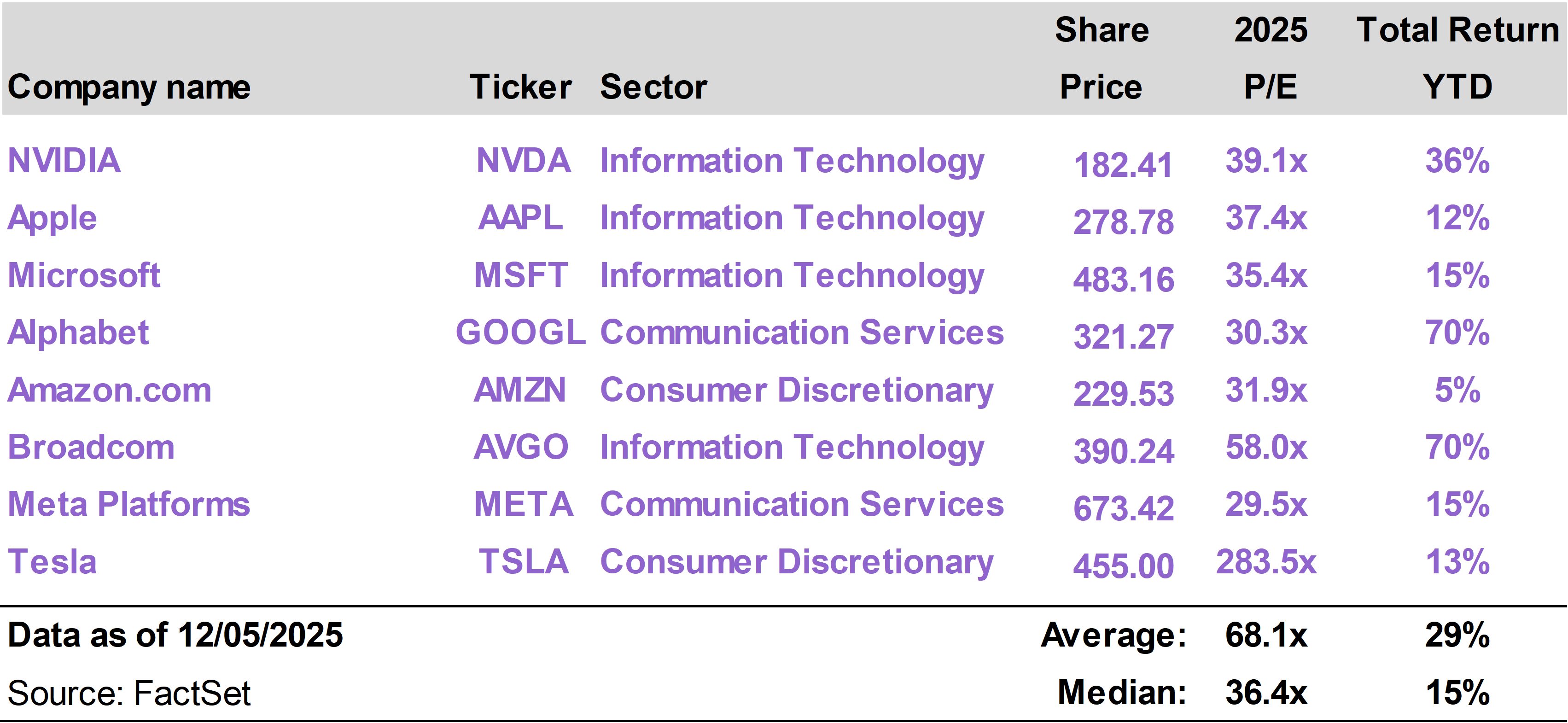
Our coverage universe for The MAG7 MONITOR—from largest to smallest, by current market cap—consists of NVIDIA (NVDA), Apple (AAPL), Microsoft (MSFT), Alphabet (GOOGL), Amazon (AMZN), Broadcom (AVGO), Meta Platforms (META), and Tesla (TSLA).

MAG7 MONITOR Coverage Universe

Get full access to all 76report research — including The MAG7 MONITOR — for as little as $1/month with promo code DOLLAR. Click HERE to start.


For starters, the Magnificent Seven (plus one) are important because they make up such a large chunk of the stock market. These eight stocks now represent almost 40% of the S&P 500. They are more than 50% of the Nasdaq-100.


But they are also crucial to understand because of their relevance to the economy. What they all have in common is a deep connection to the one structural trend that is reshaping everything—AI.


Just a few years ago, NVDA was a secondary player in the semiconductor space. Having emerged as the key hardware provider enabling the AI revolution, it now leads the Magnificent Seven as the most valuable company in the world.


All of these companies have extremely valuable legacy franchises that preceded the large-scale commercialization of AI. Yet they are all strategically adapting to an inevitable future in which AI is the dominant technological force.


Even a stock like TSLA, which many investors may view as a car maker, is inherently an AI play. The most important thing about Tesla vehicles is not that they are electric but that they are on their way toward becoming completely self-driving.


TSLA’s biggest long-term business opportunity may not even be cars. It could be humanoid robots, as Elon Musk has described. (See The Robots Are Coming: Positioning for the Next Leg of AI, recently published in the 76report.)


Why investors need to follow these stocks


The top reason investors should track these stocks is that, in all likelihood, they already own them.


The vast majority of investors have some (if not most) of their allocation to the stock market through index funds or funds that resemble major indexes like the S&P 500, the Nasdaq Composite, or the MSCI World.


It has been estimated that nearly one-third of stock market ownership is linked to passive or quasi-passive index approaches. Taking into account the large direct ownership of stocks by company founders and insiders, retail exposure to index strategies may be even higher.


To be clear, we support this sort of index exposure as a foundation for almost any investment strategy. The stock market, as a whole, delivers over time. Index exposure is low-cost, tax-efficient, and diversified.


Should they be owned?


Through index and related strategies, many investors have ended up with very large allocations to the Mag 7. Indexing has become, quite unintentionally, a mechanism for investing in these AI leaders.


Concerns about valuation and market concentration are valid, but we do believe it makes a lot of sense to have long-term, essentially permanent exposure to the Mag 7.


These companies have several unique qualities versus the rest of the stock market universe, justifying their place at the top of many investment portfolios.


In different ways, these businesses have carved out dominant positions across the digital economy, backing them with competitive moats that are hard to erode.


They are also, for the most part, immensely profitable. This means they have an unrivaled ability to reinvest their cash flows into innovation.


It also means they can take risks other companies cannot. They can operate with a long-term vision that is often absent within the typical public company.


Because technology changes so rapidly, these companies are not what they were five years ago. And they are not today what they will be in five years.


They are in a constant state of evolution that creates new upside opportunities for them. This helps explain their substantial outperformance over the years and separation from the rest of the pack.


The extent to which these stocks have in fact outperformed over the past ten years needs to be emphasized.


One of the most efficient ways investors can both track and access the Mag 7 is through the Vanguard Mega Cap Growth ETF (MGK).


MGK is a highly liquid (over $30 billion in assets) passive ETF that provides exposure to the largest market cap growth stocks. The Mag 7 (plus AVGO) now represent approximately two-thirds of the total value of MGK.


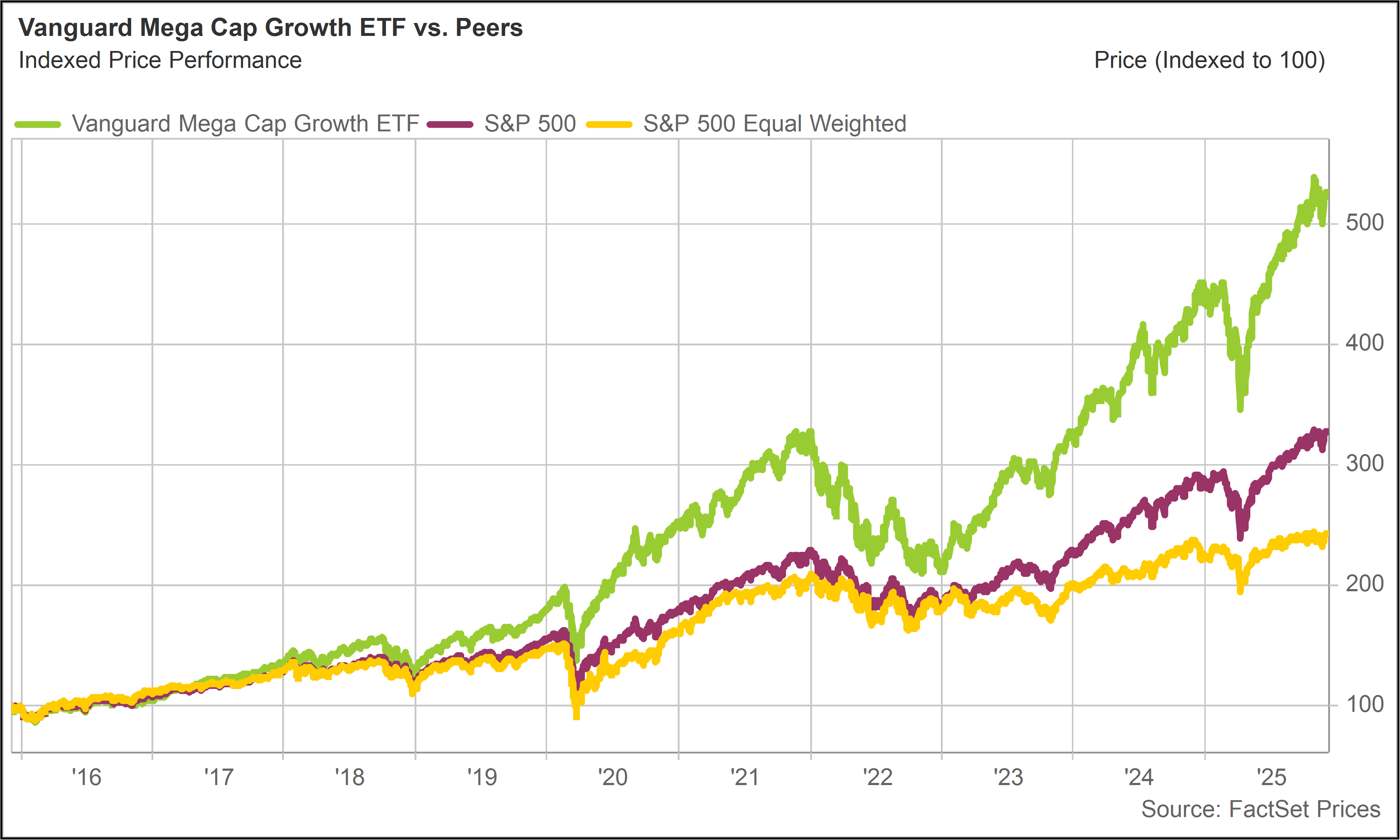
Powered by its high exposure to these names, MGK has returned over 400% over the past 10 years, versus just over 200% for the S&P 500 (which also has had high Mag 7 exposure).


For perspective, the S&P 500 Equal Weight Index (limited contribution from Mag 7) has returned less than 150% in this time frame.


As always, past performance is no guarantee of future success, but over the past ten years, having exposure to the Mag 7 has been a clear difference maker.


Mega Cap Growth ETF vs. S&P 500 and S&P 500 Equal Weighted

(Total Return - Last 10 Years)

Despite all of these positive attributes, within our Model Portfolios, we have generally deprioritized these stocks, with the exception of NVDA, which is now held in the American Resilience portfolio.


The main reason for this is that we believe investors already do have substantial exposure to them through index-based investments.


Where we see our Model Portfolios adding the most value is by offering subscribers differentiated stock ideas that can supplement broad market and Mag 7 exposure. We do not wish to simply replicate the S&P 500.


Investors have many readily available ways to invest in the Mag 7 as a group, including relatively concentrated ETFs like MGK. To the extent they wish to invest in these funds or invest directly in particular names, The MAG7 MONITOR is intended as a helpful resource to guide decision making.  


An indispensable lens


Whether or not one has significant exposure to the Mag 7, directly or indirectly, these businesses must be followed. They are leading the economy.


The choices they make, the challenges they face, their breakthroughs, and their failures—the implications for other companies across sectors are vast.


It is not just that they are large. Because they are innovation leaders, they offer a window into changes within the economy that are not available elsewhere.


These businesses are too important to ignore. You cannot say you understand what is happening in the economy today unless you have at least a basic understanding of what these companies are facing and doing.


We intend to publish The MAG7 MONITOR on a regular basis as a recurring series within the 76report. We will publish updates to address important developments, earnings releases, and any controversies that may emerge. We will carefully track performance and valuation.


Why now?


The world has changed. The stock market has changed. There is no going back. The AI genie is out of the bottle.


Recent talk of an “AI bubble” relates to concerns over valuation risk.


We expect these concerns to persist because we are in the midst of a relatively unpredictable innovation wave. Growth trajectories and profitability are inherently hard to determine, so there will be constant fear that expectations are too high.


But there may be more to this anxiety than just valuation concerns.


A great deal of it could be anxiety about AI itself… how it will change the economy, our jobs, and society as a whole? Change is exciting, but it can also be terrifying, especially when it is radical.


To some degree, we see AI bubble speculation as a form of denial. For some people, the mind may want to believe that it’s all hype, it will come and go like a passing fad, there is nothing to see here.


These may be comforting thoughts, but they do not reflect a wise attitude for an investor. This technology is here, it is in its infancy, it is improving rapidly, and it is expanding into more and more areas.


Investors who want to understand how they should be positioned in the stock market need to understand AI. This means they need to understand the Mag 7, which are the main companies driving AI forward.


By introducing The MAG7 MONITOR, we are elevating this goal as a top priority for our subscribers.


Trish Regan & Rob Hordon

Co-Founders, 76research


Gemini rising


One of the most important developments within the Mag 7 in recent months has been the resurgence of Alphabet (GOOGL).


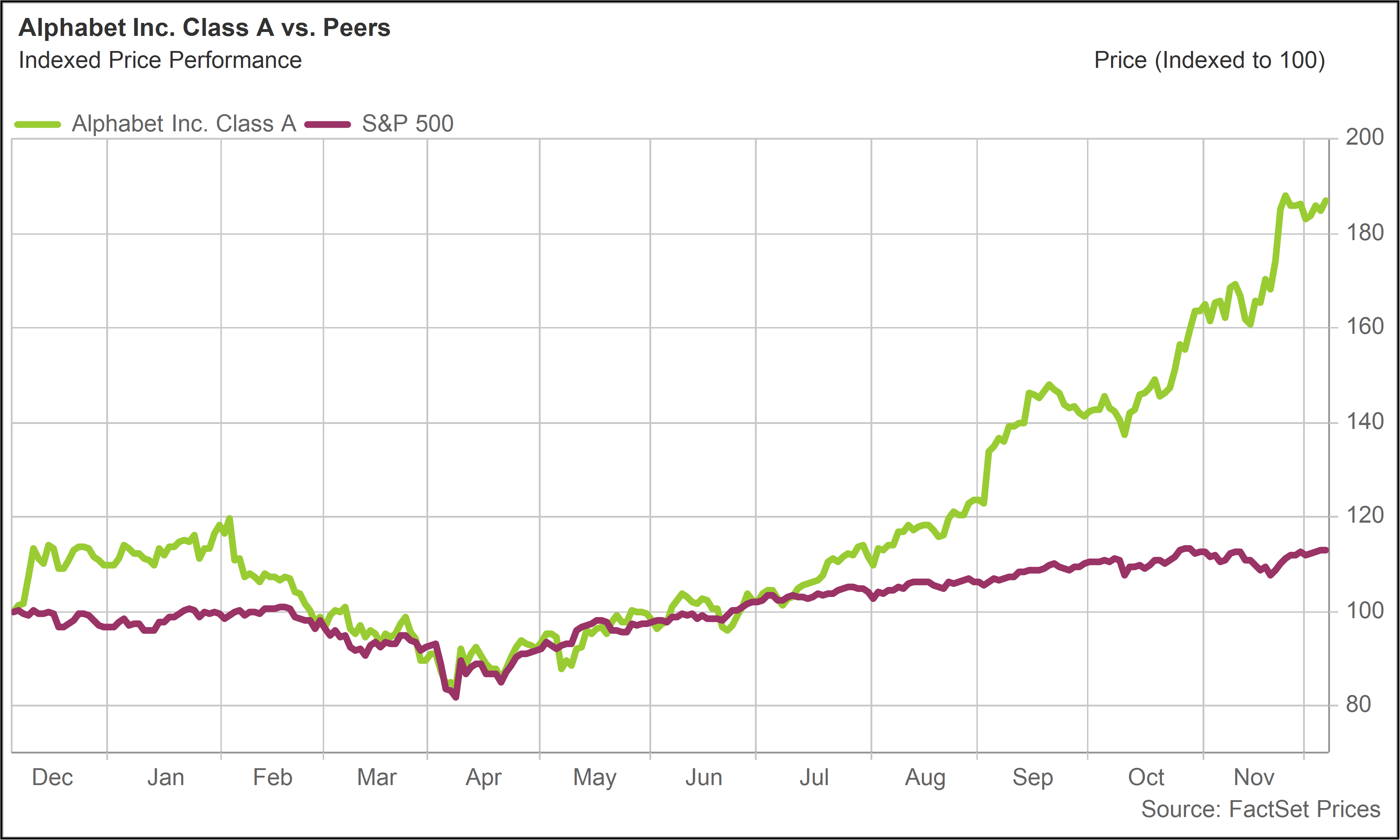
By a considerable margin, GOOGL has been the top performing Mag 7 stock over the past three and six months, surging 37% and 91% respectively. This compares to the group average of 12% and 36%.


(Scroll down to the bottom for complete valuation and performance data.)


Sentiment towards GOOGL as an AI player has rapidly shifted. Earlier this year, there was concern that GOOGL could wind up an afterthought, with its traditional search franchise eroded by AI-powered chatbots like ChatGPT.


Around January, reports surfaced of search traffic stalling, suggesting the main engine of GOOGL’s profitability appeared at risk. This got reflected in the share price.


Recent success with Gemini, the company’s flagship AI model, has changed this narrative, however.

GOOGL vs. S&P 500

(Total Return - Last 12 Months)

Gemini is one of a small handful of leading “frontier” AI models globally, alongside models from OpenAI (closely tied to MSFT), Anthropic (closely tied to AMZN), META, xAI, and a few others, that operate at the cutting edge.


In recent tests, Gemini has performed extremely well. The latest version, Gemini 3 Pro, ranked at or near the top across several independent benchmarks, showing clear strength in complex reasoning, science questions, and tasks that combine text, images, and video.


In head-to-head comparisons, it outperformed most rival models on difficult, real-world problem-solving tests, including “Humanity’s Last Exam,” a widely used standard for measuring AI capabilities.


No longer seeing GOOGL as a fading search franchise, investors have been scooping up shares. GOOGL has begun weaving Gemini into Search, Gmail, Docs, Android, and other core services. This all suggests AI will enhance its ecosystem rather than replace it.


Implications for NVDA


GOOGL’s AI resurgence has had an unintended side effect: it has reopened debate around NVDA’s role in the AI ecosystem.


This debate helps explain why NVDA’s share price has been relatively restrained in recent weeks, even after posting excellent earnings results in November that comfortably beat growth expectations.


The controversy centers on GOOGL’s heavy use of Tensor Processing Units (TPUs) instead of NVDA’s Graphics Processing Units (GPUs)….


To continue reading The MAG7 MONITOR—including our current views on GOOGL, NVDA and META—upgrade to a paid subscription to the 76report.


Use promo code DOLLAR and receive full access for only $1 per month for the first two months.


Click HERE!

Click HERE to learn more about our Model Portfolio subscription plans.