The military engagement is far from over, and things can still get messy. This particular operation, which is relatively broader in scope, may not be as costless as the prior two.
What matters most, however, is that the administration has no intention to undertake a complex nation-building exercise that involves thousands of troops and a multi-year commitment. Instead, it is pursuing a carefully tailored military operation to take away Iran’s ability to inflict harm on the U.S. or any other country.
To the extent violence escalates in the days ahead, this could weigh on markets in the short term. But it also paves the way for the U.S. to inflict more lasting damage on whatever remains of Iran’s military capability.
Over the long term, a neutralized Iran is a clear market positive.
Implications for energy
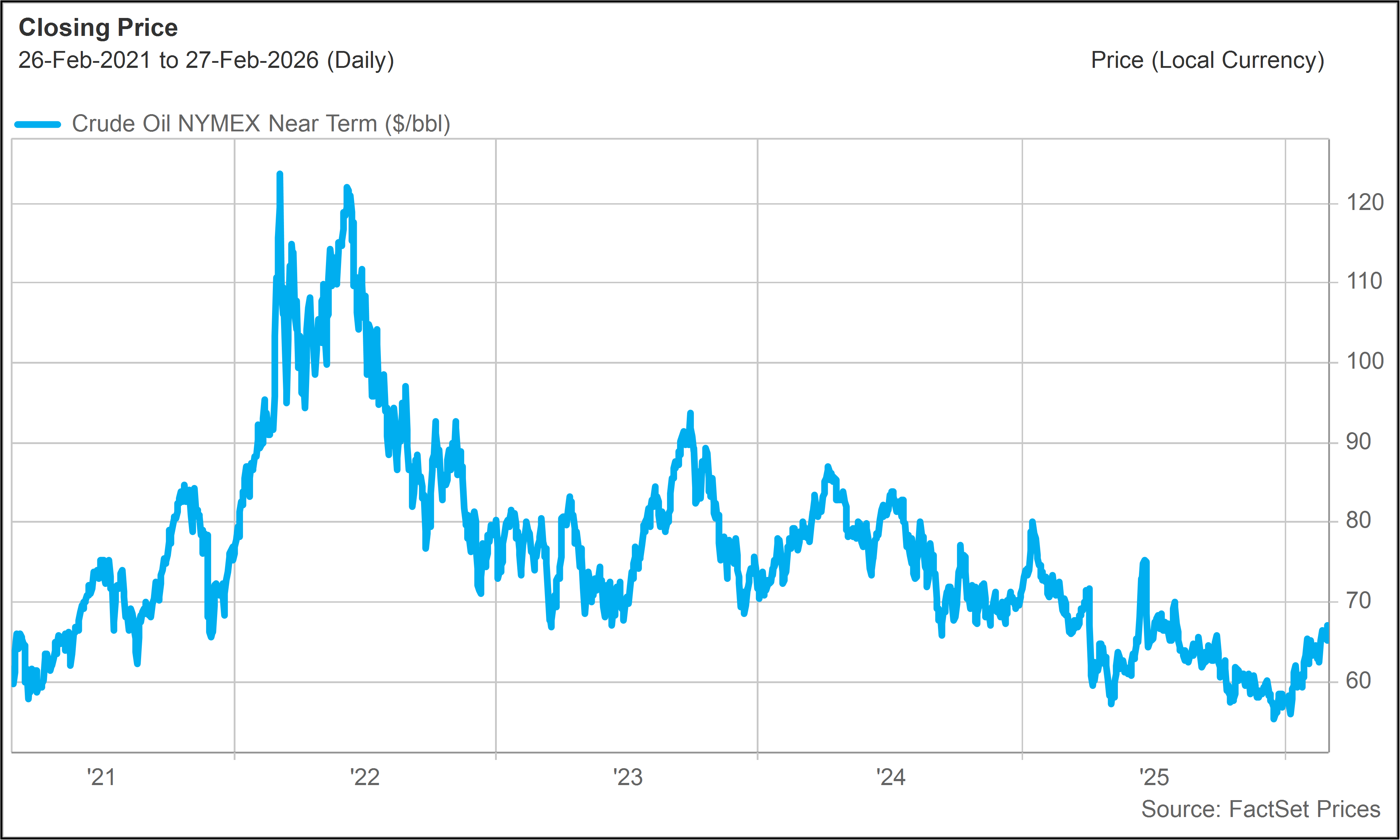
The central variable, as always in Middle East conflicts, is oil. Crude oil prices moved approximately 6% higher yesterday, reflecting the potential for supply interruptions. They are moving higher today.
But it is important to note crude pricing remains at historically low levels. Over the past year, we have grown accustomed to oil below $70 per barrel, but for most of the past five years, it has traded above that level.
The world is now abundantly supplied with oil. Current prices, even with recent strength over the past two months, are still some 40% below peak levels reached in 2022 when the Russia-Ukraine conflict broke out.