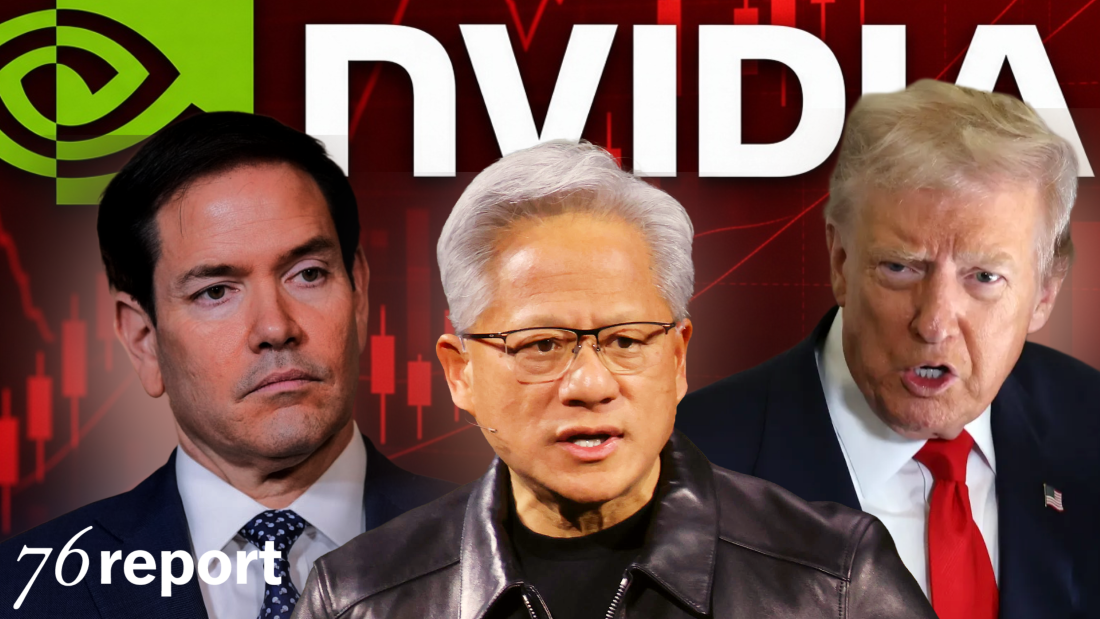
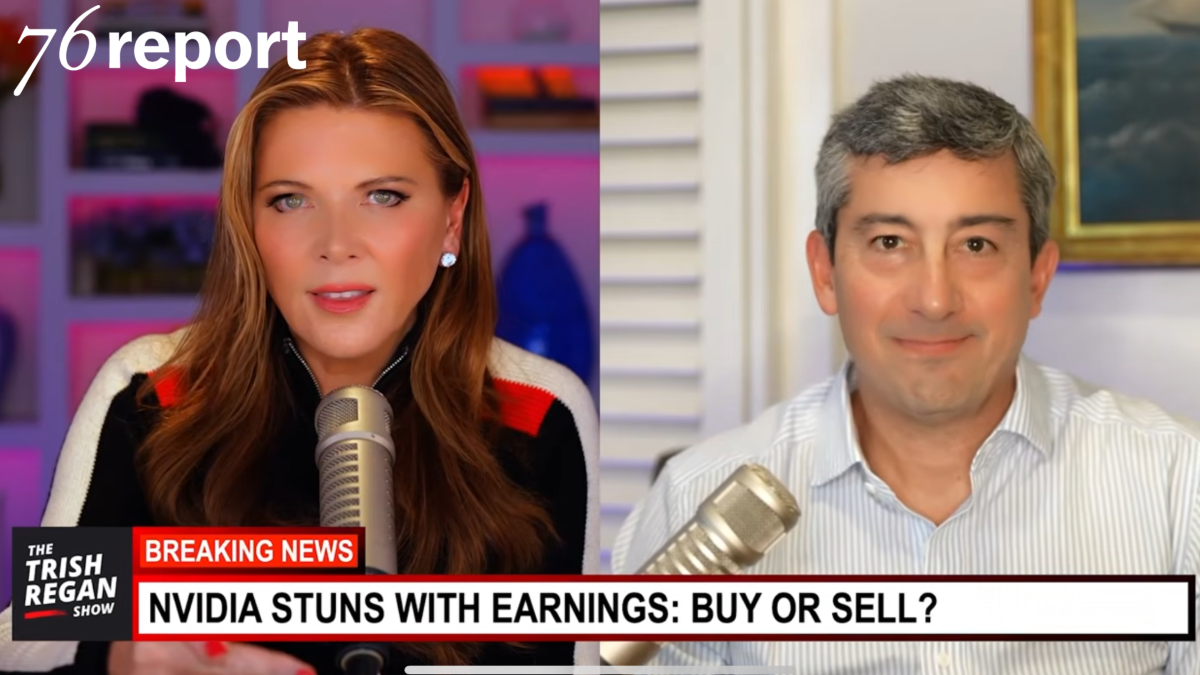
NVDA chairman Harvey Jones opened the earnings call Tuesday by explicitly rejecting the possibility of Jensen's reinstatement, but that does not necessarily end the story.
NVDA's bylaws permit shareholders representing at least 15% of its outstanding shares, subject to certain requirements, to request a special meeting. Shareholders could theoretically organize an effort to replace board members and ultimately force a different outcome.
Given NVDA's enormous institutional ownership and the practical challenges involved, we consider that an uphill battle.
A more realistic possibility may be a compromise that allows Jensen to remain involved in a strategic or advisory capacity, even if he does not return as CEO.
We believe the board should seriously consider that alternative, while appropriately addressing the misconduct and any national security concerns that precipitated his departure.
In our view, it would be a terrible waste of experience and talent to have one of America's greatest technology innovators sitting on the sidelines at such a consequential moment.
De-couple or engage?
Jensen's downfall intersects with a now extremely contentious debate over America's technology relationship with China.
There is a legitimate national security argument for preventing Chinese military and intelligence organizations from accessing the most advanced American computing capabilities.
But there is also an important distinction between denying an adversary critical military technology and deliberately excluding its entire commercial economy from the American technology ecosystem.
Jensen has openly advocated for the ability to sell NVDA technology to China—if not the most advanced products, then earlier generations.
His central argument has been that American dominance in AI hardware provides important strategic leverage. If Chinese technology companies are denied access to NVDA's products, they will increasingly turn to domestic alternatives, particularly Huawei.
Over time, this could accelerate the rise of Huawei and the broader Chinese AI ecosystem, potentially allowing China to challenge or even surpass America's technological leadership.
While the United States retains a substantial advantage in advanced AI computing hardware, thanks largely to NVDA, China has important competitive strengths of its own.
These include an enormous pool of AI research talent, increasingly sophisticated AI models, and electricity generation that is more than twice that of the United States—a potentially significant advantage as the AI infrastructure buildout accelerates.
A policy intended to preserve America's technological superiority could inadvertently accelerate the development of a competing Chinese AI ecosystem.
Self-described China hawks tend to see the problem in simplistic terms: why would you possibly sell advanced technology to our biggest adversary?
But Jensen, along with many other credible voices like the former AI Czar David Sacks, has emphasized the longer term implications of decoupling technologically from China.
Hawks often dismiss this reasoning as self-serving nonsense. They think the tech sector just wants to sell more product and doesn’t really care about the security implications.
Those in Jensen’s camp tend to believe the hawks, who often lack a background in technology and industry, do not appreciate the nuances of the debate and are incapable of thinking about the problem holistically.
Like the doctors who kept putting more leaches on George Washington, they may mean well, but they lack sophistication.
Clamping down on remote access
The Trump administration has attempted to balance these competing viewpoints, although in the wake of the Jensen scandal, the hawks seem to be gaining influence.
On Monday, the Commerce Department announced new restrictions targeting the ability of Chinese companies to access American AI computing power remotely through data centers in third countries.
These restrictions are especially relevant to the controversy around Megaspeed, the southeast Asian data center business at one point led by Alice Huang, Jensen’s alleged spy girlfriend.
The new rules seek to close a potential route around existing export restrictions by extending licensing requirements to certain overseas computing arrangements.
NVDA has also just established a new board committee dedicated to national security and export-control oversight.
We understand the rationale. Export restrictions are in some ways meaningless if companies can simply circumvent them by renting computing capacity elsewhere.
But policymakers need to be careful, even on the remote access question.
There are certain advantages to having Chinese companies relying on data centers outside of China, built around American hardware, including preserving the ability to shut them down as needed.
It is also worth noting that, while advanced AI chips do represent very powerful technology, millions of units are sold globally every year. More broadly, the U.S. exported nearly $45 billion of advanced technology products to China in 2025.
While it makes sense for the U.S. to have policies that deprive or limit Chinese access to the best of American technology, it is not necessarily an existential risk if China does manage to achieve some access.
The ability to grant such access on a limited basis also functions as a crucial bargaining chip for the Unite States, which itself needs certain critical items from China, like rare earth minerals.
A revolution bigger than any one man
The controversy surrounding Jensen should not obscure an essential reality. AI has become an economic force that extends far beyond NVDA, its founder, or the political controversies of the moment.
The most important driver of AI investment is not government policy, speculative enthusiasm, or the ambitions of Silicon Valley executives.
It is the rapidly expanding economic value of intelligence itself.
Businesses are discovering that increasingly capable AI systems can write software, analyze information, automate complicated processes, accelerate research, and perform tasks that previously required expensive human labor.
As the cost of generating intelligence declines, the range of economically viable applications expands.
Companies that deploy AI successfully can reduce costs, improve products, and gain market share. Their competitors face growing pressure to follow.
This creates a powerful, self-reinforcing cycle of investment, technological improvement, and adoption.
There will be excesses, misallocations of capital, and companies that fail to earn adequate returns. But the underlying opportunity is far too large to disappear because of a political scandal or the departure of a single executive.
The upside opportunity
The earnings results reinforce our conviction in NVDA as an investment opportunity and a position within our American Resilience Model Portfolio.
Even if Jensen Huang does not return to the company, we believe the shares continue to present a highly attractive, long-term, risk-reward opportunity….
To continue reading You Can Take Jensen Down. You Can’t Stop AI., subscribe now to the 76report.
Use promo code DOLLAR and begin for only $1 per month.
Click HERE!