| American Resilience Model Portfolio |
|
| Monthly Portfolio Review: October 2026Publication date: November 2, 2026 |
|
| | | Current portfolio holdings |
|
|
| | FOR SUBSCRIBER USE ONLY. DO NOT FORWARD OR SHARE. |
|
| | | October saw a dramatic reversal of September's market leadership, as investors rotated away from the AI trade. The S&P 500 declined 0.9%, while the NASDAQ Composite fell 5.3%, pressured by concerns over AI capital spending. While Tech stocks stumbled, many other sectors performed well. The American Resilience portfolio outperformed in October, delivering a 4.9% total return. On a year to date basis, the portfolio’s total return is 15.4%, versus 11.8% for the S&P 500. S&P Global (SPGI) led the portfolio with an 18% gain, while several other holdings produced double-digit returns. AI-related names within the portfolio were generally weak. Meta Platforms (META) gave back much of the prior month’s upside. Long-term interest rates retreated significantly, supporting a recovery across many sectors, even as oil prices remained elevated. We see the market rebalancing as healthy and remain constructive based on the key fundamental drivers of market performance—AI growth, moderating inflation, interest rates, and corporate earnings.
|
|
| | |
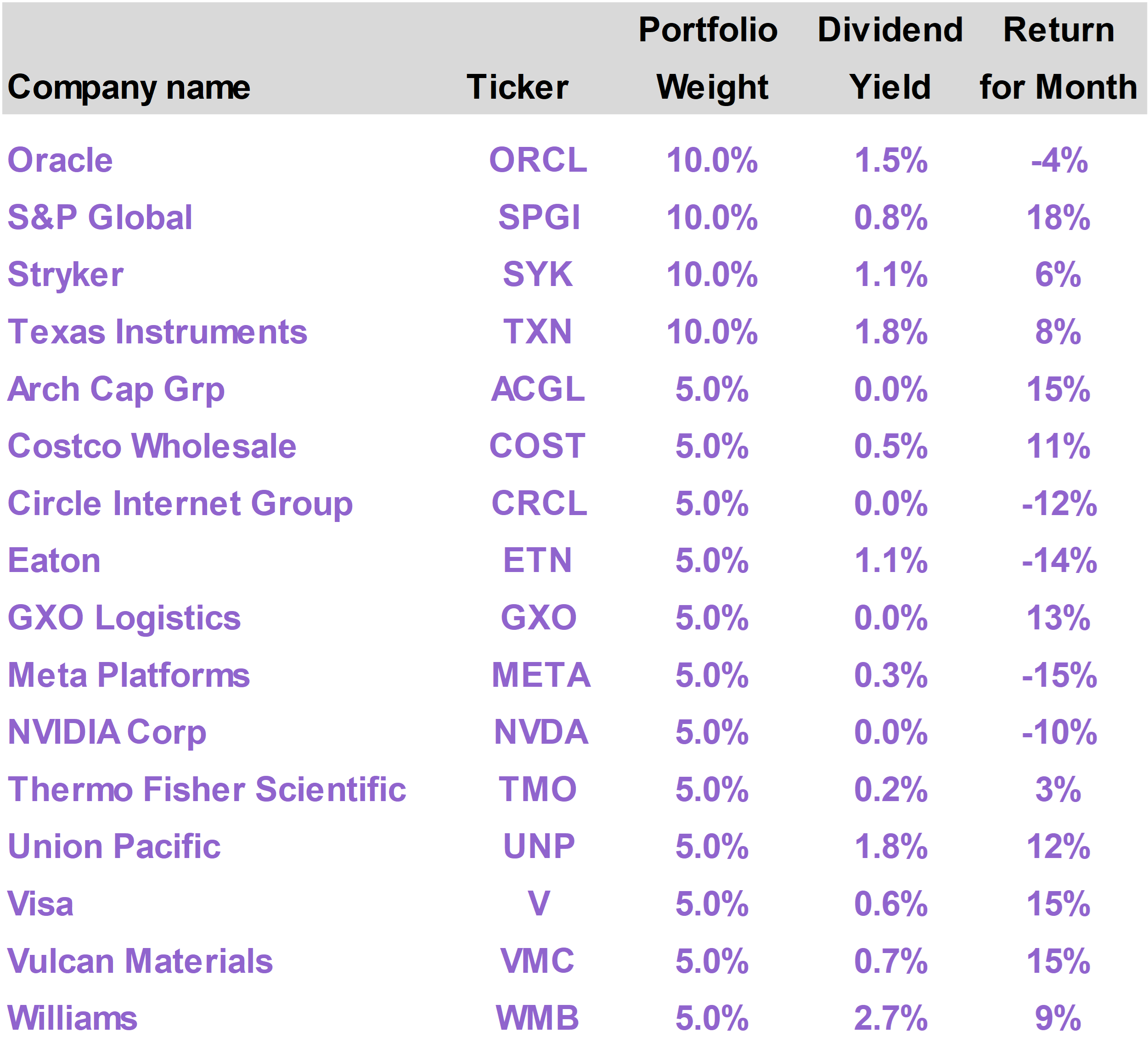
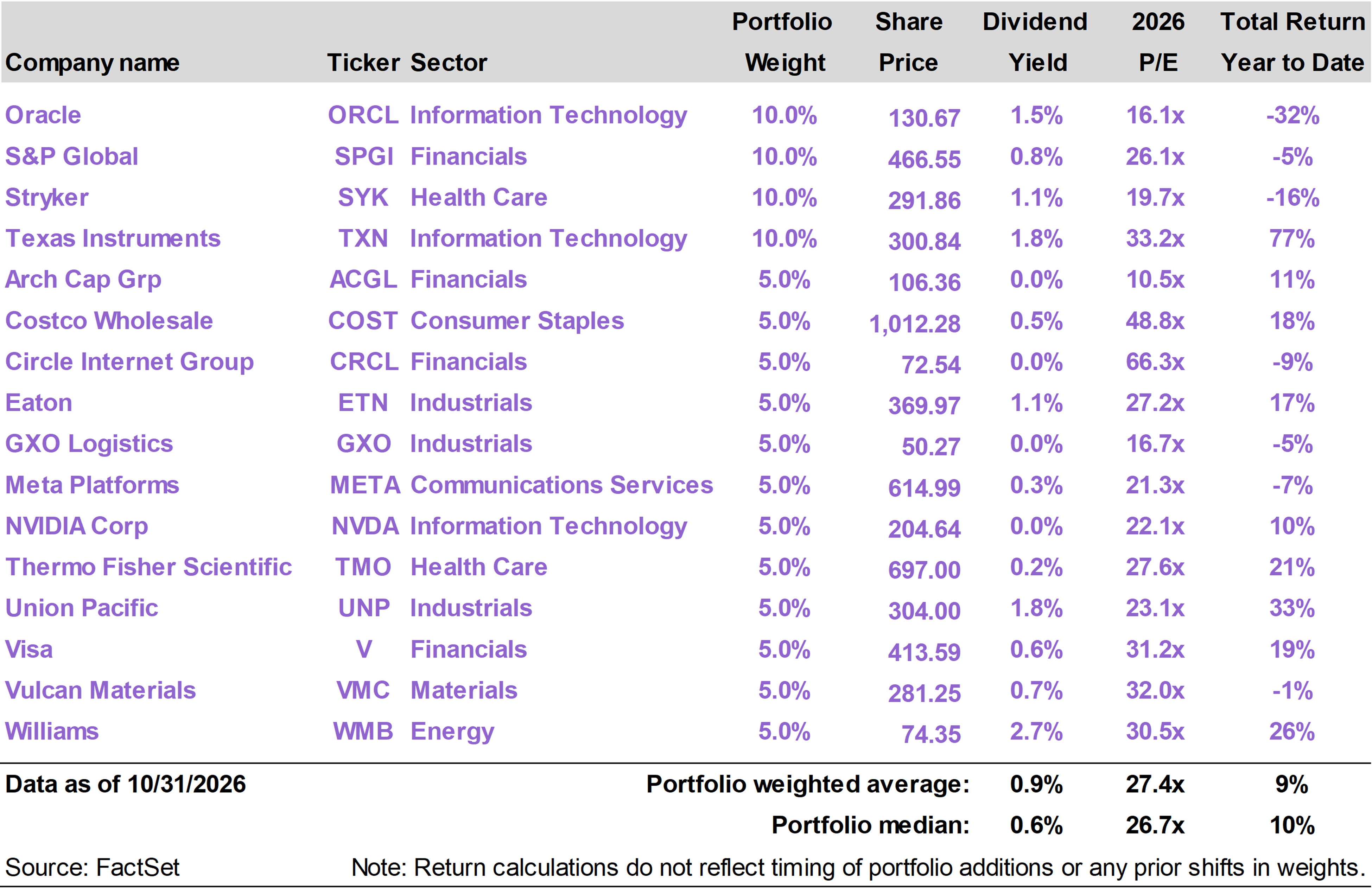
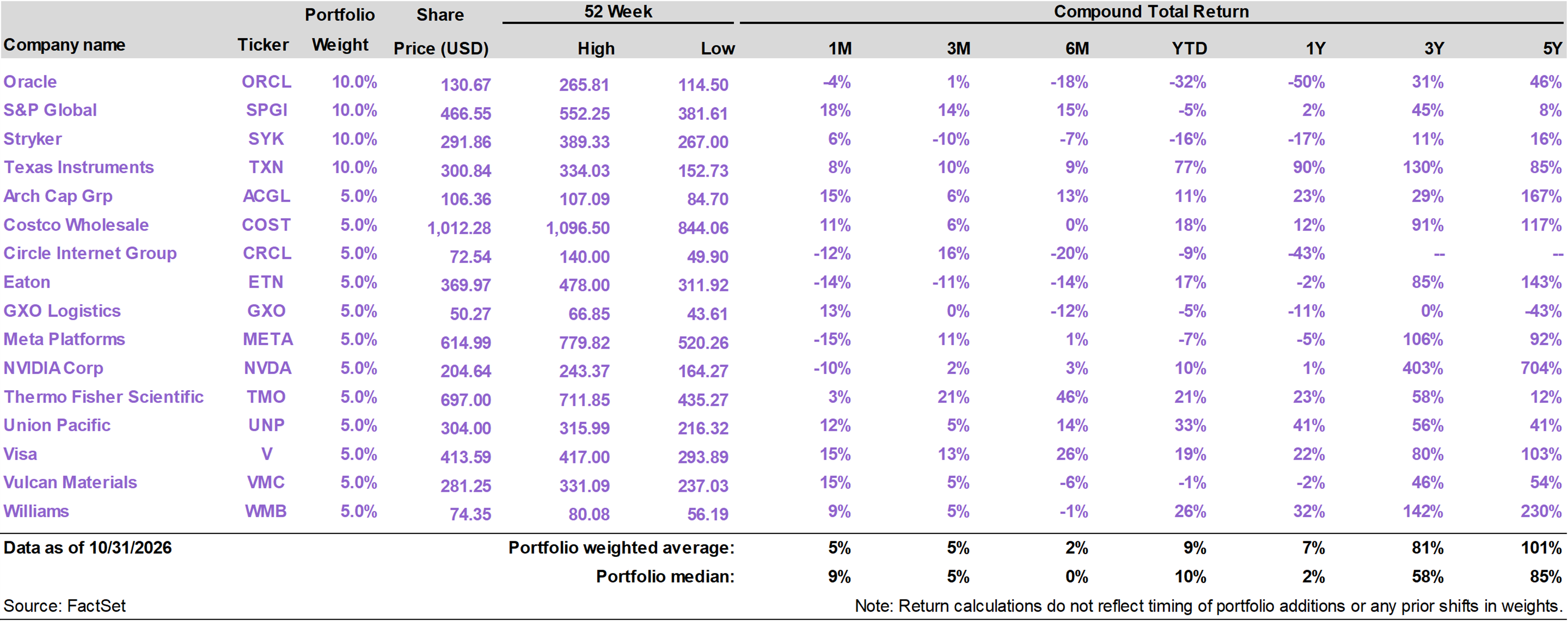
The American Resilience portfolio generated a total return of 4.9% in October, significantly outpacing the -0.9% of the S&P 500 Index. On a year to date basis through the end of the month, the portfolio has generated a total return of 15.4%, versus 11.8% for the S&P 500.
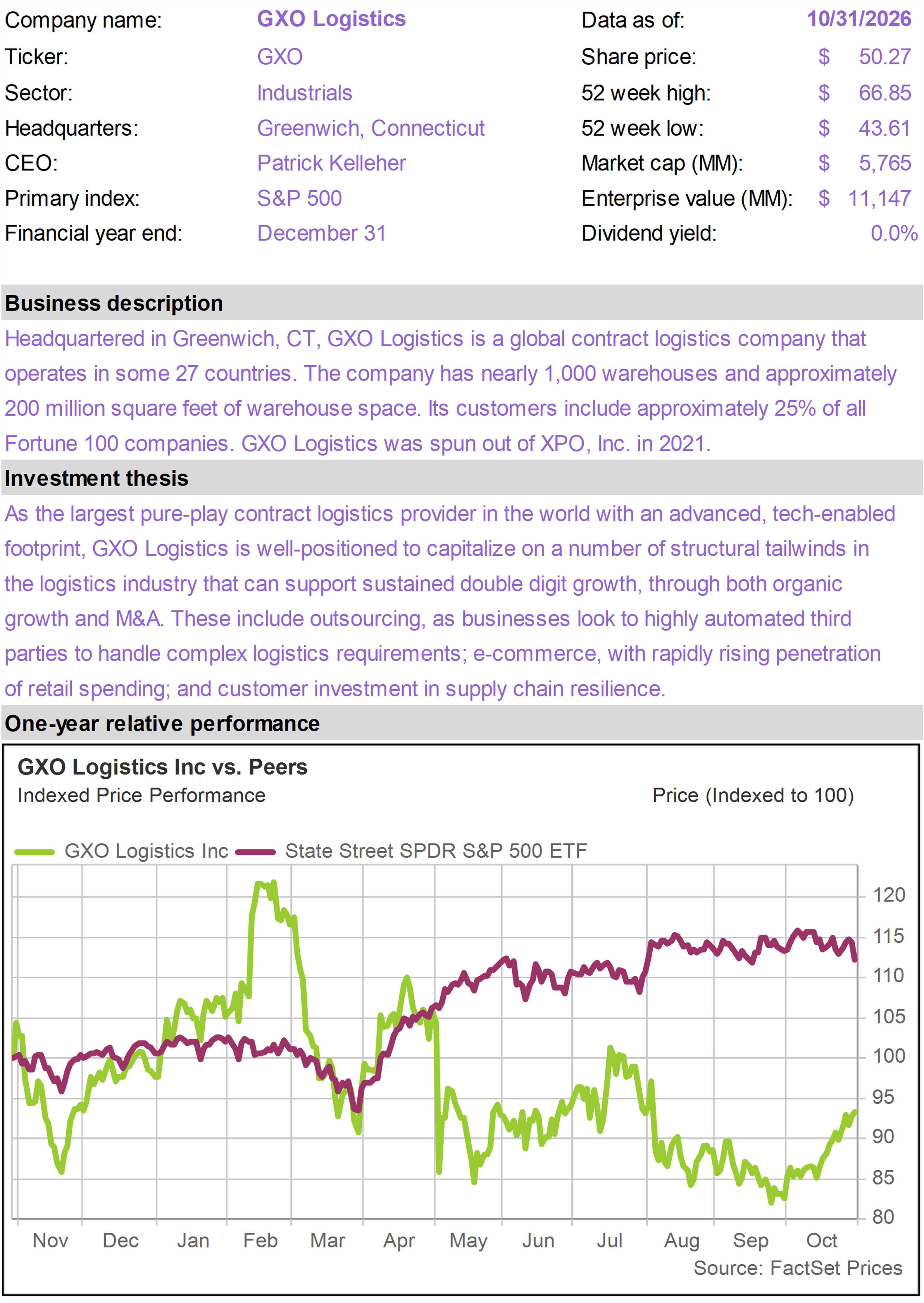
The top performing portfolio positions in October were S&P Global (SPGI), which returned 18%; Visa (V), which returned 15%; and Vulcan Materials (VMC), which returned 15%.
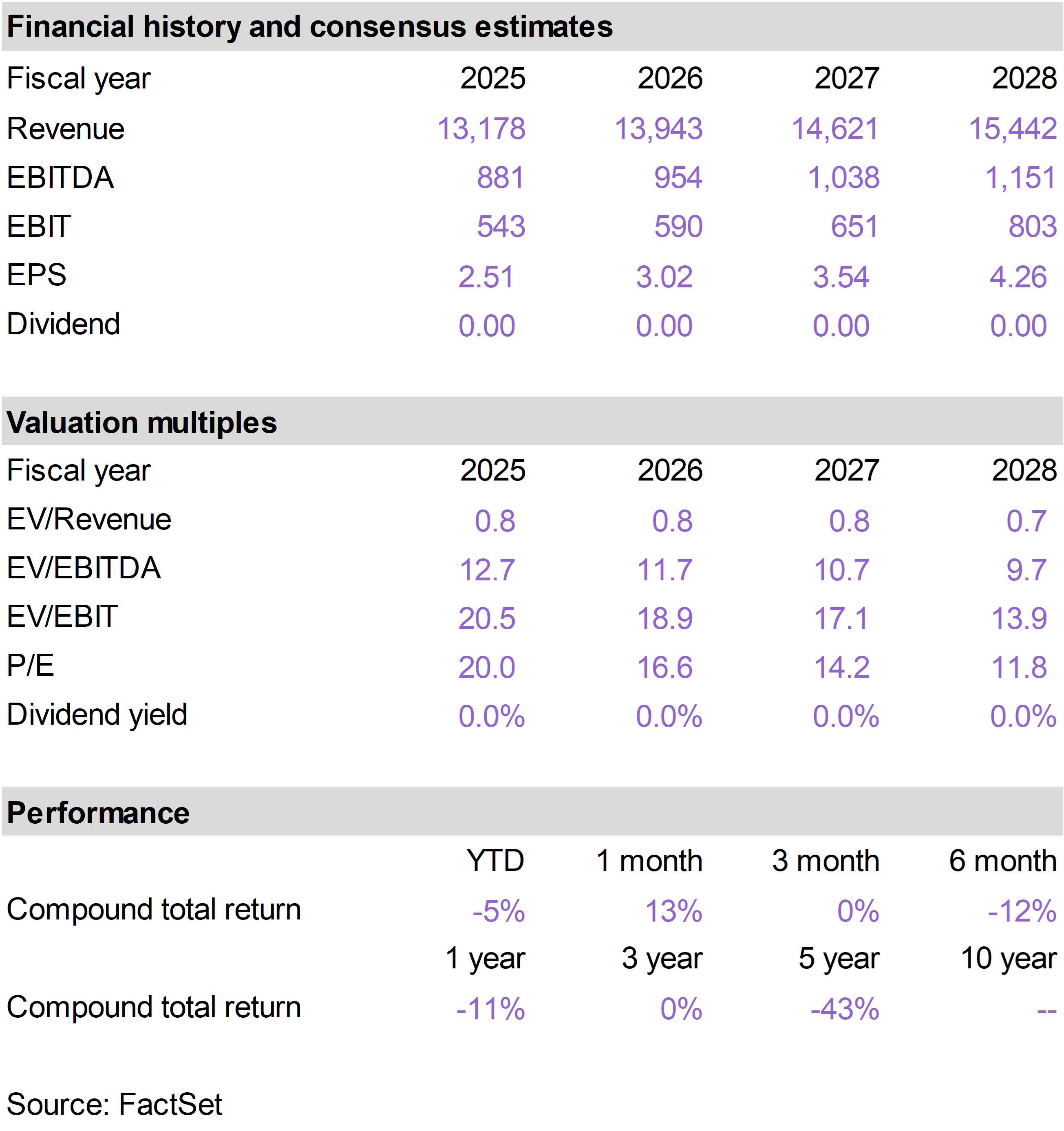
The worst performing positions were Meta Platforms (META), which returned -15%; Eaton (ETN), which returned -14%; and Circle Internet Group (CRCL), which returned -12%. |
|
|
The Anti-AI Trade
For much of 2026, including September, a relatively small group of large technology companies has dominated stock market performance, propelled by enormous enthusiasm surrounding the AI revolution.
That dynamic reversed dramatically in October.
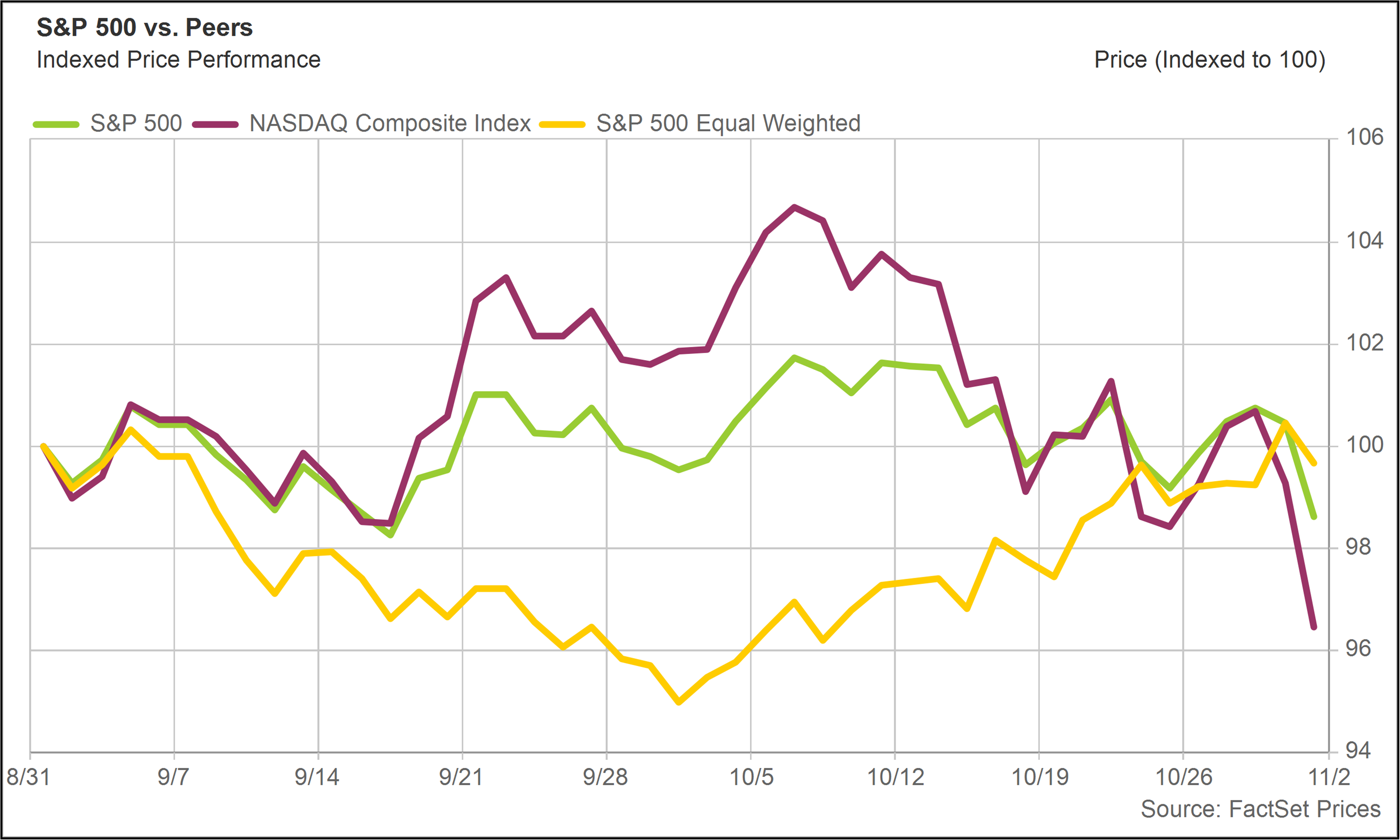
The S&P 500 declined 0.9%, while the tech-heavy NASDAQ Composite fell 5.3%, its worst monthly performance since March 2025.
Yet most stocks actually performed quite well.
The S&P 500 Equal Weight Index, which assigns the same importance to every company rather than weighting them by market capitalization, gained approximately 4.9%.
This represents an extraordinary divergence of nearly 6% between the two versions of the same index.
September had produced almost precisely the opposite outcome. Technology stocks rallied, while the equal-weighted S&P 500 declined 4.8%.
In October, investors shifted capital away from mega-cap tech and back toward a much broader range of industries that the market had largely abandoned the month prior. |
|
|
| S&P 500 vs. NASDAQ, S&P 500 Equal Weight(Total Return - 8/31/2026-10/31/2026) |
|
|
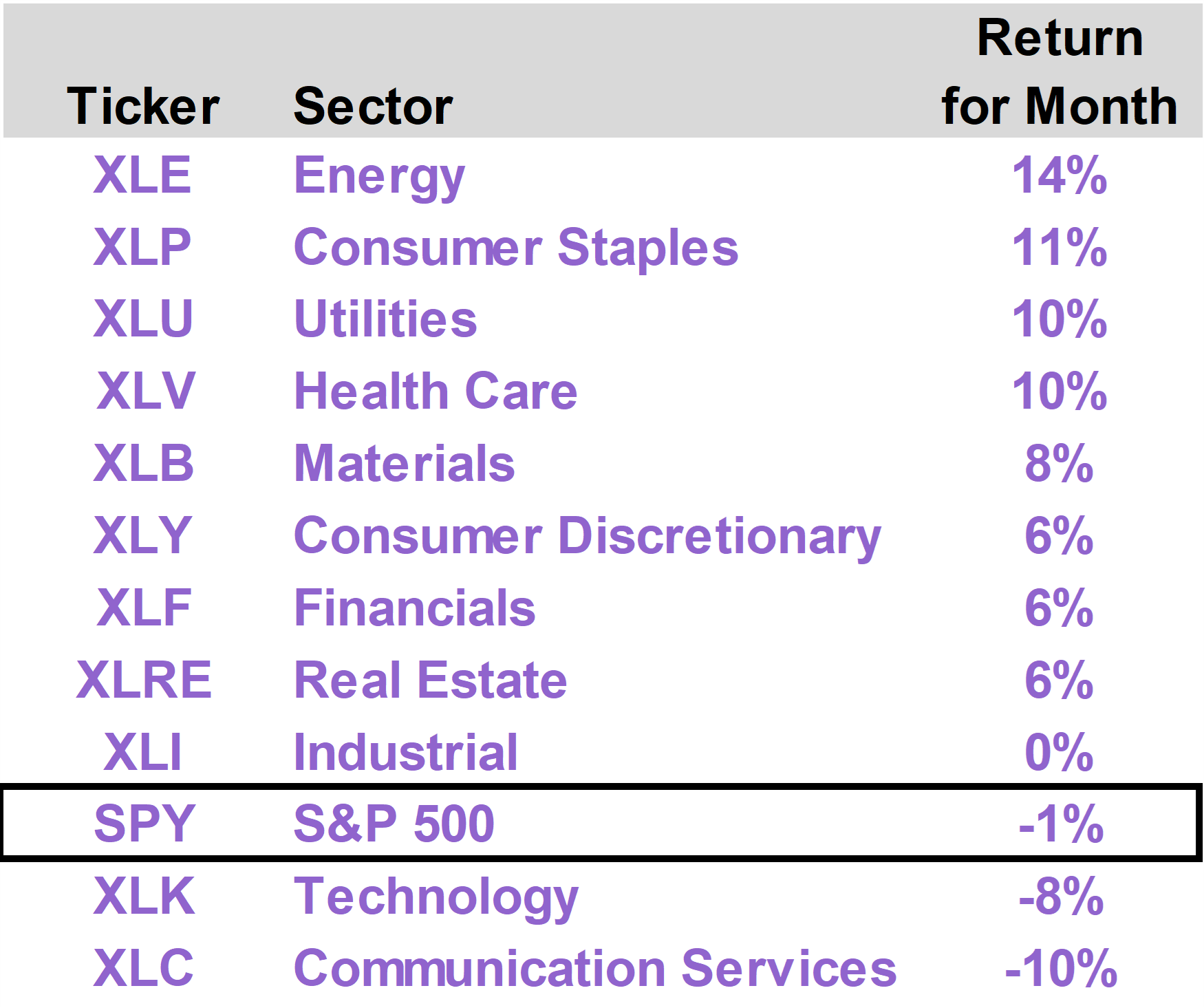
The reversal is particularly striking when we examine performance at the sector level.
Back in September, Technology was the only S&P 500 sector to generate a meaningfully positive return.
In October, nine of the eleven sectors advanced, while Technology and Communication Services were the only two to decline.
It is worth highlighting that, within the Communication Services sector, Alphabet (GOOGL) has a nearly 20% weighting. GOOGL declined 18% in October, which weighed heavily on the sector result. |
|
|
|
Energy was the top performer, benefiting from additional strength in oil prices.
Defensive sectors like Consumer Staples, Utilities, and Health Care also delivered double-digit returns, aided by a meaningful decline in long-term interest rates.
Meanwhile, the two sectors most heavily exposed to the largest AI-related technology companies suffered substantial losses.
The AI spending debate intensifies
Concerns over the enormous sums being committed to AI infrastructure became particularly acute toward the end of October, as the big AI hyperscalers reported third quarter earnings.
In addition to GOOGL, companies likes Amazon (AMZN), and Meta Platforms (META) continued to demonstrate impressive earnings growth. Yet their share prices came under pressure as investors focused on their aggressive capital spending programs.
The central question is whether these companies will ultimately earn attractive returns on their massive investments in data centers, computing infrastructure, and other AI-related assets.
As we discussed in our recent 76report (The Great AI Free Cash Flow Debate), high levels of capital expenditure can depress free cash flow even as earnings continue to grow.
Declining free cash flow does not necessarily indicate deteriorating business fundamentals. Investments intended to create new sources of earnings can require substantial cash expenditures years before they generate meaningful revenue.
But there is a legitimate risk that companies will spend too aggressively, misjudge future demand, or discover that maintaining their competitive positions requires more ongoing investment than originally anticipated.
The critical issue is not simply how much these companies are spending, but what economic returns those investments will ultimately produce.
Despite the sentiment shift, we remain optimistic about the long-term opportunity presented by AI.
Current demand for AI compute is overwhelming, which explains why the hyperscalers are pursuing the opportunity so aggressively. They do expect high returns as they become the world’s leading providers of this computational power.
At the same time, given the vast scale of the investments being made and uncertainty around how they will turn out, it is not surprising to see the market push back from time to time, especially when free cash flow turns severely negative.
Long-term rates finally retreat
Another important (and somewhat related) development in October was the reversal in long-term Treasury yields.
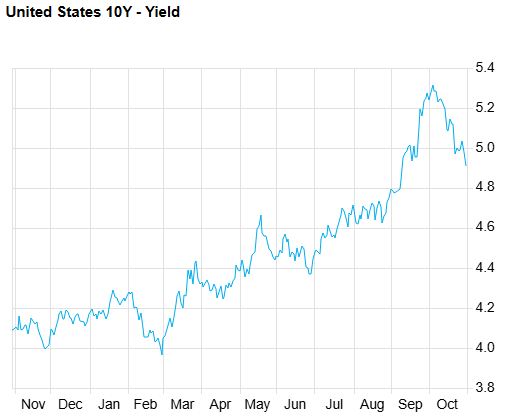
In September, rapidly rising interest rates created a major headwind for most areas of the stock market. The yield on the benchmark 10-Year Treasury climbed to approximately 5.3% by the end of September, reflecting persistent inflation, resilient economic activity, and renewed monetary tightening by the Federal Reserve.
October brought a significant change.
The 10-Year Treasury yield declined to approximately 4.9%, representing a drop of roughly 35 basis points over the course of the month. |
|
|
| 10-Year Treasury Yields—Last 12 Months(Source: FactSet) |
|
|
The 30-Year Treasury yield also moved meaningfully lower, declining from approximately 5.6% to 5.3%.
Interestingly, this happened even as the Federal Reserve maintained a relatively hawkish posture. At its October 28 meeting, the Fed left its target interest rate unchanged at 3.75%–4.00%. Two members actually favored another rate hike.
Inflation also remains elevated. The Personal Consumption Expenditures (PCE) price index, the Fed's preferred inflation measure, increased 3.6% over the twelve months ending in September.
Nonetheless, bond investors have begun to reassess whether the relentless upward movement in long-term interest rates is sustainable.
Part of the decline may reflect investors seeking the relative safety of government bonds amid tech volatility. But there is also the possibility that long-term yields had simply moved too far, too quickly.
As we have previously discussed, higher borrowing costs eventually create their own economic consequences, discouraging investment and weakening demand for credit.
The decline in long-term yields was particularly favorable for many of the stocks that suffered most during September's sell-off.
Real Estate, Utilities, and other income-producing businesses are especially sensitive to interest rates because investors frequently compare their expected returns with those available on government bonds.
Lower Treasury yields make their earnings and dividends relatively more attractive, while also reducing the discount rates investors apply to future cash flows.
Many of these businesses had experienced substantial valuation declines despite generally resilient operating fundamentals. As we signaled last month, this pressure on valuations set the stage for a potentially sharp recovery once rates stabilized or reversed.
October demonstrated how quickly market sentiment toward such companies can improve when the direction of interest rates begins to change.
Oil remains a major complication
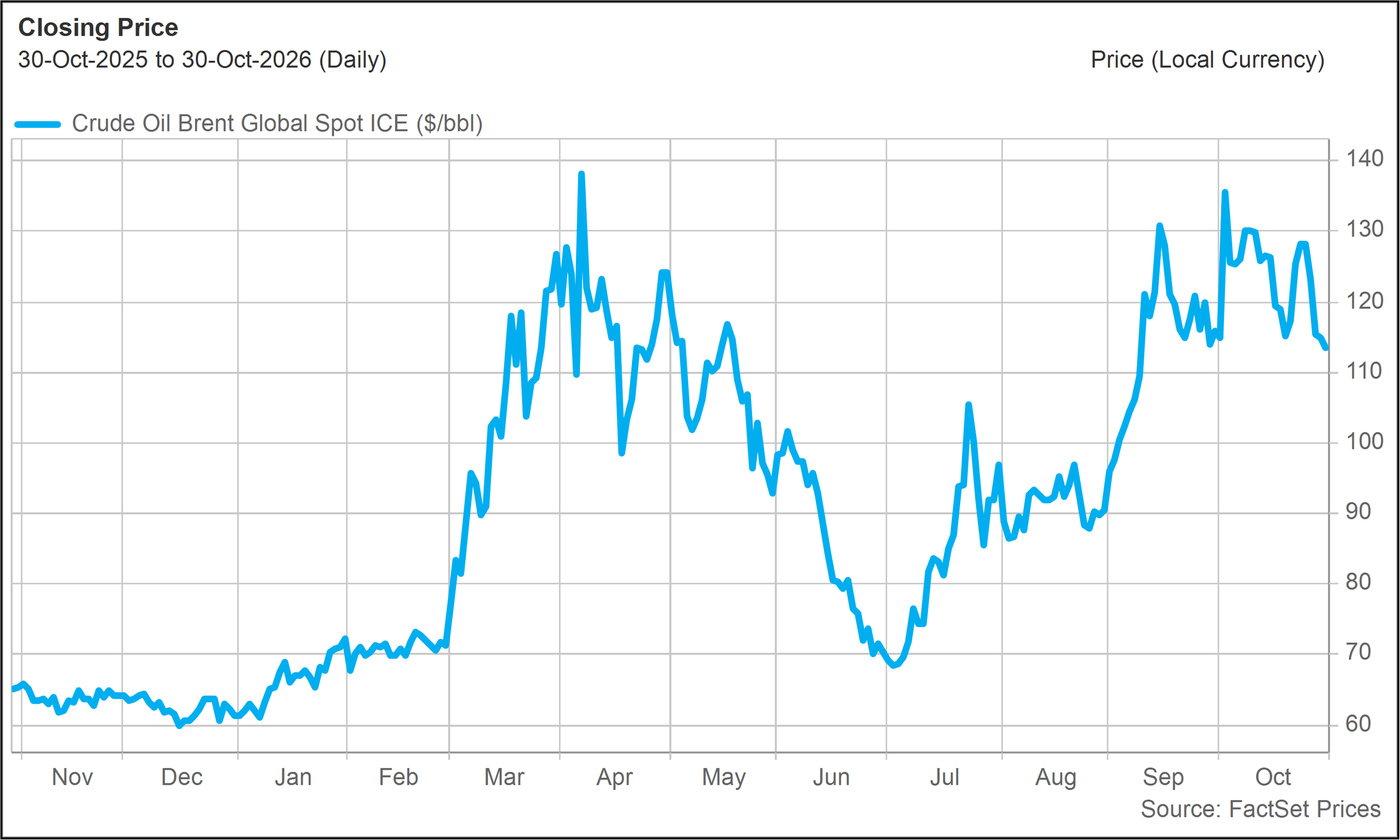
While the reversal in Treasury yields is encouraging, the inflation picture remains complicated by persistently elevated energy prices.
Oil prices were generally higher in October as the conflict with Iran continued to disrupt global energy markets. Brent crude ended the month at approximately $113 per barrel. |
|
|
| Crude Oil($/barrel - Year to Date) |
|
|
High oil prices have added to inflationary pressure and created a difficult political environment for the Trump administration.
As we discussed earlier in the 76report (Midterms and the Stock Market—How Worried Should We Be?), there has been some encouraging progress in the physical oil market.
Regional producers have managed to restore a substantial portion of their export volumes through alternative pipelines, shipping arrangements, and other logistical adaptations.
Yet the recovery in physical supply has not translated into normalized prices. Shipping costs, insurance premiums, security risks, and shortages of certain refined petroleum products—particularly diesel—continue to create substantial additional costs.
The important question is whether the global energy system can continue adapting to these disruptions and eventually reduce the enormous risk premiums embedded in oil prices.
We remain cautiously optimistic that these pressures will eventually ease.
A sustained decline in energy prices could materially improve the inflation outlook, potentially giving the Fed more flexibility and creating additional downward pressure on long-term interest rates.
Midterms are now imminent
Another major source of uncertainty is political.
The November 3 midterm elections could shift control of Congress, with Democrats widely expected to make gains, particularly in the House of Representatives.
This has implications for the Trump administration's legislative agenda, as well as regulation and oversight affecting individual industries. Yet we believe investors should be careful about placing too much emphasis on the election itself.
As we discussed in our recent midterm-election analysis, the two most consequential forces driving the stock market—AI and oil prices—are largely independent of which political party controls Congress.
AI investment will ultimately be determined by technological progress, commercial demand, and the economic returns available to companies deploying capital.
Similarly, the resolution of the Iran conflict and the resulting trajectory of global oil prices will depend primarily on geopolitical and economic developments rather than congressional majorities.
The election could certainly influence market sentiment, particularly if the results differ materially from expectations. But significant Democratic gains are already widely anticipated.
Historically, markets have often performed well following midterm elections, regardless of which party wins, as political uncertainty begins to fade.
The more important determinants of longer-term stock market performance will remain economic growth, inflation, interest rates, and corporate profitability.
A healthier market beneath the volatility?
Despite the sharp decline in technology stocks, October brought several reasons for optimism. The broader economy continues to demonstrate considerable resilience.
Real U.S. GDP expanded at an annualized rate of 3.4% in the third quarter, accelerating from 2.2% in the second quarter.
Corporate earnings generally remain strong, and investment in AI infrastructure continues at a robust pace (although resistance from the equity market could lead to some moderation).
Meanwhile, the recent decline in long-term interest rates has begun to provide relief to many high-quality businesses whose valuations were severely pressured in September.
Most importantly, the stock market is no longer relying exclusively on a handful of technology companies to generate positive returns. The extraordinary divergence between the NASDAQ and the equal-weighted S&P 500 suggests that market leadership is broadening in a constructive way.
There are certainly reasons to remain cautious. AI-related capital spending must ultimately generate attractive financial returns. Oil prices remain elevated, inflation is still too high, and the political environment is uncertain.
But October also demonstrated the benefits of maintaining exposure to a diversified collection of fundamentally attractive businesses.
We remain confident in the long-term economic transformation driven by AI, while recognizing the journey has been and will likely continue to be volatile.
At the same time, many high-quality companies outside the largest technology names offer compelling opportunities to participate in continued economic growth.
If long-term interest rates stabilize or decline further, these businesses could benefit from both improving operating performance and a meaningful recovery in valuations.
October was a difficult month for the AI theme, but it may also have marked an important and constructive shift toward a broader, more balanced stock market. |
|
| | |
The top performing stocks in the portfolio in October were S&P Global (SPGI), which returned 18%; Visa (V), which returned 15%; and Vulcan Materials (VMC), which returned 15%.
The worst performing positions this month were Meta Platforms (META), which returned -15%; Eaton (ETN), which returned -14%; and Circle Internet Group (CRCL), which returned -12%. |
|
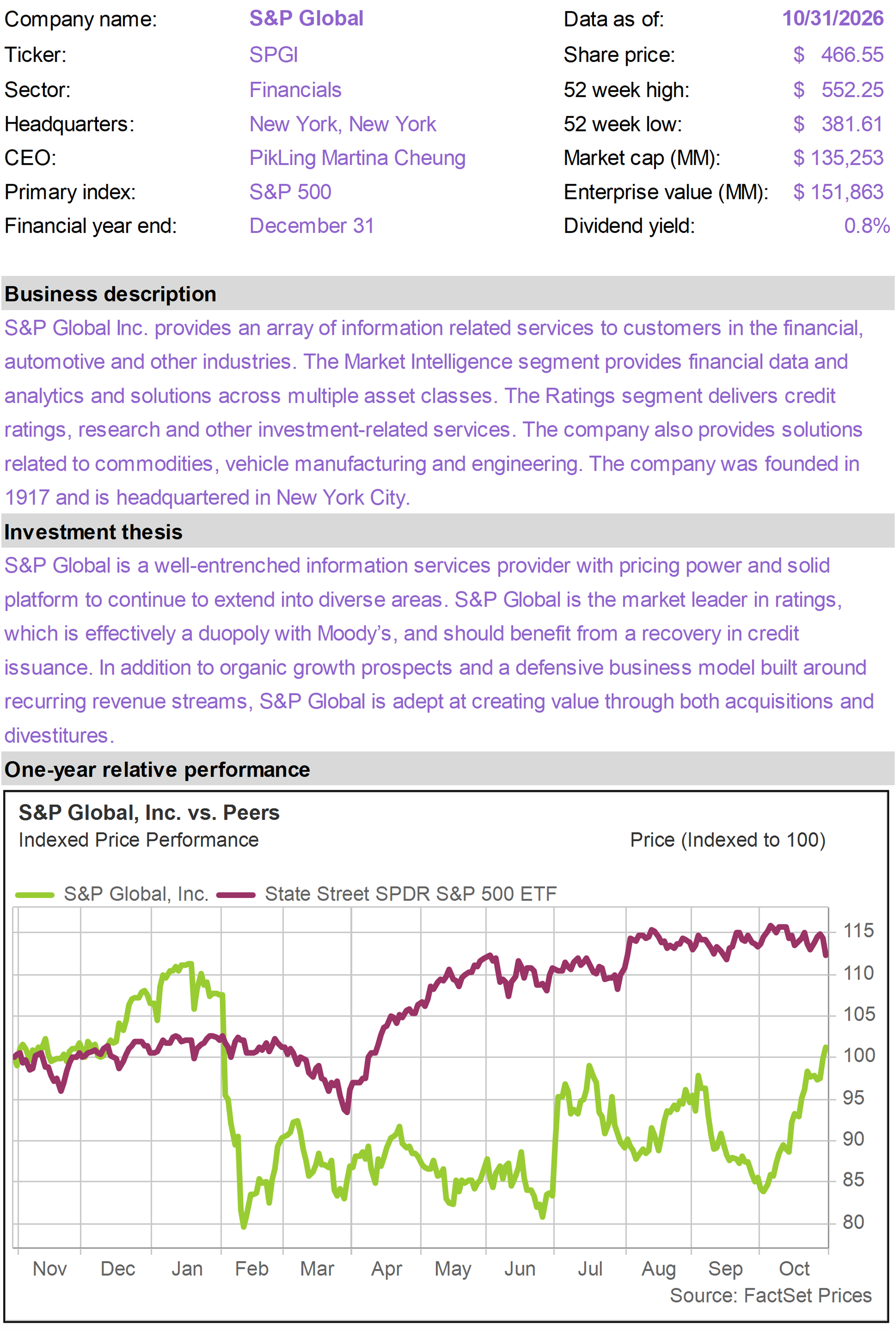
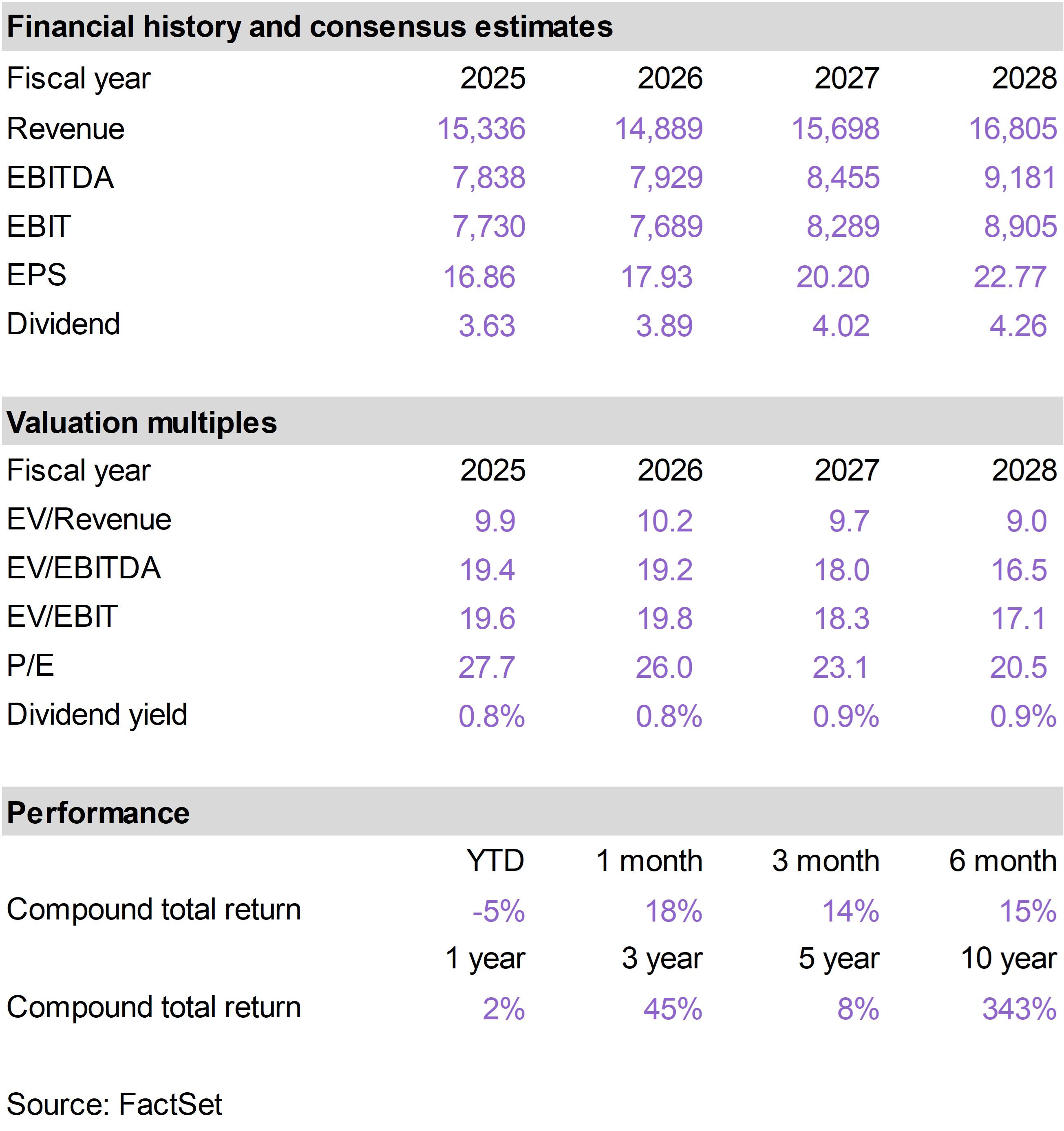
| | SPGI was the strongest performing position in the portfolio in October. Investors responded to solid third quarter earnings and an important strategic announcement.
The company reported revenue growth of 7% to approximately $3.7 billion, while adjusted earnings per share increased 9%, exceeding expectations. Management also raised its full-year earnings guidance and outlook for operating margins.
Performance was particularly strong in SPGI's Indices business, where revenue increased 20%, supported by higher asset values and continued inflows into index-linked investment products.
The Ratings business experienced more modest revenue growth of approximately 3%, although billed debt issuance increased 8%. Demand for financing related to AI infrastructure continues to represent an important source of growth.
Meanwhile, the Market Intelligence business delivered 7% organic revenue growth as sales activity improved.
Perhaps the most significant development was management's announcement of a strategic review of its Capital IQ and related data businesses, which collectively generate approximately $2 billion in annual revenue.
These businesses have faced growing investor concerns about potential disruption from AI, as new tools could change how financial professionals access and analyze information.
A potential separation would allow SPGI to concentrate more heavily on its core franchises in credit ratings, financial indices, and energy markets, where proprietary data, established industry relationships, and high barriers to entry provide substantial competitive advantages.
SPGI's underlying operations continue to perform well, with strong margins, substantial free cash flow generation, and opportunities for further productivity improvements through AI.
We view the strategic review positively, as it could help unlock value while sharpening the company's focus on its most defensible and profitable businesses.
Following October's rebound, we continue to see SPGI as a high-quality long-term compounder, benefiting from the structural growth of financial markets, expanding demand for proprietary information, and the increasing financing requirements of the AI investment cycle. |
|
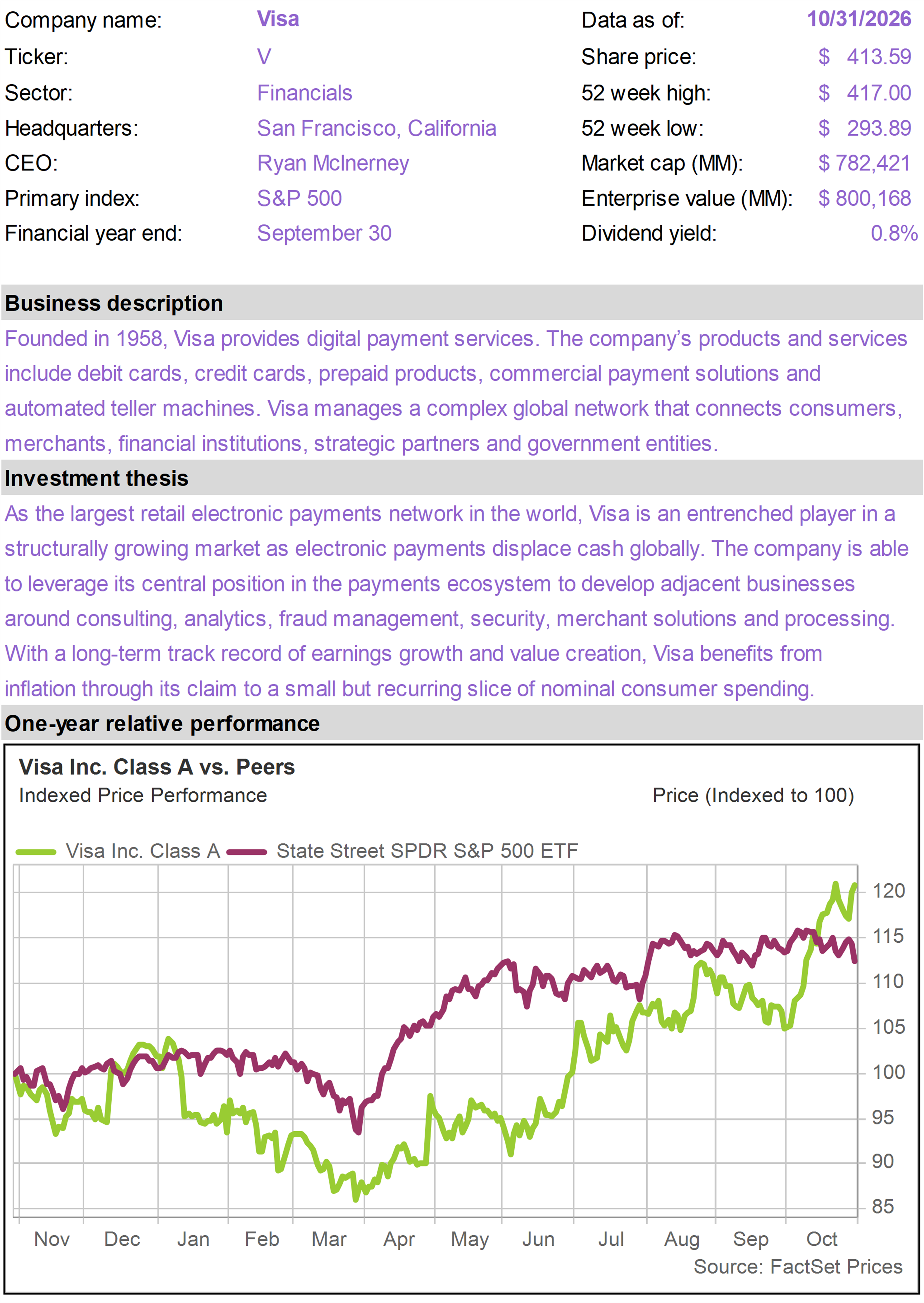
| | V performed well in October, supported by strong quarterly earnings and growing investor confidence in the company's ability to benefit from emerging payment technologies.
V reported fiscal fourth quarter revenue growth of 13% to $12.1 billion, while adjusted earnings per share increased 13% to $3.48, exceeding expectations.
Underlying payment activity remained healthy, with U.S. payment volumes increasing approximately 10% and cross-border volumes advancing 14%.
Management reported resilient consumer spending across income levels, with little evidence of deterioration among lower-income consumers.
One of the most important growth drivers is its rapidly expanding Value-Added Services (VAS) business, which provides fraud prevention, cybersecurity, analytics, and other services to financial institutions and merchants.
VAS revenue increased 31% in the quarter to approximately $4 billion. Management expects growth in the low-to-mid 20% range in fiscal 2027, providing an increasingly important source of revenue beyond traditional payment processing.
V is also positioning itself to participate in major technological changes within the payments industry, particularly stablecoins and agentic AI.
The company is expanding its integration with blockchain networks and stablecoins, which could significantly improve the efficiency of cross-border transactions and commercial payments.
Similarly, as AI agents increasingly execute transactions on behalf of consumers and businesses, V's extensive network, transaction data, and fraud prevention capabilities could become even more valuable.
The company also continues to expand Visa Direct, which facilitates payments between individuals, businesses, and financial institutions. Transaction volume reached approximately $1.5 trillion in fiscal 2026, representing 23% growth.
Looking ahead, management expects low-double-digit revenue growth in fiscal 2027, supported by continued expansion in electronic payments, value-added services, and commercial transactions.
We continue to view V as a highly attractive long-term compounder, combining powerful network effects, extraordinary profitability, and substantial free cash flow generation.
Its investments in emerging payment technologies should allow the company to capture new sources of transaction volume while reinforcing the competitive advantages of its global network. |
|
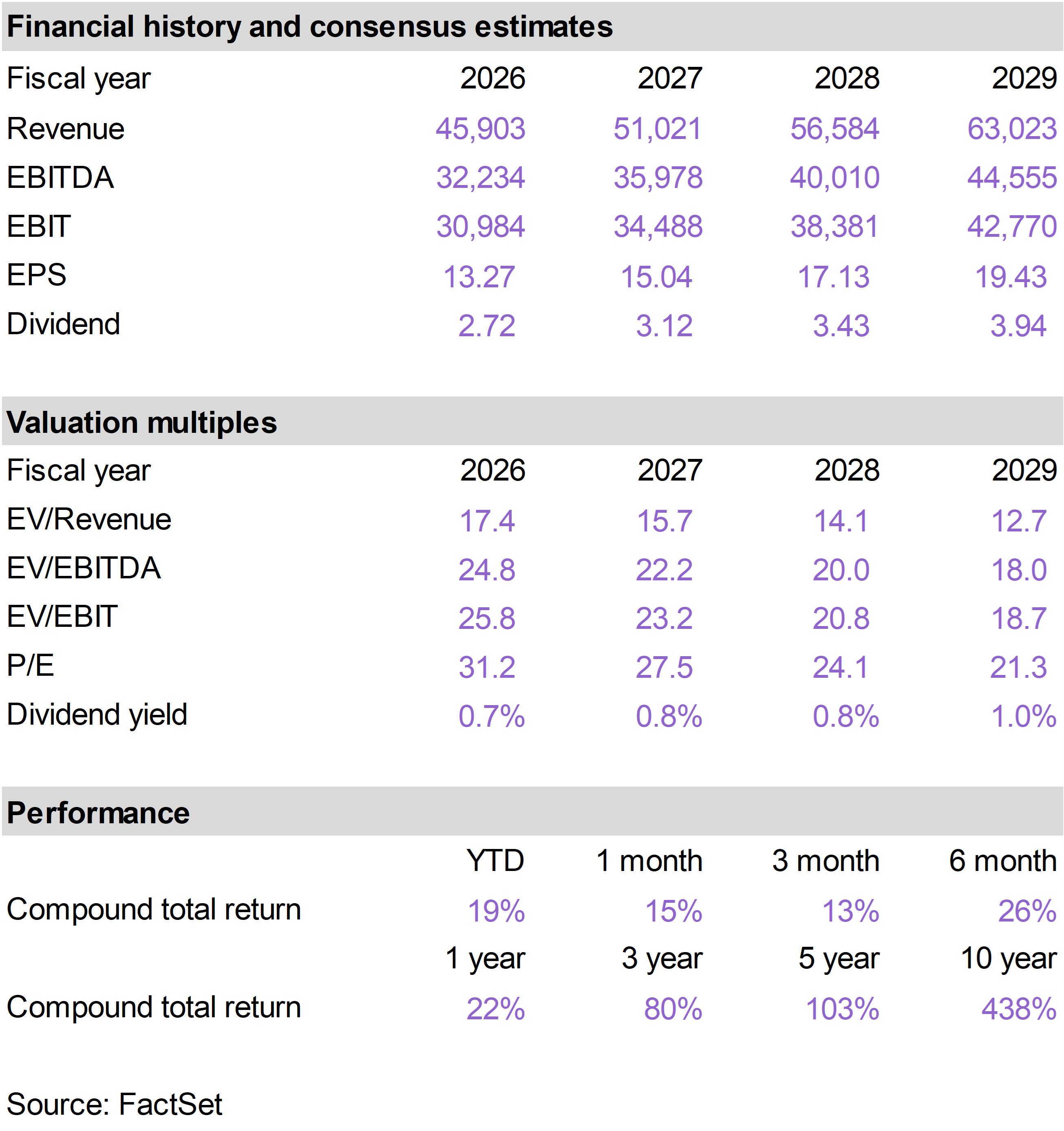
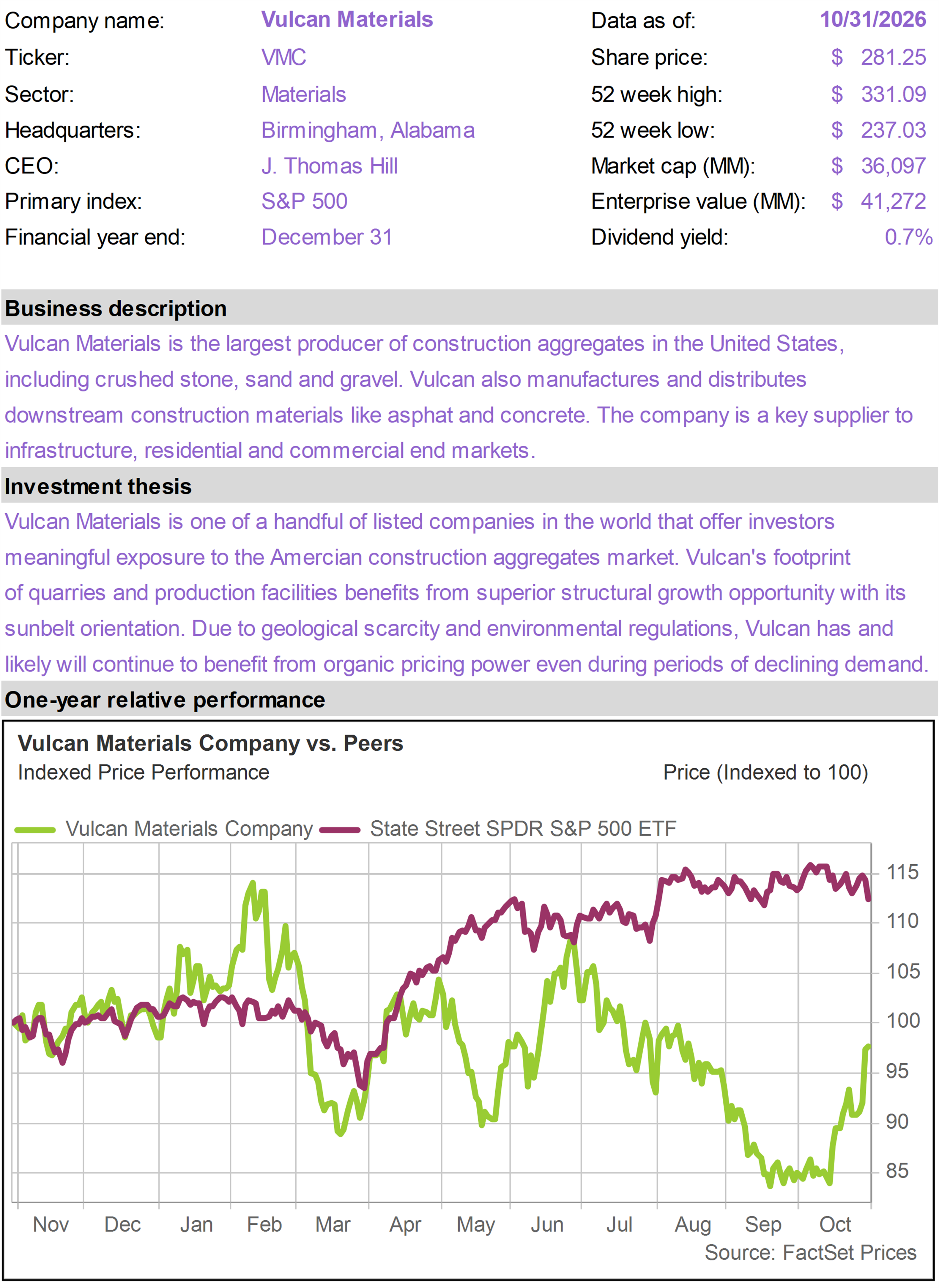
| | VMC benefited from the broader rotation into economically sensitive stocks and growing optimism that long-term interest rates may have peaked.
The nation's largest producer of construction aggregates has faced a challenging environment as elevated borrowing costs have constrained construction activity and sharply higher diesel prices have pressured margins.
Third quarter revenue declined approximately 5% to $2.18 billion, while adjusted EBITDA fell 4% to $707 million. Aggregates shipments declined 3%, but mix-adjusted selling prices increased 5%.
Importantly, cash gross profit per ton actually increased slightly despite significantly higher fuel costs, demonstrating VMC's pricing power and operational efficiency.
Management now expects approximately $2.4 billion in adjusted EBITDA for 2026, with renewed earnings growth anticipated in 2027.
A critically important element of the investment thesis is VMC's considerable pricing power.
Aggregates are essential inputs into roads, bridges, and building construction. Because transportation costs are substantial and new quarries are difficult to permit, established producers enjoy powerful competitive advantages within their local markets.
Management anticipates mid-to-high single-digit pricing gains in 2027, supporting profitability even if construction volumes remain relatively subdued.
Meanwhile, VMC continues to generate substantial cash flow, which it is deploying through acquisitions and share repurchases. The company repurchased $350 million of shares in the third quarter and completed two acquisitions in Tennessee and Ohio.
We also see potential for a meaningful recovery in construction activity if long-term interest rates continue to decline. Lower financing costs could stimulate residential and commercial development, while infrastructure investment should provide a durable source of demand.
Elevated energy costs remain a near-term risk, but an eventual reversal in oil prices could provide an additional boost to margins.
We continue to view VMC as a high-quality business with scarce, difficult-to-replicate assets and substantial pricing power. Following the significant valuation correction earlier this year, we believe the shares offer compelling upside as the construction environment improves. |
|
| | META reversed much of its strong September performance as investors became increasingly concerned about the enormous capital spending required to support the company's AI ambitions.
Third quarter operating results were exceptionally strong. Revenue increased 26% to $64.6 billion, supported by continued growth in advertising and improvements in AI-powered recommendations and ad targeting.
AI is already contributing meaningfully to META's core business, improving user engagement, advertising conversion rates, and the effectiveness of marketing campaigns.
Muse, the company's new consumer AI agent, also continues to demonstrate impressive early traction, attracting more than 10 million users within six weeks of launch.
Approximately one-quarter of registered users engage with the product daily, with shopping emerging as a particularly popular application.
However, investor enthusiasm was overwhelmed by the scale of META's infrastructure spending.
The company spent approximately $35 billion on capital expenditures during the third quarter, resulting in negative free cash flow of $2.1 billion. Full-year capital expenditures are expected to reach $135 billion to $145 billion.
META also announced plans to raise up to $97.5 billion in additional equity financing, including common shares, convertible preferred securities, and potential future stock sales.
The announcement heightened concerns about shareholder dilution and whether the company's aggressive spending will ultimately generate adequate financial returns.
We believe investors may be underestimating the breadth of the economic opportunity that this infrastructure could eventually address.
Importantly, META's investments in AI infrastructure can support multiple businesses simultaneously, including its existing advertising platforms, Muse, business agents, and potential enterprise AI offerings.
The spending commitments are undeniably substantial, and the ultimate returns remain uncertain. But META is also demonstrating that AI can materially improve the profitability and growth of its existing operations.
Following October's sharp correction, we continue to view META as an attractively priced long-term investment, combining an exceptionally profitable advertising franchise with significant opportunities to create new AI-driven revenue streams. |
|
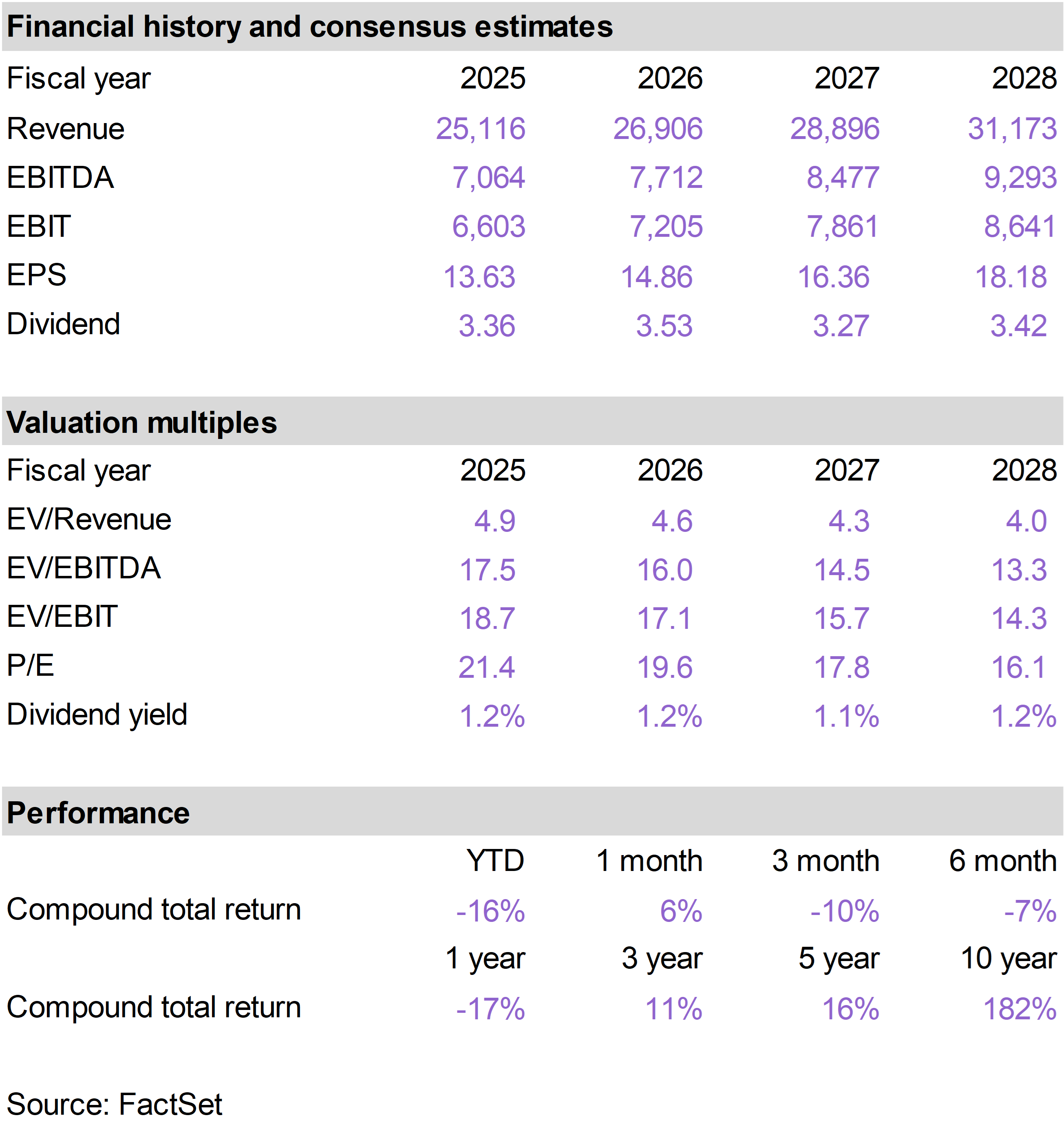
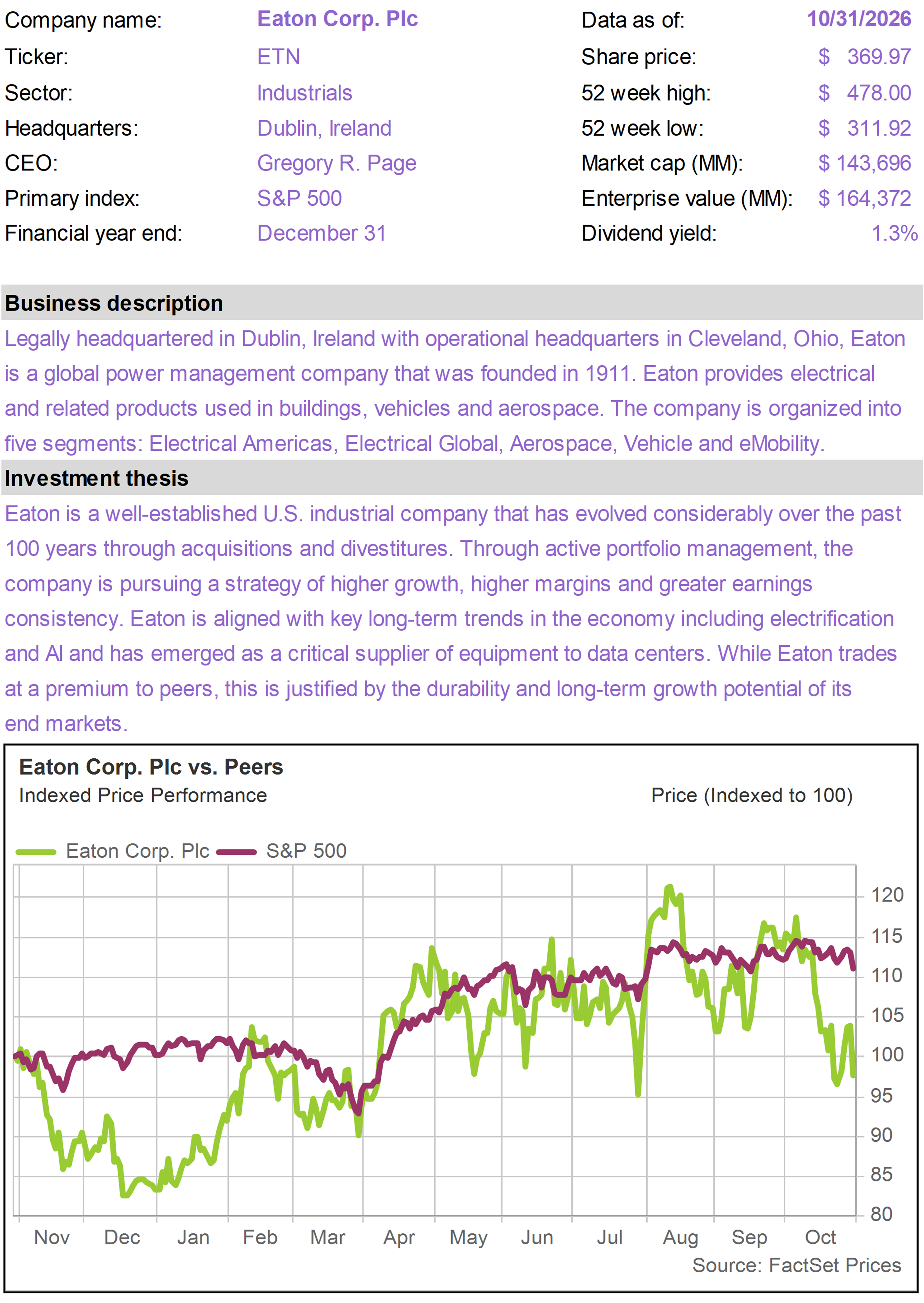
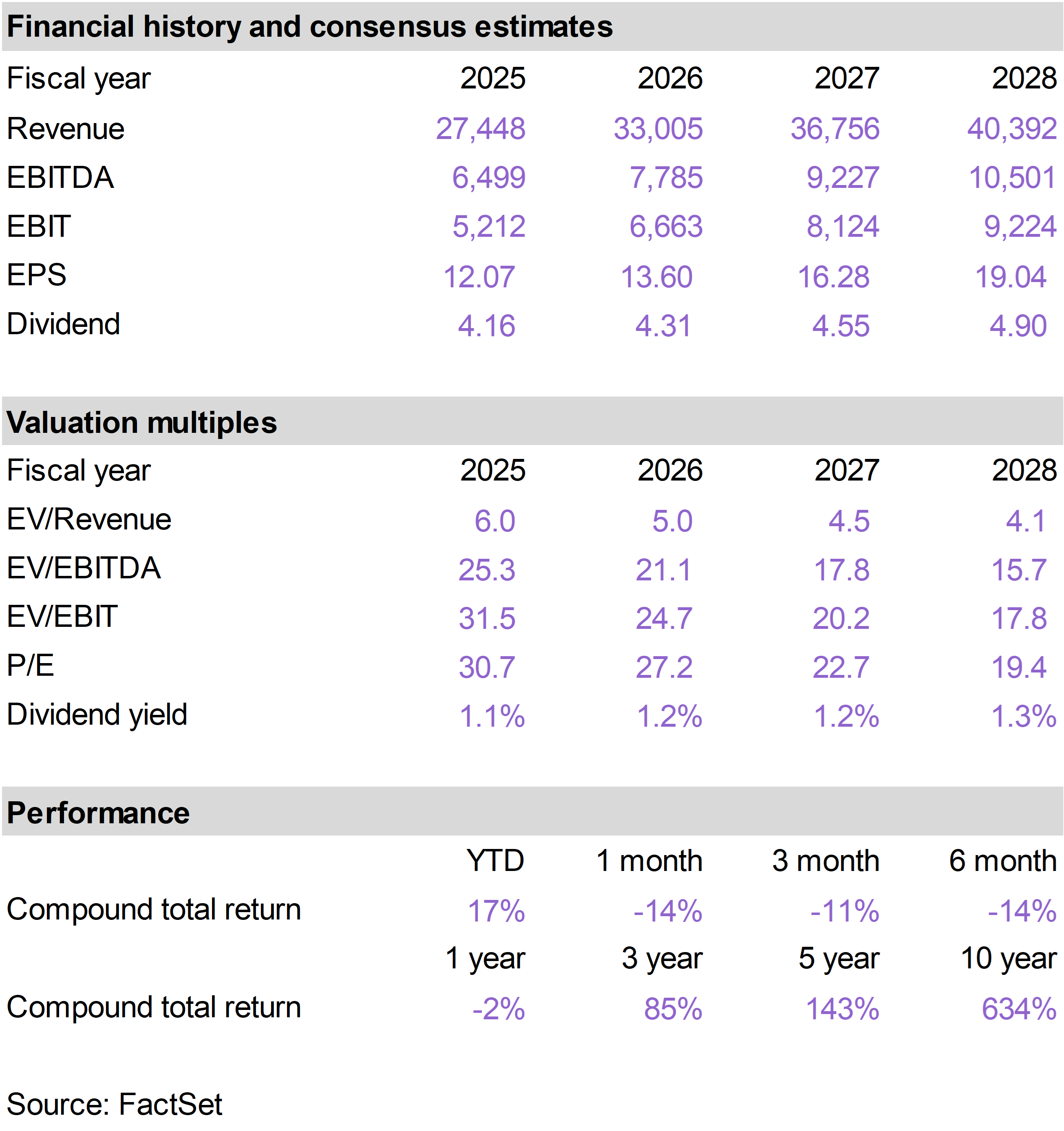
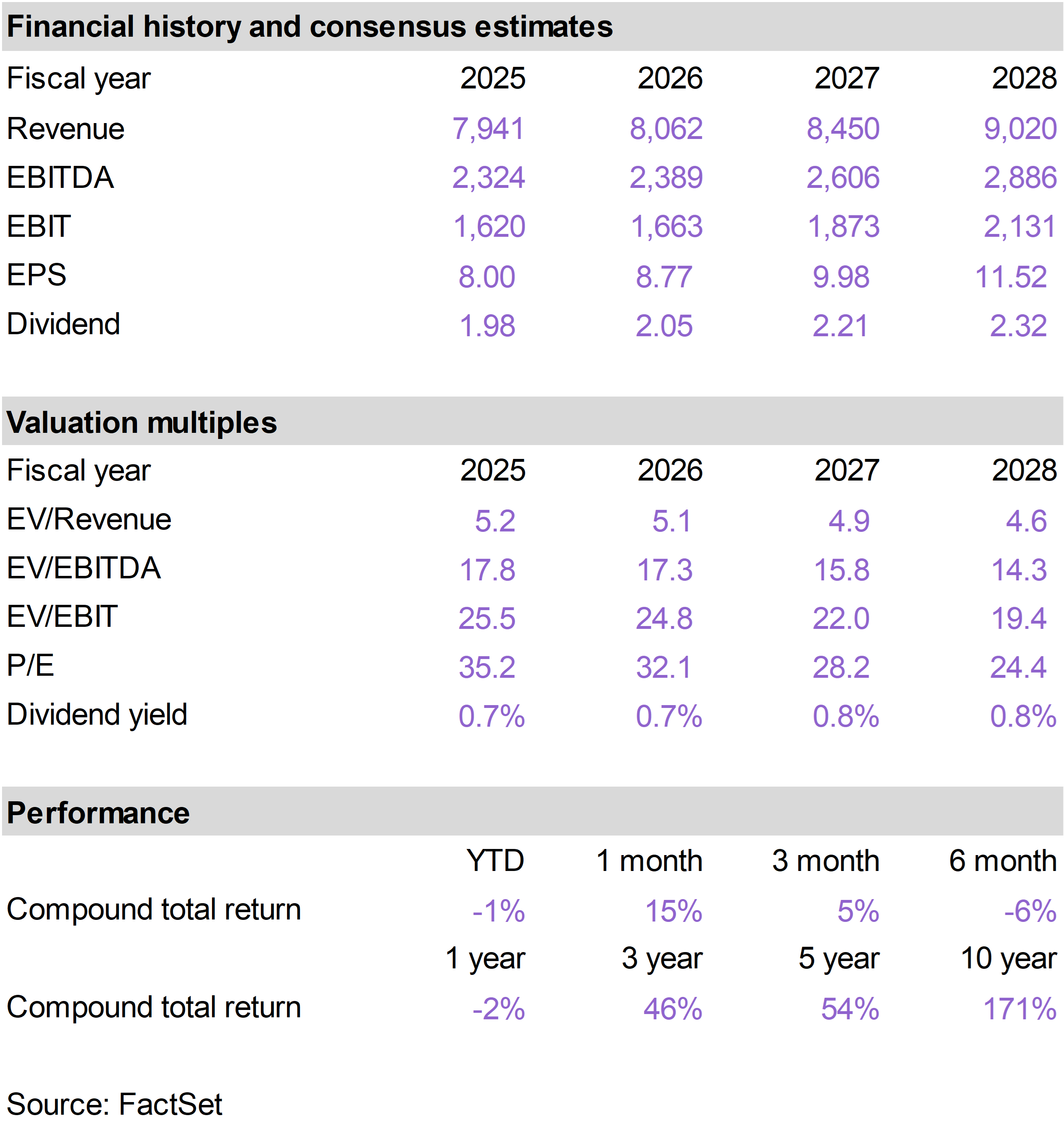
| | ETN declined in October as the broader sell-off in AI-related stocks extended to companies supplying the infrastructure necessary to support the enormous expansion of data centers.
Despite the share price weakness, the underlying business continues to benefit from exceptionally strong demand for electrical equipment, driven by AI infrastructure investment, electrification, and modernization of the power grid.
In the second quarter, revenue increased 21% to $8.5 billion, including 14% organic growth. Orders increased 41% in Electrical Americas and 33% in Electrical Global, while the company's electrical equipment backlog expanded 43% year over year.
These figures underscore the extraordinary investment cycle underway, with demand for power distribution equipment continuing to exceed the industry's ability to supply it.
ETN has been investing aggressively in manufacturing capacity to address these shortages. While the expansion has created temporary inefficiencies and pressured margins, much of the new capacity is now operational.
This should allow the company to convert its substantial backlog into revenue more efficiently, supporting stronger earnings growth and margin expansion in 2027.
Another important development is ETN's acquisition of Boyd Thermal, a leading provider of liquid cooling technology for data centers.
As AI processors become more powerful, cooling systems are becoming just as critical as electrical infrastructure. The acquisition positions ETN to offer integrated power and cooling solutions extending from the electrical grid to individual computing chips.
Importantly, approximately two-thirds of Electrical Americas revenue comes from markets outside data centers, including utilities, industrial facilities, and commercial construction. This diversification should support growth even if AI infrastructure spending moderates.
We view October's decline primarily as a valuation adjustment rather than evidence of deteriorating fundamentals. ETN's strong backlog, expanding capacity, and competitive advantages provide considerable earnings visibility.
We remain optimistic about the company's long-term prospects and believe the recent correction offers an attractive opportunity to participate in the multi-year expansion of AI infrastructure and global electricity demand. |
|
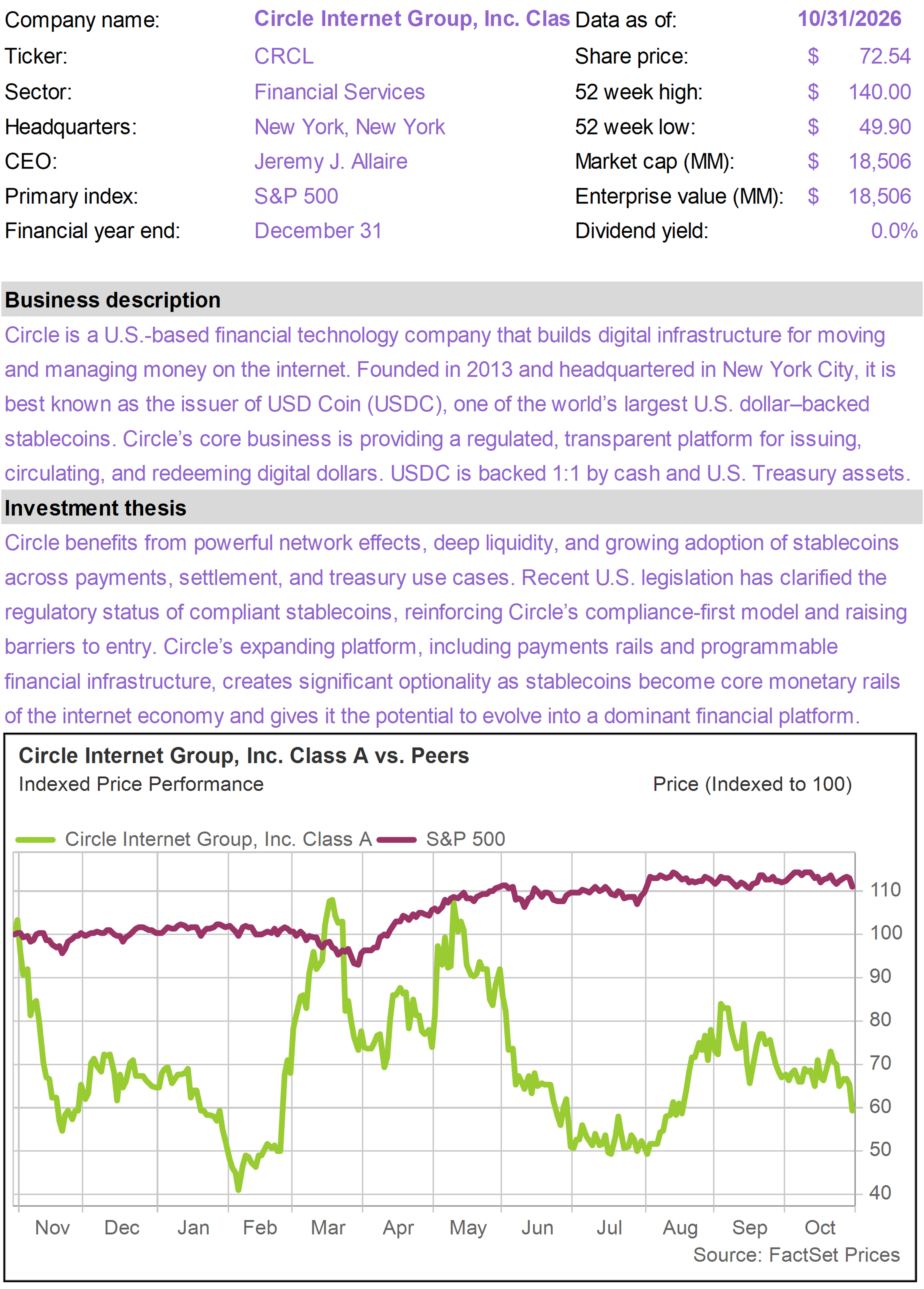
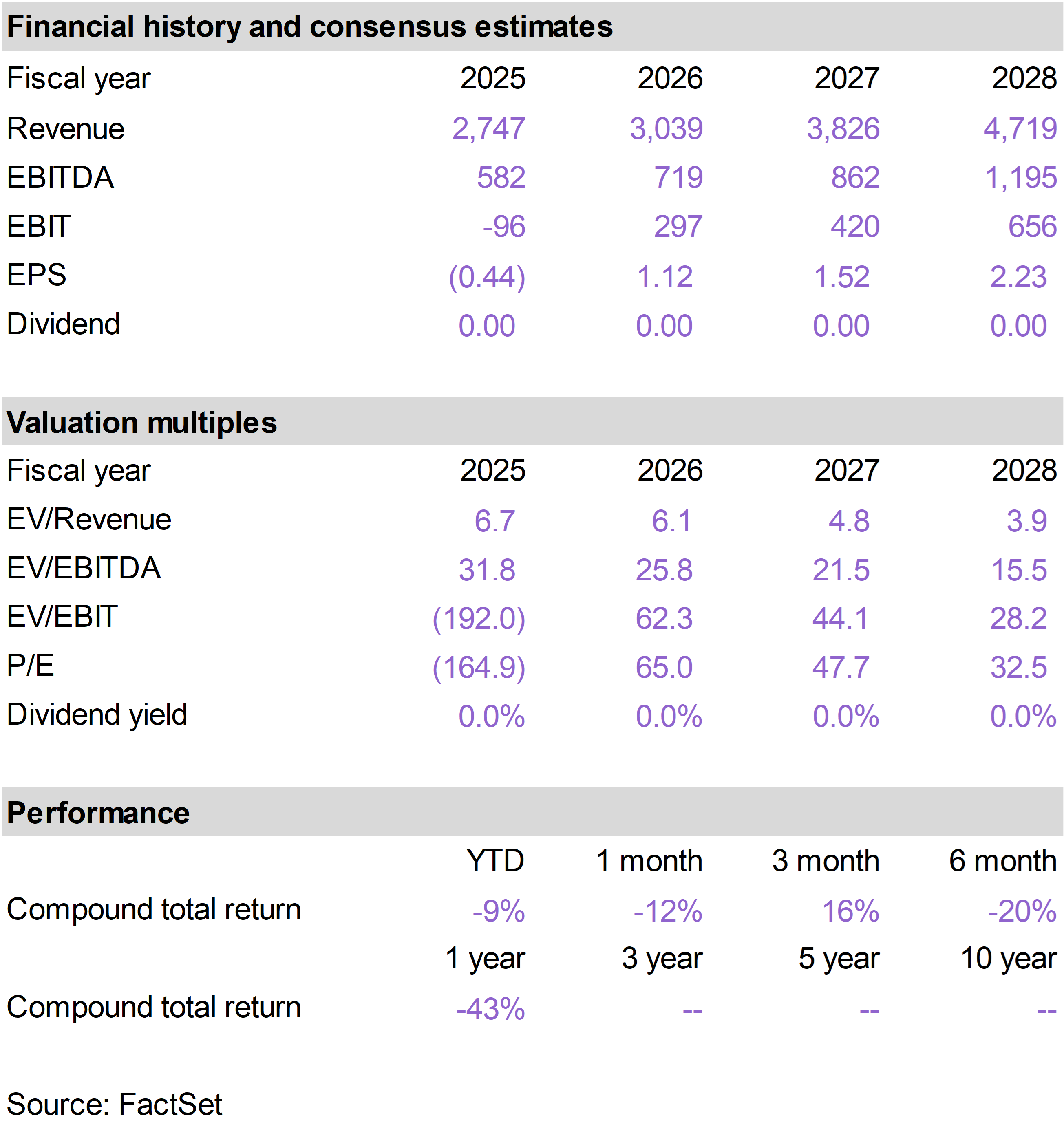
| | CRCL shares declined in October on renewed weakness across the cryptocurrency market, culminating in a major security breach at Binance, the world's largest cryptocurrency exchange.
On October 29, hackers stole approximately $6.3 billion in digital assets from Binance, triggering a sharp sell-off in cryptocurrencies and related stocks. Bitcoin briefly fell below $77,000 as investors reacted to the largest reported theft in the industry's history.
CRCL was directly involved in the response, freezing more than $800 million in USDC (the company’s stablecoin) that was associated with the attack in coordination with law enforcement.
Importantly, the incident did not represent a breach of CRCL's own infrastructure. In fact, its ability to freeze stolen assets demonstrates an important advantage of regulated stablecoins over less controlled digital assets.
Nevertheless, the episode reinforced concerns about security risks within the cryptocurrency ecosystem and contributed to a broader deterioration in investor sentiment.
CRCL is particularly sensitive to cryptocurrency market conditions because circulation of USDC, which determines the size of its interest-earning reserves, remains closely tied to digital asset trading activity.
Despite the earlier recovery in cryptocurrency prices, USDC supply has been relatively stagnant, limiting growth in CRCL's reserve income.
The company also faces questions about competition from emerging stablecoins and the growing interest of traditional financial institutions in developing their own blockchain-based payment systems.
We believe these concerns overlook the considerable competitive advantages CRCL has established through USDC's liquidity, regulatory credibility, and extensive integration across exchanges, wallets, and payment platforms.
CRCL is also expanding its business beyond reserve income through the development of Arc, its blockchain network designed to support stablecoin payments, settlement, and other financial applications.
Over time, transaction-related revenue could become a much more significant component of CRCL's business, reducing its dependence on interest rates and cryptocurrency market cycles.
We continue to view the broader adoption of stablecoins as one of the most compelling long-term opportunities within digital financial infrastructure.
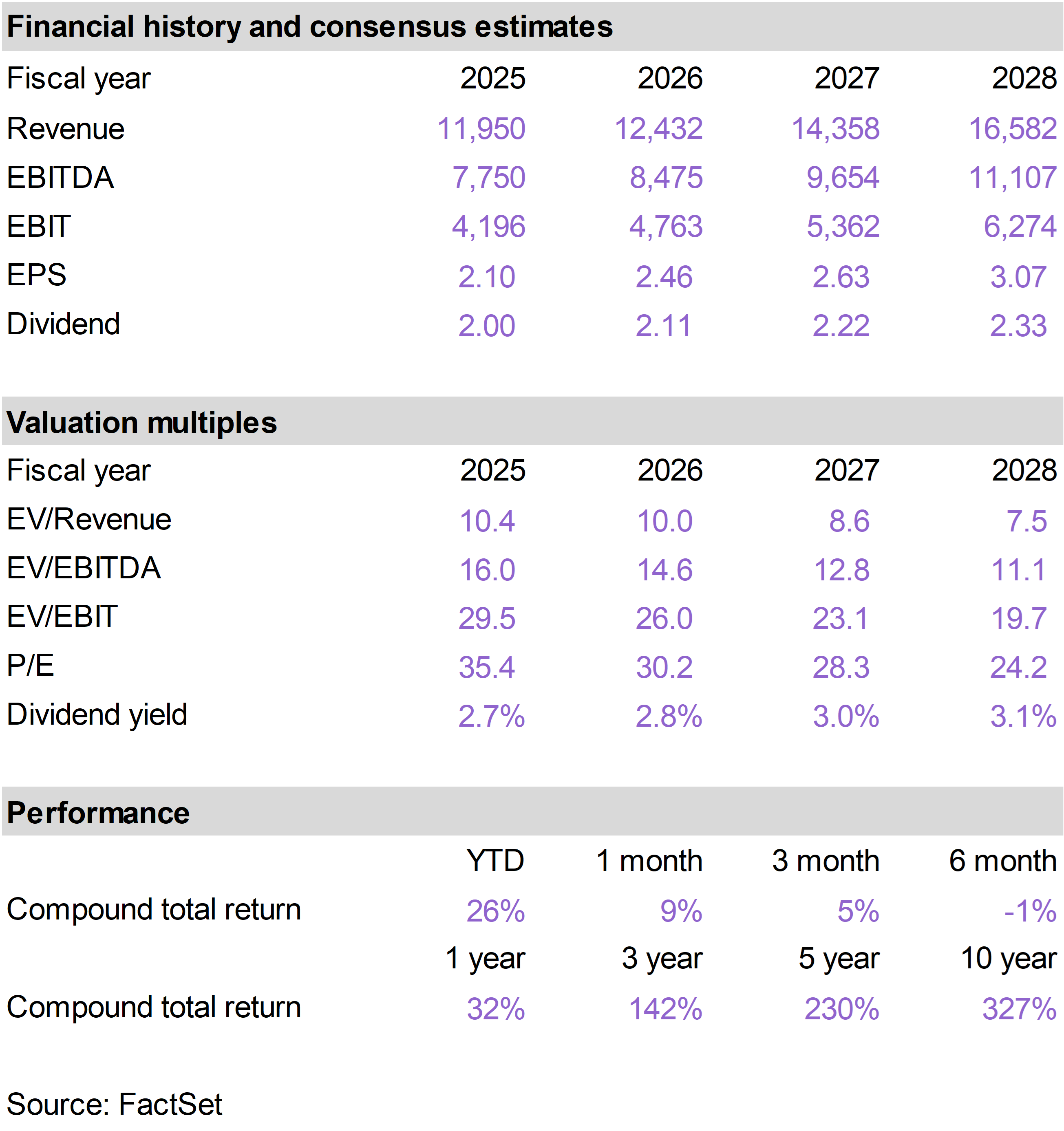
Near-term volatility and competitive pressures remain significant, but we believe CRCL is well positioned to benefit as stablecoins become increasingly integrated into mainstream payments, commerce, and financial markets. |
|
| | | |
| | |
| | |
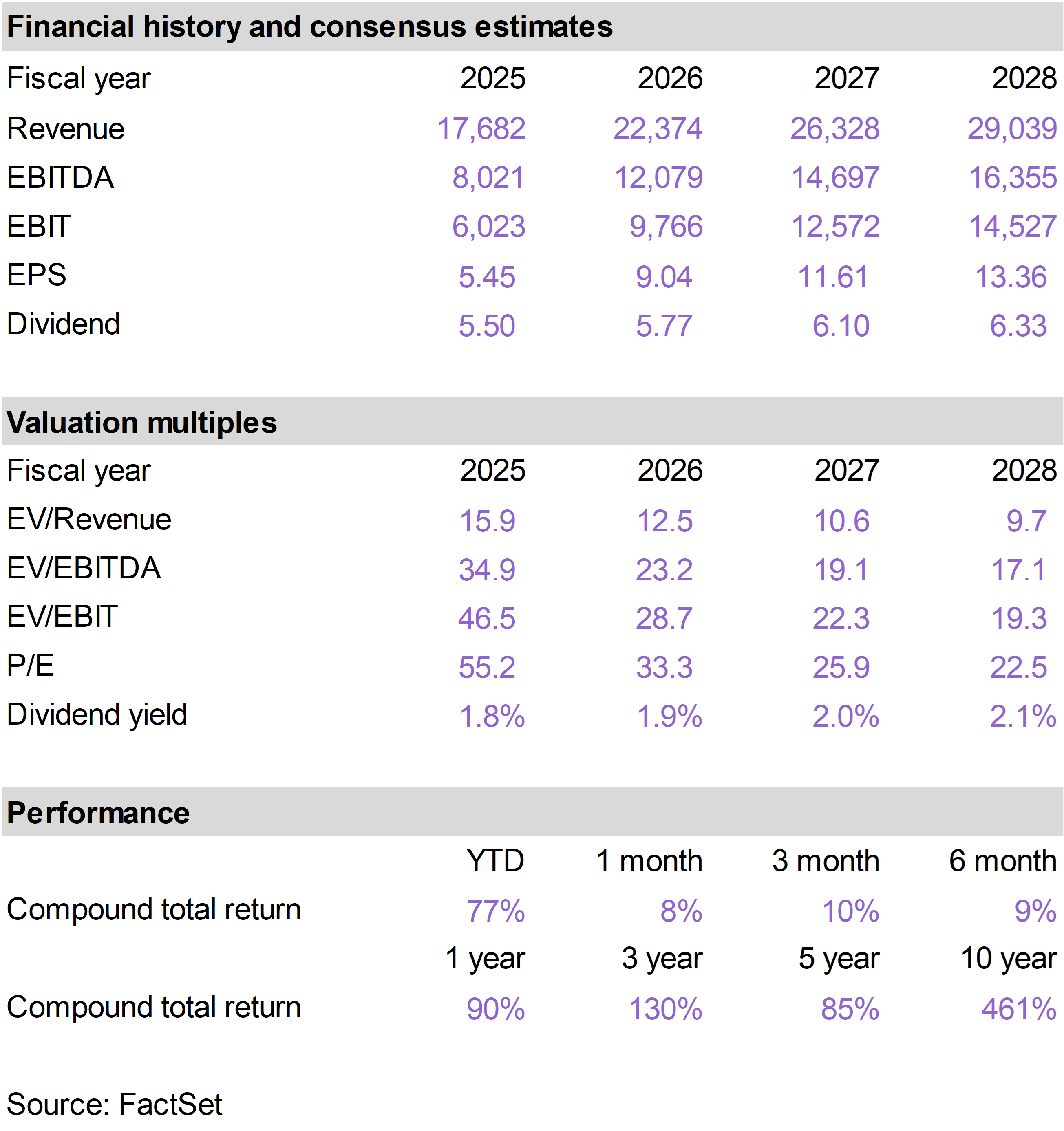
| | | Oracle Corporation (ORCL) |
|
|
|
| | |
|
| | |
|
| | |
|
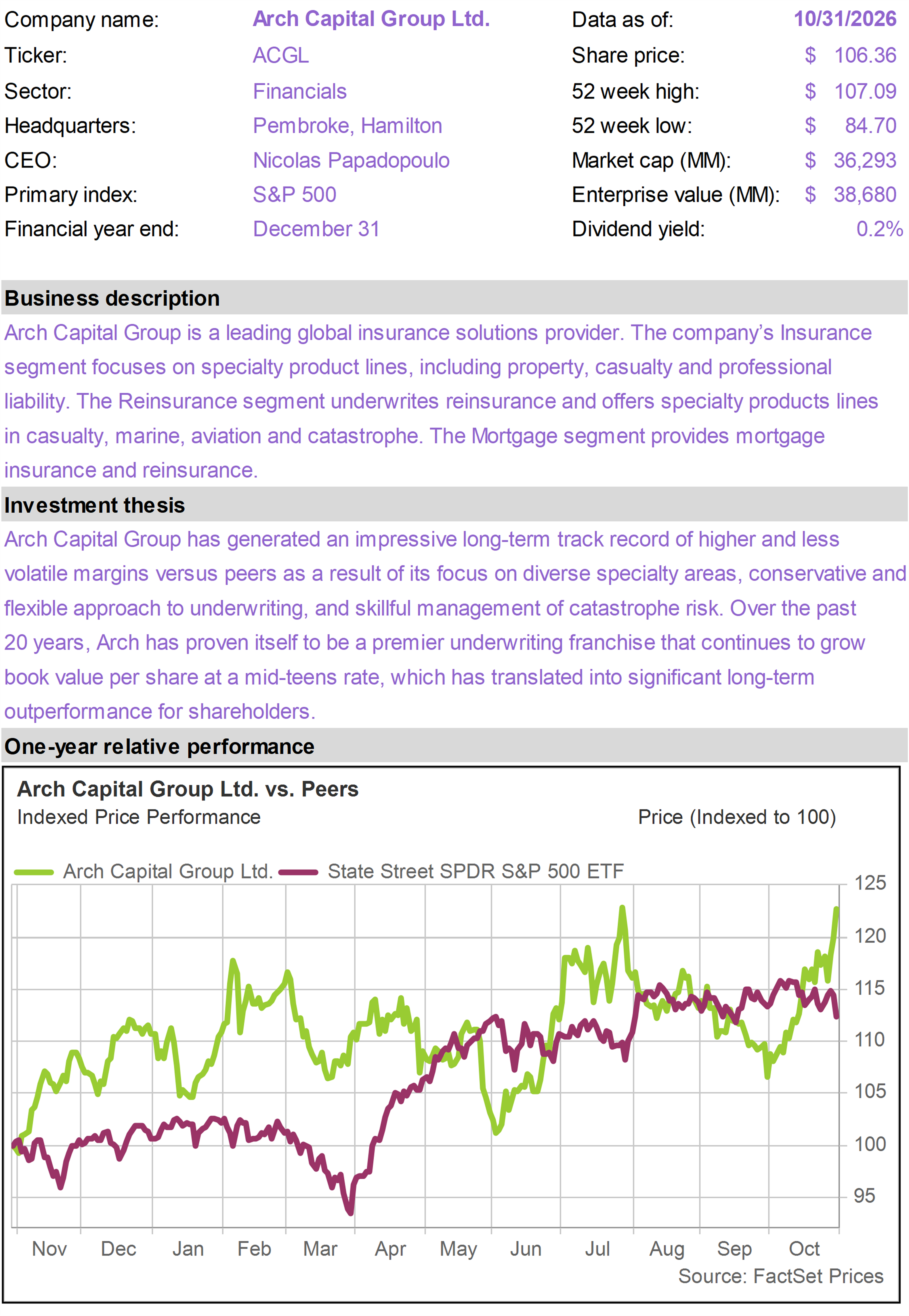
| | Arch Capital Group (ACGL) |
|
|
|
| | |
|
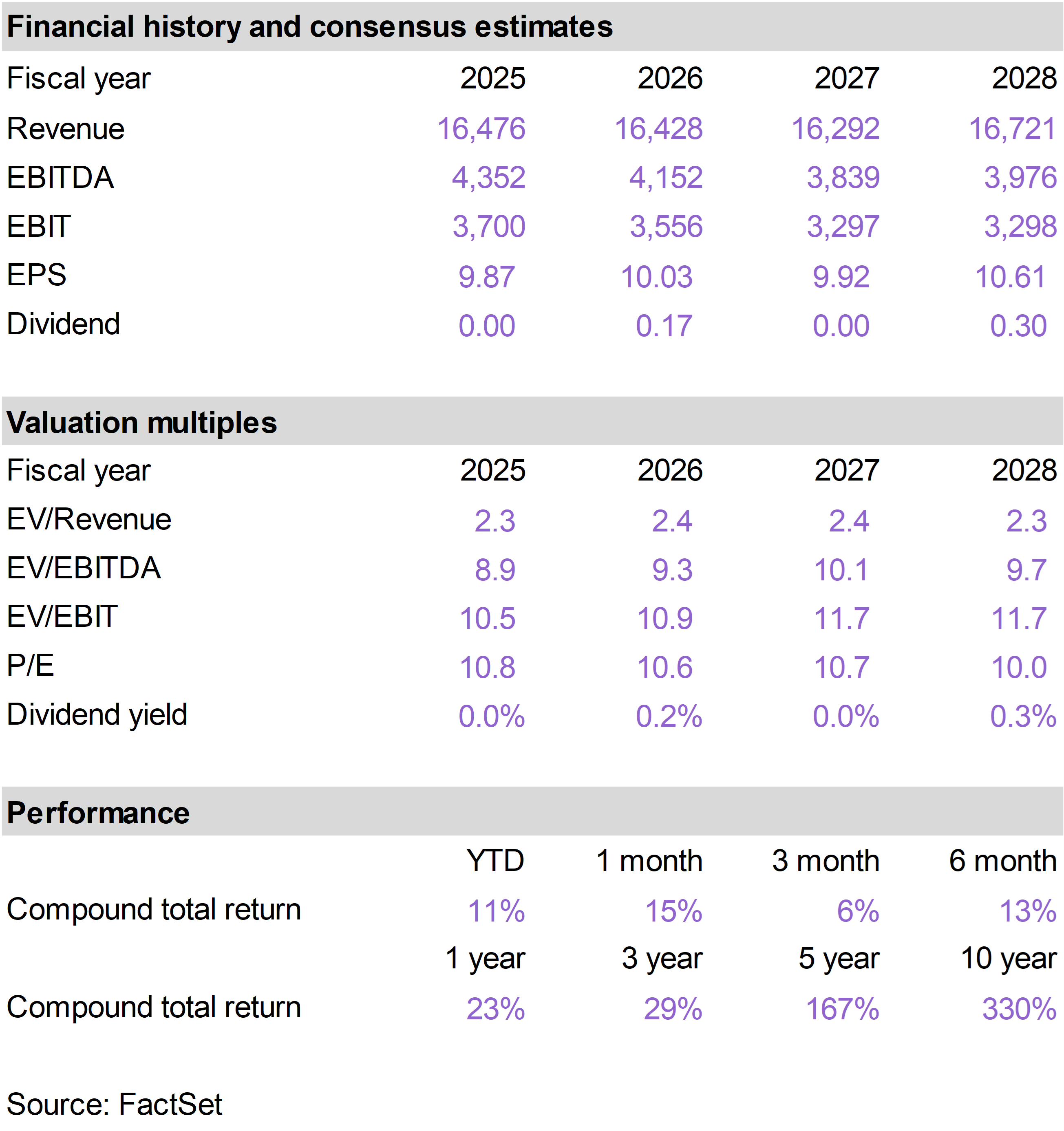
| | Circle Internet Group (CRCL) |
|
|
|
| | |
|
| | |
|
| | |
|
| | |
|
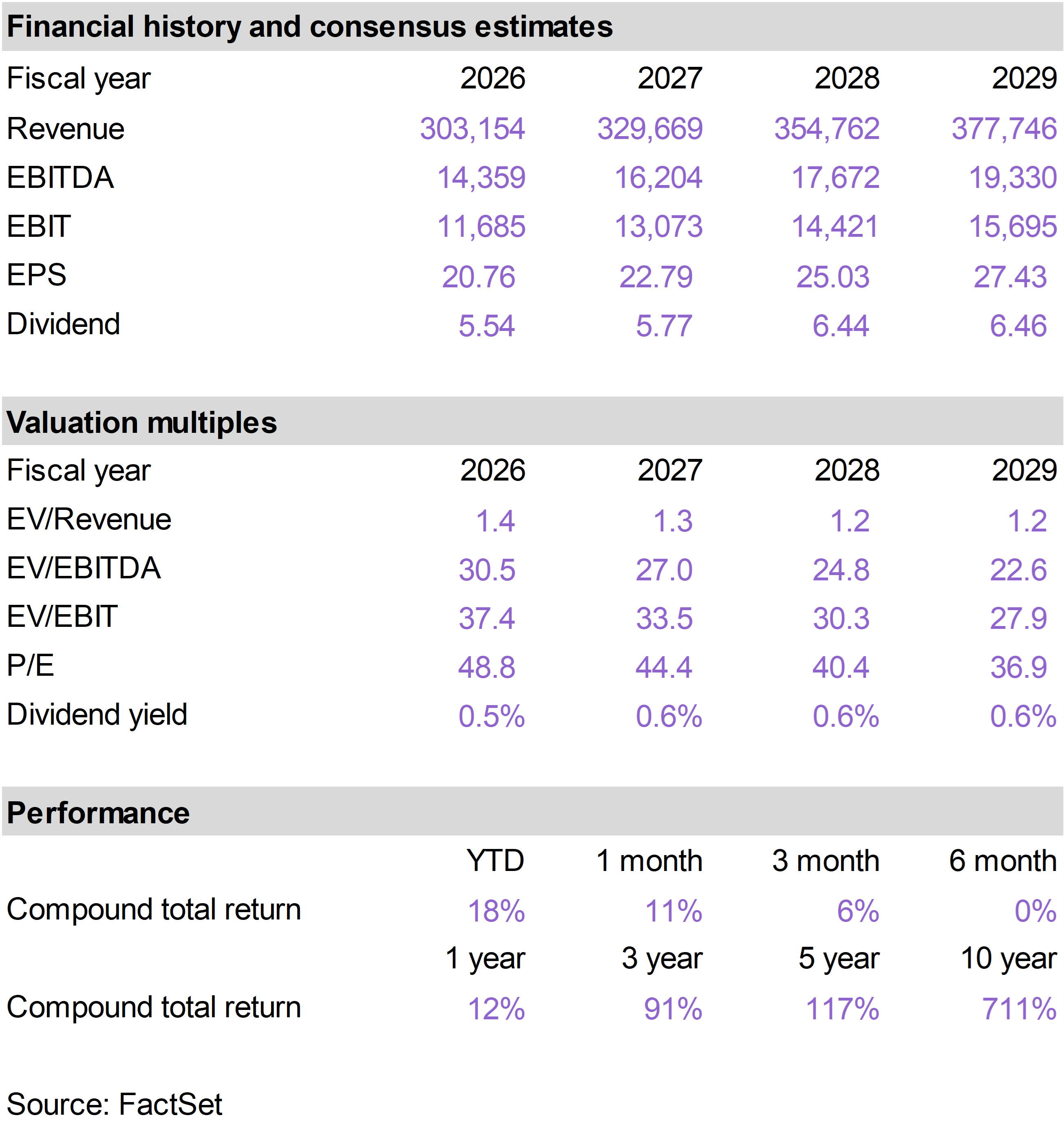
| | Thermo Fisher Scientific (TMO) |
|
|
|
| | |
|
| | |
|
| | |
|
| | |
|
| | The 76research American Resilience Model Portfolio is designed to provide exposure to growth businesses that operate with competitive advantages in structurally attractive markets. The objective is to identify businesses that can survive and thrive across different macroeconomic environments and whatever geopolitical crises may unfold. The holdings are intended as long-term investments to drive portfolio compounding with minimal need to realize taxable gains. Emphasis is placed on critical markers of business quality such as barriers to entry, physical scarcity of assets, balance sheet strength, effective capital allocation and durable long-term growth drivers. These assessments are paired with careful consideration of valuation and risk. |
|
| | FOR SUBSCRIBER USE ONLY. DO NOT FORWARD OR SHARE. |
|
| | | |
|
|
|
|
|