| American Resilience Model Portfolio |
|
| Monthly Portfolio Review: September 2026Publication date: October 5, 2026 |
|
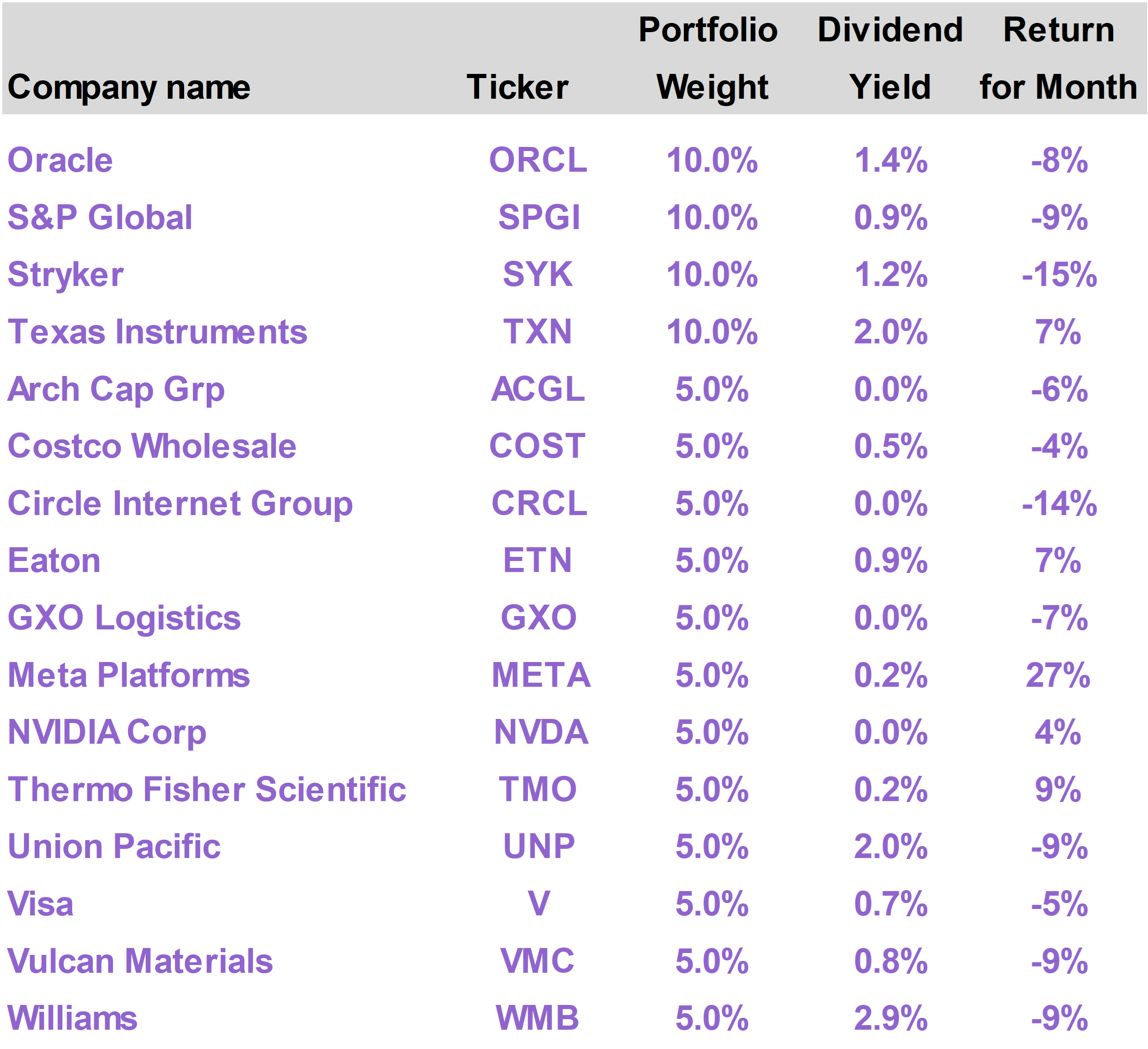
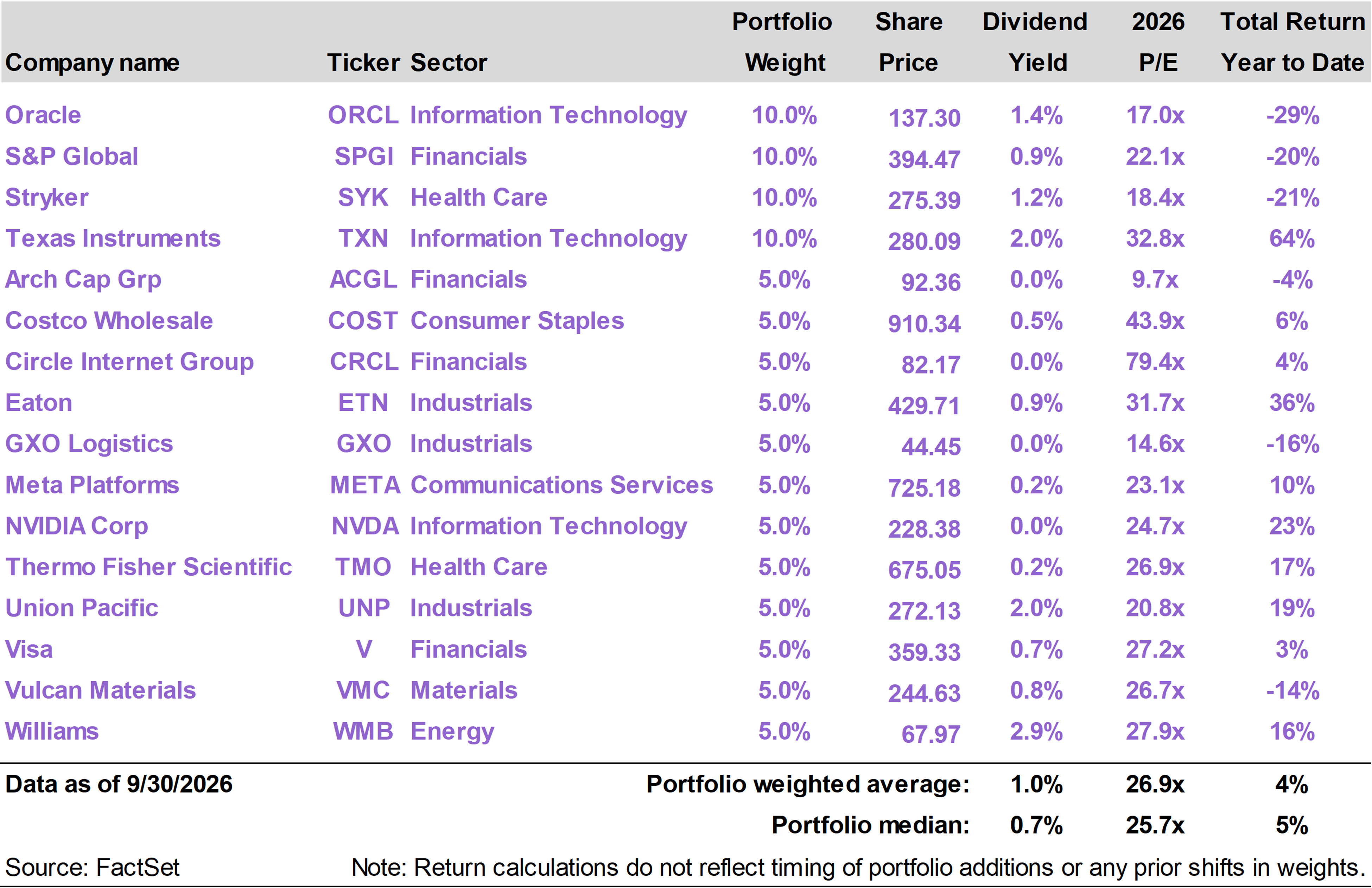
| | | Current portfolio holdings |
|
|
| | FOR SUBSCRIBER USE ONLY. DO NOT FORWARD OR SHARE. |
|
| | | September was an unusually divided month for the market. AI-related Technology stocks significantly outperformed, while almost all other sectors struggled. The S&P 500 declined 0.4%, as the NASDAQ Composite gained 1.9%. Notably, the S&P 500 Equal Weight Index (reflecting the performance of the average stock) declined 4.8%. The American Resilience portfolio returned -3.3% in September. Meta Platforms (META) was the best performing position, advancing 27% on enthusiasm around the launch of its new Muse AI agent. Sharply higher long-term interest rates, a Fed rate hike and elevated oil prices created a difficult backdrop for much of the market. As October begins, the softer September employment report suggests the market may have become too pessimistic on rates. If yields begin to stabilize or move lower, many of the high-quality stocks that lagged in September could see a meaningful rebound.
|
|
| | |
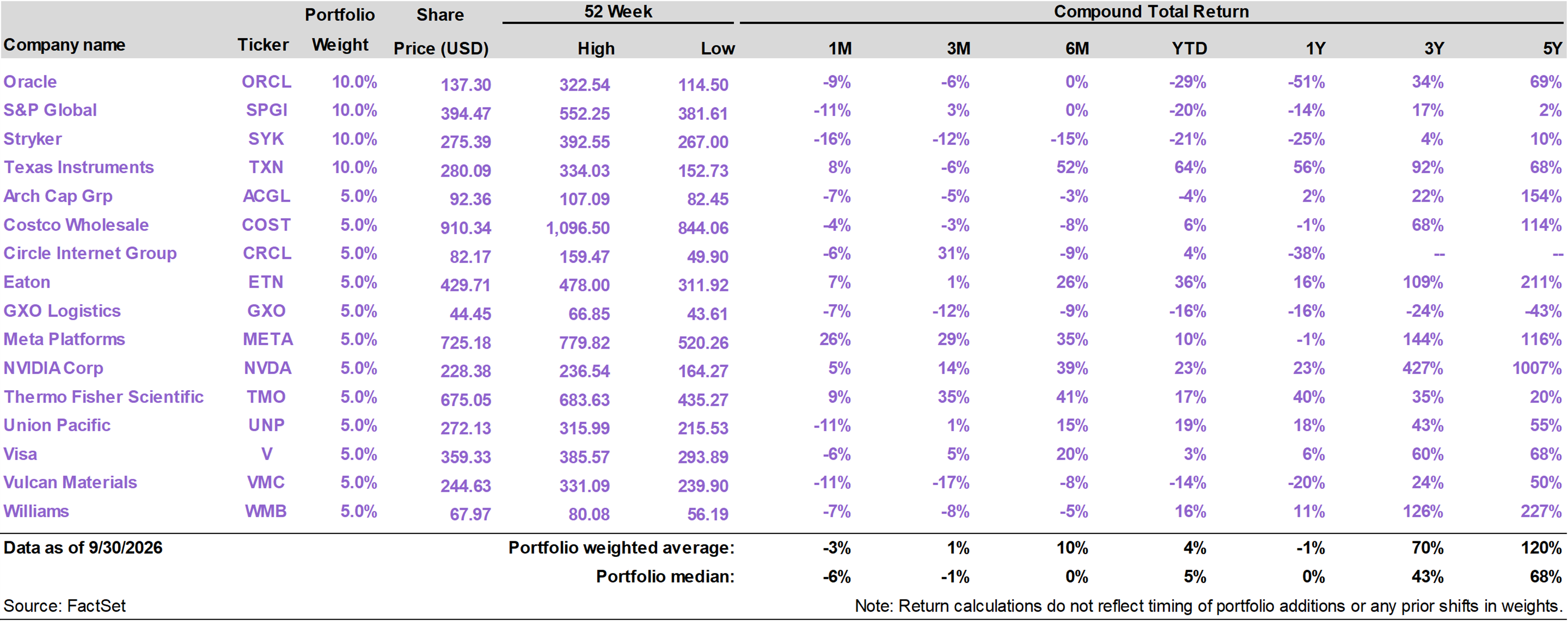
The American Resilience portfolio generated a total return of -3.3% in September, versus -0.4% for the S&P 500 Index. On a year to date basis through the end of the month, the portfolio has generated a total return of 10.0%, versus 12.7% for the S&P 500.
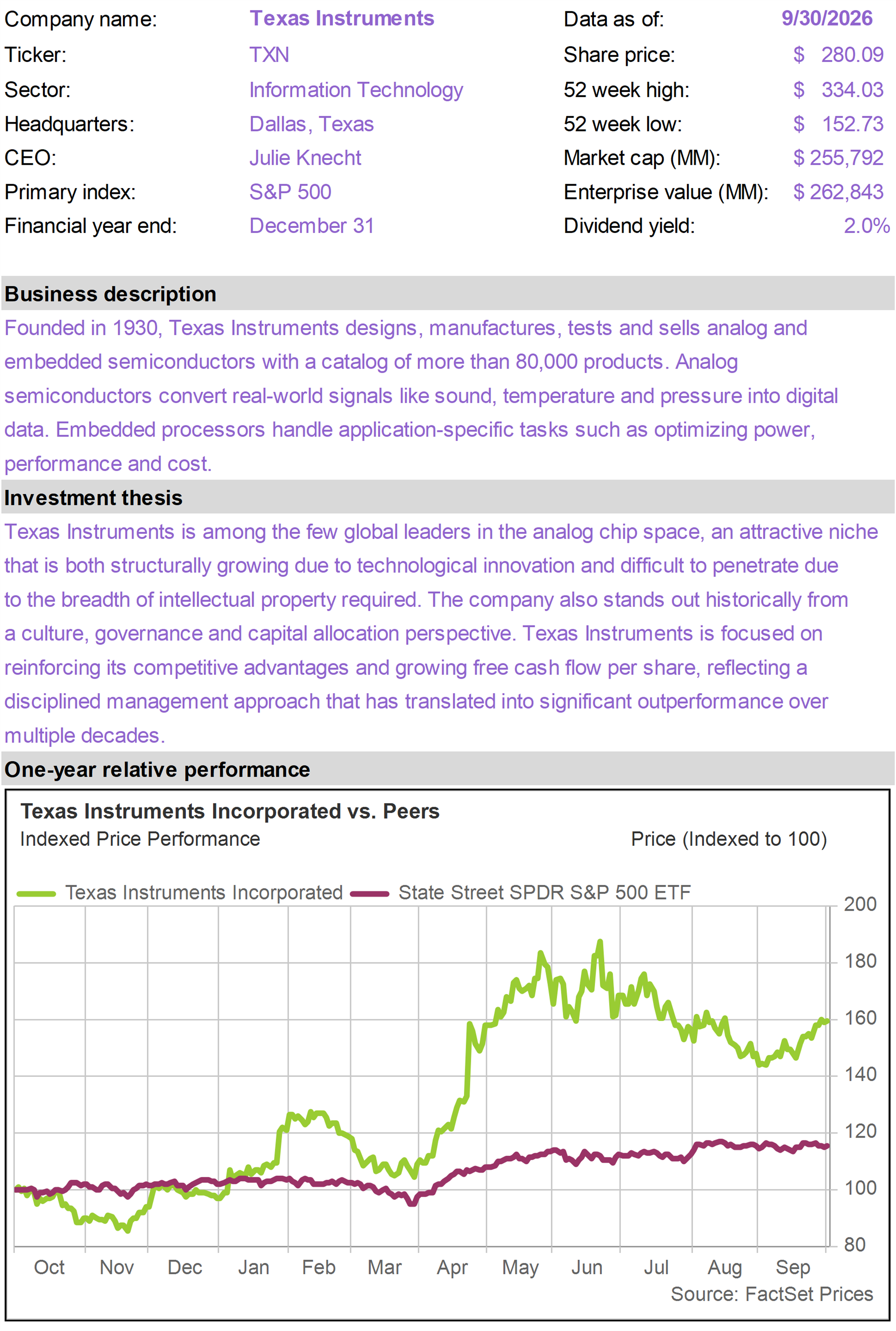
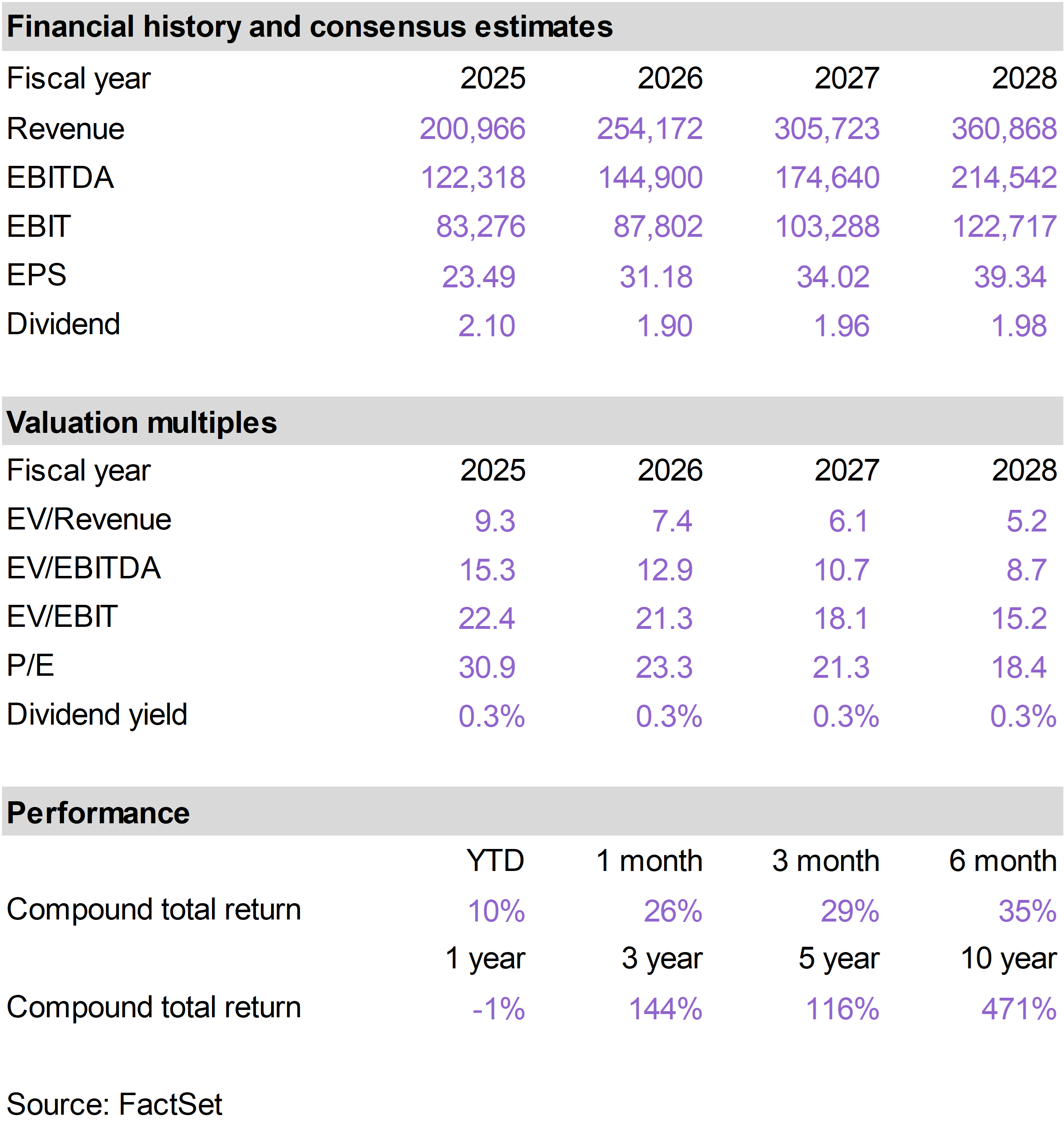
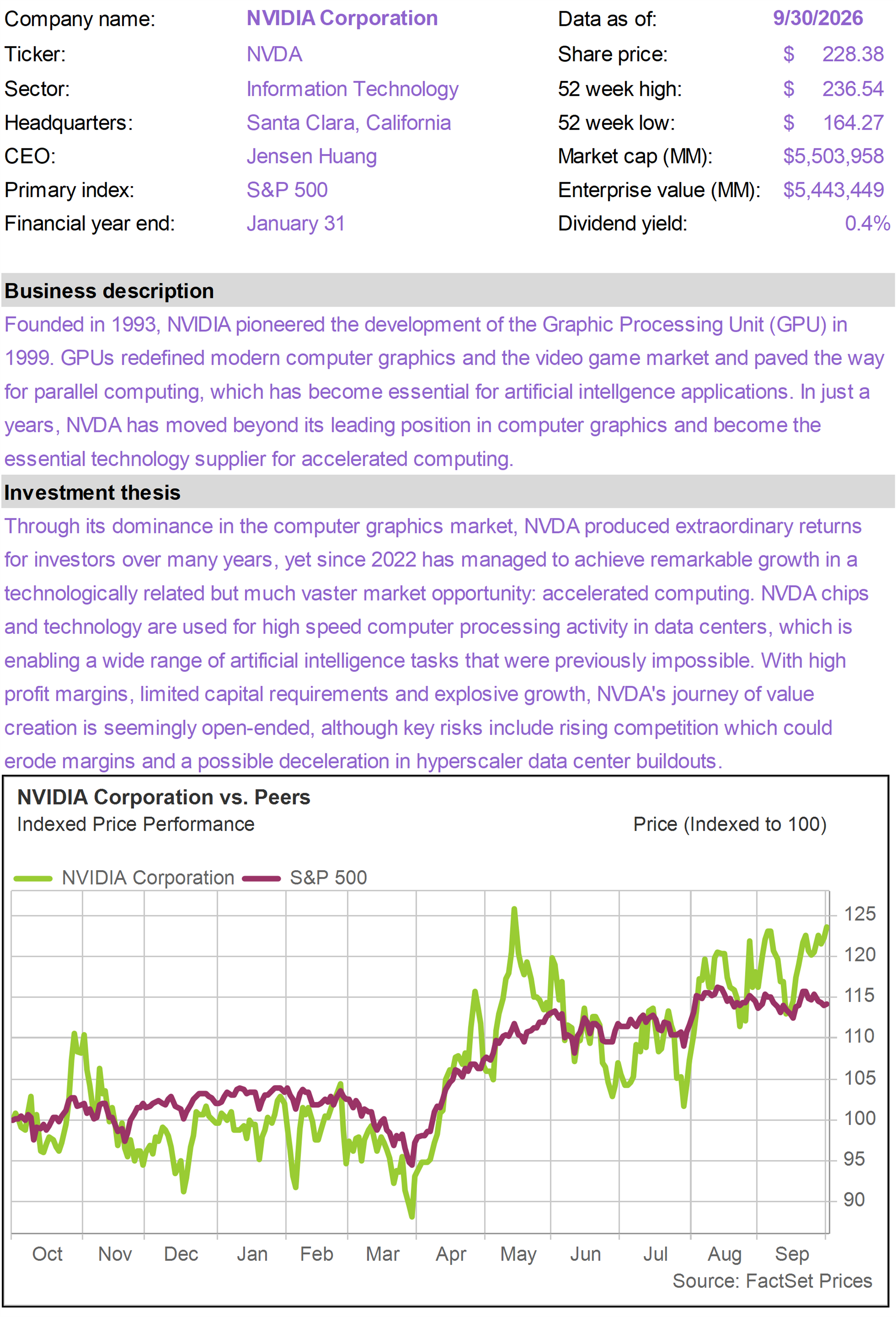
The top performing portfolio positions in September were Meta Platforms (META), which returned 27%; Thermo Fisher Scientific (TMO), which returned 9%; and Texas Instruments (TXN), which returned 7%.
The worst performing positions were Stryker (SYK), which returned -15%; Circle Internet Group (CRCL), which returned -14%; and S&P Global (SPGI), which returned -9%. |
|
|
A tale of two markets
September was an unusually divided month for financial markets.
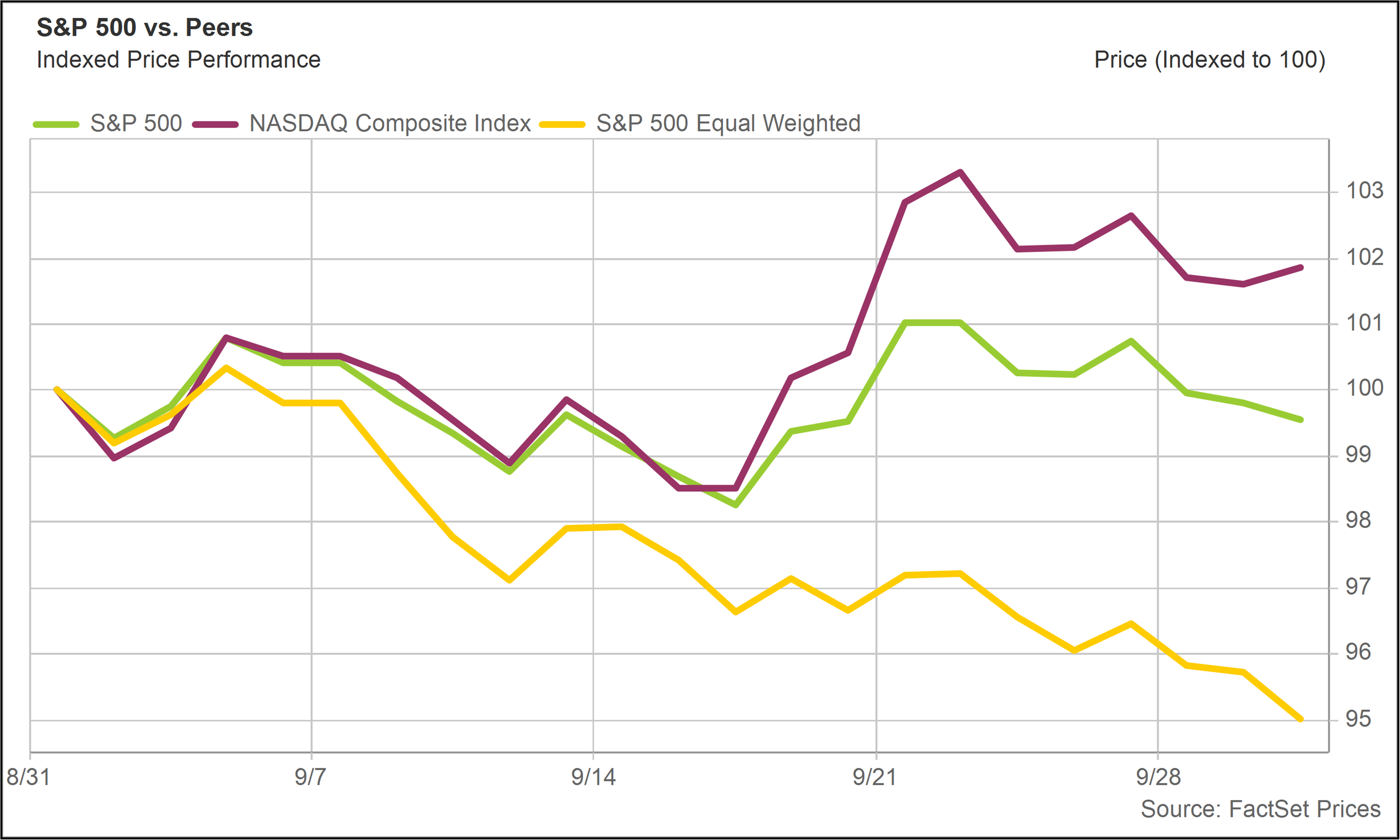
The S&P 500 finished slightly down, giving the appearance of relative stability. The Nasdaq Composite gained 1.9%, supported by continued strength among the largest AI-related stocks.
But those headline indexes concealed much greater weakness beneath the surface.
One of the clearest ways to see this is through the S&P 500 Equal Weight Index. Unlike the S&P 500, which assigns the largest weights to the most valuable companies, the equal-weight index gives the same importance to every constituent.
In that sense, it provides a much better indication of what was happening to the typical S&P 500 stock. In September, the S&P 500 Equal Weight Index generated a total return of -4.8%. |
|
|
| S&P 500 vs. NASDAQ, S&P 500 Equal Weight(Total Return - September 2026) |
|
| The deterioration in market breadth tells a similar story.
By the end of September, approximately 83% of S&P 500 constituents were more than 10% below their 52-week highs, while roughly 42% were down more than 20%—even though the capitalization-weighted index itself remained relatively close to its record.
Businesses perceived to be direct beneficiaries of the AI investment cycle continued to attract capital, whereas almost everything else struggled.
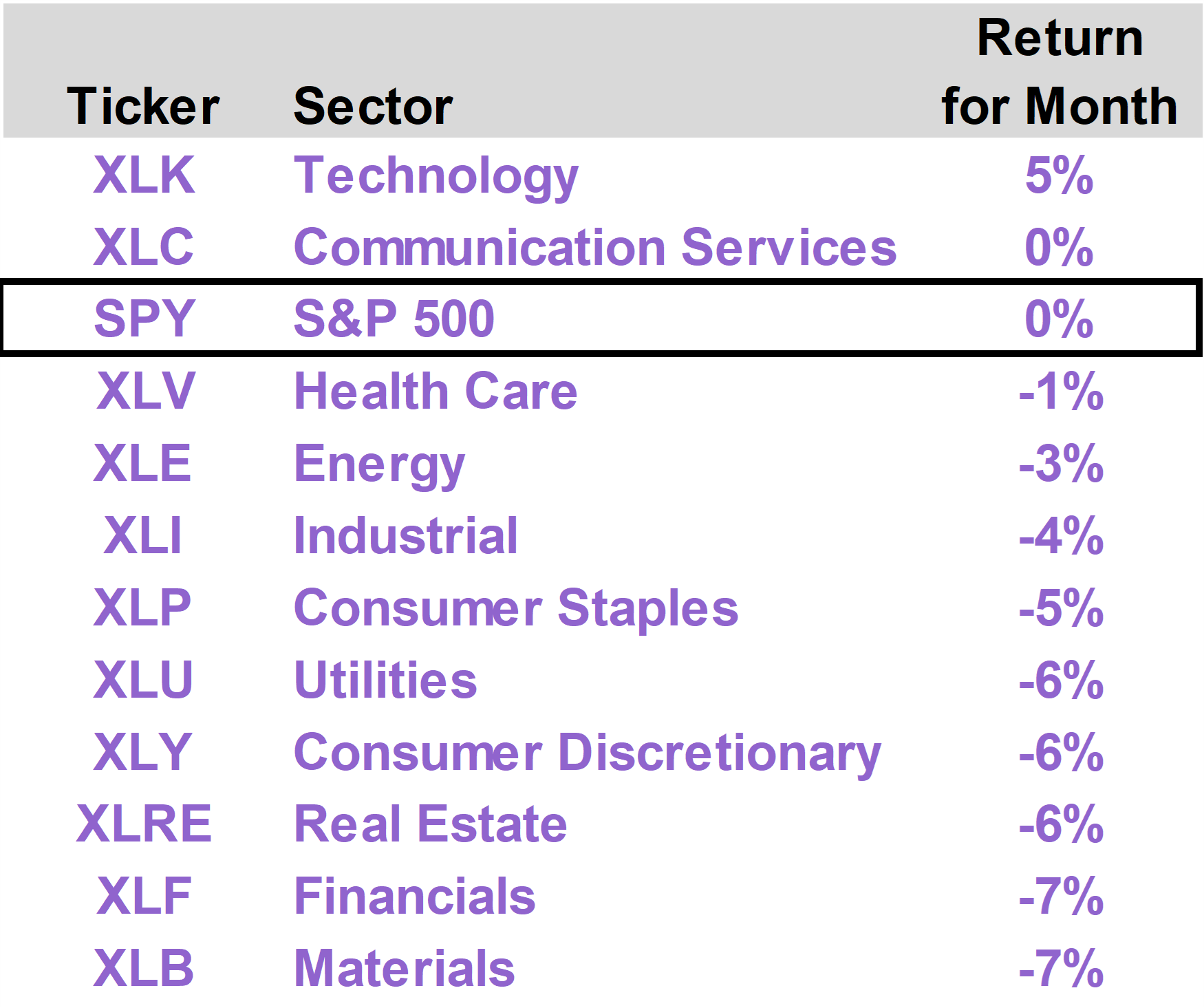
At the sector level, Technology stocks within the S&P 500 led the way and advanced 5%.
The Communication Services sector was marginally positive—but only because Meta Platforms (META), which gained 27% in September on enthusiasm around its launch of the Muse agentic AI service, has a weighting within that sector that exceeds 20%.
Excluding META, Communication Services would have delivered a negative result, along with the remaining nine other industry sectors. |
|
|
|
Bond yields spike
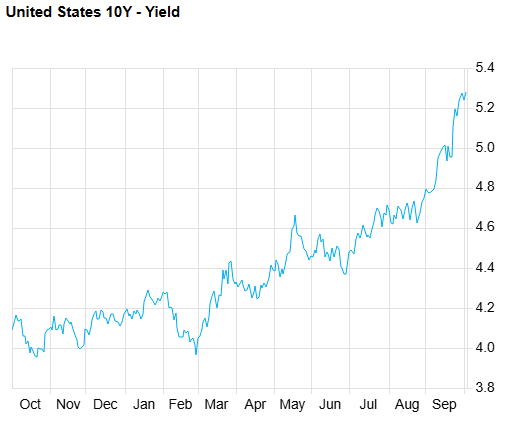
The main reason most stocks performed so poorly in September was the dramatic move higher in Treasury yields.
The 10-Year Treasury yield rose more than 50 basis points during September to approximately 5.3%, while the 30-Year Treasury yield climbed above 5.6%. |
|
|
| 10-Year Treasury Yields—Last 12 Months(Source: FactSet) |
|
|
Several factors have contributed to rising long-term bond yields this year. Economic growth has been resilient. Inflation has proven sticky. Oil prices have moved higher.
Meanwhile, the federal government continues to issue enormous quantities of debt, as the AI infrastructure boom simultaneously creates vast private sector demand for capital. In effect, the federal government and some of the world's largest corporations are competing for the same pool of long-term savings.
Some of the increase in rates therefore reflects relatively positive forces. As we discussed last month, higher real interest rates can accompany stronger expectations for long-term economic growth and productivity.
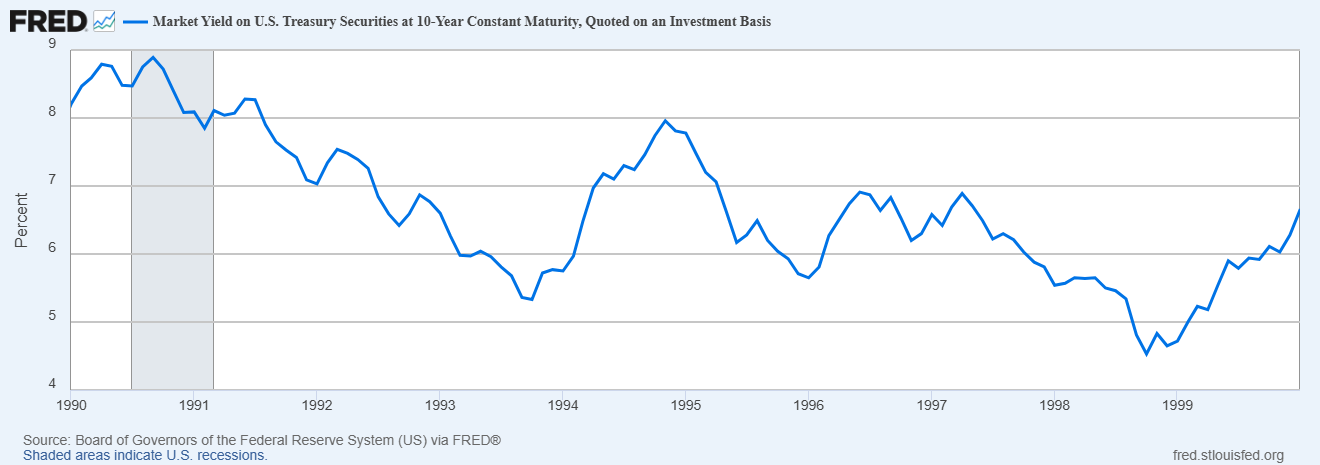
It is worth remembering that in the 1990s (a technology-driven growth era), yields on 10-Year Treasuries generally fluctuated between 5% and 8%. And the S&P 500 compounded at a remarkable 18.2% over the course of the decade. |
|
|
| 10-Year Treasury Yields in the 1990s |
|
|
While periods of real economic growth tend to be associated with higher real interest rates, the speed of September's move had significant consequences.
Higher discount rates reduce the present value investors assign to future corporate earnings. Financing becomes more expensive. Treasury securities become more competitive with stocks.
September's extraordinary market dispersion therefore makes more sense when viewed through the lens of interest rates.
Companies capable of producing explosive earnings growth could overcome the valuation pressure created by higher rates. Most other stocks could not.
The Fed adds to the pressure
While independent market forces have been pushing yields higher, the Federal Reserve significantly contributed to that dynamic in September.
At Kevin Warsh's first FOMC meeting as Chairman, the Fed unanimously raised the federal funds rate by 25 basis points to 3.75%-4.00%, its first increase in more than three years.
Warsh emphasized that inflation remained too high and that the economy remained strong enough to tolerate somewhat tighter monetary policy.
As we previously discussed in the 76report (The Rate Hike Trump Didn’t Want—But Why It Could Lead to Lower Rates Down the Road), there is a reasonable longer-term case for this approach. Establishing credibility on inflation today could ultimately give the Fed considerably more flexibility to reduce rates later.
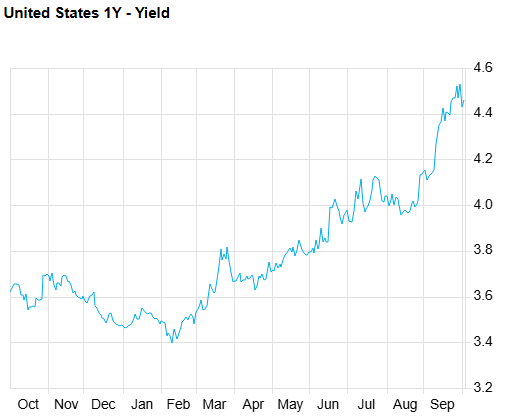
But as markets have priced in at least two incremental rate hikes in September, with 1-Year Treasury yields rising approximately a half-percent as well, the upward movement in rates has extended across the entire yield curve.
Long-term bond yields are rising in large part because they must compete with short-term bond yields. |
|
|
|
1-Year Treasury Yields—Last 12 Months(Source: FactSet) |
|
|
Oil complicates the picture
The other major macroeconomic complication remains oil.
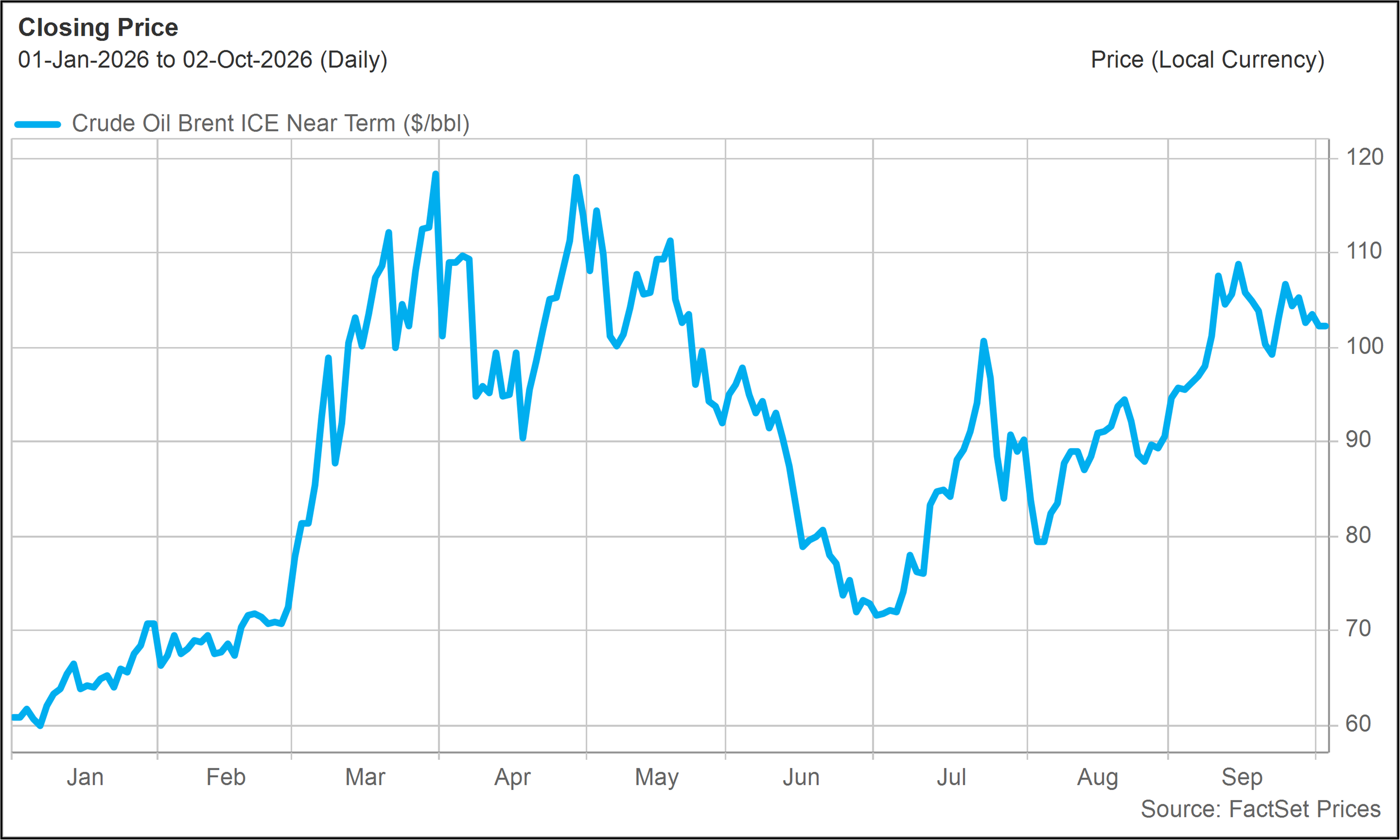
Energy prices moved higher again during September as the conflict with Iran continued to disrupt global petroleum flows and investors remained concerned about the reliability of shipments through the Strait of Hormuz. |
|
|
| Crude Oil($/barrel - Year to Date) |
|
| High oil prices make it more difficult for the Fed to declare victory over inflation and move toward easier monetary policy.
As we recently discussed (Iran Is Running Out of Financial Oxygen—Will Oil Prices Finally Break?), we are optimistic that oil prices could soon reverse, perhaps sharply. But the upward movement in oil made September particularly challenging: higher long-term rates, a Fed rate hike and rising energy prices all arrived at essentially the same time.
Gold takes a hit, as Bitcoin rallies
The surge in real interest rates also reversed part of the recent strength in precious metals.
Gold had rallied sharply in August as investors once again embraced the so-called debasement trade, but the environment became considerably less favorable in September.
Gold does not generate income. As government bond yields rise, the opportunity cost of holding it increases. A stronger dollar creates an additional headwind.
Gold consequently came under meaningful pressure during September, declining more than 6%, as real yields moved sharply higher and expectations for tighter Fed policy going forward increased.
While Bitcoin is often linked to gold as part of the debasement trade, it fared much better in September, advancing approximately 7%.
That strength largely reflects crypto-specific fundamentals, including continued institutional adoption and further regulatory progress despite the failure of the CLARITY Act to advance in the Senate.
The broader direction in Washington still appears to favor deeper integration of crypto into the traditional financial system, with growing momentum around tokenization and the link between crypto and agentic AI. This helped offset the macroeconomic headwinds that weighed on gold.
Has the rate move gone too far?
It is possible investors have become too carried away with the “higher for longer” narrative. The first meaningful evidence supporting that possibility arrived immediately after September ended.
The September employment report showed that the economy added only 29,000 jobs, well below expectations. The unemployment rate increased to 4.2%, wage growth moderated and previous months' employment gains were revised lower.
The report does not suggest the economy is falling into recession. Layoffs remain limited, and the labor market still resembles a relatively stable low-hire, low-fire environment.
But the softness in hiring reduces the urgency for additional Fed tightening, and both the stock and bond market responded positively to the weak jobs report.
If employment growth continues to moderate, inflation gradually recedes and the disruptions in oil markets eventually ease, investors may discover that September represented something close to a high-water mark for interest rate anxiety.
That could have important consequences for the areas of the market that suffered most.
A stabilization—or even modest decline—in long-term rates would relieve pressure on small-cap stocks, real estate, utilities, industrial companies, dividend-paying equities and many other businesses that have recently been overshadowed by the AI trade.
A difficult month—but potentially a healthier setup
September delivered an unusual combination.
The largest AI beneficiaries continued to perform well on underlying fundamental strength. On the other hand, long-term interest rates surged, the Fed tightened, oil remained expensive, and gold reversed.
Those pressures are now reflected much more aggressively in market prices.
Meanwhile, the underlying economy remains healthy. Corporate earnings remain solid. AI-related capital investment continues at an extraordinary pace. And the latest labor market data suggest the forces pushing rates relentlessly higher may finally be encountering some resistance.
If long-term yields begin to stabilize or retreat, the next phase of the market could look very different from September—and considerably more favorable for the broad range of high-quality businesses that were left behind during the month's unusually narrow AI-driven rally. |
|
| | |
The top performing stocks in the portfolio in September were Meta Platforms (META), which returned 27%; Thermo Fisher Scientific (TMO), which returned 9%; and Texas Instruments (TXN), which returned 7%.
The worst performing positions this month were Stryker (SYK), which returned -15%; Circle Internet Group (CRCL), which returned -14%; and S&P Global (SPGI), which returned -9%. |
|
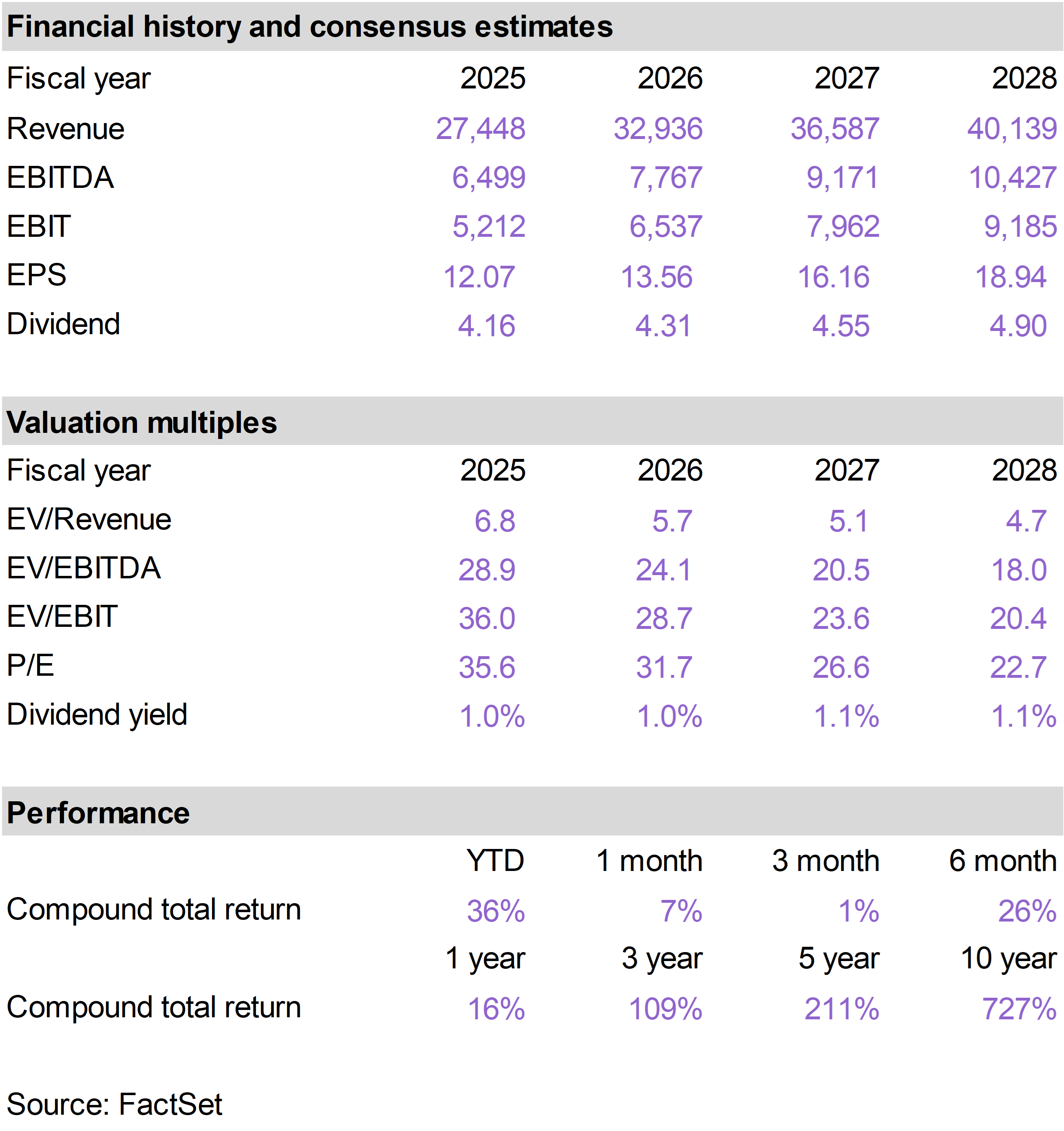
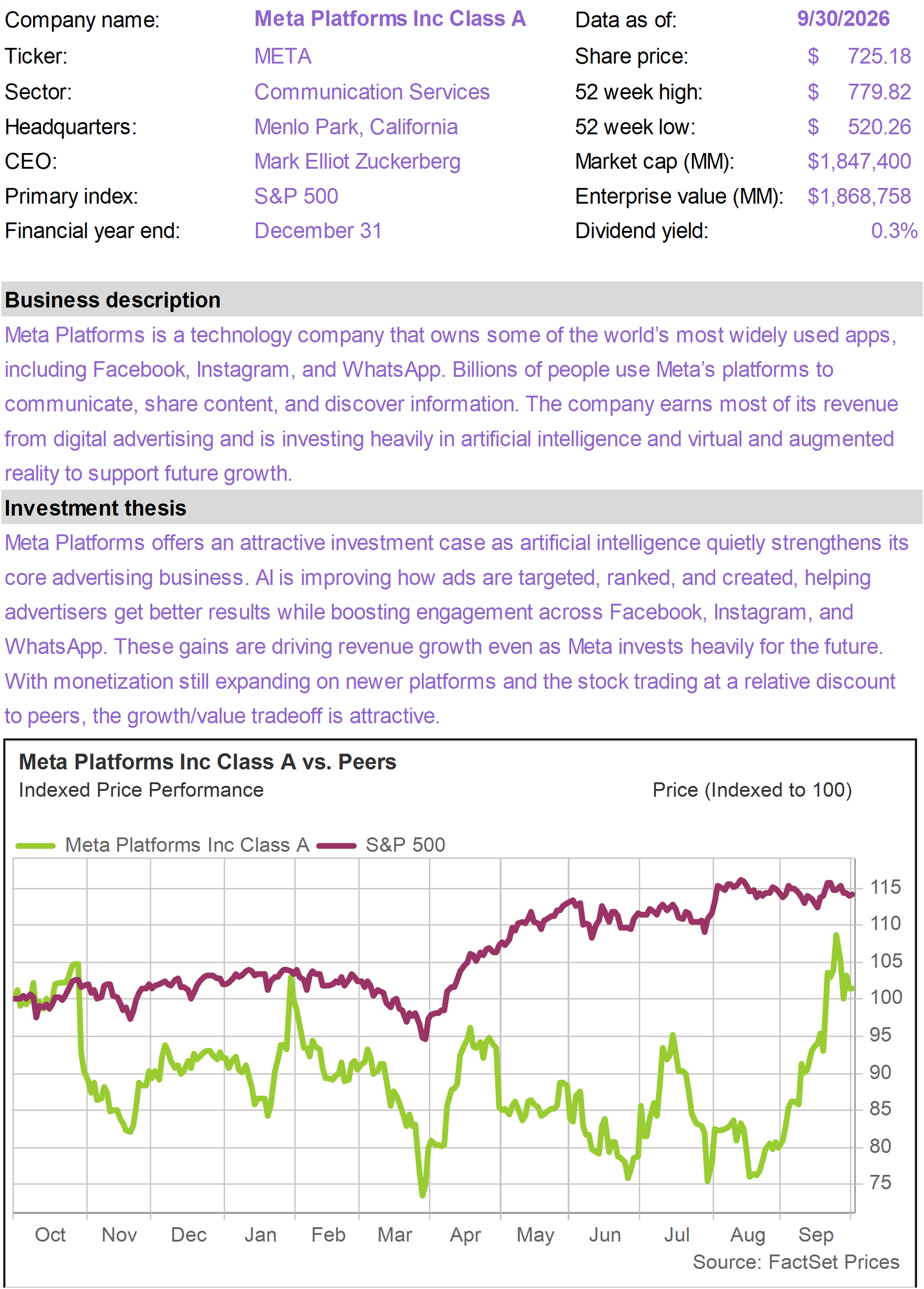
| | META was the strongest performing position in the portfolio in September as investors became considerably more optimistic about the company’s AI strategy.
For much of the past year, investors have focused primarily on the enormous cost of META’s AI ambitions. Capital expenditures could reach as much as $145 billion in 2026, which earlier this year helped push the stock to the lowest earnings multiple among the Mag 7, prompting us to add META to the portfolio in January.
As we discussed in our recent 76report (META’s AI Breakout—How Far Can It Go?), that narrative is beginning to change. The most important development has been the early success of Muse, META’s new consumer AI agent, which can take actions on behalf of users rather than simply answer questions.
Muse generated more than 3 million U.S. app installs in its first 16 days, a very strong early indication of product market fit. META is also integrating the service with major retailers and service providers including Walmart, PayPal, Shopify and Expedia, creating the potential for transaction fees, advertising and other forms of monetization.
AI is already strengthening META’s enormously profitable core advertising business through better recommendations, targeting and ad creation. The company is therefore beginning to show that its massive AI spending may support both the existing business and entirely new revenue streams.
The investment story is shifting from how much META is spending on AI to what those investments are actually producing. Despite the sharp rebound, we continue to view the valuation as reasonable relative to the company’s growth prospects and increasingly broad AI opportunity. |
|
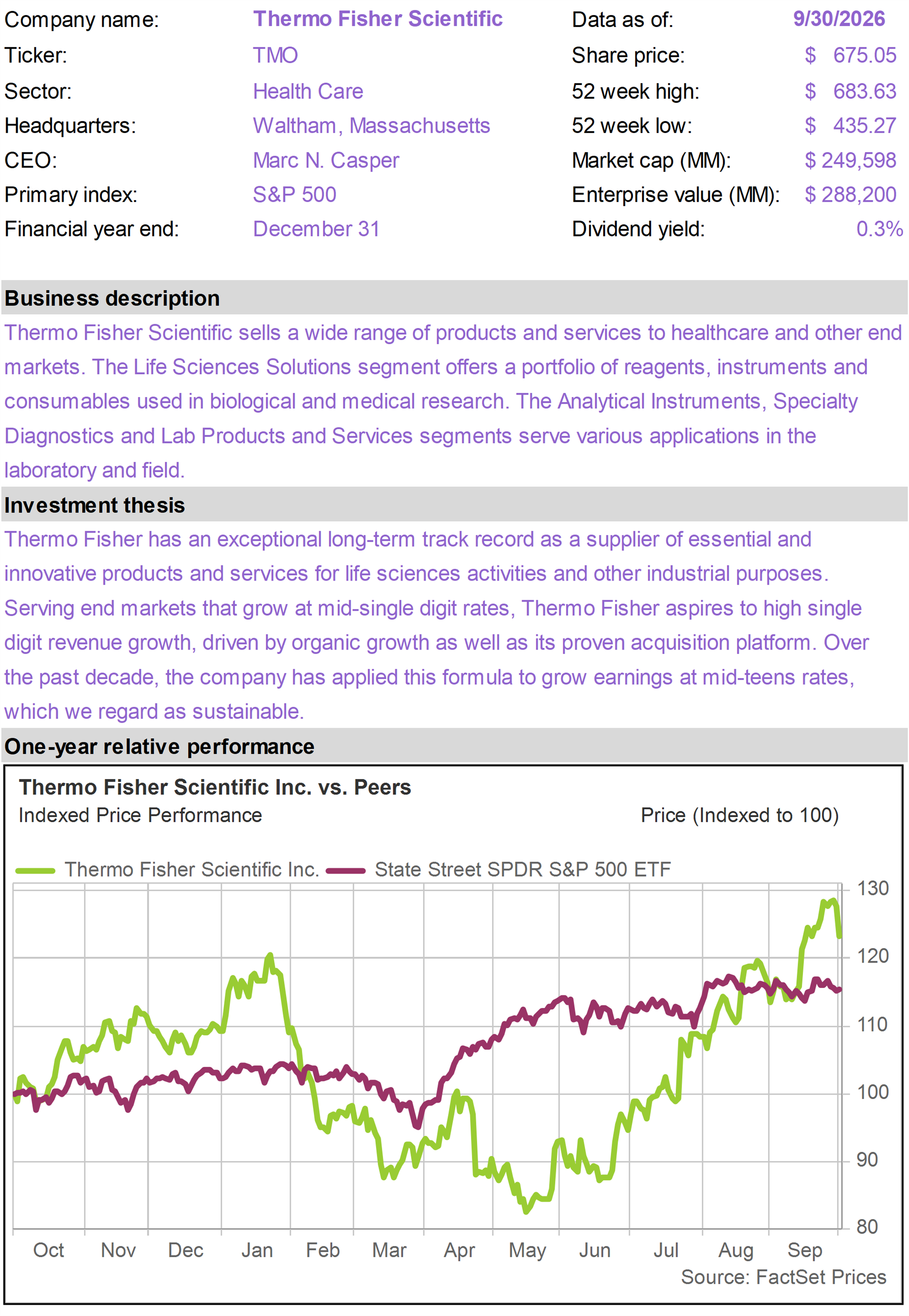
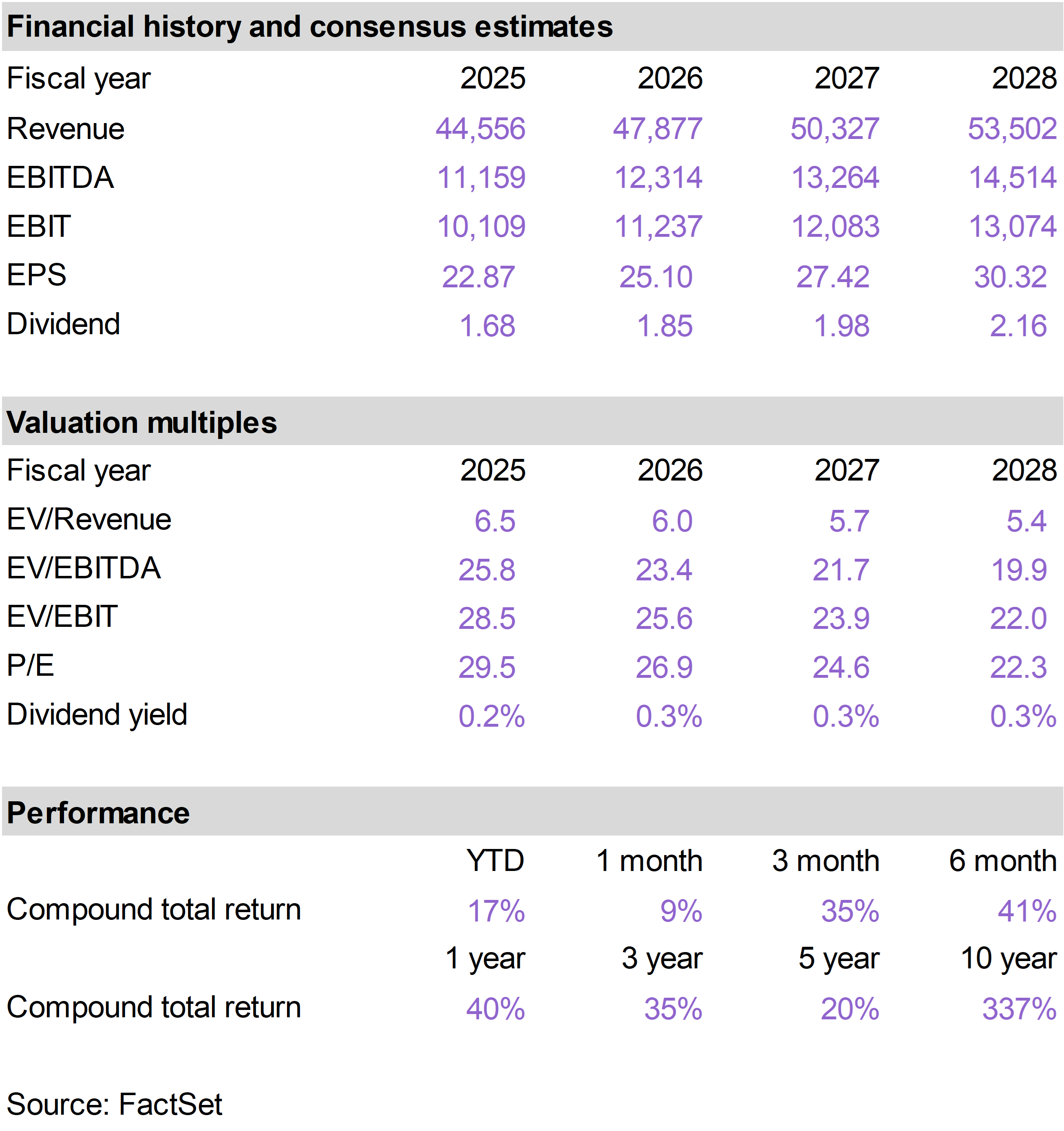
| | TMO gained in September as investors became more confident that the company is moving back toward a stronger organic growth trajectory. The company has spent the past several years working through a post-pandemic slowdown across the life-science tools industry, but conditions are improving.
TMO’s largest end market is pharma and biotech, representing roughly 60% of revenue, where funding trends, bioprocessing demand and R&D spending are becoming more supportive.
The company is now expected to return to roughly 5%-6% organic revenue growth in 2027, with the potential for further acceleration as China stabilizes and academic and government demand improves. Operating margins are also expected to expand, supporting double-digit EPS growth.
Importantly, AI may become an additional tailwind. TMO is working with OpenAI to improve clinical-trial efficiency and with NVIDIA (NVDA) to incorporate advanced processors into next-generation scientific instruments. It is also embedding AI into its own software and laboratory workflows.
We continue to view TMO as a high-quality compounder whose earnings power should improve as its end markets normalize. The September rally appears to reflect growing recognition that the company may be entering a more favorable growth and earnings revision cycle. |
|
| | TXN advanced this month on confidence that the recovery in its core industrial and automotive markets is continuing, following a company update at a major investment conference in London.
Demand trends remain relatively strong across industrial, automotive, consumer and data center end markets. In industrial, growth has been particularly strong in aerospace and defense, energy infrastructure and automated test equipment, while the broader industrial business is still growing more than 20% year over year.
The data center business is also growing in importance.
TXN’s data center revenue is annualizing at roughly $3 billion and remains on track to potentially double this year, driven by demand for power-management, voltage-regulation and other analog products used across compute and networking systems.
TXN also appears well positioned from a supply standpoint.
After years of heavy investment in 300mm manufacturing capacity, the company now has roughly $25 billion of revenue capacity and substantial additional capacity under construction. That should allow TXN to take share if competitors become supply constrained, while supporting better utilization and margins.
We continue to view TXN as an attractive way to participate in both a cyclical recovery in traditional semiconductor demand and the longer-term growth in AI infrastructure, autonomous vehicles, robotics, and other manifestations of physical AI. |
|
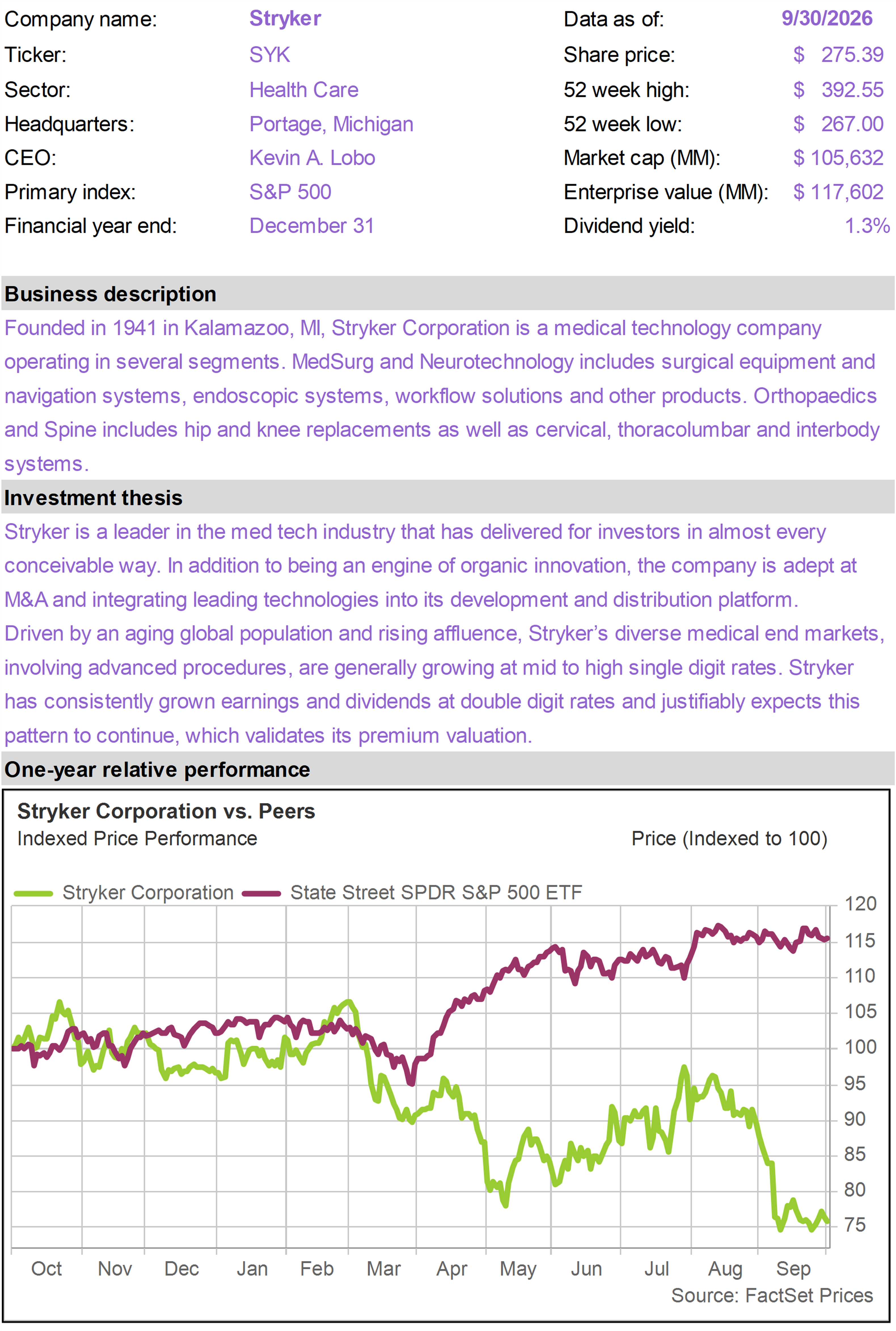
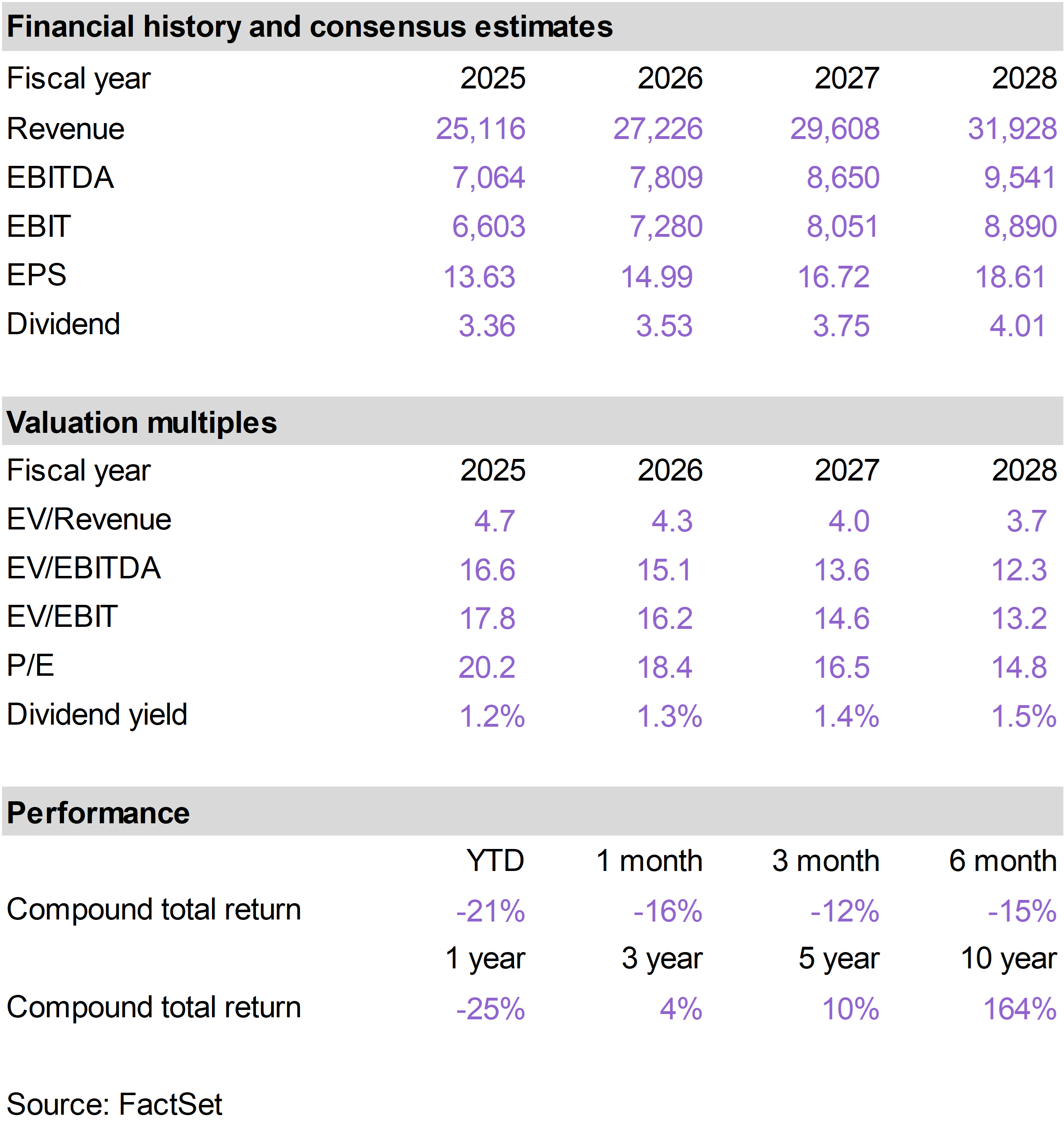
| | SYK declined in September as investors reacted to a combination of supply constraints and softer-than-expected procedure trends.
The biggest issue has been the company’s Peripheral Vascular business, where manufacturing disruptions following an earlier cyber incident have persisted longer than expected.
Limited supply has affected both existing customers and SYK’s ability to win new business, with management now expecting the headwind to extend into the fourth quarter.
The company has also seen more seasonality than expected in Joint Replacement, where weakness in Europe and softer summer procedure volumes have weighed on growth.
Importantly, the weakness appears more related to execution and timing than to a collapse in underlying demand. Capital demand remains strong, the order book is healthy, and management maintained its full-year organic growth and EPS guidance.
We see a potentially favorable setup heading into 2027. As supply normalizes, deferred procedures are worked through and capital equipment shipments convert from backlog into revenue, growth could reaccelerate against easier comparisons. New product cycles should provide additional support.
We therefore view the September selloff primarily as a reset in near-term expectations rather than a deterioration in the long-term investment case. SYK remains a high-quality MedTech franchise with strong procedure growth, leading robotics capabilities and a long record of market share gains. |
|
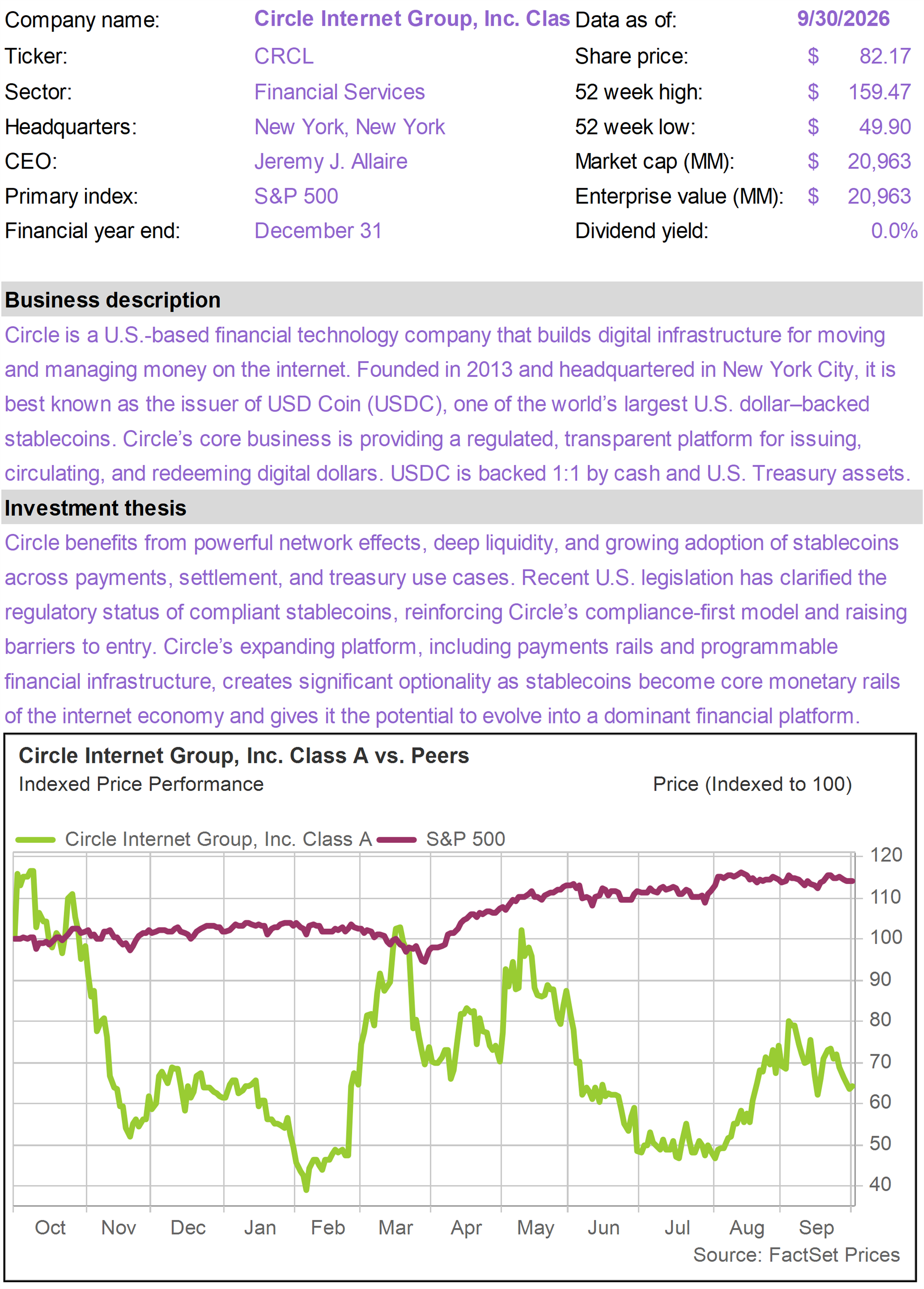
| | CRCL retreated in September as investors reacted to renewed competitive concerns and the failure of the CLARITY Act to advance in Congress.
The legislative setback initially weighed on the broader crypto complex, but we do not view it as a reversal of the longer-term regulatory trend. Agencies such as the SEC and CFTC continue to move ahead with rulemaking that should gradually provide greater clarity for digital assets.
Competitive concerns have also resurfaced around potential rival stablecoins and new reserve-sharing models. We continue to believe those fears miss the larger opportunity.
CRCL’s USDC remains the second-largest stablecoin globally, with deep liquidity, regulatory credibility and broad integration across exchanges, wallets and payment platforms.
CRCL continues to build infrastructure around USDC rather than simply earning interest on the reserves that back it.
The recent launch of the Arc mainnet reinforces that strategy. Over time, transaction revenue from payments, settlement and cross-border money movement could become much more important than reserve income.
Near term, CRCL also remains highly sensitive to the broader crypto cycle. A continued recovery in Bitcoin should support USDC circulation, while higher interest rates remain favorable for reserve income.
We therefore view the September weakness as more reflective of regulatory and competitive noise than a deterioration in CRCL’s long-term position within digital financial infrastructure, which remains excellent. |
|
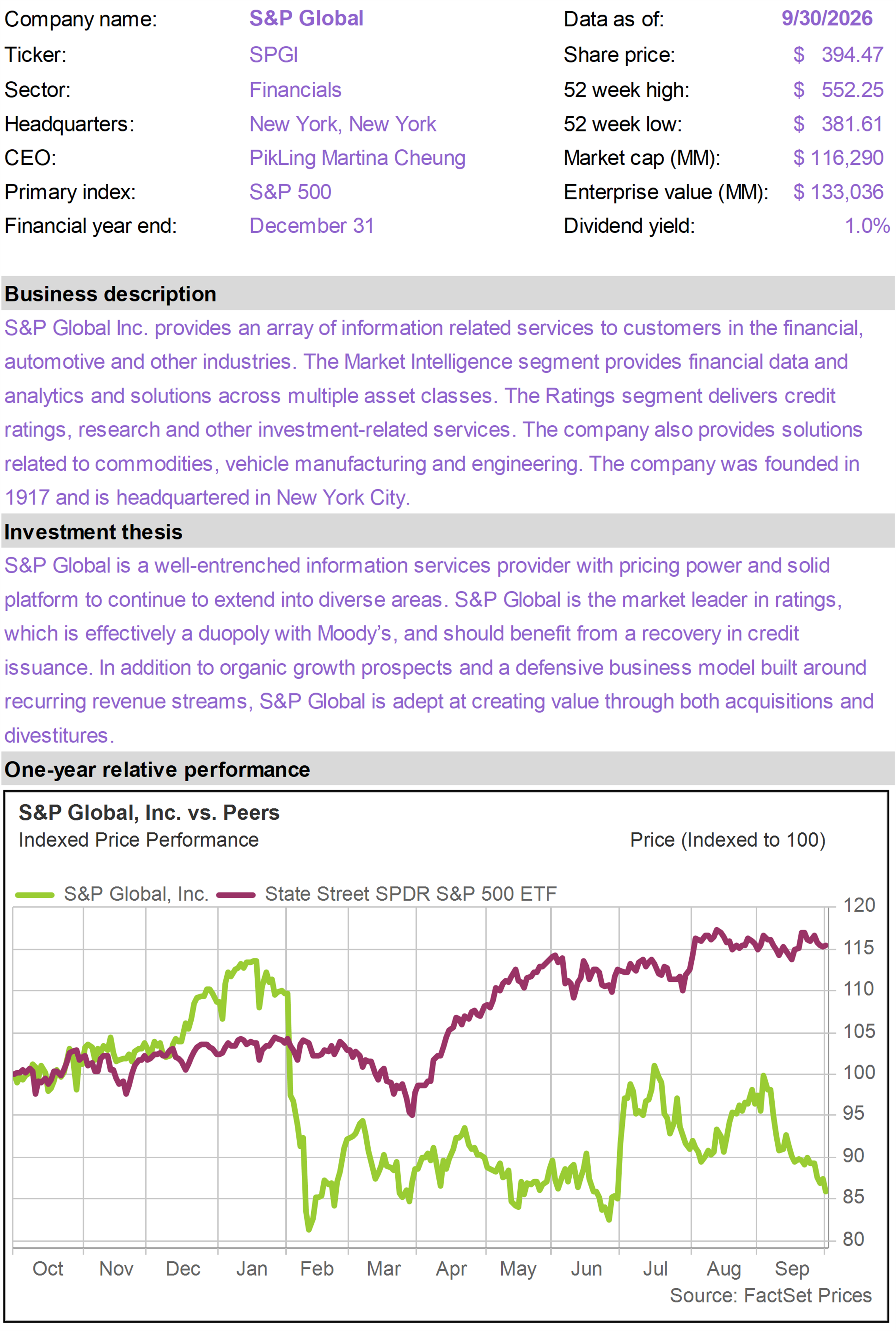
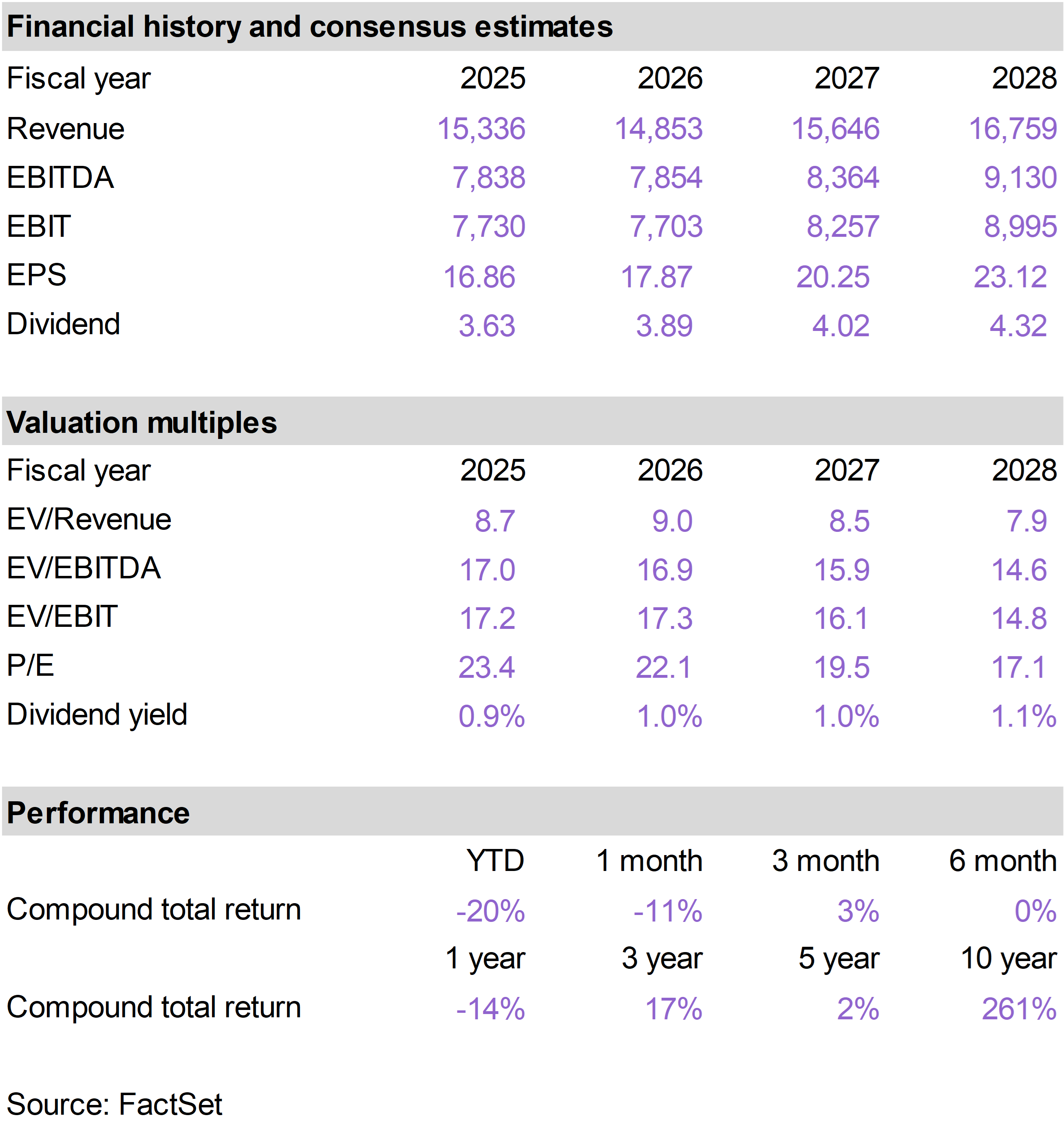
| | SPGI’s weakness in September reflected the broader pressure from sharply higher interest rates as investors became more cautious about the outlook for debt issuance and other capital-markets activity.
Higher long-term rates and greater rate volatility can make refinancing, M&A financing and new debt issuance less attractive, which in turn can weigh on transaction-related revenue in SPGI’s Ratings business.
Importantly, however, the actual issuance data remained healthy. August billed issuance increased approximately 11% year over year, with strong investment-grade activity and continued support from AI-related infrastructure financing.
The longer-term setup also remains favorable. Approximately $8.2 trillion of corporate debt is scheduled to mature over the next three years, well above the historical average, which should support refinancing activity even if markets remain volatile.
SPGI is also emerging as an interesting beneficiary of AI beyond its Ratings business. Demand is increasing for proprietary datasets, AI-enabled workflows and direct connectivity between SPGI’s data and customers’ AI systems. Management believes AI can support both revenue growth and productivity improvements.
We therefore view the September weakness primarily as a combination of rate-driven valuation pressure and concern about future credit activity, rather than a deterioration in the underlying business. |
|
| | | |
| | |
| | |
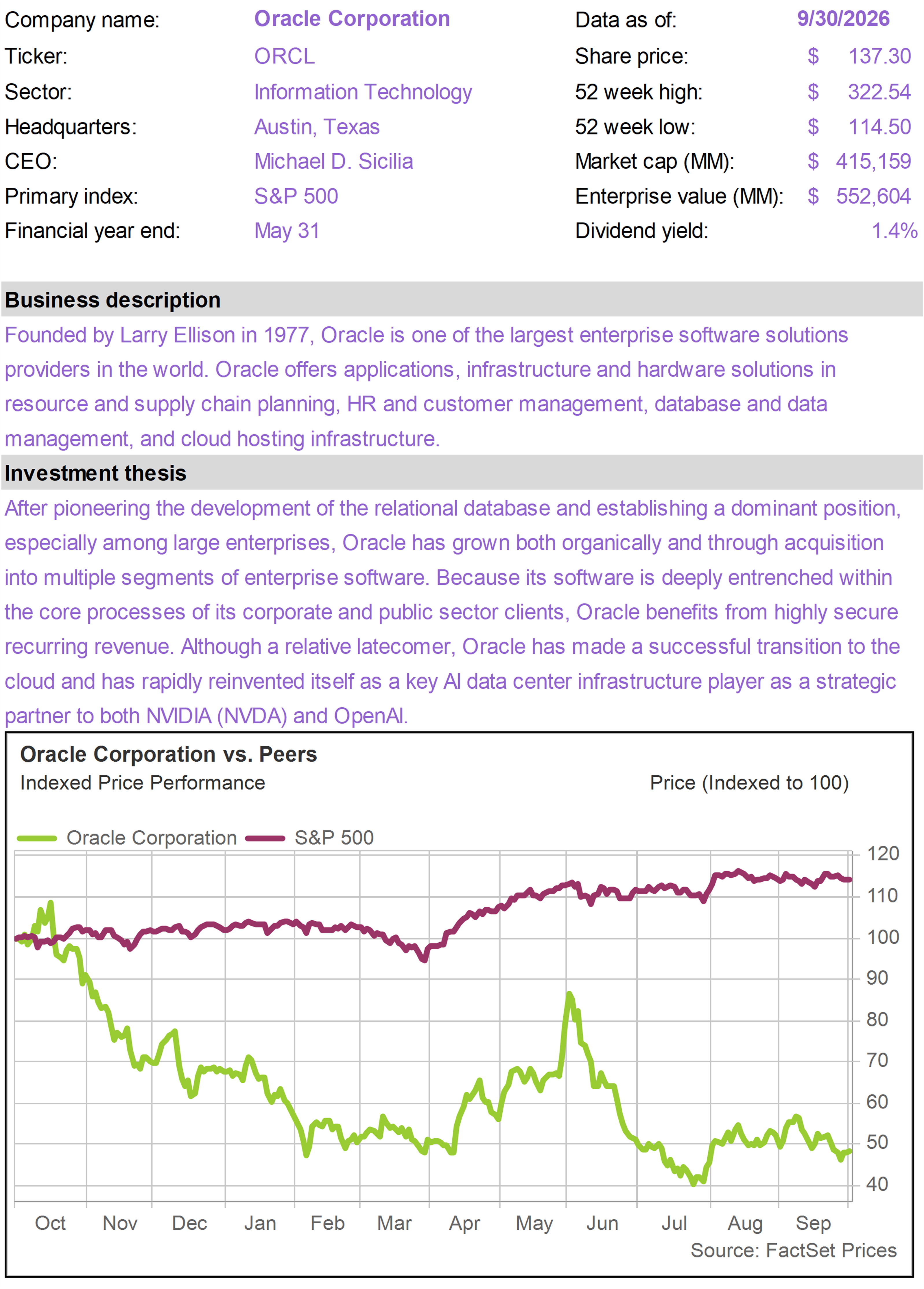
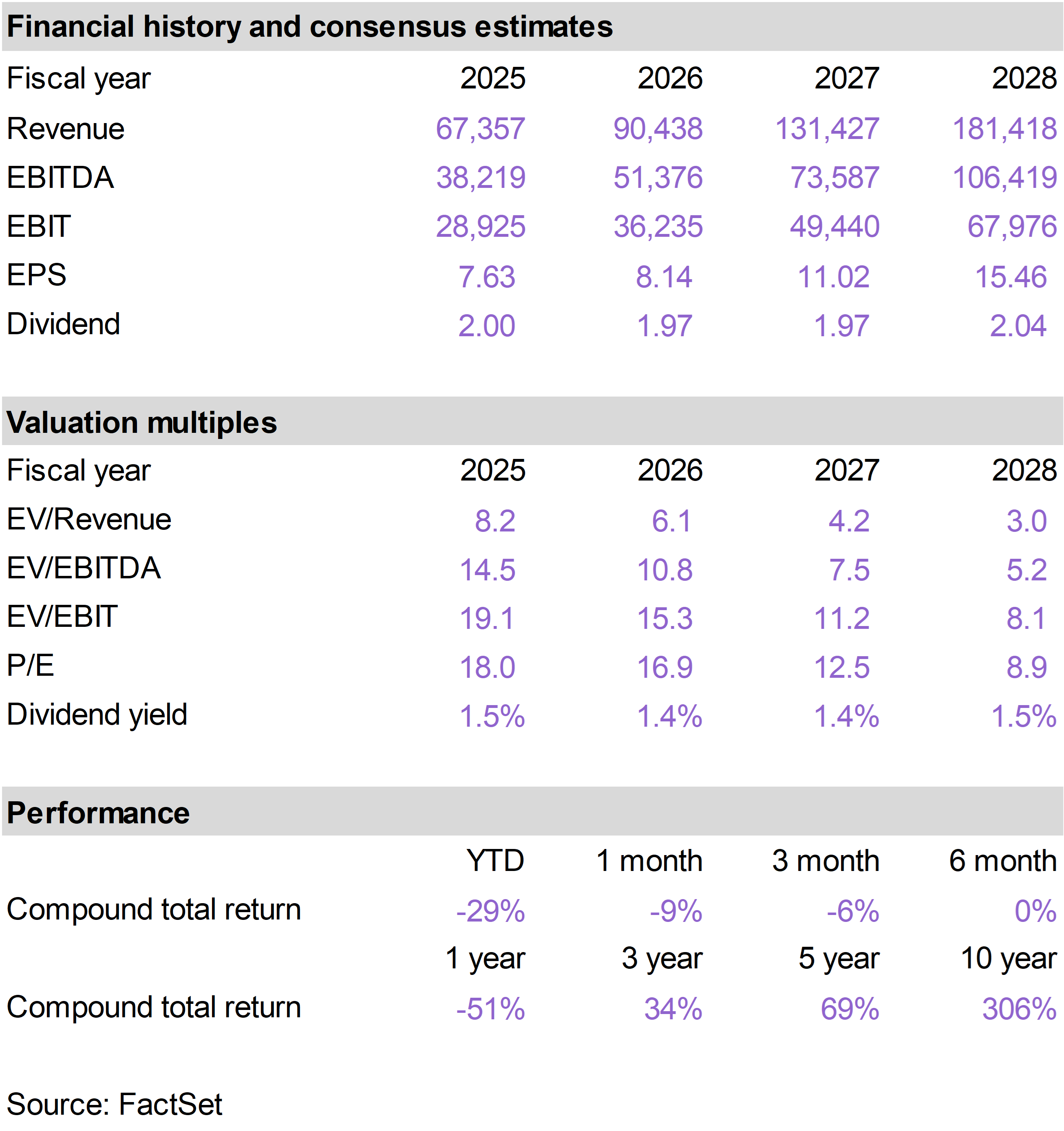
| | | Oracle Corporation (ORCL) |
|
|
|
| | |
|
| | |
|
| | |
|
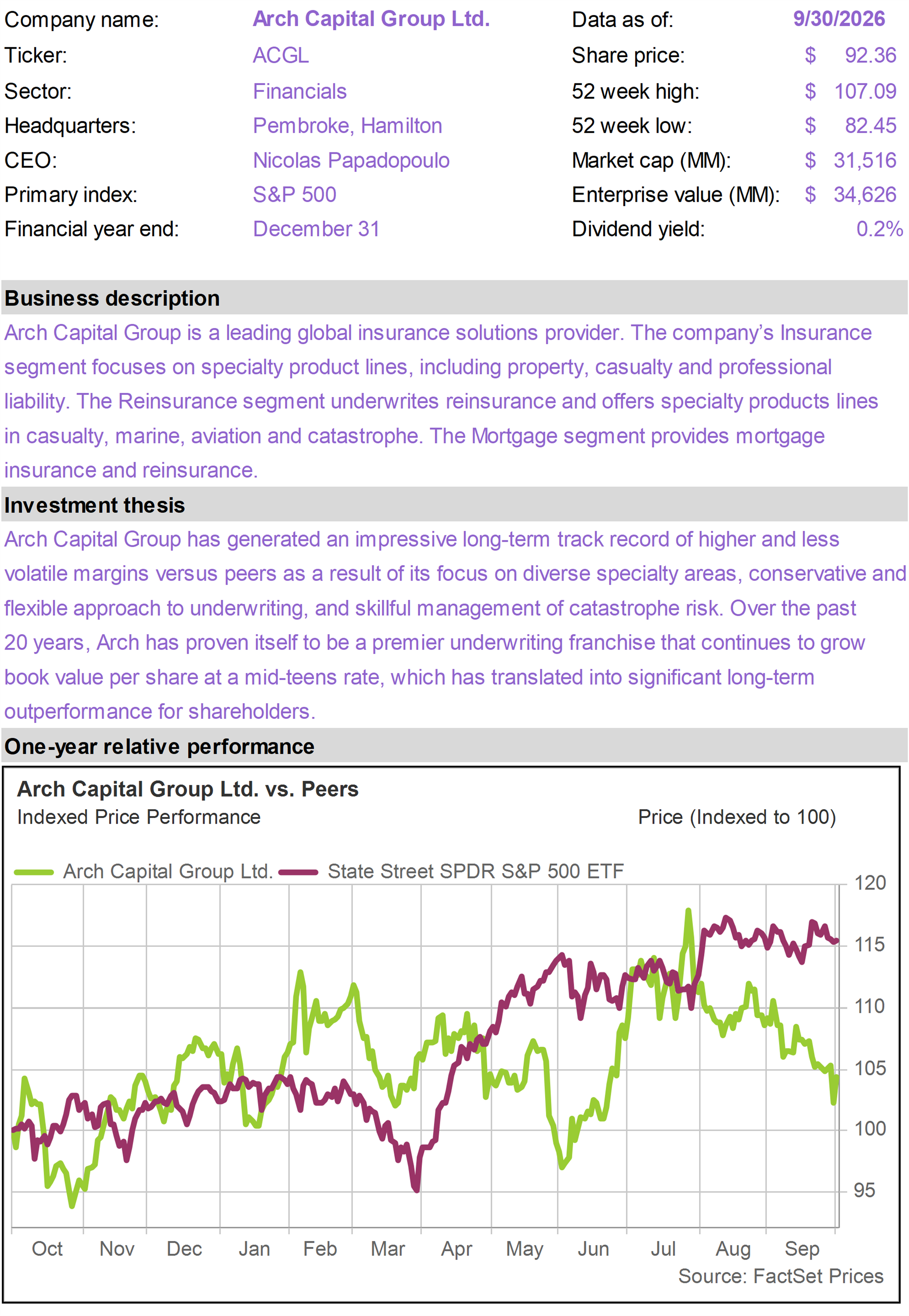
| | Arch Capital Group (ACGL) |
|
|
|
| | |
|
| | Circle Internet Group (CRCL) |
|
|
|
| | |
|
| | |
|
| | |
|
| | |
|
| | Thermo Fisher Scientific (TMO) |
|
|
|
| | |
|
| | |
|
| | |
|
| | |
|
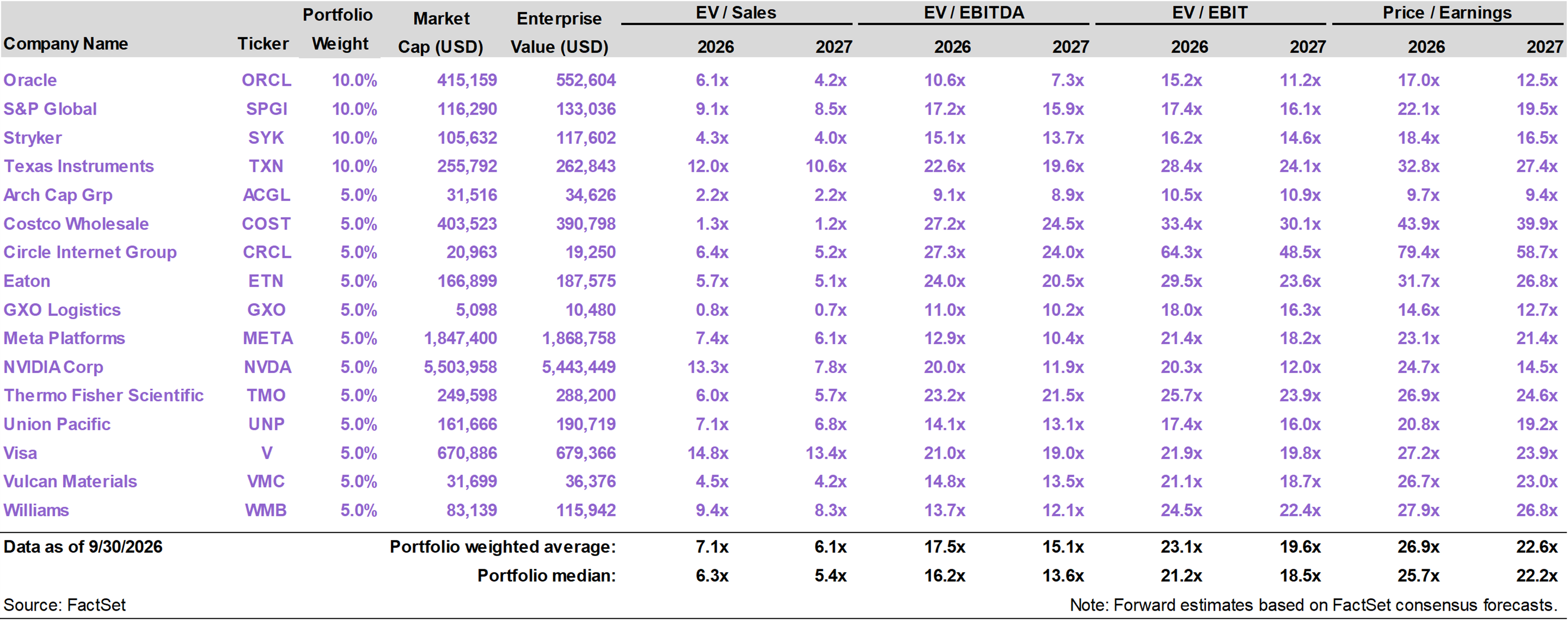
| | The 76research American Resilience Model Portfolio is designed to provide exposure to growth businesses that operate with competitive advantages in structurally attractive markets. The objective is to identify businesses that can survive and thrive across different macroeconomic environments and whatever geopolitical crises may unfold. The holdings are intended as long-term investments to drive portfolio compounding with minimal need to realize taxable gains. Emphasis is placed on critical markers of business quality such as barriers to entry, physical scarcity of assets, balance sheet strength, effective capital allocation and durable long-term growth drivers. These assessments are paired with careful consideration of valuation and risk. |
|
| | FOR SUBSCRIBER USE ONLY. DO NOT FORWARD OR SHARE. |
|
| | | |
|
|
|
|
|