Making money is great, but if you blow it all on frivolous nonsense and have nothing left at the end of the year, what good is it?
This is essentially the question Wall Street has been wrestling with over Meta Platforms (META) for much of the past year, as the company has ramped up capital expenditures to eye-popping levels.
The company now expects to spend as much as $145 billion in 2026. This figure is more than double the $70 billion spent in 2025 and close to four times the $37 billion spent in 2024.
META used to be a free cash flow machine, generating more than $40 billion in 2025 alone after all capital spending.
But now, as META builds out its AI capabilities, analysts expect the business to remain in a negative free cash flow position through year-end 2028.
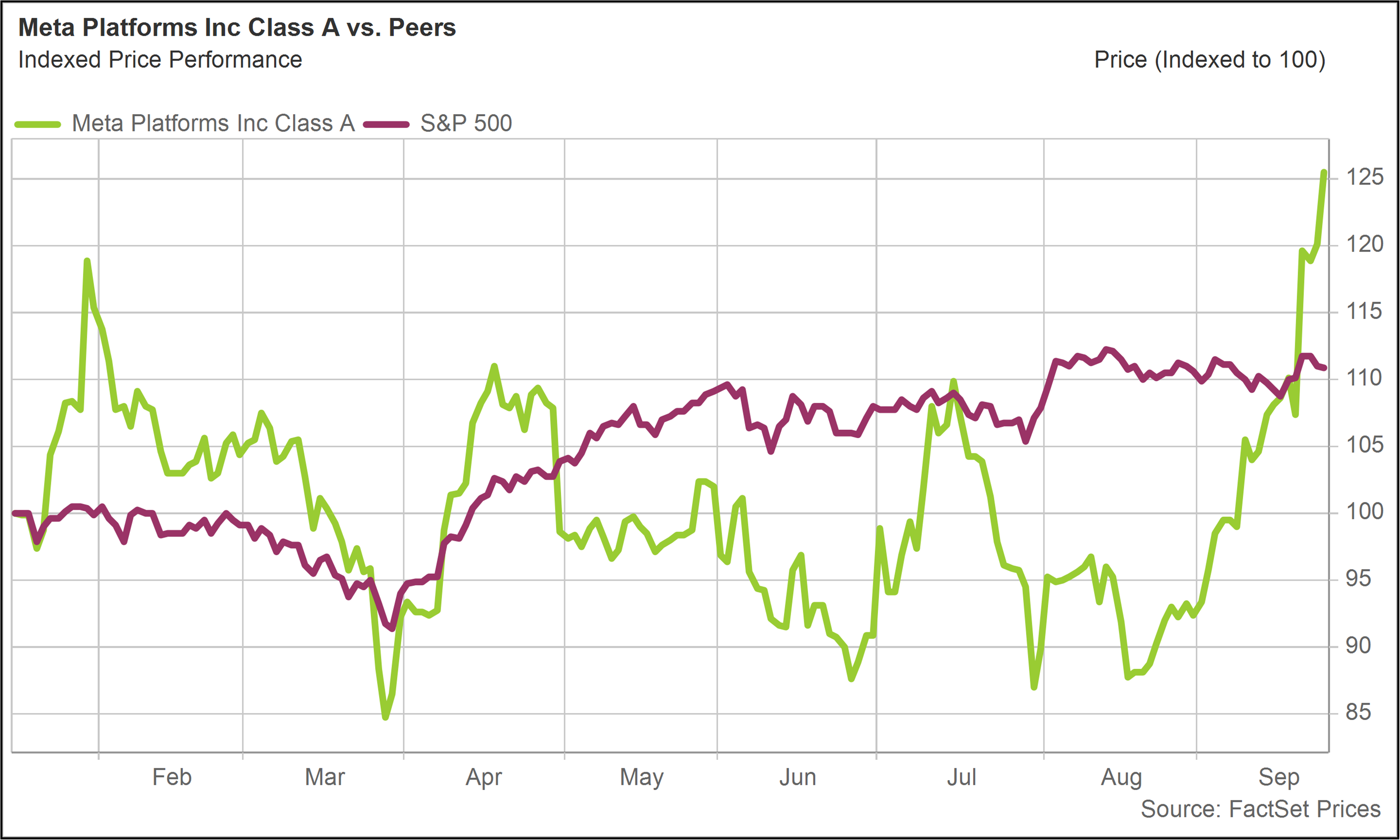
Over the course of 2026, investors have expressed their disappointment in META’s aggressive spending on AI by selling the shares and compressing the stock’s valuation.
At the start of this year, META in fact had the lowest earnings multiple within the Mag 7. It was at the time even lower than the multiple on the S&P 500, despite persistently strong growth.
But sentiment appears to be quickly changing.
Investors are beginning to wonder whether CEO Mark Zuckerberg may have quietly built one of the strongest AI positions in the world.
This was always the risk facing the META bears. What if the company’s vast profits were actually not being squandered?
Earlier this year, we decided the market was being far too punitive.
On January 15, 2026, we added META to the American Resilience Model Portfolio after a sharp selloff had pushed the stock down more than 20% from its 2025 all-time high.
As of the end of trading today, the stock is up 36% on a month to date basis. The shares have returned 26% since we added META to the portfolio in January, substantially outpacing the S&P 500 return of 12%.